Close Modal

The Locusts Have No King

Paperback
$17.95 US
5-1/16"W x 7-13/16"H | 13 oz | 24 per carton
On sale Mar 16, 2027 | 288 Pages | 9781805333241

A glamorous playwright and a bookish academic navigate a reversal of fortunes in this sparkling romantic comedy from Dawn Powell.

“The combination of a waspish sense of satire with a human sense of pathos results in a novel that is highly entertaining and curiously touching.” —New York Times


Dawn Powell turns her unsparing eye and stinging wit on the literary world in this charming romantic comedy following an introverted academic and a high-powered playwright who cannot quite relinquish each other, no matter how different they may be.

Frederick Olliver, an obscure historian and writer, is having an affair with the restively married, beautiful, and hugely successful playwright, Lyle Gaynor. The pair could not be more different. Frederick is happiest among half-finished drafts and forgotten notes, while Lyle moves with ease through glittering first nights and high-powered dinner parties.

But when Frederick’s new book is abruptly seized by his publisher, he is thrust suddenly into the spotlight, transformed from obscure academic into the darling of the very elite he once scorned. At the same time, Lyle’s once unstoppable Broadway career begins to falter. With their relationship strained by this dizzying reversal of fortunes, they must navigate a society obsessed with wealth and status, where success reshapes intimacy and love often comes at a price.

Taking place under the bright lights of Broadway and smoky jazz bars of mid-20th-century New York, Powell’s biting send-up of society “locusts” blends the irresistible satire of Evelyn Waugh and the incisive wit of Muriel Spark.

"The 1948 tale of a scholar's roller-coaster affair with a married society type is an anguished love story, a reversal-of-fortune parable, and a blistering satire that rings true today—cynical columnists, silly socialites, sinister nighthawks, all in one gorgeous Deco package."  —Borish Kachka, Bloomberg Businessweek

"Dawn Powell once wrote that although her writing might occasionally concern itself with serious matters, there was never any need to get heavy-handed about it. The Locusts Have no King, first published in 1948, is a stellar example of this quasi-manifesto. Like all Powell's novels, it glides, fast but deep, from the first sentence to the last, written with impeccable finesse and a flawless ear, never grinding its wheels or getting lost in egotistical undergrowth. For all its sweetness and light, Locusts is an intelligent, hard-headed, clear-eyed, examination of art, love, ruthlessness, infidelity, commerce, ambition, betrayal, and destruction. It is, in short, a quintessential New York novel. . . . The whole novel still rings as true now as it must have more than half a century ago." — Kate Christensen, author of The Epicure's Lament and other novels in Barnes & Noble Review.

The Locusts Have No King is one of Powell’s finest novels and better than anything currently on the bestseller lists.” — Library Journal (Classic Returns column, 1995)


"A brilliant satire of the New York literary world during the late 1940s." Shelf Awareness
When Dawn Powell died in 1965, virtually all her books were out of print. Not a single historical survey of American literature mentioned her, even in passing. And so she slept, seemingly destined to be forgotten – or, to put it more exactly, never to be remembered. 

How things have changed! Numerous novels by Dawn Powell are currently available, along with her diaries and short stories. She has joined the Library of America, admitted to the illustrious company of Ralph Waldo Emerson, Henry Adams, Frederick Douglass, and Edith Wharton. She is taught in college and read with delight on vacation. For the contemporary poet and novelist Lisa Zeidner, writing inThe New York Times Book Review, Powell “is wittier than Dorothy Parker, dissects the rich better than F. Scott Fitzgerald, is more plaintive than Willa Cather in her evocation of the heartland, and has a more supple control of satirical voice than Evelyn Waugh.” For his part, Gore Vidal offered a simple reason for Powell’s sudden popularity in the early Twentieth Century: “We are catching up to her.”

Dawn Powell was born in Mt. Gilead, Ohio, on November 28, 1896, the second of three daughters. Her father was a traveling salesman, and her mother died a few days after Dawn turned seven. After enduring great cruelty at the hands of her stepmother, Dawn ran away at the age of thirteen and eventually arrived at the home of her maternal aunt, who served hot meals to travelers emerging from the train station across the street. Dawn worked her way through college and made it to New York. There she married a young advertising executive and had one child, a boy who suffered from autism, then an unknown condition.

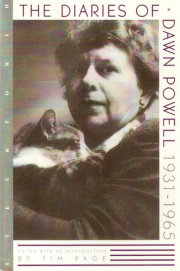
Powell referred to herself as a “permanent visitor” in her adopted Manhattan and brought to her writing a perspective gained from her upbringing in Middle America. She knew many of the great writers of her time, and Diana Trilling famously said it was Dawn “who really says the funny things for which Dorothy Parker gets credit.” Ernest Hemingway called her his “favorite living writer.” She was one of America’ s great novelists, and yet when she died in 1965 she was buried in an unmarked grave in New York’s Potter’s Field. View titles by Dawn Powell

About

A glamorous playwright and a bookish academic navigate a reversal of fortunes in this sparkling romantic comedy from Dawn Powell.

“The combination of a waspish sense of satire with a human sense of pathos results in a novel that is highly entertaining and curiously touching.” —New York Times


Dawn Powell turns her unsparing eye and stinging wit on the literary world in this charming romantic comedy following an introverted academic and a high-powered playwright who cannot quite relinquish each other, no matter how different they may be.

Frederick Olliver, an obscure historian and writer, is having an affair with the restively married, beautiful, and hugely successful playwright, Lyle Gaynor. The pair could not be more different. Frederick is happiest among half-finished drafts and forgotten notes, while Lyle moves with ease through glittering first nights and high-powered dinner parties.

But when Frederick’s new book is abruptly seized by his publisher, he is thrust suddenly into the spotlight, transformed from obscure academic into the darling of the very elite he once scorned. At the same time, Lyle’s once unstoppable Broadway career begins to falter. With their relationship strained by this dizzying reversal of fortunes, they must navigate a society obsessed with wealth and status, where success reshapes intimacy and love often comes at a price.

Taking place under the bright lights of Broadway and smoky jazz bars of mid-20th-century New York, Powell’s biting send-up of society “locusts” blends the irresistible satire of Evelyn Waugh and the incisive wit of Muriel Spark.

Praise

"The 1948 tale of a scholar's roller-coaster affair with a married society type is an anguished love story, a reversal-of-fortune parable, and a blistering satire that rings true today—cynical columnists, silly socialites, sinister nighthawks, all in one gorgeous Deco package."  —Borish Kachka, Bloomberg Businessweek

"Dawn Powell once wrote that although her writing might occasionally concern itself with serious matters, there was never any need to get heavy-handed about it. The Locusts Have no King, first published in 1948, is a stellar example of this quasi-manifesto. Like all Powell's novels, it glides, fast but deep, from the first sentence to the last, written with impeccable finesse and a flawless ear, never grinding its wheels or getting lost in egotistical undergrowth. For all its sweetness and light, Locusts is an intelligent, hard-headed, clear-eyed, examination of art, love, ruthlessness, infidelity, commerce, ambition, betrayal, and destruction. It is, in short, a quintessential New York novel. . . . The whole novel still rings as true now as it must have more than half a century ago." — Kate Christensen, author of The Epicure's Lament and other novels in Barnes & Noble Review.

The Locusts Have No King is one of Powell’s finest novels and better than anything currently on the bestseller lists.” — Library Journal (Classic Returns column, 1995)


"A brilliant satire of the New York literary world during the late 1940s." Shelf Awareness
Author

When Dawn Powell died in 1965, virtually all her books were out of print. Not a single historical survey of American literature mentioned her, even in passing. And so she slept, seemingly destined to be forgotten – or, to put it more exactly, never to be remembered. 

How things have changed! Numerous novels by Dawn Powell are currently available, along with her diaries and short stories. She has joined the Library of America, admitted to the illustrious company of Ralph Waldo Emerson, Henry Adams, Frederick Douglass, and Edith Wharton. She is taught in college and read with delight on vacation. For the contemporary poet and novelist Lisa Zeidner, writing inThe New York Times Book Review, Powell “is wittier than Dorothy Parker, dissects the rich better than F. Scott Fitzgerald, is more plaintive than Willa Cather in her evocation of the heartland, and has a more supple control of satirical voice than Evelyn Waugh.” For his part, Gore Vidal offered a simple reason for Powell’s sudden popularity in the early Twentieth Century: “We are catching up to her.”

Dawn Powell was born in Mt. Gilead, Ohio, on November 28, 1896, the second of three daughters. Her father was a traveling salesman, and her mother died a few days after Dawn turned seven. After enduring great cruelty at the hands of her stepmother, Dawn ran away at the age of thirteen and eventually arrived at the home of her maternal aunt, who served hot meals to travelers emerging from the train station across the street. Dawn worked her way through college and made it to New York. There she married a young advertising executive and had one child, a boy who suffered from autism, then an unknown condition.
Powell referred to herself as a “permanent visitor” in her adopted Manhattan and brought to her writing a perspective gained from her upbringing in Middle America. She knew many of the great writers of her time, and Diana Trilling famously said it was Dawn “who really says the funny things for which Dorothy Parker gets credit.” Ernest Hemingway called her his “favorite living writer.” She was one of America’ s great novelists, and yet when she died in 1965 she was buried in an unmarked grave in New York’s Potter’s Field. View titles by Dawn Powell