Close Modal

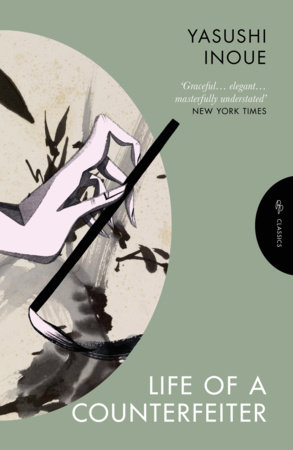
Life of a Counterfeiter

Translated by Michael Emmerich
Paperback
$16.95 US
5-1/16"W x 7-13/16"H | 13 oz | 24 per carton
On sale Jun 30, 2026 | 144 Pages | 9781805332077

A master forger lives in obscurity and disappointment, oppressed by the shadow of the artist whose work he copies. Unglamorous, unadorned lives such as this form the focus of Yasushi Inoue's tenderly observed, elegantly distilled short stories - two of which are appearing in English for the first time. With a haunting emotional intensity, they offer glimpses of love lost and lives wasted. 

These three luminous, compassionate tales showcase the mastery and exquisite talent of one of Japan's most beloved writers.

Pushkin Collection editions feature a spare, elegant series style and superior, durable components. The Collection is typeset in Monotype Baskerville, litho-printed on Munken Premium White Paper and notch-bound by the independently owned printer TJ International in Padstow. The covers, with French flaps, are printed on Colorplan Pristine White Paper. Both paper and cover board are acid-free and Forest Stewardship Council (FSC) certified.

"Two graceful new translations [of The Hunting Gun and Life of a Counterfeiter] should help expand [Inoue's] audience in English . . . These elegant new editions of Inoue’s work are in keeping with his masterfully understated prose." — New York Times Book Review

"Inoue writes with remarkable clarity and disarming simplicity about feelings and concepts usually too intricate and ambiguous to pin down." Kirkus Reviews

"The three powerful stories collected here were written by Inoue in the years following WWII, giving readers a nuanced glimpse of the postwar psyche… Inoue's prose is simple without being austere, a perfect vehicle for these beautiful stories full of pathos for those lonely souls who live in the shadows. This haunting, elegiac trio makes clear Inoue's position as a Japanese literary master." — Publishers Weekly (STARRED review)

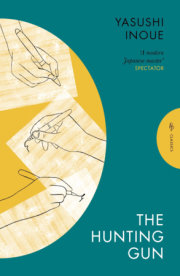
"The three Inoue titles (thus far) sport distinctive covers in saturated, solid colors on subtly textured stock, invitingly sized to fit both pockets and hands. Beyond impeccable aesthetics, the stories prove even more exceptional." — American Book Review

"The Hunting Gun and Life of a Counterfeiter complement each other nicely as a pair. Delicate and powerful on their own, taken together the two works form a haunting, sensitive meditation on memory as well as a wonderful introduction to a master sorely underappreciated in the West." - Music and Literature


"Taut, probing style and Proustian preoccupation with memory were there from the beginning of his fiction career. . . . Inoue depicts in admirably straightforward prose the roiling waters of love, marriage, passion, and the effects of the passage of time on all three, as in his evocation of a match whose light has gone out. . . . Inoue’s characters always are slaves to their fates. It’s a testament to his poetic imagination that he compels us to follow them avidly as they slide forward through time, transforming as they go into creatures of memory." - Jon Sobel, Blogcritics 

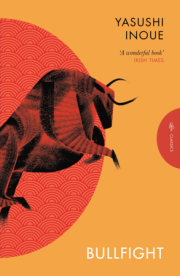
Born in 1907, Yasushi Inoue worked as a journalist and literary editor for many years, only beginning his prolific career as an author in 1949 with Bullfight. He went on to publish 50 novels and 150 short stories, both historical and contemporary, his work making him one of Japan's major literary figures. In 1976 Inoue was presented with the Order of Culture, the highest honour granted for artistic merit in Japan. He died in 1991. View titles by Yasushi Inoue
Nearly a decade has passed since the Ōnuki family first asked me to compile a biography of the painter Ōnuki Keigaku, and I have yet to complete it. This spring, I received a printed announcement from the house in Kyoto saying they would be marking the thirteenth anniversary of Keigaku’s death with a memorial service at a Zen temple; a postcard was enclosed, self-addressed and stamped, by which I was to inform them whether or not I would be able to attend. I must admit I was somewhat diffident about presenting myself to the family. For better or worse, work would make it impossible for me to participate in the ceremony anyway, but in all honesty it came as a relief that this was the case—I felt as if I had been saved.

It was in 1942, as I recall, that Takuhiko, the new head of the family, first contacted me to discuss the terms under which I might undertake to assemble Keigaku’s biography; he indicated that, while the family was in no great hurry, they intended to present the book to the deceased on the seventh anniversary of his death, and to distribute copies at the ceremony, so they would be glad if I could finish the manuscript in time for it to be published by then. In the event, the seventh anniversary fell in March 1945, when the war was in its final stages, and both the Ōnuki family and I were in such frantic straits that the biography was nowhere in our thoughts; I had no choice but to put a temporary hold on my work while I was still gathering materials, and our agree- ment dissolved of its own accord. After the fighting ceased, however, the family approached me once again. Now that we were living in a more settled age, they said, the project could no longer be allowed to languish, and they desired that I might see it to completion in due haste. Ever since, perhaps once a year, I receive a postcard from Takuhiko inquiring, with a subtlety and delicacy so typical of him, how the biography is coming along; and each time I have replied with some tortuous excuse, buying a temporary reprieve.

I was chosen for the rather irksome task of preparing Keigaku’s biography, it seems, because I had interviewed the deceased on a few occasions in my capacity as an arts reporter for an Osaka newspaper, which is what I was in those days, and he had liked me better than reporters from the other papers: this familiarity would make it rela- tively easy for me to collect materials. My position in the newspaper and the passing acquaintance with the painting community it had given me appears to have impressed both the Ōnuki family and Keigaku’s disciples favorably as well, leading them to settle upon me as the person best suited to the job.

My decision to accept the commission—which I did with alacrity—was prompted in the first place by my admiration both for Ōnuki Keigaku the man and for his works; but also, and more importantly, by the realization that, in order to compile such a biography, I would essentially have to write a history of the entire Kyoto painting establishment, or indeed of painting at the national level. This would not be such a bad way, I thought, for a reporter who was supposedly a specialist in the arts to learn a bit about how painting had changed and evolved in this country since the Meiji period. Having taken on the job in this rather cavalier manner, I discovered that the work itself was by no means as straight- forward as I had expected. I began by trying to piece together a timeline of Keigaku’s life, only to find that until he built the magnificent estate in Kyoto where he lived out his final years he had been constantly on the move, bumping about from place to place as the spirit moved him—he had lived in more than ten houses just within Kyoto and its suburbs—and as if that weren’t enough, he had spent almost half of each year traveling. It was all but impossible, then, to determine with any accuracy when and in which atelier he had painted even his greatest, most acclaimed works. In order to trace the sixty-odd years of his career, I had to piece together what I could learn from a number of disciples and fellow painters, as well as art dealers, framers, collectors, and so on—and each of their accounts conflicted with the others. Making a timeline was not as neat a task as it might appear from the outside.

Keigaku had lost his wife of many years, Mitsu, when he was fifty, and lived out the remainder of his life in a household of three, accompanied by an elderly maid who passed away two years after him and a series of students who did chores around the house in exchange for lodging. Keigaku was such a prickly man that none of the students stayed for long; one was always leaving, and another coming to take his place. Takuhiko, whom as heir one would have expected to be most knowledgeable about the deceased’s doings, had spent many years in France, and although he had returned five years prior to Keigaku’s death, he had his own house in Tokyo and had been so characteristically self-centered in his dealings with his father that he had essentially no experience of Keigaku’s day-to-day life. The end result was that there was almost no one I could go to for detailed knowledge about Keigaku’s private existence. And there was one more factor that placed hurdle after hurdle in my way as I attempted to gather materials for my biography, causing me no end of trouble: owing to his untamed personality, his wild disregard for matters that concerned more ordinary people, he had always been utterly indifferent to the painting establishment, and thus from start to finish remained isolated, a member of no school but his own.

In short, for all these reasons, I made hardly any pro- gress at all, even on the timeline that should have been the foundation of my biography, managing to fill at best two or three notebooks by visiting towns near his birthplace, up and down the coast of the Inland Sea, where I saw his very first efforts, and by making trips to view the major later-period “decorative works,” painted for selling, in the small weaving towns in the Hokuriku region where, oddly enough, many of his admirers were concentrated. And then, as the war escalated, my work on the biography came to an abrupt end, the basic research still only half done.

After the war, my feelings came to be dominated by an odd reluctance to embark again on a once-failed project, and while I knew I had no choice, insofar as I had taken the job, my acute awareness of the particular annoyances I would face made it hard to pick myself up and do what had to be done. What’s more, when the war ended, I had—quite out of the blue, even from my own vantage—quit my post at the newspaper, moved to Tokyo, and plowed headfirst into the world of literature, so that all my time was occupied by writing of that nature; thus, what with this and that, I allowed my work on the biography to languish, putting it off until tomorrow, then the next day, with the result that even now, after all these years, I have yet to produce anything beyond that incomplete timeline, littered with blanks, and two or three notebooks of fragmentary jottings.

So the situation stood. The realization that I had now failed to produce the biography in time for even the thir- teenth anniversary of Keigaku’s death made me feel so ashamed of myself and my endless procrastinating, with respect both to the Ōnuki family and to the deceased himself, that I really could not have faced them; and so, ever since I received the announcement, I began to think that this year, at last, I absolutely had to cobble together at least the semblance of a biography, so that I would at least have half carried out my responsibility, and be free of that burden.

Since I knew from past experience that I never made much progress on my own work in July and August anyway, when the heat is at its worst, I arranged to devote these two months to the Keigaku biography, renting a small studio in a village at the foot of Mt. Amagi, in Izu, where I was born and raised. I threw myself somewhat aggressively into the project, deciding to spend only mornings on it, and that I would simply leave anything I was uncertain of until the autumn, when I would make a trip to Kyoto to fill in the gaps; thus I would at least be able to finish the manuscript. Work progressed smoothly enough in July: I went through nearly ten collections of Keigaku’s occasional essays and travel writings and listed as many of his trips as I could identify, then added in his major works by year of composi- tion—and with that I was able to complete a timeline of sorts, however slapdash. In August, relying on my old notes and trying as much as possible to set out only trustworthy facts, avoiding any speculation, I finished the section of the biography covering from his childhood through his teenage years, then wrote of his apprenticeships with a series of Kyoto painters, including Katakura Issō and Yoshimizu Gahō; the submission of his first important work, Pleasures Lost, to the 1897 Exhibition for the Promotion of Painting, and the really quite extraordinary splash with which his career began when the painting received an award, marking him as a genius from the beginning; and then, finally, his unveiling, in quick succession, of the works now regarded as his early masterpieces, among them White Nights, The Old Fox, and A Thin Layer of Snow. After that, however, I suddenly found myself unable to write another word.

Here and there, in the course of describing Keigaku’s glorious beginnings as a young artist, I had been transcrib- ing sections from what was essentially the only holographic document to have survived, an unpublished diary from that period in his life that Ōnuki Takuhiko had handed me the first time I visited him in Kyoto after the war.

“I came across something unusual,” he had said. “I wonder if you might find it useful?”
The diary contained scattered notes about day-to-day events from the end of 1897 to the summer of 1899, all written out in spidery characters on handmade Japanese paper; it was a precious, absolutely unique record of Keigaku’s life during that period. Evidently the family had found it in a Chinese chest in the storehouse, mixed in with all sorts of other old papers, while they were preparing to evacuate.
Life of a Counterfeiter 9
Reeds 83
Mr. Goodall’s Gloves 113

About

A master forger lives in obscurity and disappointment, oppressed by the shadow of the artist whose work he copies. Unglamorous, unadorned lives such as this form the focus of Yasushi Inoue's tenderly observed, elegantly distilled short stories - two of which are appearing in English for the first time. With a haunting emotional intensity, they offer glimpses of love lost and lives wasted. 

These three luminous, compassionate tales showcase the mastery and exquisite talent of one of Japan's most beloved writers.

Pushkin Collection editions feature a spare, elegant series style and superior, durable components. The Collection is typeset in Monotype Baskerville, litho-printed on Munken Premium White Paper and notch-bound by the independently owned printer TJ International in Padstow. The covers, with French flaps, are printed on Colorplan Pristine White Paper. Both paper and cover board are acid-free and Forest Stewardship Council (FSC) certified.

Praise

"Two graceful new translations [of The Hunting Gun and Life of a Counterfeiter] should help expand [Inoue's] audience in English . . . These elegant new editions of Inoue’s work are in keeping with his masterfully understated prose." — New York Times Book Review

"Inoue writes with remarkable clarity and disarming simplicity about feelings and concepts usually too intricate and ambiguous to pin down." Kirkus Reviews

"The three powerful stories collected here were written by Inoue in the years following WWII, giving readers a nuanced glimpse of the postwar psyche… Inoue's prose is simple without being austere, a perfect vehicle for these beautiful stories full of pathos for those lonely souls who live in the shadows. This haunting, elegiac trio makes clear Inoue's position as a Japanese literary master." — Publishers Weekly (STARRED review)

"The three Inoue titles (thus far) sport distinctive covers in saturated, solid colors on subtly textured stock, invitingly sized to fit both pockets and hands. Beyond impeccable aesthetics, the stories prove even more exceptional." — American Book Review

"The Hunting Gun and Life of a Counterfeiter complement each other nicely as a pair. Delicate and powerful on their own, taken together the two works form a haunting, sensitive meditation on memory as well as a wonderful introduction to a master sorely underappreciated in the West." - Music and Literature


"Taut, probing style and Proustian preoccupation with memory were there from the beginning of his fiction career. . . . Inoue depicts in admirably straightforward prose the roiling waters of love, marriage, passion, and the effects of the passage of time on all three, as in his evocation of a match whose light has gone out. . . . Inoue’s characters always are slaves to their fates. It’s a testament to his poetic imagination that he compels us to follow them avidly as they slide forward through time, transforming as they go into creatures of memory." - Jon Sobel, Blogcritics 

Author

Born in 1907, Yasushi Inoue worked as a journalist and literary editor for many years, only beginning his prolific career as an author in 1949 with Bullfight. He went on to publish 50 novels and 150 short stories, both historical and contemporary, his work making him one of Japan's major literary figures. In 1976 Inoue was presented with the Order of Culture, the highest honour granted for artistic merit in Japan. He died in 1991. View titles by Yasushi Inoue

Excerpt

Nearly a decade has passed since the Ōnuki family first asked me to compile a biography of the painter Ōnuki Keigaku, and I have yet to complete it. This spring, I received a printed announcement from the house in Kyoto saying they would be marking the thirteenth anniversary of Keigaku’s death with a memorial service at a Zen temple; a postcard was enclosed, self-addressed and stamped, by which I was to inform them whether or not I would be able to attend. I must admit I was somewhat diffident about presenting myself to the family. For better or worse, work would make it impossible for me to participate in the ceremony anyway, but in all honesty it came as a relief that this was the case—I felt as if I had been saved.

It was in 1942, as I recall, that Takuhiko, the new head of the family, first contacted me to discuss the terms under which I might undertake to assemble Keigaku’s biography; he indicated that, while the family was in no great hurry, they intended to present the book to the deceased on the seventh anniversary of his death, and to distribute copies at the ceremony, so they would be glad if I could finish the manuscript in time for it to be published by then. In the event, the seventh anniversary fell in March 1945, when the war was in its final stages, and both the Ōnuki family and I were in such frantic straits that the biography was nowhere in our thoughts; I had no choice but to put a temporary hold on my work while I was still gathering materials, and our agree- ment dissolved of its own accord. After the fighting ceased, however, the family approached me once again. Now that we were living in a more settled age, they said, the project could no longer be allowed to languish, and they desired that I might see it to completion in due haste. Ever since, perhaps once a year, I receive a postcard from Takuhiko inquiring, with a subtlety and delicacy so typical of him, how the biography is coming along; and each time I have replied with some tortuous excuse, buying a temporary reprieve.

I was chosen for the rather irksome task of preparing Keigaku’s biography, it seems, because I had interviewed the deceased on a few occasions in my capacity as an arts reporter for an Osaka newspaper, which is what I was in those days, and he had liked me better than reporters from the other papers: this familiarity would make it rela- tively easy for me to collect materials. My position in the newspaper and the passing acquaintance with the painting community it had given me appears to have impressed both the Ōnuki family and Keigaku’s disciples favorably as well, leading them to settle upon me as the person best suited to the job.

My decision to accept the commission—which I did with alacrity—was prompted in the first place by my admiration both for Ōnuki Keigaku the man and for his works; but also, and more importantly, by the realization that, in order to compile such a biography, I would essentially have to write a history of the entire Kyoto painting establishment, or indeed of painting at the national level. This would not be such a bad way, I thought, for a reporter who was supposedly a specialist in the arts to learn a bit about how painting had changed and evolved in this country since the Meiji period. Having taken on the job in this rather cavalier manner, I discovered that the work itself was by no means as straight- forward as I had expected. I began by trying to piece together a timeline of Keigaku’s life, only to find that until he built the magnificent estate in Kyoto where he lived out his final years he had been constantly on the move, bumping about from place to place as the spirit moved him—he had lived in more than ten houses just within Kyoto and its suburbs—and as if that weren’t enough, he had spent almost half of each year traveling. It was all but impossible, then, to determine with any accuracy when and in which atelier he had painted even his greatest, most acclaimed works. In order to trace the sixty-odd years of his career, I had to piece together what I could learn from a number of disciples and fellow painters, as well as art dealers, framers, collectors, and so on—and each of their accounts conflicted with the others. Making a timeline was not as neat a task as it might appear from the outside.

Keigaku had lost his wife of many years, Mitsu, when he was fifty, and lived out the remainder of his life in a household of three, accompanied by an elderly maid who passed away two years after him and a series of students who did chores around the house in exchange for lodging. Keigaku was such a prickly man that none of the students stayed for long; one was always leaving, and another coming to take his place. Takuhiko, whom as heir one would have expected to be most knowledgeable about the deceased’s doings, had spent many years in France, and although he had returned five years prior to Keigaku’s death, he had his own house in Tokyo and had been so characteristically self-centered in his dealings with his father that he had essentially no experience of Keigaku’s day-to-day life. The end result was that there was almost no one I could go to for detailed knowledge about Keigaku’s private existence. And there was one more factor that placed hurdle after hurdle in my way as I attempted to gather materials for my biography, causing me no end of trouble: owing to his untamed personality, his wild disregard for matters that concerned more ordinary people, he had always been utterly indifferent to the painting establishment, and thus from start to finish remained isolated, a member of no school but his own.

In short, for all these reasons, I made hardly any pro- gress at all, even on the timeline that should have been the foundation of my biography, managing to fill at best two or three notebooks by visiting towns near his birthplace, up and down the coast of the Inland Sea, where I saw his very first efforts, and by making trips to view the major later-period “decorative works,” painted for selling, in the small weaving towns in the Hokuriku region where, oddly enough, many of his admirers were concentrated. And then, as the war escalated, my work on the biography came to an abrupt end, the basic research still only half done.

After the war, my feelings came to be dominated by an odd reluctance to embark again on a once-failed project, and while I knew I had no choice, insofar as I had taken the job, my acute awareness of the particular annoyances I would face made it hard to pick myself up and do what had to be done. What’s more, when the war ended, I had—quite out of the blue, even from my own vantage—quit my post at the newspaper, moved to Tokyo, and plowed headfirst into the world of literature, so that all my time was occupied by writing of that nature; thus, what with this and that, I allowed my work on the biography to languish, putting it off until tomorrow, then the next day, with the result that even now, after all these years, I have yet to produce anything beyond that incomplete timeline, littered with blanks, and two or three notebooks of fragmentary jottings.

So the situation stood. The realization that I had now failed to produce the biography in time for even the thir- teenth anniversary of Keigaku’s death made me feel so ashamed of myself and my endless procrastinating, with respect both to the Ōnuki family and to the deceased himself, that I really could not have faced them; and so, ever since I received the announcement, I began to think that this year, at last, I absolutely had to cobble together at least the semblance of a biography, so that I would at least have half carried out my responsibility, and be free of that burden.

Since I knew from past experience that I never made much progress on my own work in July and August anyway, when the heat is at its worst, I arranged to devote these two months to the Keigaku biography, renting a small studio in a village at the foot of Mt. Amagi, in Izu, where I was born and raised. I threw myself somewhat aggressively into the project, deciding to spend only mornings on it, and that I would simply leave anything I was uncertain of until the autumn, when I would make a trip to Kyoto to fill in the gaps; thus I would at least be able to finish the manuscript. Work progressed smoothly enough in July: I went through nearly ten collections of Keigaku’s occasional essays and travel writings and listed as many of his trips as I could identify, then added in his major works by year of composi- tion—and with that I was able to complete a timeline of sorts, however slapdash. In August, relying on my old notes and trying as much as possible to set out only trustworthy facts, avoiding any speculation, I finished the section of the biography covering from his childhood through his teenage years, then wrote of his apprenticeships with a series of Kyoto painters, including Katakura Issō and Yoshimizu Gahō; the submission of his first important work, Pleasures Lost, to the 1897 Exhibition for the Promotion of Painting, and the really quite extraordinary splash with which his career began when the painting received an award, marking him as a genius from the beginning; and then, finally, his unveiling, in quick succession, of the works now regarded as his early masterpieces, among them White Nights, The Old Fox, and A Thin Layer of Snow. After that, however, I suddenly found myself unable to write another word.

Here and there, in the course of describing Keigaku’s glorious beginnings as a young artist, I had been transcrib- ing sections from what was essentially the only holographic document to have survived, an unpublished diary from that period in his life that Ōnuki Takuhiko had handed me the first time I visited him in Kyoto after the war.

“I came across something unusual,” he had said. “I wonder if you might find it useful?”
The diary contained scattered notes about day-to-day events from the end of 1897 to the summer of 1899, all written out in spidery characters on handmade Japanese paper; it was a precious, absolutely unique record of Keigaku’s life during that period. Evidently the family had found it in a Chinese chest in the storehouse, mixed in with all sorts of other old papers, while they were preparing to evacuate.

Table of Contents

Life of a Counterfeiter 9
Reeds 83
Mr. Goodall’s Gloves 113

Holiday Cheer, Perfectly Gifted 🎁

The holidays are here, and our specialty retail sales team can’t wait to help you find the best gifts for your customers so you can sleigh the season! From blockbuster celebrity books to charming stocking stuffers to festive gift bags from Out of Print, PRH Retail has everything you need to curate a custom assortment

Read more