Close Modal

Discourses and Selected Writings

Author Epictetus
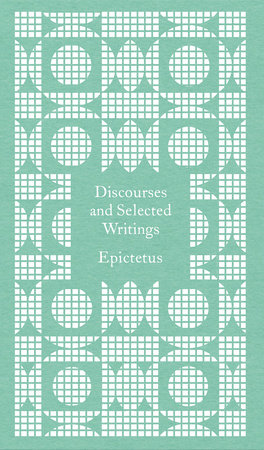
Cover Design or Artwork by Coralie Bickford-Smith
Introduction by Robert Dobbin
Edited by Robert Dobbin
Translated by Robert Dobbin
Notes by Robert Dobbin
Hardcover (Cloth-over-Board, no jacket)
$25.00 US
4.4"W x 6.88"H x 1.32"D   | 13 oz | 20 per carton
On sale Dec 02, 2025 | 416 Pages | 9780241764060

See Additional Formats
A new translation of the influential teachings of the great Stoic philosopher, now a Penguin Clothbound Classic designed by Coralie Bickford-Smith

Epictetus, a Greek Stoic and freed slave, ran a thriving philosophy school in Nicopolis in the early second century CE. His animated discussions were celebrated for their rhetorical wizardry and were written down by Arrian, his most famous pupil. The Discourses argue that happiness lies in learning to perceive exactly what is in our power to change and what is not, and in embracing our fate to live in harmony with God and nature. In this personal, practical guide to the ethics of Stoicism and moral self-improvement, Epictetus tackles questions of freedom and imprisonment, illness and fear, family, friendship and love. Robert Dobbin's modern and lively translation is accompanied by an introduction and notes.

Penguin Classics is the leading publisher of classic literature in the English-speaking world, representing a global bookshelf of the best works throughout history and across genres and disciplines. Readers trust the series to provide authoritative texts enhanced by introductions and notes by distinguished scholars and contemporary authors, as well as up-to-date translations by award-winning translators.
Epictetus (c. AD 55–135) was a teacher and Greco-Roman philosopher. Originally a slave from Hierapolis in Anatolia (modern Turkey), he was owned for a time by a prominent freedman at the court of the emperor Nero. After gaining his freedom he moved to Nicopolis on the Adriatic coast of Greece and opened a school of philosophy there. His informal lectures (Discourses) were transcribed and published by his student Arrian, who also composed a digest of Epictetus's teaching known as the Manual (or Enchiridion). View titles by Epictetus
EpictetusIntroduction
Further Reading
Note on the Translation

The Discourses
Fragments
Enchiridion

Glossary of Names
Notes
About

A new translation of the influential teachings of the great Stoic philosopher, now a Penguin Clothbound Classic designed by Coralie Bickford-Smith

Epictetus, a Greek Stoic and freed slave, ran a thriving philosophy school in Nicopolis in the early second century CE. His animated discussions were celebrated for their rhetorical wizardry and were written down by Arrian, his most famous pupil. The Discourses argue that happiness lies in learning to perceive exactly what is in our power to change and what is not, and in embracing our fate to live in harmony with God and nature. In this personal, practical guide to the ethics of Stoicism and moral self-improvement, Epictetus tackles questions of freedom and imprisonment, illness and fear, family, friendship and love. Robert Dobbin's modern and lively translation is accompanied by an introduction and notes.

Penguin Classics is the leading publisher of classic literature in the English-speaking world, representing a global bookshelf of the best works throughout history and across genres and disciplines. Readers trust the series to provide authoritative texts enhanced by introductions and notes by distinguished scholars and contemporary authors, as well as up-to-date translations by award-winning translators.

Author

Epictetus (c. AD 55–135) was a teacher and Greco-Roman philosopher. Originally a slave from Hierapolis in Anatolia (modern Turkey), he was owned for a time by a prominent freedman at the court of the emperor Nero. After gaining his freedom he moved to Nicopolis on the Adriatic coast of Greece and opened a school of philosophy there. His informal lectures (Discourses) were transcribed and published by his student Arrian, who also composed a digest of Epictetus's teaching known as the Manual (or Enchiridion). View titles by Epictetus



Table of Contents

EpictetusIntroduction
Further Reading
Note on the Translation

The Discourses
Fragments
Enchiridion

Glossary of Names
Notes