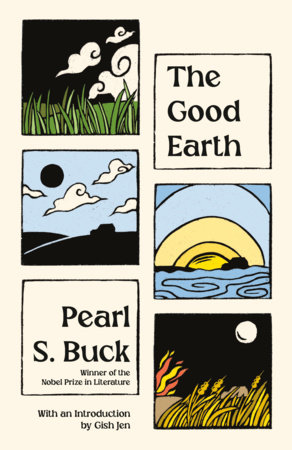
This epic, Pulitzer Prize-winning novel of rural China in the 1920s, written by the first American woman to win the Nobel Prize in Literature, has stood the test of time and become a classic.
Both a vivid portrait of a vanished time and place and a moving story of one family's trials and triumphs, The Good Earth is a brilliant and beloved classic.
Wang Lung begins his adult life as a poor farmer, eking a living from land that is frequently devastated by droughts, floods, plagues of locusts, and the passing armies of distant powers. His fortunes begin to change when his father purchases a wife for him—O-lan, an enslaved woman from the estate of a nearby noble family. O-lan is selfless and hard-working, and with her help the relentlessly ambitious Wang Lung gradually builds up his family's holdings through good times and bad.
Wang Lung achieves a level of success he had never dreamed of, but then his children, who have been educated to expect more from life, begin to follow other paths and disdain the life of a mere farmer. He himself becomes distracted by his infatuation with a courtesan, and the threatening tides of war and impending revolution come closer to their village than ever before. Through it all, however, Wang Lung never loses his devotion to the land, and he eventually realizes—when it is almost too late—what a treasure he had in his life partner, O-lan.
PEARL S. BUCK (1892–1973) was born in West Virginia but spent most of her childhood and much of her adulthood in China. In 1932, Buck won the Pulitzer Prize for her second novel, The Good Earth. In 1938 she was the first American woman to be honored with the Nobel Prize in Literature.
View titles by Pearl S. Buck
This epic, Pulitzer Prize-winning novel of rural China in the 1920s, written by the first American woman to win the Nobel Prize in Literature, has stood the test of time and become a classic.
Both a vivid portrait of a vanished time and place and a moving story of one family's trials and triumphs, The Good Earth is a brilliant and beloved classic.
Wang Lung begins his adult life as a poor farmer, eking a living from land that is frequently devastated by droughts, floods, plagues of locusts, and the passing armies of distant powers. His fortunes begin to change when his father purchases a wife for him—O-lan, an enslaved woman from the estate of a nearby noble family. O-lan is selfless and hard-working, and with her help the relentlessly ambitious Wang Lung gradually builds up his family's holdings through good times and bad.
Wang Lung achieves a level of success he had never dreamed of, but then his children, who have been educated to expect more from life, begin to follow other paths and disdain the life of a mere farmer. He himself becomes distracted by his infatuation with a courtesan, and the threatening tides of war and impending revolution come closer to their village than ever before. Through it all, however, Wang Lung never loses his devotion to the land, and he eventually realizes—when it is almost too late—what a treasure he had in his life partner, O-lan.
Author
PEARL S. BUCK (1892–1973) was born in West Virginia but spent most of her childhood and much of her adulthood in China. In 1932, Buck won the Pulitzer Prize for her second novel, The Good Earth. In 1938 she was the first American woman to be honored with the Nobel Prize in Literature.
View titles by Pearl S. Buck