Close Modal

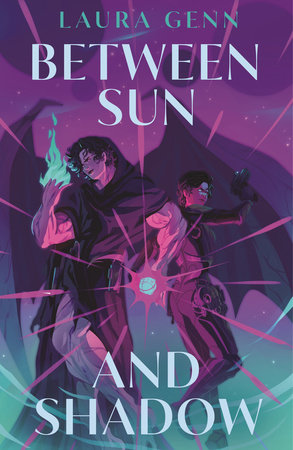
Between Sun and Shadow

Author Laura Genn
Hardcover
$19.99 US
5.63"W x 8.29"H x 1.6"D   | 22 oz | 18 per carton
On sale May 05, 2026 | 464 Pages | 9781682638187
Age 14 and up | Grade 9 & Up

Hades and Persephone reimagined on a tidally locked planet, for fans of queer romance, mutant superpowers, eccentric robots, and speculative tech.

Featuring fun and stylish case art beneath the hardcover dust jacket!


Sixteen-year-old Kori struggles to be a dutiful heiress to the Daylands, a post-cataclysmic society reliant on chip implants to retain memory. With a strict routine and an overly cautious mother, Kori has only one friend, Aspect—an industrial robot she's repurposed. Determined to awaken sentience in her metal companion, Kori crash-lands in enemy territory while hunting for a memory that might do the trick.

Ravaged by radiation from a meteorite, the citizens of the Shadowlands have evolved into beast-like creatures with supernatural abilities. Adria, a winged mutant, has wrested control of the Shadowlands from her bloodthirsty parents—but not everyone is so willing to embrace her leadership. What better way to instill confidence in her court than by capturing a foreign princess and demanding ransom?

However, what began as a political maneuver transforms into a potent attraction as Kori's longing for relationship echoes Adria's own. Granted free rein of Adria's fortress, Kori stumbles upon a startling revelation that could upend the Daylands entirely. As rebellion grows and Adria's precarious hold on her throne wavers, Adria and Kori must join forces to avert all-out war. Does a queen of shadows really stand a chance with a princess of sunlight? Or has the chasm between their nations grown too wide?

A science fantasy "Beauty and the Beast," this action-packed adventure is written in dual point of view and layered with a charming robot, a cuddly three-headed dog, mind-bending twists, and sapphic yearning.
While a romance at its heart, Genn’s debut doesn’t lack action, with punchy fight scenes and violent moments of well-placed horror. . . . An excellent title for libraries with teens who love genre-blending romance.
—School Library Journal (starred review)

This is a fresh take on the Hades and Persephone tale. Kori and Adria’s dynamic is electric, both suffering from the weight and loneliness that come with duty. Recommended for fans of sci-fi and Greek mythology.
—Booklist

A unique and lore-rich story with queer yearning at its core. Between Sun and Shadow takes you on an intense, action-packed ride that immerses you in its tidally-locked planet from page one and keeps you locked in until the end. In turns funny, thrilling, and romantic, Genn weaves a deeply imaginative tale with a lush, intricately built world and strikes a perfect balance between sharp political intrigue and moments that make the reader’s heart swell with affection for the delightful characters.
—Louangie Bou-Montes, Author of Till the Last Beat of My Heart

Between Sun and Shadow is a gorgeous, high-voltage exploration of love, belonging, and sapphic joy, built on an intricate, breathtaking world, whip-smart prose, and characters that will stay with you long after the story ends.
—Ashley Shuttleworth, author of The Hollow Star Saga

An enthralling, intricately-built, and hopeful sci-fi that feels simultaneously fresh and nostalgic. Between Sun and Shadow features characters who’ll steal your heart, explosive political intrigue, and high-chemistry sapphic yearning to swoon for.
—Claire Winn, author of City of Shattered Light

At its core, this is an inspiring tale about queer teens conquering the odds to live as their truest selves. . . . A heartfelt Sapphic romance wrapped in exciting otherworldly action.
—Kirkus Reviews

Vivid worldbuilding and richly imagined character arcs, balanced against moments of well-timed humor, create a real treat for speculative romance and science fantasy fans.
—Andrea Tang, author of To the Death and These Deadly Prophecies
Laura Genn writes about queer teens confronting fantastical challenges. She graduated with a BS in strategic communication and enjoys building with LEGO® bricks, having TV marathons, and playing competitive Street Fighter. She lives with her girlfriend and three goofy rescue cats somewhere in New Jersey, surrounded by an ever-growing collection of dragon tchotchkes. Follow her on Instagram and Threads @lauragennauthor.

Promo Video

Prologue
Once upon a time, the planet Pagomènos stopped spinning.
An asteroid—massive, merciless, over a mile in all directions, gleaming with a distant galaxy’s heretofore unknown power—lurched free of its belt. Whether by idle fate or by the thoughtless hand of a cruel god, the rogue rock struck Pagomènos, rapidly pursued by the tongues of its sun. All at once and forevermore, the planet’s spin lurched to a near halt.
Tidally locked, Pagomènos’s rotation synced with its solar orbit, and the planet was split into light and unrelenting dark. Days, nights, seasons, and a lifetime tracked in seconds and minutes and hours became confined to a distant past.
This cosmic change bore natural disasters: vicious wind storms at the intersection of night and day, and unwavering pressure from either extreme heat or cold on the the planet’s far sides. In time—though it would become impossible to track how long—the people would find that the meteorite, which had embedded itself in the planet’s surface, bled power and poison. Their world had been irrevocably changed, and with it, their bodies.
Preternatural energy warped every living thing it touched, transforming it to be as fierce as the increasingly hostile planet.
Even before the physical changes revealed themselves, the Pagonians were terrified. While core memories—identity, recent events, simple tasks like food and sleep—remained untouched, the people found their broader understanding slipping through their fingers like so much sunbaked sand. Where had they come from, before they settled Pagomènos? How had the technology that enabled such interstellar travel been built? History crumbled to ash in their minds with every passing moment. They feared their very senses of self would soon dissolve alongside it.
In the daylight, the people fled belowground. They gathered their wisest inventors, their most advanced technological prodigies, and constructed a memory-storage device for every survivor: a simple microchip, surgically installed as a ward against eventually forgetting all they had ever been. Aboveground, where the remaining animals achieved ever more alarming new forms—evolving at an impossible rate, fueled by the asteroid’s unimaginable power—the daylight people never dared to tread without armor. Apocalypse be damned, they would not join the ranks of Pagonian mutations. And they would not forget what it was to be merely human.
In the darkness, the people scraped and clawed for purchase, but they simply could not prioritize invention when utter sightlessness loomed supreme as a challenge. Cut off from Pagomènos’s sun, they sought the gleaming asteroid itself, and their exposure to it accelerated their mutation beyond even the planet’s animals. Soon there were people who could move objects with a thought, others bearing wings to carry them through the frigid wind currents. There were even those who could produce azure energy, like the asteroid’s own, from their hands—with which they would build a looming torch for their shadowed home.
The people of the light had worried that, absent microchip installations, they would forget even their own names, deteriorated by the asteroid’s energy, becoming ever less and less. But the people of the night, embracing their invader as one might a godlike visitation, found instead that in fully giving themselves to its power, they became much more. Their knowledge of extended history, former technology, and the like were laid like sacrifices before their intergalactic interloper. Of events yet to unfold, they would keep meticulous records. And unlike what the daylight people had feared, they never forgot themselves entirely.
After the cataclysmic impact, Pagomènos should have been a graveyard for human life, sentience erased from its surface as surely as if an Earthside starship had never landed. Instead, as the asteroid’s energies permeated everything, the dead planet became undead, its people walking monuments to purgatory. In the daylight, there were armored, sheltered beings, still clinging to technology, constructing ever more advanced methods of living somewhat as they always had; but in the nighttime, wings and claws and teeth overtook the land, lit by impossible fire conjured by hulking, powerful creatures who hardly recalled what their bodies had once been.
Once upon a time, half of Pagomènos descended into eternal night. Once upon a time, half of Pagomènos ascended into eternal day.
Once upon a time, a whole world slipped and fell out of time as they had known it.

About

Hades and Persephone reimagined on a tidally locked planet, for fans of queer romance, mutant superpowers, eccentric robots, and speculative tech.

Featuring fun and stylish case art beneath the hardcover dust jacket!


Sixteen-year-old Kori struggles to be a dutiful heiress to the Daylands, a post-cataclysmic society reliant on chip implants to retain memory. With a strict routine and an overly cautious mother, Kori has only one friend, Aspect—an industrial robot she's repurposed. Determined to awaken sentience in her metal companion, Kori crash-lands in enemy territory while hunting for a memory that might do the trick.

Ravaged by radiation from a meteorite, the citizens of the Shadowlands have evolved into beast-like creatures with supernatural abilities. Adria, a winged mutant, has wrested control of the Shadowlands from her bloodthirsty parents—but not everyone is so willing to embrace her leadership. What better way to instill confidence in her court than by capturing a foreign princess and demanding ransom?

However, what began as a political maneuver transforms into a potent attraction as Kori's longing for relationship echoes Adria's own. Granted free rein of Adria's fortress, Kori stumbles upon a startling revelation that could upend the Daylands entirely. As rebellion grows and Adria's precarious hold on her throne wavers, Adria and Kori must join forces to avert all-out war. Does a queen of shadows really stand a chance with a princess of sunlight? Or has the chasm between their nations grown too wide?

A science fantasy "Beauty and the Beast," this action-packed adventure is written in dual point of view and layered with a charming robot, a cuddly three-headed dog, mind-bending twists, and sapphic yearning.

Praise

While a romance at its heart, Genn’s debut doesn’t lack action, with punchy fight scenes and violent moments of well-placed horror. . . . An excellent title for libraries with teens who love genre-blending romance.
—School Library Journal (starred review)

This is a fresh take on the Hades and Persephone tale. Kori and Adria’s dynamic is electric, both suffering from the weight and loneliness that come with duty. Recommended for fans of sci-fi and Greek mythology.
—Booklist

A unique and lore-rich story with queer yearning at its core. Between Sun and Shadow takes you on an intense, action-packed ride that immerses you in its tidally-locked planet from page one and keeps you locked in until the end. In turns funny, thrilling, and romantic, Genn weaves a deeply imaginative tale with a lush, intricately built world and strikes a perfect balance between sharp political intrigue and moments that make the reader’s heart swell with affection for the delightful characters.
—Louangie Bou-Montes, Author of Till the Last Beat of My Heart

Between Sun and Shadow is a gorgeous, high-voltage exploration of love, belonging, and sapphic joy, built on an intricate, breathtaking world, whip-smart prose, and characters that will stay with you long after the story ends.
—Ashley Shuttleworth, author of The Hollow Star Saga

An enthralling, intricately-built, and hopeful sci-fi that feels simultaneously fresh and nostalgic. Between Sun and Shadow features characters who’ll steal your heart, explosive political intrigue, and high-chemistry sapphic yearning to swoon for.
—Claire Winn, author of City of Shattered Light

At its core, this is an inspiring tale about queer teens conquering the odds to live as their truest selves. . . . A heartfelt Sapphic romance wrapped in exciting otherworldly action.
—Kirkus Reviews

Vivid worldbuilding and richly imagined character arcs, balanced against moments of well-timed humor, create a real treat for speculative romance and science fantasy fans.
—Andrea Tang, author of To the Death and These Deadly Prophecies

Author

Laura Genn writes about queer teens confronting fantastical challenges. She graduated with a BS in strategic communication and enjoys building with LEGO® bricks, having TV marathons, and playing competitive Street Fighter. She lives with her girlfriend and three goofy rescue cats somewhere in New Jersey, surrounded by an ever-growing collection of dragon tchotchkes. Follow her on Instagram and Threads @lauragennauthor.

Media

Promo Video

Excerpt

Prologue
Once upon a time, the planet Pagomènos stopped spinning.
An asteroid—massive, merciless, over a mile in all directions, gleaming with a distant galaxy’s heretofore unknown power—lurched free of its belt. Whether by idle fate or by the thoughtless hand of a cruel god, the rogue rock struck Pagomènos, rapidly pursued by the tongues of its sun. All at once and forevermore, the planet’s spin lurched to a near halt.
Tidally locked, Pagomènos’s rotation synced with its solar orbit, and the planet was split into light and unrelenting dark. Days, nights, seasons, and a lifetime tracked in seconds and minutes and hours became confined to a distant past.
This cosmic change bore natural disasters: vicious wind storms at the intersection of night and day, and unwavering pressure from either extreme heat or cold on the the planet’s far sides. In time—though it would become impossible to track how long—the people would find that the meteorite, which had embedded itself in the planet’s surface, bled power and poison. Their world had been irrevocably changed, and with it, their bodies.
Preternatural energy warped every living thing it touched, transforming it to be as fierce as the increasingly hostile planet.
Even before the physical changes revealed themselves, the Pagonians were terrified. While core memories—identity, recent events, simple tasks like food and sleep—remained untouched, the people found their broader understanding slipping through their fingers like so much sunbaked sand. Where had they come from, before they settled Pagomènos? How had the technology that enabled such interstellar travel been built? History crumbled to ash in their minds with every passing moment. They feared their very senses of self would soon dissolve alongside it.
In the daylight, the people fled belowground. They gathered their wisest inventors, their most advanced technological prodigies, and constructed a memory-storage device for every survivor: a simple microchip, surgically installed as a ward against eventually forgetting all they had ever been. Aboveground, where the remaining animals achieved ever more alarming new forms—evolving at an impossible rate, fueled by the asteroid’s unimaginable power—the daylight people never dared to tread without armor. Apocalypse be damned, they would not join the ranks of Pagonian mutations. And they would not forget what it was to be merely human.
In the darkness, the people scraped and clawed for purchase, but they simply could not prioritize invention when utter sightlessness loomed supreme as a challenge. Cut off from Pagomènos’s sun, they sought the gleaming asteroid itself, and their exposure to it accelerated their mutation beyond even the planet’s animals. Soon there were people who could move objects with a thought, others bearing wings to carry them through the frigid wind currents. There were even those who could produce azure energy, like the asteroid’s own, from their hands—with which they would build a looming torch for their shadowed home.
The people of the light had worried that, absent microchip installations, they would forget even their own names, deteriorated by the asteroid’s energy, becoming ever less and less. But the people of the night, embracing their invader as one might a godlike visitation, found instead that in fully giving themselves to its power, they became much more. Their knowledge of extended history, former technology, and the like were laid like sacrifices before their intergalactic interloper. Of events yet to unfold, they would keep meticulous records. And unlike what the daylight people had feared, they never forgot themselves entirely.
After the cataclysmic impact, Pagomènos should have been a graveyard for human life, sentience erased from its surface as surely as if an Earthside starship had never landed. Instead, as the asteroid’s energies permeated everything, the dead planet became undead, its people walking monuments to purgatory. In the daylight, there were armored, sheltered beings, still clinging to technology, constructing ever more advanced methods of living somewhat as they always had; but in the nighttime, wings and claws and teeth overtook the land, lit by impossible fire conjured by hulking, powerful creatures who hardly recalled what their bodies had once been.
Once upon a time, half of Pagomènos descended into eternal night. Once upon a time, half of Pagomènos ascended into eternal day.
Once upon a time, a whole world slipped and fell out of time as they had known it.