Close Modal

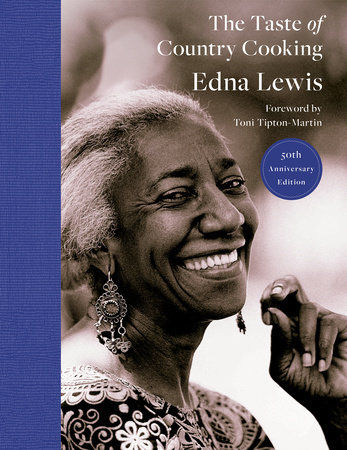
The Taste of Country Cooking

50th Anniversary Edition: A Cookbook

Author Edna Lewis
Foreword by Toni Tipton-Martin
The most beloved Southern cookbook of all time: a glorious celebration of seasonal eating that has shaped generations of home cooks, from “the first lady of Southern cooking” (NPR). Beautifully repackaged and redesigned, with a new foreword by Toni Tipton-Martin.

“A classic, showing Americans the bounty of Southern cuisine and influencing generations.” —Melissa Clark, The New York Times

“Indispensable . . . An inspiration to all of us who are striving to protect both biodiversity and cultural diversity by cooking real food in season and honoring our heritage through the ritual of the table.” —Alice Waters

With the publication of The Taste of Country Cooking in 1976, Edna Lewis proclaimed the food of the American South one of the world’s great cuisines. From the field greens and salads of spring; pan-fried chicken and crushed peaches in summer; preserves and sweet potatoes for fall; and hearty soups and stews during the cold winter months, Miss Lewis (as she was almost universally known) extolled the vir­tues of the good food of her childhood, spent in a Virginia farming community founded by her grandfather and his friends after Emancipation.

A celebration of eating locally—decades before “farm to table” became common parlance—the book showcases the joys of cooking with the seasons.

The 150 accessible recipes in its pages include:
•Baked Virginia Ham, Buttered Jerusalem Artichokes, and Rhubarb Pie in Spring
•Green Tomato Preserves, Wilted Lettuce with Hot Vinegar Dressing, and Fresh Blackberry Cobbler in Summer
•Crispy Biscuits, Green Bean Salad with Sliced Tomatoes, and Country-Fried Apples in Fall
•Oyster Stew, Pan-Braised Spareribs, and Coconut Layer Cake in Winter

An affirmation of a distinctly American way of eating, fifty years after its publica­tion, The Taste of Country Cooking remains the definitive book on Southern food.
"The empress of Southern cooking.” —The New Yorker

“An eloquent tribute to farm life, and the bonding power of food. . . . Essays, combined with simple yet elegant menus, transformed the way people looked at Southern cooking.” —NPR

“What Edna really teaches a cook is what you can’t find in a recipe. It’s respect. Respect for every ingredient. Respect for the recipe itself . . . It’s about reverence—an application of spiritual sincerity, faith, vulnerability, and humanity. And that’s the greatest gift she gives: a new way to think about the art of cooking.” —Alexander Smalls, Bon Appétit

“Lewis inspired the now-ubiquitous farm-to-table movement by championing the virtues of growing one’s own food and cooking with local, seasonal ingredients.” —The Washington Post

“The grand dame of Southern cooking.” —San Francisco Chronicle

“It’s impossible to overstate the importance of Edna Lewis in the pantheon of American chefs.” —Food & Wine

“This book is my all-time favorite cookbook, always and forever. It’s such a seminal book for so many reasons. What has always felt so particular about this book was that no one else could have written it. It’s so tied to her experience, life, and voice. It appeals to her as a writer and a cook. I think it’s one of the most important cookbooks.” —Julia Turshen, Eater

“[A] masterpiece . . . widely hailed as one of the most important cookbooks of the twentieth century.” —Saveur

“One of the most influential figures in modern Southern cooking. . . . [A Taste of Country Cooking] is celebrated for its focus on the simplicity of Southern food and emphasis of farm-to-table eating.” —The New York Times
© John T. Hill

Edna Lewis was born in 1916 in Freetown, Virginia, a farming community founded after the Civil War by freed slaves (among them her grandfather) and for many years lived and cooked in New York City. She was the recipient of numerous awards, including the inaugural James Beard Living Legend and Southern Foodways Alliance (SFA) Lifetime Achievement Awards, the Grande Dame des Dames d’Escoffier International, and the International Association of Culinary Professionals (IACP) Lifetime Achievement Award. Her books were inducted into the James Beard Foundation Cookbook Hall of Fame, and she was commemorated with a United States Postal Service postage stamp. Miss Lewis was the author of The Edna Lewis Cookbook, The Taste of Country Cooking, In Pursuit of Flavor, and, with Scott Peacock, The Gift of Southern Cooking. She died in February 2006.

View titles by Edna Lewis

Rhubarb Pie
PASTRY
1 1/2 cups plus 2 teaspoons sifted flour
1 scant teaspoon salt
1/4 cup chilled lard
1/4 cup cold water
Makes 1 8 or 9-inch pie (depending on shallowness of pie plate)
 
FILLING
2/3 cup sugar
1/4 teaspoon fresh-grated nutmeg
2 teaspoons cornstarch
4 cups (about 1 1/2 -2 pounds) fresh rhubarb, cut into 1/2-inch pieces
1   8 or 9-inch pie plate
 
Put 1 1/2 cups sifted flour and the salt into a 2-quart bowl, add the chilled lard, and mix well with a pastry blender or with fingertips. This blend will not be as dry as a butter-mixed pastry. When well blended add all of the water and mix until the water is all absorbed. This will make the dough a bit sticky. Sprinkle over lightly with 2 teaspoons of flour and roll into a ball. Leave to rest in a cool place for about 15 minutes.
Separate the dough into two unequal pieces. Roll out the larger piece and place it into a 9-inch pie pan. Roll out the smaller piece and cut it into 3/4-inch strips to form a latticework top crust.
Place the strips upon a sheet of wax paper and place it, along  with the pastry-lined pie plate, into the refrigerator until needed.
When ready to prepare the filling, remove pastry from refrigerator. Mix together well the sugar, nutmeg, and cornstarch.  Sprinkle 3 tablespoons of the sugar mixture over bottom of pastry. Mix the rest into the rhubarb and fill the crust. Place on strips in lattice fashion. Moisten rim of bottom crust to help lattice strips adhere to rim of bottom pastry. Place the pie into a preheated 450° oven.
This high temperature is important in forming a crispy crust when using very juicy products. If the crust tends  to brown too quickly, cut a ring of aluminum foil and place it over the rim of the pie. It is the rim that usually overbrowns. Remove the foil about 10 minutes before the pie is to be removed from the oven. Total cooking time for the pie is 40 minutes.


Compote of Stewed Blackberries
Everyone seems to have forgotten how delicious blackberries wereif they ever knew. We picked them mainly for canning, for making wine and jelly to use in the winter, but how we did enjoy them too during the summer season in blackberry pie, rolypoly, or with cream and sugar, as well as stewed and served warm. Blackberries are still gathered from the wild and they are the one frozen fruit that still tastes good. Put up in Marion, Oregon, they can be purchased in the A & P frozen, and they are just as delicious when stewed for 10 minutes with a little water and sugar to taste. Serve warm with cookies or cold with warm, plain cake.
 
1 cup sugar
1 cup well water or bottled water
1 pint blackberries
 
Serves 4 to 5
 
Set the sugar and water to boil briskly for 10 to 12 minutes. Pick over the berries, wash them off, and drain on a clean towel. Then add them to the boiled syrup. Bring this to a near boil and stew gently for 10 minutes. Turn the heat off and leave in a warm spot if they are to be served warm.


Oven Brisket or Rolled Chuck
Beef was more available in the spring and summer and it was inexpensive as well, being locally butchered. We would take a big piece so that we could have some left for slicing cold during the busy sea­ son. Usually it was the rib roast. It was dusted with flour, salt, pepper, cooked to perfection, and served cold after the first or second meal. Locally grown beef had such a great flavor. None was ever left to spoil.

Because of the lack of flavor in beef today, I have searched and found that the more unpopular cuts have a bit more taste. Brisket, rolled chuck, which is also sold sliced as chicken steak, and flanken all have more flavor than some of the other more expensive, better­ known cuts.
For preparing this dish of brisket or chuck,  purchase  half  as many onions as beef.
 
3 pounds beef brisket or chuck
Vegetable oil or lard
1 tablespoon butter
1 1/2 pounds onions, peeled and sliced
Fresh-ground black pepper
3 or 4 whole allspice
1 bay leaf
Salt
 
Serves 6
 
Wipe the meat with a damp cloth. Heat a skillet hot, grease lightly with oil or lard, and add the beef, searing well on all sides until well browned. Place the seared meat in a heavy pot or pan. Wipe the skillet out and then add a tablespoon of butter and put in the onions. Stir the onions until they are pretty well browned. Sprinkle the meat over with fresh-ground black pepper and now add the browned onions, allspice, and bay leaf. Cover closely and see that the pan is good and hot before placing it in the oven. Set into a preheated 400° oven until the meat begins to cook. Turn the oven to 225 ° and leave to cook undisturbed for 2½ hours. When finished, remove the meat and press the onions through a sieve. Add to pan drippings and season this sauce with salt and pepper to taste. Serve hot with the beef.


Busy-Day Cake or Sweet Bread
Busy-day cake was never iced, it was always cut into squares and served warm, often with fruit or berries left over from canning. The delicious flavor of fresh-cooked fruit with the plain cake was just to our taste and it was also refreshing with newly churned, chilled buttermilk or cold morning's milk.
 
8 tablespoons (1 stick) butter at room temperature
1 1/3 cups granulated sugar
3 medium to large eggs
2 cups sifted flour
1/2 cup sweet milk, at room temperature
1/4 teaspoon salt
2 teaspoons vanilla
4 teaspoons Royal Baking Powder
1 light grating of nutmeg (about 25 grains)
 
1 10 x 10 x 2-inch cake pan
 
Serves 4 to 5
 
Blend the butter and sugar by hand until it is light and fluffy. Then, one by one, add the eggs, beating the batter with a wooden spoon after each egg. Add in 1/2 cup of flour and one part of the milk, alternating the milk in three parts and the flour in four parts, and ending with the flour. Add salt, vanilla, baking powder, and nutmeg, and mix well. Stir well after each addition, but always stir only once after you have added the milk then quickly add more flour so as to keep the batter from separating.
 
Butter and flour the bottom of the cake pan and spoon the batter into it. Bake in a preheated 375° oven for 40 minutes. Cut into squares and serve warm.

About

The most beloved Southern cookbook of all time: a glorious celebration of seasonal eating that has shaped generations of home cooks, from “the first lady of Southern cooking” (NPR). Beautifully repackaged and redesigned, with a new foreword by Toni Tipton-Martin.

“A classic, showing Americans the bounty of Southern cuisine and influencing generations.” —Melissa Clark, The New York Times

“Indispensable . . . An inspiration to all of us who are striving to protect both biodiversity and cultural diversity by cooking real food in season and honoring our heritage through the ritual of the table.” —Alice Waters

With the publication of The Taste of Country Cooking in 1976, Edna Lewis proclaimed the food of the American South one of the world’s great cuisines. From the field greens and salads of spring; pan-fried chicken and crushed peaches in summer; preserves and sweet potatoes for fall; and hearty soups and stews during the cold winter months, Miss Lewis (as she was almost universally known) extolled the vir­tues of the good food of her childhood, spent in a Virginia farming community founded by her grandfather and his friends after Emancipation.

A celebration of eating locally—decades before “farm to table” became common parlance—the book showcases the joys of cooking with the seasons.

The 150 accessible recipes in its pages include:
•Baked Virginia Ham, Buttered Jerusalem Artichokes, and Rhubarb Pie in Spring
•Green Tomato Preserves, Wilted Lettuce with Hot Vinegar Dressing, and Fresh Blackberry Cobbler in Summer
•Crispy Biscuits, Green Bean Salad with Sliced Tomatoes, and Country-Fried Apples in Fall
•Oyster Stew, Pan-Braised Spareribs, and Coconut Layer Cake in Winter

An affirmation of a distinctly American way of eating, fifty years after its publica­tion, The Taste of Country Cooking remains the definitive book on Southern food.

Praise

"The empress of Southern cooking.” —The New Yorker

“An eloquent tribute to farm life, and the bonding power of food. . . . Essays, combined with simple yet elegant menus, transformed the way people looked at Southern cooking.” —NPR

“What Edna really teaches a cook is what you can’t find in a recipe. It’s respect. Respect for every ingredient. Respect for the recipe itself . . . It’s about reverence—an application of spiritual sincerity, faith, vulnerability, and humanity. And that’s the greatest gift she gives: a new way to think about the art of cooking.” —Alexander Smalls, Bon Appétit

“Lewis inspired the now-ubiquitous farm-to-table movement by championing the virtues of growing one’s own food and cooking with local, seasonal ingredients.” —The Washington Post

“The grand dame of Southern cooking.” —San Francisco Chronicle

“It’s impossible to overstate the importance of Edna Lewis in the pantheon of American chefs.” —Food & Wine

“This book is my all-time favorite cookbook, always and forever. It’s such a seminal book for so many reasons. What has always felt so particular about this book was that no one else could have written it. It’s so tied to her experience, life, and voice. It appeals to her as a writer and a cook. I think it’s one of the most important cookbooks.” —Julia Turshen, Eater

“[A] masterpiece . . . widely hailed as one of the most important cookbooks of the twentieth century.” —Saveur

“One of the most influential figures in modern Southern cooking. . . . [A Taste of Country Cooking] is celebrated for its focus on the simplicity of Southern food and emphasis of farm-to-table eating.” —The New York Times

Author

© John T. Hill

Edna Lewis was born in 1916 in Freetown, Virginia, a farming community founded after the Civil War by freed slaves (among them her grandfather) and for many years lived and cooked in New York City. She was the recipient of numerous awards, including the inaugural James Beard Living Legend and Southern Foodways Alliance (SFA) Lifetime Achievement Awards, the Grande Dame des Dames d’Escoffier International, and the International Association of Culinary Professionals (IACP) Lifetime Achievement Award. Her books were inducted into the James Beard Foundation Cookbook Hall of Fame, and she was commemorated with a United States Postal Service postage stamp. Miss Lewis was the author of The Edna Lewis Cookbook, The Taste of Country Cooking, In Pursuit of Flavor, and, with Scott Peacock, The Gift of Southern Cooking. She died in February 2006.

View titles by Edna Lewis

Excerpt

Rhubarb Pie
PASTRY
1 1/2 cups plus 2 teaspoons sifted flour
1 scant teaspoon salt
1/4 cup chilled lard
1/4 cup cold water
Makes 1 8 or 9-inch pie (depending on shallowness of pie plate)
 
FILLING
2/3 cup sugar
1/4 teaspoon fresh-grated nutmeg
2 teaspoons cornstarch
4 cups (about 1 1/2 -2 pounds) fresh rhubarb, cut into 1/2-inch pieces
1   8 or 9-inch pie plate
 
Put 1 1/2 cups sifted flour and the salt into a 2-quart bowl, add the chilled lard, and mix well with a pastry blender or with fingertips. This blend will not be as dry as a butter-mixed pastry. When well blended add all of the water and mix until the water is all absorbed. This will make the dough a bit sticky. Sprinkle over lightly with 2 teaspoons of flour and roll into a ball. Leave to rest in a cool place for about 15 minutes.
Separate the dough into two unequal pieces. Roll out the larger piece and place it into a 9-inch pie pan. Roll out the smaller piece and cut it into 3/4-inch strips to form a latticework top crust.
Place the strips upon a sheet of wax paper and place it, along  with the pastry-lined pie plate, into the refrigerator until needed.
When ready to prepare the filling, remove pastry from refrigerator. Mix together well the sugar, nutmeg, and cornstarch.  Sprinkle 3 tablespoons of the sugar mixture over bottom of pastry. Mix the rest into the rhubarb and fill the crust. Place on strips in lattice fashion. Moisten rim of bottom crust to help lattice strips adhere to rim of bottom pastry. Place the pie into a preheated 450° oven.
This high temperature is important in forming a crispy crust when using very juicy products. If the crust tends  to brown too quickly, cut a ring of aluminum foil and place it over the rim of the pie. It is the rim that usually overbrowns. Remove the foil about 10 minutes before the pie is to be removed from the oven. Total cooking time for the pie is 40 minutes.


Compote of Stewed Blackberries
Everyone seems to have forgotten how delicious blackberries wereif they ever knew. We picked them mainly for canning, for making wine and jelly to use in the winter, but how we did enjoy them too during the summer season in blackberry pie, rolypoly, or with cream and sugar, as well as stewed and served warm. Blackberries are still gathered from the wild and they are the one frozen fruit that still tastes good. Put up in Marion, Oregon, they can be purchased in the A & P frozen, and they are just as delicious when stewed for 10 minutes with a little water and sugar to taste. Serve warm with cookies or cold with warm, plain cake.
 
1 cup sugar
1 cup well water or bottled water
1 pint blackberries
 
Serves 4 to 5
 
Set the sugar and water to boil briskly for 10 to 12 minutes. Pick over the berries, wash them off, and drain on a clean towel. Then add them to the boiled syrup. Bring this to a near boil and stew gently for 10 minutes. Turn the heat off and leave in a warm spot if they are to be served warm.


Oven Brisket or Rolled Chuck
Beef was more available in the spring and summer and it was inexpensive as well, being locally butchered. We would take a big piece so that we could have some left for slicing cold during the busy sea­ son. Usually it was the rib roast. It was dusted with flour, salt, pepper, cooked to perfection, and served cold after the first or second meal. Locally grown beef had such a great flavor. None was ever left to spoil.

Because of the lack of flavor in beef today, I have searched and found that the more unpopular cuts have a bit more taste. Brisket, rolled chuck, which is also sold sliced as chicken steak, and flanken all have more flavor than some of the other more expensive, better­ known cuts.
For preparing this dish of brisket or chuck,  purchase  half  as many onions as beef.
 
3 pounds beef brisket or chuck
Vegetable oil or lard
1 tablespoon butter
1 1/2 pounds onions, peeled and sliced
Fresh-ground black pepper
3 or 4 whole allspice
1 bay leaf
Salt
 
Serves 6
 
Wipe the meat with a damp cloth. Heat a skillet hot, grease lightly with oil or lard, and add the beef, searing well on all sides until well browned. Place the seared meat in a heavy pot or pan. Wipe the skillet out and then add a tablespoon of butter and put in the onions. Stir the onions until they are pretty well browned. Sprinkle the meat over with fresh-ground black pepper and now add the browned onions, allspice, and bay leaf. Cover closely and see that the pan is good and hot before placing it in the oven. Set into a preheated 400° oven until the meat begins to cook. Turn the oven to 225 ° and leave to cook undisturbed for 2½ hours. When finished, remove the meat and press the onions through a sieve. Add to pan drippings and season this sauce with salt and pepper to taste. Serve hot with the beef.


Busy-Day Cake or Sweet Bread
Busy-day cake was never iced, it was always cut into squares and served warm, often with fruit or berries left over from canning. The delicious flavor of fresh-cooked fruit with the plain cake was just to our taste and it was also refreshing with newly churned, chilled buttermilk or cold morning's milk.
 
8 tablespoons (1 stick) butter at room temperature
1 1/3 cups granulated sugar
3 medium to large eggs
2 cups sifted flour
1/2 cup sweet milk, at room temperature
1/4 teaspoon salt
2 teaspoons vanilla
4 teaspoons Royal Baking Powder
1 light grating of nutmeg (about 25 grains)
 
1 10 x 10 x 2-inch cake pan
 
Serves 4 to 5
 
Blend the butter and sugar by hand until it is light and fluffy. Then, one by one, add the eggs, beating the batter with a wooden spoon after each egg. Add in 1/2 cup of flour and one part of the milk, alternating the milk in three parts and the flour in four parts, and ending with the flour. Add salt, vanilla, baking powder, and nutmeg, and mix well. Stir well after each addition, but always stir only once after you have added the milk then quickly add more flour so as to keep the batter from separating.
 
Butter and flour the bottom of the cake pan and spoon the batter into it. Bake in a preheated 375° oven for 40 minutes. Cut into squares and serve warm.