Close Modal

Ohana Style

Food from Hawai'i, for Your Family

Look inside
additional book photo
The author of Cook Real Hawai’i brings the essence of Hawai’ian cuisine to everyday cooking with over 100 unfussy and flavorful recipes featuring easy ingredient substitutions, clever new techniques, and creative (and often plant-based) spins on traditional dishes.

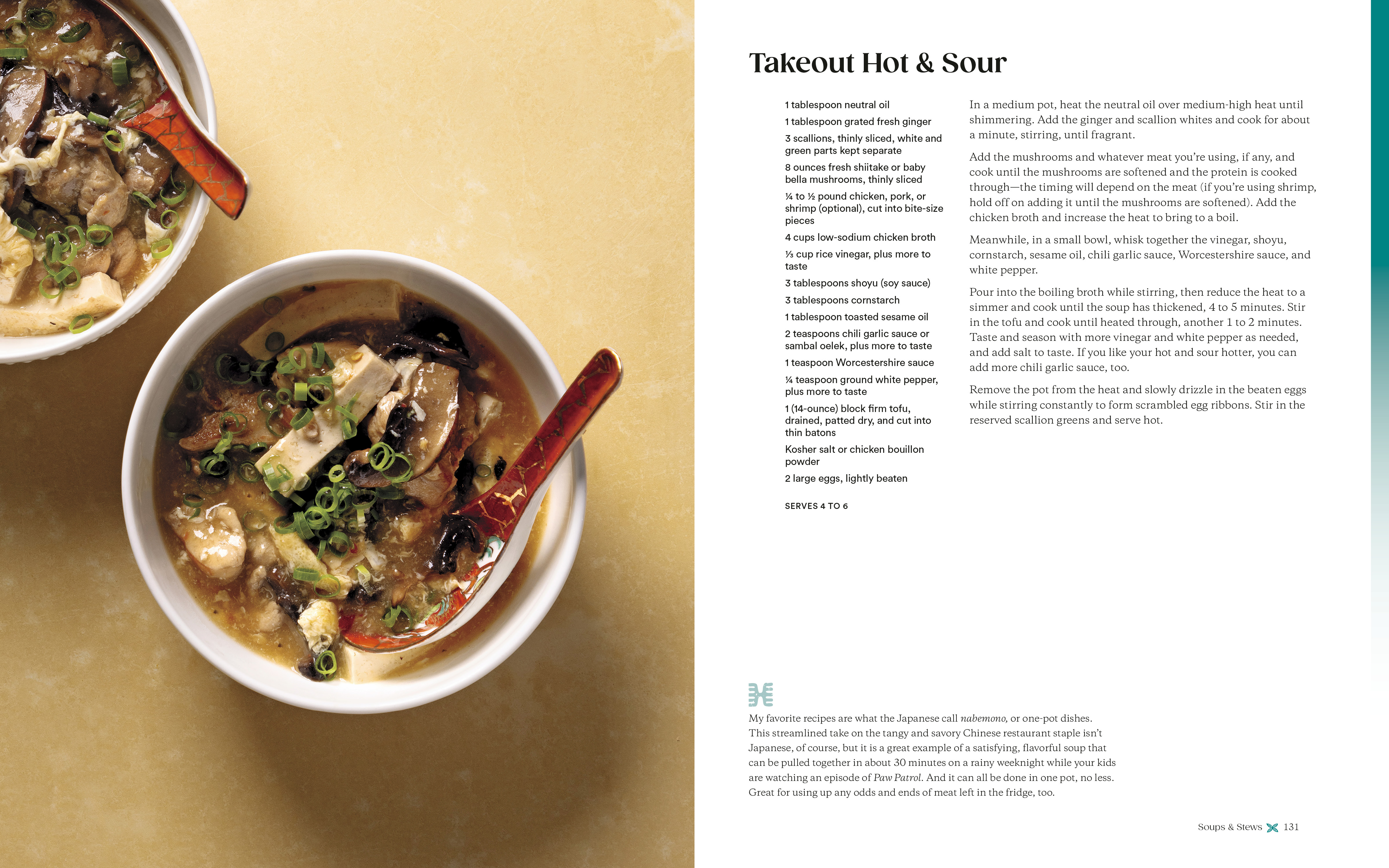
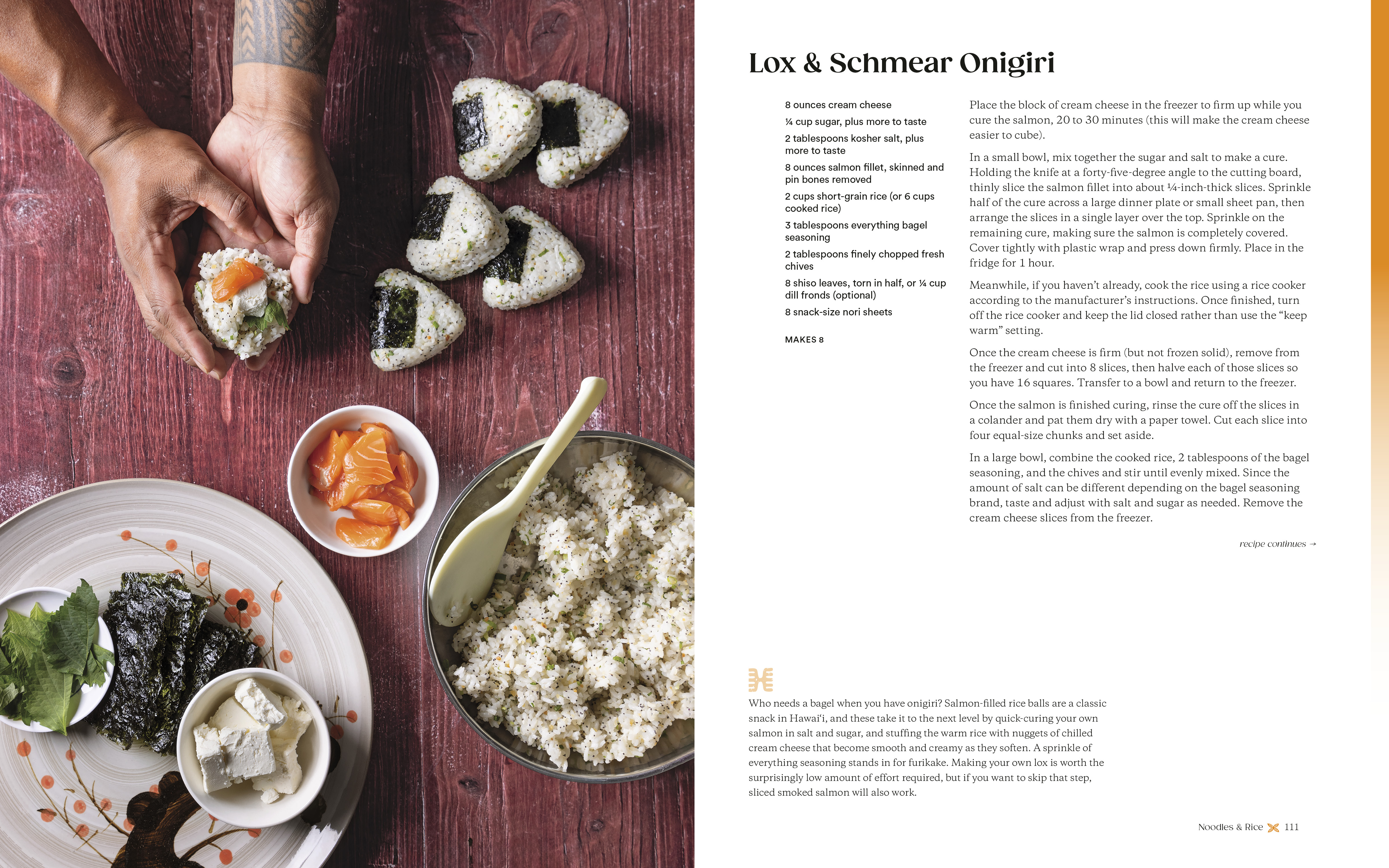
Beloved chef and two-time Top Chef fan favorite Sheldon Simeon’s food joyfully reflects Hawai'i’s flavors and cooking styles, a mixture of island influences including Native Hawai'ian, Filipino, Japanese, Chinese, Korean, Portuguese, and other cuisines. With creative plant-based spins (like swapping out raw fish with pan-seared ripe avocado for a delicious "tataki", or using mushrooms to create the best "escargot") and shortcut cooking techniques (like searing shoyu-marinated tuna in a hot wok or pan to mimic smoking, or using a Chinese dry wok cooking style to perfect fish sticks), the recipes in Ohana Style shows how quick, easy, and flexible Hawai'ian cuisine can be.

Sheldon's recipes show how to blend sweet, savory, and tangy Hawai'ian flavors into every day meals, all the while centering the cuisine's legacy of communal-style eating, reminiscent of the traditions and memories of foods we all grew up with. In Ohana Style you’ll find umami-packed recipes meant for family—that’s what ohana means in Hawai'ian—weeknight dinners, quick lunches, snacks, cookouts, and barbecues.

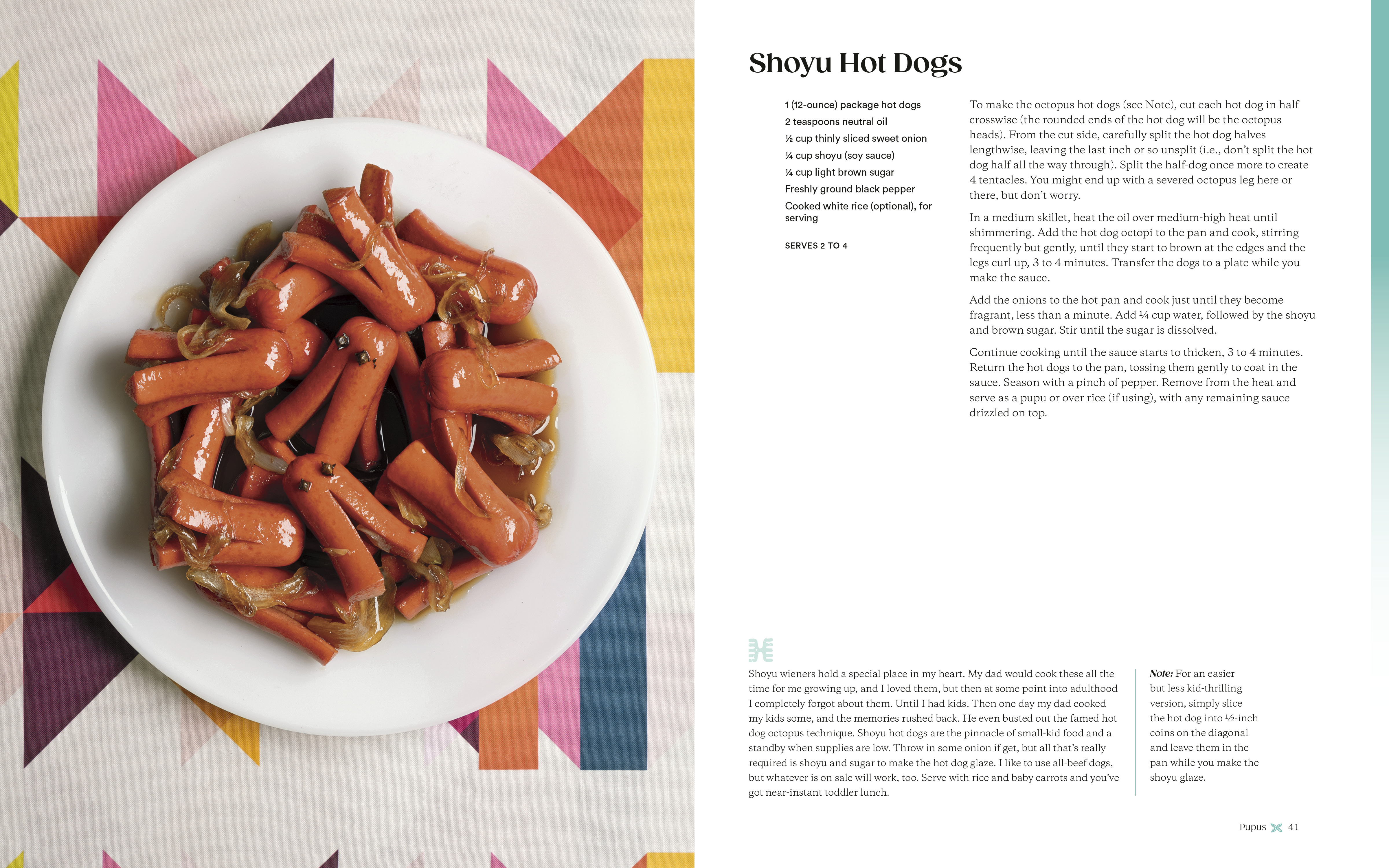
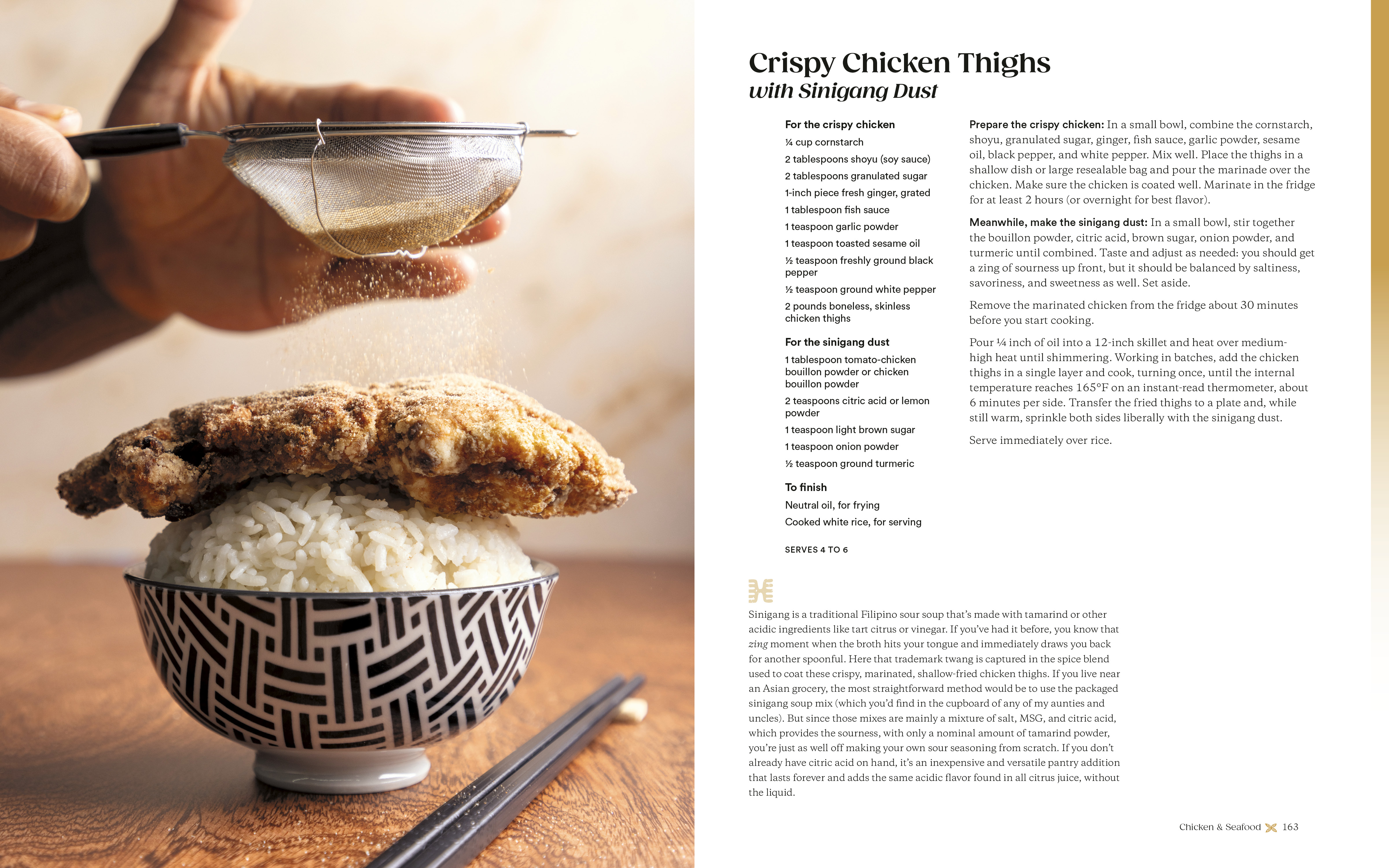
From Pork Belly Tocino with garlic rice for breakfast and Stir-Fried Olives with ginger as a midday snack, to a pan-fried Lemon-Caper Mahi dinner with Furikake Animal Crackers for dessert, Ohana Style has recipes for every mood and any event—for people who want to get something flavorful and delicious on the table quickly without forgoing the exciting and layered flavors of local Hawai'ian cooking.
© Marylane Studios
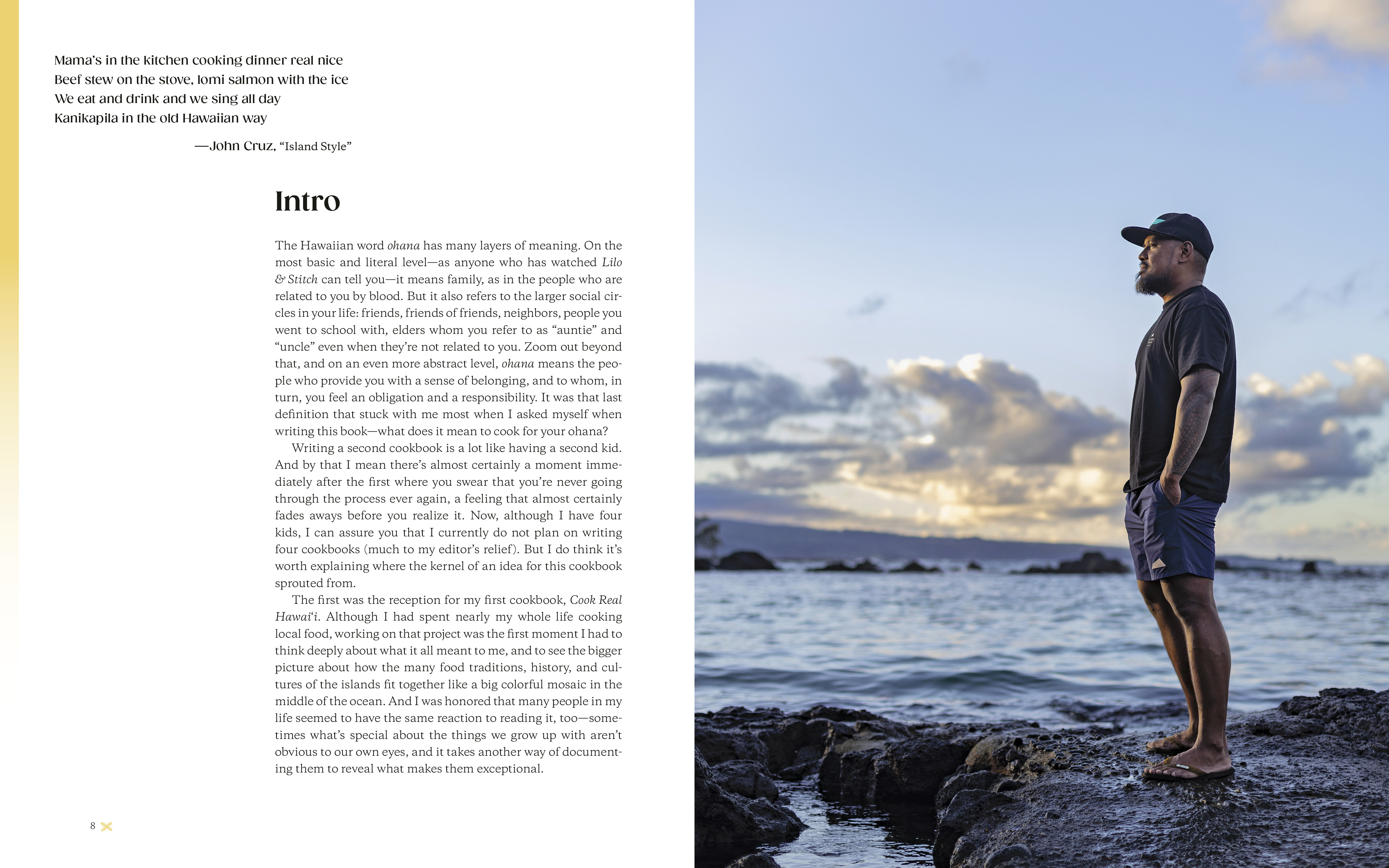
Sheldon Simeon is the chef and owner of Lineage, a restaurant that explores the ancestral roots of Hawaiian cuisine, as well as Tin Roof, where he serves contemporary Hawaiian dishes in a casual setting, both in Maui. In 2019, Lineage was named one of Bon Appétit's Top 50 Nominees for America's Best New Restaurants. Sheldon was a finalist on Season 10 of Top Chef: Seattle, becoming a finalist en route, and later competed on Season 14 of Top Chef: Charleston. He was voted Fan Favorite on both seasons. View titles by Sheldon Simeon
Intro

The Hawaiian word ohana has many layers of meaning. On the most basic and literal level—as anyone who has watched Lilo & Stitch can tell you—it means family, as in the people who are related to you by blood. But it also refers to the larger social circles in your life: friends, friends of friends, neighbors, people you went to school with, elders whom you refer to as “auntie” and “uncle” even when they’re not related to you. Zoom out beyond that, and on an even more abstract level, ohana means the people who provide you with a sense of belonging, and to whom, in turn, you feel an obligation and a responsibility. It was that last definition that stuck with me most when I asked myself when writing this book—what does it mean to cook for your ohana?

Writing a second cookbook is a lot like having a second kid. And by that I mean there’s almost certainly a moment immediately after the first where you swear that you’re never going through the process ever again, a feeling that almost certainly fades aways before you realize it. Now, although I have four kids, I can assure you that I currently do not plan on writing four cookbooks (much to my editor’s relief). But I do think it’s worth explaining where the kernel of an idea for this cookbook sprouted from.

The first was the reception for my first cookbook, Cook Real Hawai‘i. Although I had spent nearly my whole life cooking local food, working on that project was the first moment I had to think deeply about what it all meant to me, and to see the bigger picture about how the many food traditions, history, and cultures of the islands fit together like a big colorful mosaic in the middle of the ocean. And I was honored that many people in my life seemed to have the same reaction to reading it, too—sometimes what’s special about the things we grow up with aren’t obvious to our own eyes, and it takes another way of documenting them to reveal what makes them exceptional.

The second was the pandemic. After working for decades in a restaurant kitchen, the majority of my time was spent cooking for others, which also meant it was only on my rare days off when I had the chance to cook for my own family—my wife, Janice, and our kids, Chloe, Peyton, Quinn, and Asher. When restaurants shut down in 2020, though, all that was flipped on its head. You could find me at home cooking breakfast, lunch, and dinner every day—and not just snacky meals, but full-on spreads of dishes. It even got to the point that Janice asked, Can we just have a snack? Something we can eat on the couch?

At the same time, I was also thinking about my restaurant ohana—the cooks, cashiers, and other people whom we employed at Tin Roof. We spent many months staying busy by cooking big family-style meals like pastele stew or chicken adobo and packaging them up for people in the community who were out of work or weren’t able to cook for themselves.

What started to happen over time was that the lines between two worlds that were previously distinct started to blur and bleed together—cooking at the restaurant versus cooking at home, or cooking as a professional chef versus cooking for friends and family—until it changed the way I thought about cooking altogether.

These days I like to use the phrase “small kine homemade,” which is a pidgin riff on the idea behind the old Sandra Lee cooking show Semi-Homemade, which was a favorite of mine on Food Network when I was just getting into cooking after high school. If you’re not familiar with it, the concept of the show was using different techniques to combine store-bought items with fresh ingredients to make food that was fun and delicious. This was far from a foreign idea to me. My dad, Renoir Simeon—aka Papa Rei to his grandkids—was the king of cooking dishes with a “use what get” mentality. He never thought less of a recipe or dish because it used something that came from a can, as evidenced by his famous pan-fried tuna patties (page 42). The main thing, the buggah is ONO! as he would say: What matters is that it’s delicious.

The other side of this mentality, however, is that paying attention to small, simple details—and knowing which ones are important enough to fuss over—can make all the difference in making a meal feel special. When I was growing up, it was very common for us to have guests over during family dinner. Aunts, uncles, and cousins just dropped in to hang out, or my dad’s friends came over for pau hana beer and pupus. But even on a normal night, prior to when my mom fell ill, we would all sit down for a proper full meal. My mother would cook, my brother Jeremy and I would set the dining table full-on, with utensils sitting in their correct place next to folded napkins and cups of ice water. I was in charge of putting hot pads down on the table, and you best believe that if I didn’t lay them out before my brother carried the pot of burning hot beef stew down from the stove, I would hear about it from him—you f—n dummy! We also made sure that the right condiments and accoutrements were on the table for whatever we were eating: shoyu for sashimi, Tabasco for stew, sliced tomato for adobo.

Nowadays, I’d be lying if I said that my own household operates with the same level of detail and steadfastness. Between running the restaurants and picking up the kids from school, cheerleading practices, and the like, life is so busy, busy, busy, it’s a rare occasion when Janice or I have the time to prepare a proper meal. But when those occasions do come around, it’s that special little half-twist, or attention to detail, that makes the memory. So if my friend Isaac suddenly gifts me some mahimahi fillets he snapped up on a fishing trip, I know they can be a fantastic dinner when I fry them in a pan and then make a quick pan sauce with lemon, capers, and cream (see Lemon Caper Mahi, page 176). If Chloe gets home from work and Peyton from cheer practice and everyone is starving, and all that’s left in the freezer is some frozen dumplings, it doesn’t take more than adding the leftover kimchi and shredded cheese in the fridge to impress them with some Loaded Mandoo (page 33).

When putting together the recipes for this book, my goal was for anyone—whether they are a kitchen pro or a novice—to be able to flip open to a random page and find something they can start cooking right away. Just dive in. That meant recipes that are simple but not simplistic, flexible, full of flavor, and, most of all, fun. Because why cook with ohana in the first place if not to bring happiness? I hope that as you make your way through this book, you’ll find a recipe that speaks to every person in your life. There are the big gather-the-whole-crew dishes like Lechon Liempo (page 203)—a crispy-skinned pork belly roast—or a whole prime rib with soy sauce–infused jus (see page 223), or a sweet-savory umami-bomb Filipino Spaghetti Bake (page 107) that will entertain a crowd, but there are just as many everyone’srunning-late breakfasts, the-cupboards-are-empty lunches, and something-from-nothing dinners—and don’t worry, Janice, there are plenty of snacks, too. It’s a sizable collection, but they all feature the same layered, complex mixture of Hawai‘i flavor— a mix of Native Hawaiian, Filipino, Korean, Chinese, Japanese, and Portuguese influences and more—that have always defined what I cook, both at my restaurants and at home. And I hope they bring your ohana as much joy as they do mine.

There’s another aspect to this book, and it has to do with the idea of legacy—what we share and pass on to our families when we cook together. As my coauthor Garrett and I were working on this, two very significant events took place in my life. The first was the opening of Tiffany’s in our hometown of Wailuku on Maui. The original Tiffany’s was what I would call a “no-frills” neighborhood bar and grill in the heart of Wailuku that had opened in the 2000s. Much like how we came to open Tin Roof, Tiffany’s owners had decided to retire and wanted to sell the restaurant to someone local. As mom-and-pop business owners already, Janice and I knew how much work would be involved in starting a second spot, but we also realized how rare the opportunity was to have a restaurant a short drive down the road from our house that would act as a gathering place for the community. So, long story short, we went for it, and just like having a second kid (or writing a second cookbook), it was a decision that I’m prouder of every day. We’re blessed with amazing local support and have become a destination for good food and drinks around Maui and beyond. Come see us.

Photos

additional book photo

About

The author of Cook Real Hawai’i brings the essence of Hawai’ian cuisine to everyday cooking with over 100 unfussy and flavorful recipes featuring easy ingredient substitutions, clever new techniques, and creative (and often plant-based) spins on traditional dishes.

Beloved chef and two-time Top Chef fan favorite Sheldon Simeon’s food joyfully reflects Hawai'i’s flavors and cooking styles, a mixture of island influences including Native Hawai'ian, Filipino, Japanese, Chinese, Korean, Portuguese, and other cuisines. With creative plant-based spins (like swapping out raw fish with pan-seared ripe avocado for a delicious "tataki", or using mushrooms to create the best "escargot") and shortcut cooking techniques (like searing shoyu-marinated tuna in a hot wok or pan to mimic smoking, or using a Chinese dry wok cooking style to perfect fish sticks), the recipes in Ohana Style shows how quick, easy, and flexible Hawai'ian cuisine can be.

Sheldon's recipes show how to blend sweet, savory, and tangy Hawai'ian flavors into every day meals, all the while centering the cuisine's legacy of communal-style eating, reminiscent of the traditions and memories of foods we all grew up with. In Ohana Style you’ll find umami-packed recipes meant for family—that’s what ohana means in Hawai'ian—weeknight dinners, quick lunches, snacks, cookouts, and barbecues.

From Pork Belly Tocino with garlic rice for breakfast and Stir-Fried Olives with ginger as a midday snack, to a pan-fried Lemon-Caper Mahi dinner with Furikake Animal Crackers for dessert, Ohana Style has recipes for every mood and any event—for people who want to get something flavorful and delicious on the table quickly without forgoing the exciting and layered flavors of local Hawai'ian cooking.

Author

© Marylane Studios
Sheldon Simeon is the chef and owner of Lineage, a restaurant that explores the ancestral roots of Hawaiian cuisine, as well as Tin Roof, where he serves contemporary Hawaiian dishes in a casual setting, both in Maui. In 2019, Lineage was named one of Bon Appétit's Top 50 Nominees for America's Best New Restaurants. Sheldon was a finalist on Season 10 of Top Chef: Seattle, becoming a finalist en route, and later competed on Season 14 of Top Chef: Charleston. He was voted Fan Favorite on both seasons. View titles by Sheldon Simeon

Excerpt

Intro

The Hawaiian word ohana has many layers of meaning. On the most basic and literal level—as anyone who has watched Lilo & Stitch can tell you—it means family, as in the people who are related to you by blood. But it also refers to the larger social circles in your life: friends, friends of friends, neighbors, people you went to school with, elders whom you refer to as “auntie” and “uncle” even when they’re not related to you. Zoom out beyond that, and on an even more abstract level, ohana means the people who provide you with a sense of belonging, and to whom, in turn, you feel an obligation and a responsibility. It was that last definition that stuck with me most when I asked myself when writing this book—what does it mean to cook for your ohana?

Writing a second cookbook is a lot like having a second kid. And by that I mean there’s almost certainly a moment immediately after the first where you swear that you’re never going through the process ever again, a feeling that almost certainly fades aways before you realize it. Now, although I have four kids, I can assure you that I currently do not plan on writing four cookbooks (much to my editor’s relief). But I do think it’s worth explaining where the kernel of an idea for this cookbook sprouted from.

The first was the reception for my first cookbook, Cook Real Hawai‘i. Although I had spent nearly my whole life cooking local food, working on that project was the first moment I had to think deeply about what it all meant to me, and to see the bigger picture about how the many food traditions, history, and cultures of the islands fit together like a big colorful mosaic in the middle of the ocean. And I was honored that many people in my life seemed to have the same reaction to reading it, too—sometimes what’s special about the things we grow up with aren’t obvious to our own eyes, and it takes another way of documenting them to reveal what makes them exceptional.

The second was the pandemic. After working for decades in a restaurant kitchen, the majority of my time was spent cooking for others, which also meant it was only on my rare days off when I had the chance to cook for my own family—my wife, Janice, and our kids, Chloe, Peyton, Quinn, and Asher. When restaurants shut down in 2020, though, all that was flipped on its head. You could find me at home cooking breakfast, lunch, and dinner every day—and not just snacky meals, but full-on spreads of dishes. It even got to the point that Janice asked, Can we just have a snack? Something we can eat on the couch?

At the same time, I was also thinking about my restaurant ohana—the cooks, cashiers, and other people whom we employed at Tin Roof. We spent many months staying busy by cooking big family-style meals like pastele stew or chicken adobo and packaging them up for people in the community who were out of work or weren’t able to cook for themselves.

What started to happen over time was that the lines between two worlds that were previously distinct started to blur and bleed together—cooking at the restaurant versus cooking at home, or cooking as a professional chef versus cooking for friends and family—until it changed the way I thought about cooking altogether.

These days I like to use the phrase “small kine homemade,” which is a pidgin riff on the idea behind the old Sandra Lee cooking show Semi-Homemade, which was a favorite of mine on Food Network when I was just getting into cooking after high school. If you’re not familiar with it, the concept of the show was using different techniques to combine store-bought items with fresh ingredients to make food that was fun and delicious. This was far from a foreign idea to me. My dad, Renoir Simeon—aka Papa Rei to his grandkids—was the king of cooking dishes with a “use what get” mentality. He never thought less of a recipe or dish because it used something that came from a can, as evidenced by his famous pan-fried tuna patties (page 42). The main thing, the buggah is ONO! as he would say: What matters is that it’s delicious.

The other side of this mentality, however, is that paying attention to small, simple details—and knowing which ones are important enough to fuss over—can make all the difference in making a meal feel special. When I was growing up, it was very common for us to have guests over during family dinner. Aunts, uncles, and cousins just dropped in to hang out, or my dad’s friends came over for pau hana beer and pupus. But even on a normal night, prior to when my mom fell ill, we would all sit down for a proper full meal. My mother would cook, my brother Jeremy and I would set the dining table full-on, with utensils sitting in their correct place next to folded napkins and cups of ice water. I was in charge of putting hot pads down on the table, and you best believe that if I didn’t lay them out before my brother carried the pot of burning hot beef stew down from the stove, I would hear about it from him—you f—n dummy! We also made sure that the right condiments and accoutrements were on the table for whatever we were eating: shoyu for sashimi, Tabasco for stew, sliced tomato for adobo.

Nowadays, I’d be lying if I said that my own household operates with the same level of detail and steadfastness. Between running the restaurants and picking up the kids from school, cheerleading practices, and the like, life is so busy, busy, busy, it’s a rare occasion when Janice or I have the time to prepare a proper meal. But when those occasions do come around, it’s that special little half-twist, or attention to detail, that makes the memory. So if my friend Isaac suddenly gifts me some mahimahi fillets he snapped up on a fishing trip, I know they can be a fantastic dinner when I fry them in a pan and then make a quick pan sauce with lemon, capers, and cream (see Lemon Caper Mahi, page 176). If Chloe gets home from work and Peyton from cheer practice and everyone is starving, and all that’s left in the freezer is some frozen dumplings, it doesn’t take more than adding the leftover kimchi and shredded cheese in the fridge to impress them with some Loaded Mandoo (page 33).

When putting together the recipes for this book, my goal was for anyone—whether they are a kitchen pro or a novice—to be able to flip open to a random page and find something they can start cooking right away. Just dive in. That meant recipes that are simple but not simplistic, flexible, full of flavor, and, most of all, fun. Because why cook with ohana in the first place if not to bring happiness? I hope that as you make your way through this book, you’ll find a recipe that speaks to every person in your life. There are the big gather-the-whole-crew dishes like Lechon Liempo (page 203)—a crispy-skinned pork belly roast—or a whole prime rib with soy sauce–infused jus (see page 223), or a sweet-savory umami-bomb Filipino Spaghetti Bake (page 107) that will entertain a crowd, but there are just as many everyone’srunning-late breakfasts, the-cupboards-are-empty lunches, and something-from-nothing dinners—and don’t worry, Janice, there are plenty of snacks, too. It’s a sizable collection, but they all feature the same layered, complex mixture of Hawai‘i flavor— a mix of Native Hawaiian, Filipino, Korean, Chinese, Japanese, and Portuguese influences and more—that have always defined what I cook, both at my restaurants and at home. And I hope they bring your ohana as much joy as they do mine.

There’s another aspect to this book, and it has to do with the idea of legacy—what we share and pass on to our families when we cook together. As my coauthor Garrett and I were working on this, two very significant events took place in my life. The first was the opening of Tiffany’s in our hometown of Wailuku on Maui. The original Tiffany’s was what I would call a “no-frills” neighborhood bar and grill in the heart of Wailuku that had opened in the 2000s. Much like how we came to open Tin Roof, Tiffany’s owners had decided to retire and wanted to sell the restaurant to someone local. As mom-and-pop business owners already, Janice and I knew how much work would be involved in starting a second spot, but we also realized how rare the opportunity was to have a restaurant a short drive down the road from our house that would act as a gathering place for the community. So, long story short, we went for it, and just like having a second kid (or writing a second cookbook), it was a decision that I’m prouder of every day. We’re blessed with amazing local support and have become a destination for good food and drinks around Maui and beyond. Come see us.