Close Modal

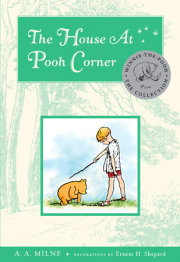
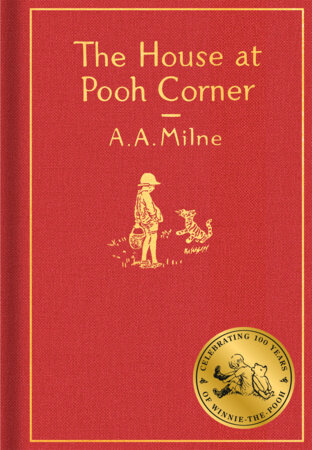
The House at Pooh Corner: Classic Gift Edition

Illustrated by Ernest H. Shepard
Look inside
Hardcover (Paper-over-Board, no jacket)
$17.00 US
5.44"W x 7.81"H x 0.76"D   | 10 oz | 24 per carton
On sale Oct 16, 2018 | 192 Pages | 9780525555544
Age 8-12 years | Grades 3-7

Celebrating 100 years of one of the most beloved icons of children's literature, Winnie-the-Pooh!

Following the instant success of the first edition replica of Winnie-the-Pooh, this gorgeous collectible edition of The House At Pooh Corner completes the set of A. A. Milne's beloved books about Winnie-the-Pooh and friends.


For over a century, Winnie-the-Pooh and his friends—Piglet, Owl, Tigger, and the ever doleful Eeyore--have endured as the unforgettable creations of A. A. Milne, who wrote this book for his son, Christopher Robin, and Ernest H. Shepard, who lovingly gave Pooh and his companions shape through his illustrations.

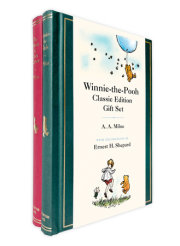
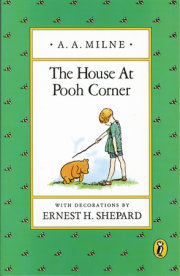
Now fans can continue to celebrate the legacy of Pooh with a beautiful new gift edition. Crafted as a replica of the first American edition of The House At Pooh Corner, published in 1928 by E. P. Dutton, this elegant edition features a textured case, gold foil stamping, and illustrated endpapers. It is the ideal gift for both new readers and passionate collectors and is the perfect companion to the Classic Gift Edition of Winnie-the-Pooh.
A. A. Milne (1882-1956) was born in England. He studied at Cambridge but left school in 1903 to write, soon supporting himself on his earnings as an editor at Punch magazine and as a playwright. His son Christopher Robin Milne was born in 1920. Christopher's toy bear, pig, donkey, tiger, and kangaroo inspired the famous Pooh books. Milne also wrote plays, a novel, his autobiography, and political nonfiction, although he is best remembered for Winnie-the-Pooh, The House at Pooh Corner, When We Were Very Young, and Now We Are Six. View titles by A. A. Milne
Ernest H. Shepard (1879-1976) was born in England. Shepard won a scholarship to the Royal Academy Schools, and, after graduating, supported himself by drawing for illustrated papers and books. He became a regular contributor to Punch magazine, where he met A. A. Milne. While working together, Shepard agreed to do the illustrations for Milne's first book of verse, When We Were Very Young. Shepard’s witty and loving illustrations of Winnie-the-Pooh and his friends in the Hundred Acre Wood have become an inseparable part of the Pooh stories, and they have become classics in their own right. View titles by Ernest H. Shepard
WHEN HE AWOKE IN THE MORNING, the first thing he saw was Tigger, sitting in front of the glass and looking at himself.

“Hallo!” said Pooh.

“Hallo!” said Tigger. “I’ve found somebody just like me. I thought I was the only one of them.”

Pooh got out of bed, and began to explain what a looking-glass was, but just as he was getting to the interesting part, Tigger said:

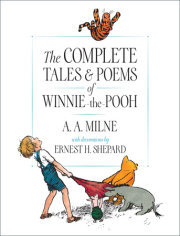
“Excuse me a moment, but there’s something climbing up your table,” and with one loud Worraworraworraworraworra he jumped at the end of the tablecloth, pulled it to the ground, wrapped himself up in it three times, rolled to the other end of the room, and, after a terrible struggle, got his head into the daylight again, and said cheerfully: “Have I won?”

“That’s my tablecloth,” said Pooh, as he began to unwind Tigger.

“I wondered what it was,” said Tigger.
“It goes on the table and you put things on it.”

“Then why did it try to bite me when I wasn’t looking?”

“I don’t think it did,” said Pooh.

“It tried,” said Tigger, “but I was too quick for it.”

Pooh put the cloth back on the table, and he put a large honey-pot on the cloth, and they sat down to breakfast. And as soon as they sat down, Tigger took a large mouthful of honey . . . and he looked up at the ceiling with his head on one side, and made exploring noises with his tongue and considering noises, and what-have-we-got-here noises . . . and then he said in a very decided voice:

“Tiggers don’t like honey.”

“Oh!” said Pooh, and tried to make it sound Sad and Regretful. “I thought they liked everything.”

“Everything except honey,” said Tigger.

Pooh felt rather pleased about this, and said that, as soon as he had finished his own breakfast, he would take Tigger round to Piglet’s house, and Tigger could try some of Piglet’s haycorns.

About

Celebrating 100 years of one of the most beloved icons of children's literature, Winnie-the-Pooh!

Following the instant success of the first edition replica of Winnie-the-Pooh, this gorgeous collectible edition of The House At Pooh Corner completes the set of A. A. Milne's beloved books about Winnie-the-Pooh and friends.


For over a century, Winnie-the-Pooh and his friends—Piglet, Owl, Tigger, and the ever doleful Eeyore--have endured as the unforgettable creations of A. A. Milne, who wrote this book for his son, Christopher Robin, and Ernest H. Shepard, who lovingly gave Pooh and his companions shape through his illustrations.

Now fans can continue to celebrate the legacy of Pooh with a beautiful new gift edition. Crafted as a replica of the first American edition of The House At Pooh Corner, published in 1928 by E. P. Dutton, this elegant edition features a textured case, gold foil stamping, and illustrated endpapers. It is the ideal gift for both new readers and passionate collectors and is the perfect companion to the Classic Gift Edition of Winnie-the-Pooh.

Author

A. A. Milne (1882-1956) was born in England. He studied at Cambridge but left school in 1903 to write, soon supporting himself on his earnings as an editor at Punch magazine and as a playwright. His son Christopher Robin Milne was born in 1920. Christopher's toy bear, pig, donkey, tiger, and kangaroo inspired the famous Pooh books. Milne also wrote plays, a novel, his autobiography, and political nonfiction, although he is best remembered for Winnie-the-Pooh, The House at Pooh Corner, When We Were Very Young, and Now We Are Six. View titles by A. A. Milne
Ernest H. Shepard (1879-1976) was born in England. Shepard won a scholarship to the Royal Academy Schools, and, after graduating, supported himself by drawing for illustrated papers and books. He became a regular contributor to Punch magazine, where he met A. A. Milne. While working together, Shepard agreed to do the illustrations for Milne's first book of verse, When We Were Very Young. Shepard’s witty and loving illustrations of Winnie-the-Pooh and his friends in the Hundred Acre Wood have become an inseparable part of the Pooh stories, and they have become classics in their own right. View titles by Ernest H. Shepard

Excerpt

WHEN HE AWOKE IN THE MORNING, the first thing he saw was Tigger, sitting in front of the glass and looking at himself.

“Hallo!” said Pooh.

“Hallo!” said Tigger. “I’ve found somebody just like me. I thought I was the only one of them.”

Pooh got out of bed, and began to explain what a looking-glass was, but just as he was getting to the interesting part, Tigger said:

“Excuse me a moment, but there’s something climbing up your table,” and with one loud Worraworraworraworraworra he jumped at the end of the tablecloth, pulled it to the ground, wrapped himself up in it three times, rolled to the other end of the room, and, after a terrible struggle, got his head into the daylight again, and said cheerfully: “Have I won?”

“That’s my tablecloth,” said Pooh, as he began to unwind Tigger.

“I wondered what it was,” said Tigger.

“It goes on the table and you put things on it.”

“Then why did it try to bite me when I wasn’t looking?”

“I don’t think it did,” said Pooh.

“It tried,” said Tigger, “but I was too quick for it.”

Pooh put the cloth back on the table, and he put a large honey-pot on the cloth, and they sat down to breakfast. And as soon as they sat down, Tigger took a large mouthful of honey . . . and he looked up at the ceiling with his head on one side, and made exploring noises with his tongue and considering noises, and what-have-we-got-here noises . . . and then he said in a very decided voice:

“Tiggers don’t like honey.”

“Oh!” said Pooh, and tried to make it sound Sad and Regretful. “I thought they liked everything.”

“Everything except honey,” said Tigger.

Pooh felt rather pleased about this, and said that, as soon as he had finished his own breakfast, he would take Tigger round to Piglet’s house, and Tigger could try some of Piglet’s haycorns.