

Close Modal

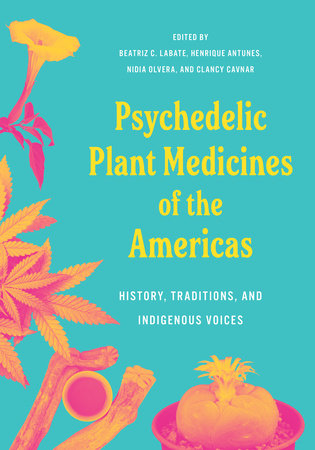
Psychedelic Plant Medicines of the Americas

History, Traditions, and Indigenous Voices

Paperback
$27.95 US
7"W x 10"H | 13 oz | 24 per carton
On sale May 26, 2026 | 440 Pages | 9798889842439

An essential new anthology that reveals the cultural, medicinal, and spiritual traditions behind marijuana, mushrooms, ayahuasca, and other psychedelics, informed by both Western and Indigenous science

What if your psychedelic journey could be even more meaningful? What if, instead of seeing a trip as an escape from the world, we saw it as an entryway into numerous time-tested Indigenous traditions, each full of vast histories with valuable insights—lessons we can incorporate into our own journeys?

The Psychoactive Plants in the Americas encourages this far greater, fuller mind-expansion. An anthology of 23 psychedelic-specific articles, written by historians, anthropologists, and psychologists, it includes extensive interviews with Indigenous Latin American practitioners and a deep understanding of Western science. Altogether, it offers the broadest, most up-to-date perspectives of any book on the field of psychedelics yet, including examinations of:

  • Marijuana’s colonial history in Mexico
  • Psilocybin mushrooms’ actual traditional use—which contradicts common, mistaken assumptions
  • Ayahuasca and peyote’s roles in Native rituals, and their subsequent cultural appropriation
  • Many more psychotropic drugs, including coca and tobacco snuff

The anthology is a critical reminder, at a time when psychedelics continue to become more popular and accepted within Western society, that these practices are not just part of a counterculture—in many places, they are central to the culture. And with the rise of psychedelic tourism, some of those cultures and cosmologies are now being put at risk. Gaining a greater understanding of why people have used and continue to use these psychedelics—informed by those with the deepest histories of experience—is only growing more important. There's never been a better time to not only gain a greater understanding of yourself, but also a deeper, more rooted understanding of psychedelics.
“An innovative book that focuses on a variety of plants and practices, some of which have received rather limited scholarly attention. It approaches the complex circuits and new agents within the global landscape of psychoactive plant medicines from a nuanced and balanced ethical stance, and takes into account the reality of commodification, implying the growing circulation of substances throughout the entire world, the problem related to the territories and ecology where these plants grow, and the challenges and opportunities this opens up for Indigenous communities.”
—Brigitte Adriaensen, professor of Latin American Studies at Radboud Universiteit Nijmegen (Netherlands)

“Coming to this book after years of work at the intersection of drug policy, human rights, and community based responses to substance use, I most value its deep respect for shared knowledge and for the Indigenous wisdom that has safeguarded psychedelic plant medicines for generations. Grounded in the voices of communities themselves, it explores ancestral practices as they live and adapt in the present, from peyote in Mexico to coca circles and the Wirikuta community’s relationship with peyote, reminding us to honor where this knowledge comes from and how we continue learning together.”
—Zara Snapp, director of Instituto RIA

About

An essential new anthology that reveals the cultural, medicinal, and spiritual traditions behind marijuana, mushrooms, ayahuasca, and other psychedelics, informed by both Western and Indigenous science

What if your psychedelic journey could be even more meaningful? What if, instead of seeing a trip as an escape from the world, we saw it as an entryway into numerous time-tested Indigenous traditions, each full of vast histories with valuable insights—lessons we can incorporate into our own journeys?

The Psychoactive Plants in the Americas encourages this far greater, fuller mind-expansion. An anthology of 23 psychedelic-specific articles, written by historians, anthropologists, and psychologists, it includes extensive interviews with Indigenous Latin American practitioners and a deep understanding of Western science. Altogether, it offers the broadest, most up-to-date perspectives of any book on the field of psychedelics yet, including examinations of:

  • Marijuana’s colonial history in Mexico
  • Psilocybin mushrooms’ actual traditional use—which contradicts common, mistaken assumptions
  • Ayahuasca and peyote’s roles in Native rituals, and their subsequent cultural appropriation
  • Many more psychotropic drugs, including coca and tobacco snuff

The anthology is a critical reminder, at a time when psychedelics continue to become more popular and accepted within Western society, that these practices are not just part of a counterculture—in many places, they are central to the culture. And with the rise of psychedelic tourism, some of those cultures and cosmologies are now being put at risk. Gaining a greater understanding of why people have used and continue to use these psychedelics—informed by those with the deepest histories of experience—is only growing more important. There's never been a better time to not only gain a greater understanding of yourself, but also a deeper, more rooted understanding of psychedelics.

Praise

“An innovative book that focuses on a variety of plants and practices, some of which have received rather limited scholarly attention. It approaches the complex circuits and new agents within the global landscape of psychoactive plant medicines from a nuanced and balanced ethical stance, and takes into account the reality of commodification, implying the growing circulation of substances throughout the entire world, the problem related to the territories and ecology where these plants grow, and the challenges and opportunities this opens up for Indigenous communities.”
—Brigitte Adriaensen, professor of Latin American Studies at Radboud Universiteit Nijmegen (Netherlands)

“Coming to this book after years of work at the intersection of drug policy, human rights, and community based responses to substance use, I most value its deep respect for shared knowledge and for the Indigenous wisdom that has safeguarded psychedelic plant medicines for generations. Grounded in the voices of communities themselves, it explores ancestral practices as they live and adapt in the present, from peyote in Mexico to coca circles and the Wirikuta community’s relationship with peyote, reminding us to honor where this knowledge comes from and how we continue learning together.”
—Zara Snapp, director of Instituto RIA