Close Modal

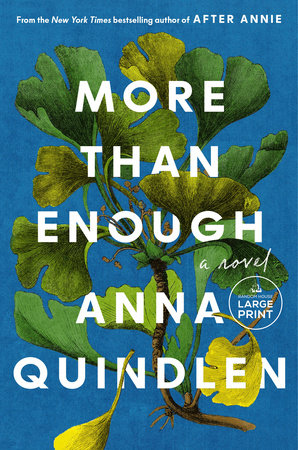
More Than Enough

A Novel

Look inside
Large Print (Large Print - Tradepaper)
$31.00 US
6.1"W x 9.17"H x 0.91"D   | 13 oz | 12 per carton
On sale Feb 24, 2026 | 352 Pages | 9798217294145

See Additional Formats
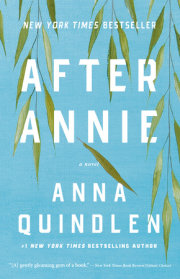
A woman confronts the surprising results of an ancestry test and begins to question the meaning of family and friendship in this wise, tender novel teeming with life—from the beloved #1 New York Times bestselling author of After Annie

No one knows you like your book club.

High school English teacher Polly Goodman can talk about everything and anything with the women in her book club, which is why they’ve become her closest friends and, along with her veterinarian husband, the bedrock of her life. Her students, her fraught relationship with her mother, her struggles with IVF—Polly’s book club friends have heard about it all.

But when they give Polly an ancestry test kit as a joke, the results match her with a stranger. It is clear to Polly that this match is a mistake, but still she cannot help but comb through her family history for answers. Then, when it seems that the book club circle of four will become three, Polly learns how friendships can change your life in the most profound ways.

Written with Anna Quindlen’s trademark warmth, humor, and insight into the power of love and hope, More Than Enough explores how we find ourselves again and again through the relationships that define us.
Praise for Anna Quindlen

“Anna Quindlen is America’s Resident Sane Person. She has what Joyce called the common touch, the ability to speak to many people about what’s on their minds before they have the vaguest idea what’s on their minds.”The New York Times Book Review

“[Quindlen’s] emotional sophistication, and her journalistic eye for authentic dialogue and detail, bring the ring of truth to every page.”—NPR

“Part of Quindlen’s gift is that you don’t just read about [her] characters, you inhabit them. . . . Luminous with life, hope and the power of love.”People

“An astonishingly graceful writer.”San Francisco Examiner

“[Quindlen] packs an emotional punch.”The Washington Post
© Maria Krovatin
Anna Quindlen is a novelist and journalist whose work has appeared on fiction, nonfiction, and self-help bestseller lists. She is the author of many novels: Object Lessons, One True Thing, Black and Blue, Blessings, Rise and Shine, Every Last One, Still Life with Bread Crumbs, and Miller’s Valley. Her memoir Lots of Candles, Plenty of Cake, published in 2012, was a #1 New York Times bestseller. Her book A Short Guide to a Happy Life has sold more than a million copies. While a columnist at The New York Times she won the Pulitzer Prize and published two collections, Living Out Loud and Thinking Out Loud. Her Newsweek columns were collected in Loud and Clear. View titles by Anna Quindlen
I’d said I would tell them everything.

“Everything,” Jamie had said. “Everything.” That’s Jamie’s conversational tic, that she repeats everything for emphasis. Everything.

“I promise to tell you when I get the results,” I’d said at the time, whacking off a wedge of cheese. The lingering hormones in my system make me ravenous, then nauseous, then ravenous again, and emotional for no reason I can reliably predict. I cry at subway delays and TV ads. I buy impulsively at white sales. I have a small apartment and seven decorative quilts.

“I think we all need to remember that we gave Polly this DNA kit in the first place as a joke,” Sarah had said. “It wasn’t serious. We didn’t give it to her to pressure her into anything.”

“I’m fine with pressuring Polly,” Jamie said.

I’d said I would tell them everything, but that was a month ago, when we had my birthday celebration at Helen’s apartment. A party hat, a chocolate cupcake, a small square package with foil wrapping and ribbons, then a larger one as well. “I’ll report back,” I’d said then about the DNA test. Ethnicity, genetic makeup, long-lost family members. While Jamie rolled her eyes and Helen mentioned someone at her law firm who had taken the same test and discovered she was part Russian, Sarah, always looking out for me, had said again, “No pressure at all. Just for fun.”

I can feel the folded sheet of paper in my tote bag now, and it doesn’t feel like fun. It feels incandescent, as though the three of them will be able to see it glowing like a lightning bug under a leaf stuck beneath my course notes, a folder of essays, my computer, and the fancy needlepoint clutch in which I keep my tampons, because despite all our efforts, Mark’s and mine and the doctors’, I am not pregnant.

I don’t know why I printed out a paper copy of the test results. I guess it was that it would make them feel more real, when part of me wanted them to simply disappear, to go back to the evening in the bathroom when I stuck that stupid swab in my mouth and rotated it inside my cheek, just behind where my girlhood dimples used to be before they turned into the divots of forty. The paraphernalia from that little just-for-fun gift box had been stacked on the side of the sink the same way all the pregnancy tests had been, and the ovulation predictors. I take more tests than my students at the Windsor School do.

Sarah and Helen and especially Jamie want me to tell them everything, everything that’s on that sheet of paper in my tote bag. But I’m not ready to do that, not yet. Which is why, a month on from that birthday celebration, I’m standing frozen at the door of Sarah’s apartment listening to the faint sounds of the three of them talking inside.

It sounds like a symphony of conversation, Helen low and melodious, Sarah interjecting from time to time in her high, sweet voice, and then Jamie, loudest, sharpest. Timpani, maybe? I know enough about classical music to appreciate it, but not enough to assign instruments to my friends heard at a distance. I don’t know what they’re talking about, but it’s probably the usual—Helen’s law practice, Sarah’s philanthropic causes, Jamie’s annoying husband and annoying counseling clients. We’ve never really figured out whether Jamie has a good marriage or a bad one, loves Bert or merely tolerates him, since she talks about everyone else as though they’re annoying, too. Even sometimes the three of us.

But I know for sure they’re not talking about me, or if they are, it’s not mean talk. We’re not that kind of group. If we want to talk about one another, we do it face-to-face, with a decent white wine, although I almost never drink anymore. But the others do. Not chardonnay. Jamie hates chardonnay. Not expensive. Sarah thinks it’s a crime to spend a lot of money for a bottle of wine when there’s so much need in the world, even though she’s positioned to buy expensive wine better than any of the rest of us.

“We know, we know, we know,” Jamie will say when Sarah mentions how many families are homeless in the city. “Jamie,” Helen will say, trying to rein her in, although that’s clearly impossible. There’s a kind of equipoise to our group, so that we’ll veer here and there and somehow always come back to center, and peace. Twelve years we’ve been meeting. These three have been with me through a career pivot, a divorce, two years of mostly celibacy and total misanthropy, a succession of terrible dates, and then Mark. Once we got rid of Rachel, the chemistry was ideal. And that one, Rachel, that was Helen’s fault. Helen had finally stopped apologizing for what she called “the Rachel misfire,” even though we’d all forgiven her years ago. I love Helen. I really love Sarah. I even love Jamie. I’d told her that once, but only as she was climbing into a cab. “Me, you too,” she’d whispered in my ear.

We meet once a month, and so here I was, standing eye to eye with the peephole in Sarah’s apartment door. From the sound of their voices I can tell the three are already sitting in her living room ranged around the glass coffee table. The apartment door leads to the long gallery leads to the living room and the living room windows, with their view of the paths and trees of Central Park. Sarah keeps binoculars on one of the window seats; sometimes at night you can watch a raccoon family waddling across the grass as they pass beneath one of the park lights. It’s the apartment of someone with plenty of money but no affectations. Sarah always says that all she really needs is the view of the park outside, pale green to deep green to gold and red to bare and black, spring to summer to autumn to winter, and then around again.

I don’t think Sarah ever uses the peephole. To get up to her apartment you have to get past the doorman, and to get past the doorman you have to get past the call up to the resident. “All Visitors Must Be Announced” it says on a sign at the front desk. When the delivery man comes on his bicycle with the Chinese takeout, one of the doormen takes the bags up to the apartment.

The door to the apartment isn’t even locked, I know, and yet still I stood there staring at the peephole. What was I, six or seven, when Garrison, my older brother, told me that I should never stand in front of one of those peepholes in an apartment door because when an assassin inside saw the shadow of someone in the hallway with their eye to it, that was how they’d know you were standing there and would shoot you.

“Why would somebody want to shoot me?” I’d asked. “I’m not even tall enough. You’re not even tall enough.”

“You never know what’s going to happen, Polly,” Garrison had said. Which is something Garrison still says to me sometimes.

So I finally turned the knob to Sarah’s apartment and walked inside.

“There you are!” Jamie called down the length of the gallery.

“Hey, honey,” said Sarah.

“Don’t get up,” I said, putting my tote bag and jacket on the bench by the door, next to Jamie’s and Helen’s totes and jackets, and sinking down into one of the big upholstered chairs. Sarah’s furniture is somehow like Sarah, always ready to give you a hug. There was a faint odor in the room from the street, a combination of exhaust fumes, pot smoke, mown grass, and flowering trees, that was oddly pleasant. Sarah is one of the only people I know in New York City who opens her windows. Air-conditioning May to October, heat November to April: That’s the rule for most people in most places. The inside separate from the outside. Which, come to think of it, is true of most New Yorkers, including me. The inside quite separate from what you see on the outside.

“Was it a long day?” Helen said.

“Senior project presentation day,” I said.

“Which one of them is curing cancer?” Jamie said.

“They’re pretty amazing,” I said. “Although sometimes their ambition scares me.”

“Why should they be ambitious?” Jamie said. “They already have everything.”

“Continue, Polly,” said Helen, looking sidelong at Jamie.

“These were four history projects,” I said, putting an egg roll and a fried pork dumpling on one of Sarah’s little hand-thrown plates. “There was one on Seneca Falls that was practically a doctoral dissertation. Her parents were levitating, they were so proud.”

“Which is why you’re wearing makeup,” Jamie said, leaning forward and narrowing her eyes. “Even foundation?”

My mouth was full and there was no need to respond. Almost all of Jamie’s questions are rhetorical. She already knows the answers. Except the answer on the piece of paper folded deep inside my tote bag, as though I could bury it beneath the stuff of my everyday, ordinary life.

“Anything to report?” Helen said.

“Give us the whole shebang,” said Sarah.

“Who under the age of ninety says that?” Jamie said. “The whole shebang? What’s next? Pardon my French? The bee’s knees?”

“I never understood the bee’s knees.”

“Happy as a clam?”

About

A woman confronts the surprising results of an ancestry test and begins to question the meaning of family and friendship in this wise, tender novel teeming with life—from the beloved #1 New York Times bestselling author of After Annie

No one knows you like your book club.

High school English teacher Polly Goodman can talk about everything and anything with the women in her book club, which is why they’ve become her closest friends and, along with her veterinarian husband, the bedrock of her life. Her students, her fraught relationship with her mother, her struggles with IVF—Polly’s book club friends have heard about it all.

But when they give Polly an ancestry test kit as a joke, the results match her with a stranger. It is clear to Polly that this match is a mistake, but still she cannot help but comb through her family history for answers. Then, when it seems that the book club circle of four will become three, Polly learns how friendships can change your life in the most profound ways.

Written with Anna Quindlen’s trademark warmth, humor, and insight into the power of love and hope, More Than Enough explores how we find ourselves again and again through the relationships that define us.

Praise

Praise for Anna Quindlen

“Anna Quindlen is America’s Resident Sane Person. She has what Joyce called the common touch, the ability to speak to many people about what’s on their minds before they have the vaguest idea what’s on their minds.”The New York Times Book Review

“[Quindlen’s] emotional sophistication, and her journalistic eye for authentic dialogue and detail, bring the ring of truth to every page.”—NPR

“Part of Quindlen’s gift is that you don’t just read about [her] characters, you inhabit them. . . . Luminous with life, hope and the power of love.”People

“An astonishingly graceful writer.”San Francisco Examiner

“[Quindlen] packs an emotional punch.”The Washington Post

Author

© Maria Krovatin
Anna Quindlen is a novelist and journalist whose work has appeared on fiction, nonfiction, and self-help bestseller lists. She is the author of many novels: Object Lessons, One True Thing, Black and Blue, Blessings, Rise and Shine, Every Last One, Still Life with Bread Crumbs, and Miller’s Valley. Her memoir Lots of Candles, Plenty of Cake, published in 2012, was a #1 New York Times bestseller. Her book A Short Guide to a Happy Life has sold more than a million copies. While a columnist at The New York Times she won the Pulitzer Prize and published two collections, Living Out Loud and Thinking Out Loud. Her Newsweek columns were collected in Loud and Clear. View titles by Anna Quindlen

Excerpt

I’d said I would tell them everything.

“Everything,” Jamie had said. “Everything.” That’s Jamie’s conversational tic, that she repeats everything for emphasis. Everything.

“I promise to tell you when I get the results,” I’d said at the time, whacking off a wedge of cheese. The lingering hormones in my system make me ravenous, then nauseous, then ravenous again, and emotional for no reason I can reliably predict. I cry at subway delays and TV ads. I buy impulsively at white sales. I have a small apartment and seven decorative quilts.

“I think we all need to remember that we gave Polly this DNA kit in the first place as a joke,” Sarah had said. “It wasn’t serious. We didn’t give it to her to pressure her into anything.”

“I’m fine with pressuring Polly,” Jamie said.

I’d said I would tell them everything, but that was a month ago, when we had my birthday celebration at Helen’s apartment. A party hat, a chocolate cupcake, a small square package with foil wrapping and ribbons, then a larger one as well. “I’ll report back,” I’d said then about the DNA test. Ethnicity, genetic makeup, long-lost family members. While Jamie rolled her eyes and Helen mentioned someone at her law firm who had taken the same test and discovered she was part Russian, Sarah, always looking out for me, had said again, “No pressure at all. Just for fun.”

I can feel the folded sheet of paper in my tote bag now, and it doesn’t feel like fun. It feels incandescent, as though the three of them will be able to see it glowing like a lightning bug under a leaf stuck beneath my course notes, a folder of essays, my computer, and the fancy needlepoint clutch in which I keep my tampons, because despite all our efforts, Mark’s and mine and the doctors’, I am not pregnant.

I don’t know why I printed out a paper copy of the test results. I guess it was that it would make them feel more real, when part of me wanted them to simply disappear, to go back to the evening in the bathroom when I stuck that stupid swab in my mouth and rotated it inside my cheek, just behind where my girlhood dimples used to be before they turned into the divots of forty. The paraphernalia from that little just-for-fun gift box had been stacked on the side of the sink the same way all the pregnancy tests had been, and the ovulation predictors. I take more tests than my students at the Windsor School do.

Sarah and Helen and especially Jamie want me to tell them everything, everything that’s on that sheet of paper in my tote bag. But I’m not ready to do that, not yet. Which is why, a month on from that birthday celebration, I’m standing frozen at the door of Sarah’s apartment listening to the faint sounds of the three of them talking inside.

It sounds like a symphony of conversation, Helen low and melodious, Sarah interjecting from time to time in her high, sweet voice, and then Jamie, loudest, sharpest. Timpani, maybe? I know enough about classical music to appreciate it, but not enough to assign instruments to my friends heard at a distance. I don’t know what they’re talking about, but it’s probably the usual—Helen’s law practice, Sarah’s philanthropic causes, Jamie’s annoying husband and annoying counseling clients. We’ve never really figured out whether Jamie has a good marriage or a bad one, loves Bert or merely tolerates him, since she talks about everyone else as though they’re annoying, too. Even sometimes the three of us.

But I know for sure they’re not talking about me, or if they are, it’s not mean talk. We’re not that kind of group. If we want to talk about one another, we do it face-to-face, with a decent white wine, although I almost never drink anymore. But the others do. Not chardonnay. Jamie hates chardonnay. Not expensive. Sarah thinks it’s a crime to spend a lot of money for a bottle of wine when there’s so much need in the world, even though she’s positioned to buy expensive wine better than any of the rest of us.

“We know, we know, we know,” Jamie will say when Sarah mentions how many families are homeless in the city. “Jamie,” Helen will say, trying to rein her in, although that’s clearly impossible. There’s a kind of equipoise to our group, so that we’ll veer here and there and somehow always come back to center, and peace. Twelve years we’ve been meeting. These three have been with me through a career pivot, a divorce, two years of mostly celibacy and total misanthropy, a succession of terrible dates, and then Mark. Once we got rid of Rachel, the chemistry was ideal. And that one, Rachel, that was Helen’s fault. Helen had finally stopped apologizing for what she called “the Rachel misfire,” even though we’d all forgiven her years ago. I love Helen. I really love Sarah. I even love Jamie. I’d told her that once, but only as she was climbing into a cab. “Me, you too,” she’d whispered in my ear.

We meet once a month, and so here I was, standing eye to eye with the peephole in Sarah’s apartment door. From the sound of their voices I can tell the three are already sitting in her living room ranged around the glass coffee table. The apartment door leads to the long gallery leads to the living room and the living room windows, with their view of the paths and trees of Central Park. Sarah keeps binoculars on one of the window seats; sometimes at night you can watch a raccoon family waddling across the grass as they pass beneath one of the park lights. It’s the apartment of someone with plenty of money but no affectations. Sarah always says that all she really needs is the view of the park outside, pale green to deep green to gold and red to bare and black, spring to summer to autumn to winter, and then around again.

I don’t think Sarah ever uses the peephole. To get up to her apartment you have to get past the doorman, and to get past the doorman you have to get past the call up to the resident. “All Visitors Must Be Announced” it says on a sign at the front desk. When the delivery man comes on his bicycle with the Chinese takeout, one of the doormen takes the bags up to the apartment.

The door to the apartment isn’t even locked, I know, and yet still I stood there staring at the peephole. What was I, six or seven, when Garrison, my older brother, told me that I should never stand in front of one of those peepholes in an apartment door because when an assassin inside saw the shadow of someone in the hallway with their eye to it, that was how they’d know you were standing there and would shoot you.

“Why would somebody want to shoot me?” I’d asked. “I’m not even tall enough. You’re not even tall enough.”

“You never know what’s going to happen, Polly,” Garrison had said. Which is something Garrison still says to me sometimes.

So I finally turned the knob to Sarah’s apartment and walked inside.

“There you are!” Jamie called down the length of the gallery.

“Hey, honey,” said Sarah.

“Don’t get up,” I said, putting my tote bag and jacket on the bench by the door, next to Jamie’s and Helen’s totes and jackets, and sinking down into one of the big upholstered chairs. Sarah’s furniture is somehow like Sarah, always ready to give you a hug. There was a faint odor in the room from the street, a combination of exhaust fumes, pot smoke, mown grass, and flowering trees, that was oddly pleasant. Sarah is one of the only people I know in New York City who opens her windows. Air-conditioning May to October, heat November to April: That’s the rule for most people in most places. The inside separate from the outside. Which, come to think of it, is true of most New Yorkers, including me. The inside quite separate from what you see on the outside.

“Was it a long day?” Helen said.

“Senior project presentation day,” I said.

“Which one of them is curing cancer?” Jamie said.

“They’re pretty amazing,” I said. “Although sometimes their ambition scares me.”

“Why should they be ambitious?” Jamie said. “They already have everything.”

“Continue, Polly,” said Helen, looking sidelong at Jamie.

“These were four history projects,” I said, putting an egg roll and a fried pork dumpling on one of Sarah’s little hand-thrown plates. “There was one on Seneca Falls that was practically a doctoral dissertation. Her parents were levitating, they were so proud.”

“Which is why you’re wearing makeup,” Jamie said, leaning forward and narrowing her eyes. “Even foundation?”

My mouth was full and there was no need to respond. Almost all of Jamie’s questions are rhetorical. She already knows the answers. Except the answer on the piece of paper folded deep inside my tote bag, as though I could bury it beneath the stuff of my everyday, ordinary life.

“Anything to report?” Helen said.

“Give us the whole shebang,” said Sarah.

“Who under the age of ninety says that?” Jamie said. “The whole shebang? What’s next? Pardon my French? The bee’s knees?”

“I never understood the bee’s knees.”

“Happy as a clam?”