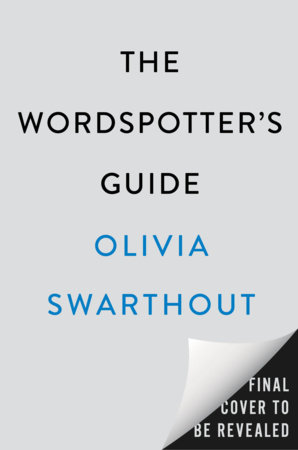
A rollicking, beautifully illustrated adventure through the history of the English language—from social media star Olivia Swarthout
English is, by many measures, the largest language in the world—and doubtless the unruliest. Over the last millennium, we’ve borrowed, stolen, conquered, and invented our way to a massive lexicon (a million words by some counts), filled with numerous untold stories.
Enter The Wordspotter’s Guide, a delightful tour through our etymological past. Did you know that the term silhouette comes from 18th century French finance minister Etienne de Silhouette, whose austerity measures caused his name to be associated with any low-quality work, such as the black paper cutouts that were a cheaper alternative to traditional portraits? That the word unfriend actually dates to the 17th century? Or that robe and robbed share an etymological root, dating to a time when constructing clothing was so labor-intensive that it was the most valuable thing in most people’s homes and thus likely to be stolen?
Olivia Swarthout tells a deeply-researched, authoritative story about the history of the English language—without losing sight of the fun. If you’ve ever wondered which meaning of cardinal came first (the direction, then the Church figure, then the bird) or lamented that we no longer give people names like John the Wifeless, Ralph the Haunted, and Hugh the Ass (all citizens of 11th century Britain), this is the book for you.
"Immensely readable, full of learning and very entertaining. Olivia Swarthout shows how words are a source of stories and of knowledge across time and across human society. With energy, humour and learning she demonstrates that words have inner lives, often surprising, wayward and ambiguous. This is an enjoyable and readable book that will teach readers something about the language we use every day." –Anthony Bale, author of A Travel Guide to the Middle Ages
"Every word tells a story, and Swarthout has scooped up some of the best. From internal anatomy to outer space, her light-hearted joyride through English etymology will enrich your appreciation of the lore beneath our language." –Eli Burnstein, author of Dictionary of Fine Distinctions "Part field guide, part bestiary – a joyful hunt through the weird and wonderful world of the English language." –Rebecca Lee, author of Rogues, Widows and Orphans
"Hugely enjoyable. Reading The Wordspotter’s Guide was like following a plough as it unearths the fossils of the English language." –Shaun Bythell, author of Confessions of a Bookseller
OLIVIA SWARTHOUT is a chronicler of strange stories from our distant past, especially the Middle Ages. She is the author of Weird Medieval Guys. Her first name is derived from the Latin oliva, meaning olive, and her surname is of Middle Dutch origin, roughly corresponding to black forest.View titles by Olivia Swarthout
A rollicking, beautifully illustrated adventure through the history of the English language—from social media star Olivia Swarthout
English is, by many measures, the largest language in the world—and doubtless the unruliest. Over the last millennium, we’ve borrowed, stolen, conquered, and invented our way to a massive lexicon (a million words by some counts), filled with numerous untold stories.
Enter The Wordspotter’s Guide, a delightful tour through our etymological past. Did you know that the term silhouette comes from 18th century French finance minister Etienne de Silhouette, whose austerity measures caused his name to be associated with any low-quality work, such as the black paper cutouts that were a cheaper alternative to traditional portraits? That the word unfriend actually dates to the 17th century? Or that robe and robbed share an etymological root, dating to a time when constructing clothing was so labor-intensive that it was the most valuable thing in most people’s homes and thus likely to be stolen?
Olivia Swarthout tells a deeply-researched, authoritative story about the history of the English language—without losing sight of the fun. If you’ve ever wondered which meaning of cardinal came first (the direction, then the Church figure, then the bird) or lamented that we no longer give people names like John the Wifeless, Ralph the Haunted, and Hugh the Ass (all citizens of 11th century Britain), this is the book for you.
Praise
"Immensely readable, full of learning and very entertaining. Olivia Swarthout shows how words are a source of stories and of knowledge across time and across human society. With energy, humour and learning she demonstrates that words have inner lives, often surprising, wayward and ambiguous. This is an enjoyable and readable book that will teach readers something about the language we use every day." –Anthony Bale, author of A Travel Guide to the Middle Ages
"Every word tells a story, and Swarthout has scooped up some of the best. From internal anatomy to outer space, her light-hearted joyride through English etymology will enrich your appreciation of the lore beneath our language." –Eli Burnstein, author of Dictionary of Fine Distinctions "Part field guide, part bestiary – a joyful hunt through the weird and wonderful world of the English language." –Rebecca Lee, author of Rogues, Widows and Orphans
"Hugely enjoyable. Reading The Wordspotter’s Guide was like following a plough as it unearths the fossils of the English language." –Shaun Bythell, author of Confessions of a Bookseller
OLIVIA SWARTHOUT is a chronicler of strange stories from our distant past, especially the Middle Ages. She is the author of Weird Medieval Guys. Her first name is derived from the Latin oliva, meaning olive, and her surname is of Middle Dutch origin, roughly corresponding to black forest.View titles by Olivia Swarthout