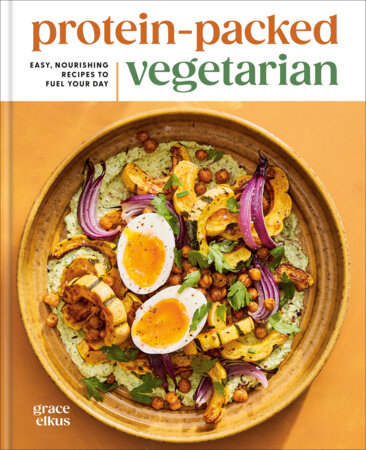
IntroductionI became a vegetarian in the sixth grade after seeing an episode of
Braceface in which Sharon, the main character, visits a meatpacking farm. (I believe she too became a vegetarian after this experience.) For many years following, I was solely concerned with what I
wasn’t eating (meat) and neglected to consider the nutritional breakdown of what I
was eating.
I grew up with a bowl of fresh fruit on the dinner table every night, and I’ve always enjoyed vegetables (my first pet was a green bean I kept in the freezer), so it wasn’t that I was eating poorly. But if you had asked me to list my primary sources of protein, I would have told you peanut butter and hummus.
I have my husband, Pat, to thank for introducing me to strength training—and, in turn, the importance of protein. We met in the summer of 2018, almost a year after I ran the New York City Marathon and was in search of a new way of challenging myself physically. Just as I had set weekly mileage goals for my runs, Pat, who was passionate about the benefits of lifting weights (and was hoping I wouldn’t force him to run another turkey trot), was creating programs for me that involved “progressive overload,” or gradually increasing the intensity of my workouts by upping the weight or reps. As a woman, I had been taught by society that weight training would make me “bulky” and that the ticket to my “dream body” was intense cardio, not barbell squats. So, it was immensely freeing to focus on getting stronger and not smaller, and realizing that the “toned” look I was after required putting on muscle, not spending hours on the elliptical. Today, strength training is at the center of my fitness routine, and I don’t foresee that changing.
Outside of the gym, I began educating myself on the role nutrition played in all of this, and learned how important it was to add more protein into my diet to promote muscle growth. The good news? I’ve always loved cooking, so much so that I had made it my career. I had graduated from the Natural Gourmet Institute (a mostly plant-based culinary school) a few years prior and was working as the deputy food director at The Kitchn, a popular website for home cooks. I had both the knife skills and the know-how to create good recipes, and soon I was building meals around tofu, tempeh, beans, lentils, quinoa, yogurt, eggs, cottage cheese—and yes, still plenty of hummus and peanut butter.
Fast-forward to summer 2023. I had moved from New York City to Pittsburgh, I was burnt out from freelancing while simultaneously job hunting, and I decided to start posting my recipes on Instagram. Similar to the nerves I had experienced a decade ago around entering food media as a vegetarian (what if they asked me to style a turkey for the Thanksgiving spread?!), I was hesitant about sharing the food I
actually ate at home. I was worried people expected me, the food editor and culinary school grad, to share aspirational dishes featuring cheffy techniques. In reality, I was scrambling eggs with cottage cheese and perfecting my air fryer tofu.
But there was a hole in my social media feeds that I wanted to fill. I found there to be a lack of great-tasting, protein-packed recipes—
especially vegetarian ones. With some exceptions of course, the advice seemed to be to simplify the nutrition component by eating the same thing every day, or to enjoy flavorless egg-white omelets and plan dinners around lean ground beef.
So I decided to hit “post,” and I soon learned that my two worlds— the one where I had made a name for myself in food media and the one where I prioritized protein and lifted weights—didn’t have to be mutually exclusive. As it turns out, a lot of other people want to eat great-tasting food while also adding more protein into their diets, whether to fuel their lifts or simply to have more energy, feel more satiated, and cut down on snacking. (Eating more protein doesn’t have to go hand in hand with the gym!) I grew from twenty thousand followers to more than one hundred thousand in the span of two months and watched in total shock one day as the third-hour anchors on
Today tried my viral Feta Fried Egg recipe (page 39).
Being interested in cooking and eating good food doesn’t mean basting everything in butter or garnishing every plate. And prioritizing strength gains doesn’t mean choking down protein shakes or subsisting solely on chicken, rice, and broccoli. This book celebrates the middle ground and demonstrates how exciting and delicious highprotein vegetarian food can be.
Copyright © 2026 by Grace Elkus. All rights reserved. No part of this excerpt may be reproduced or reprinted without permission in writing from the publisher.