IntroductionBiophilia at HomeWhat if your home could do more than just shelter you? What if it could also heal you? As a licensed therapist for twenty years and an interior designer of nearly fifteen years, I have noticed a common thread running through all my clients’ lives: the constant hustle and bustle—the racing, juggling, and striving that often leaves little time to simply breathe and be in the one place where we’re most comfortable. At home. Finding refuge within our own homes these days isn’t just a luxury, it’s essential to our well-being.
When life feels overwhelming, many of us turn to nature without even realizing it. We step outside for a breath of fresh air, take the dog for a walk, or simply gaze at the horizon to reset ourselves. Nature in its simplicity offers a kind of therapy that no app or gadget can replicate. That’s the power of biophilia, a design philosophy that promotes bringing the healing qualities of the natural world into our everyday spaces.
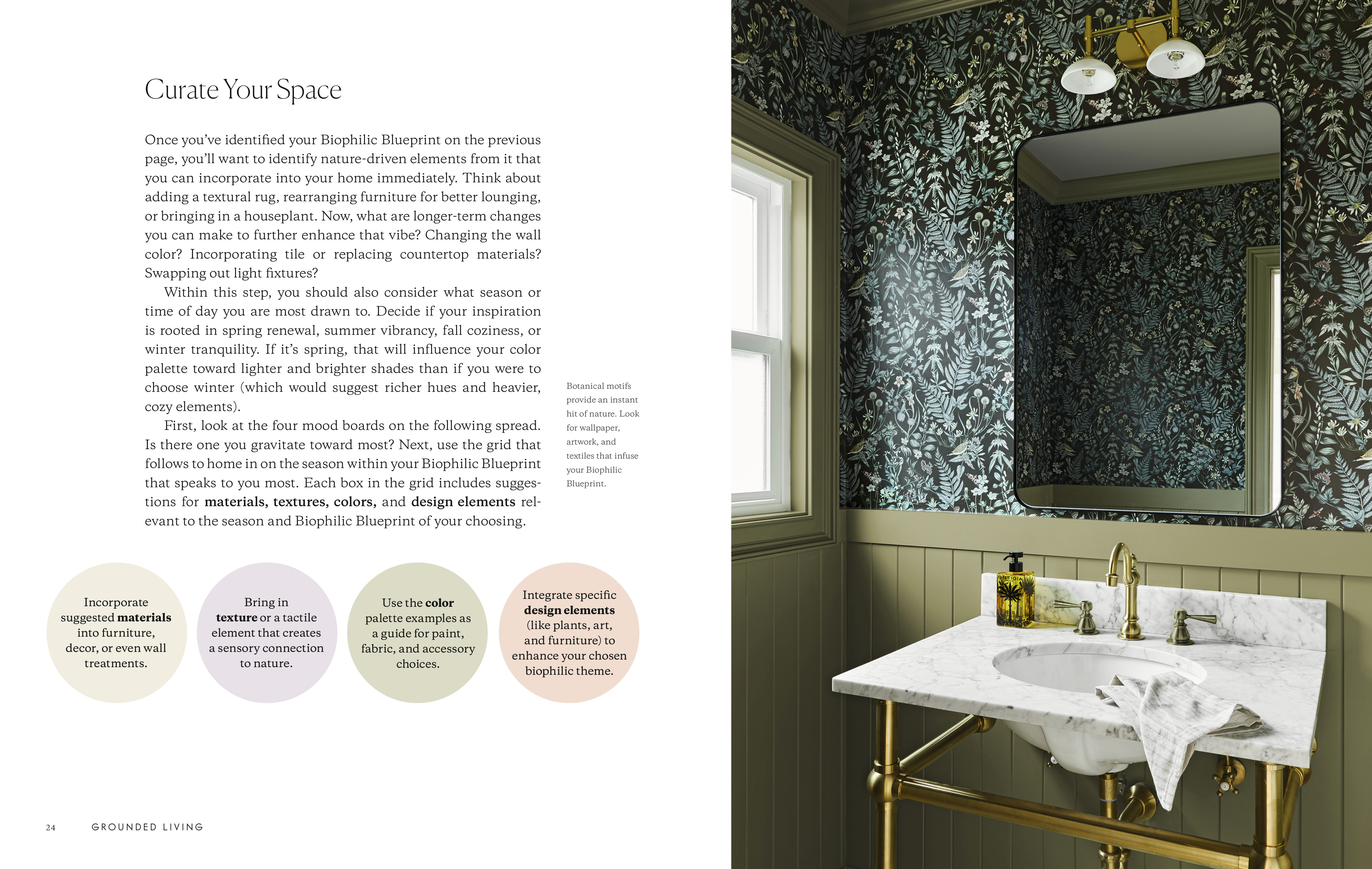
I’ve always been drawn to natural elements in design—floral wallpaper, cascading greenery, woven textures—but I didn’t have the vocabulary to explain why they felt so right. Over time, I’ve realized it’s not just about aesthetics; it’s about creating spaces that feel alive, that breathe, and that connect us to the earth.
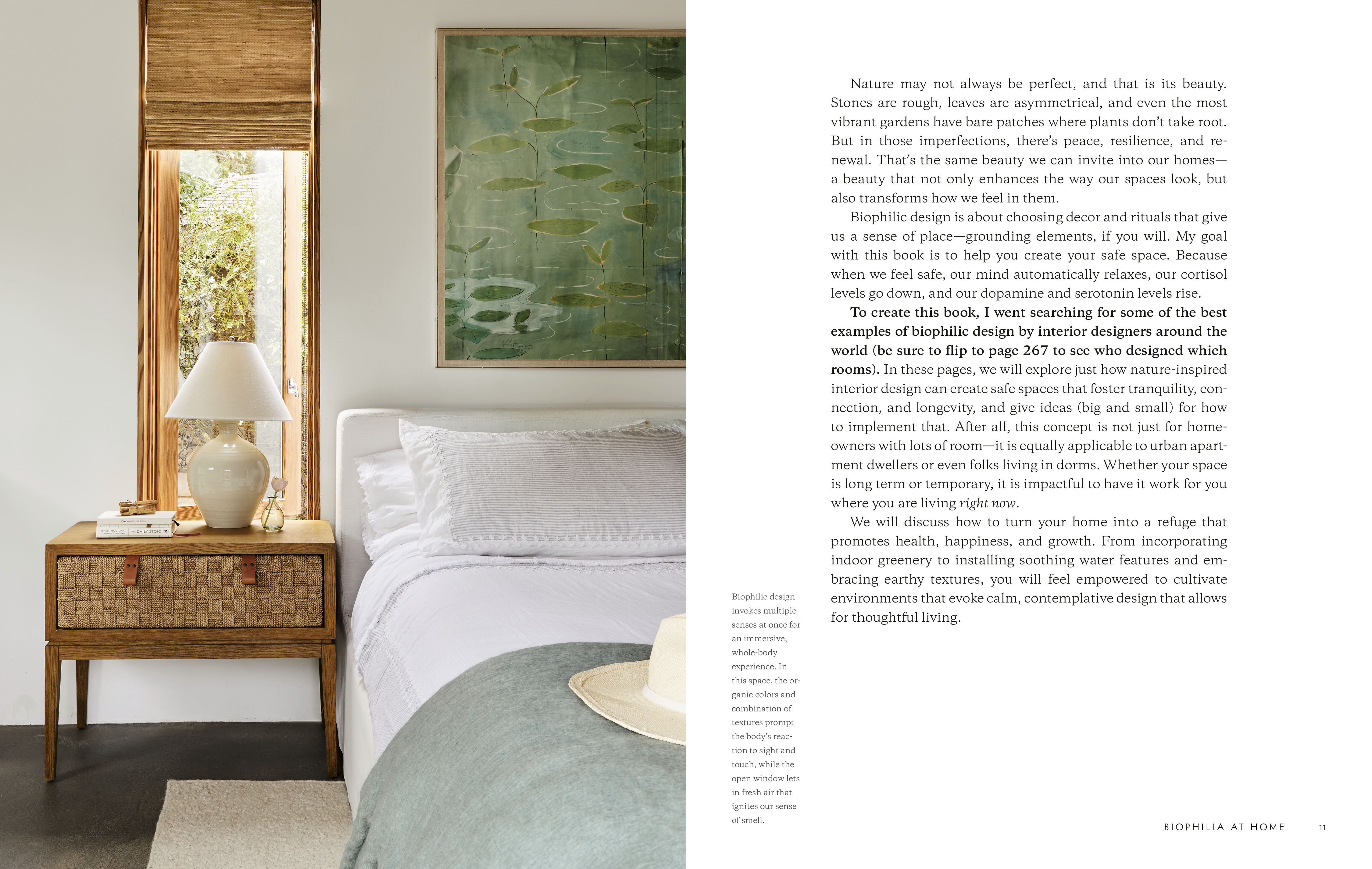
Nature may not always be perfect, and that is its beauty. Stones are rough, leaves are asymmetrical, and even the most vibrant gardens have bare patches where plants don’t take root. But in those imperfections, there’s peace, resilience, and renewal. That’s the same beauty we can invite into our homes—a beauty that not only enhances the way our spaces look, but also transforms how we feel in them.
Biophilic design is about choosing decor and rituals that give us a sense of place—grounding elements, if you will. My goal with this book is to help you create your safe space. Because when we feel safe, our mind automatically relaxes, our cortisol levels go down, and our dopamine and serotonin levels rise.
To create this book, I went searching for some of the best examples of biophilic design by interior designers around the world (be sure to flip to page 267 to see who designed which rooms). In these pages, we will explore just how nature-inspired interior design can create safe spaces that foster tranquility, connection, and longevity, and give ideas (big and small) for how to implement that. After all, this concept is not just for homeowners with lots of room—it is equally applicable to urban apartment dwellers or even folks living in dorms. Whether your space is long term or temporary, it is impactful to have it work for you where you are living
right now. We will discuss how to turn your home into a refuge that promotes health, happiness, and growth. From incorporating indoor greenery to installing soothing water features and embracing earthy textures, you will feel empowered to cultivate environments that evoke calm, contemplative design that allows for thoughtful living.
Biophilic Basics Before jumping into my method, I should first explain the principles of biophilic design. Stephen R. Kellert is a Yale professor, author, and preeminent expert on biophilia. He explains that biophilic design can be organized under three central pillars:
1. Incorporation of nature
2. Inspiration from nature
3. Interaction with nature
Incorporating nature in your home (through additions like plants and lighting) allows you to experience it directly and immediately benefit. So often, we move in and out of our homes and fall into an auto-response mode, forgetting to be present. Having these physical cues reminds us to stay grounded and live in the moment.
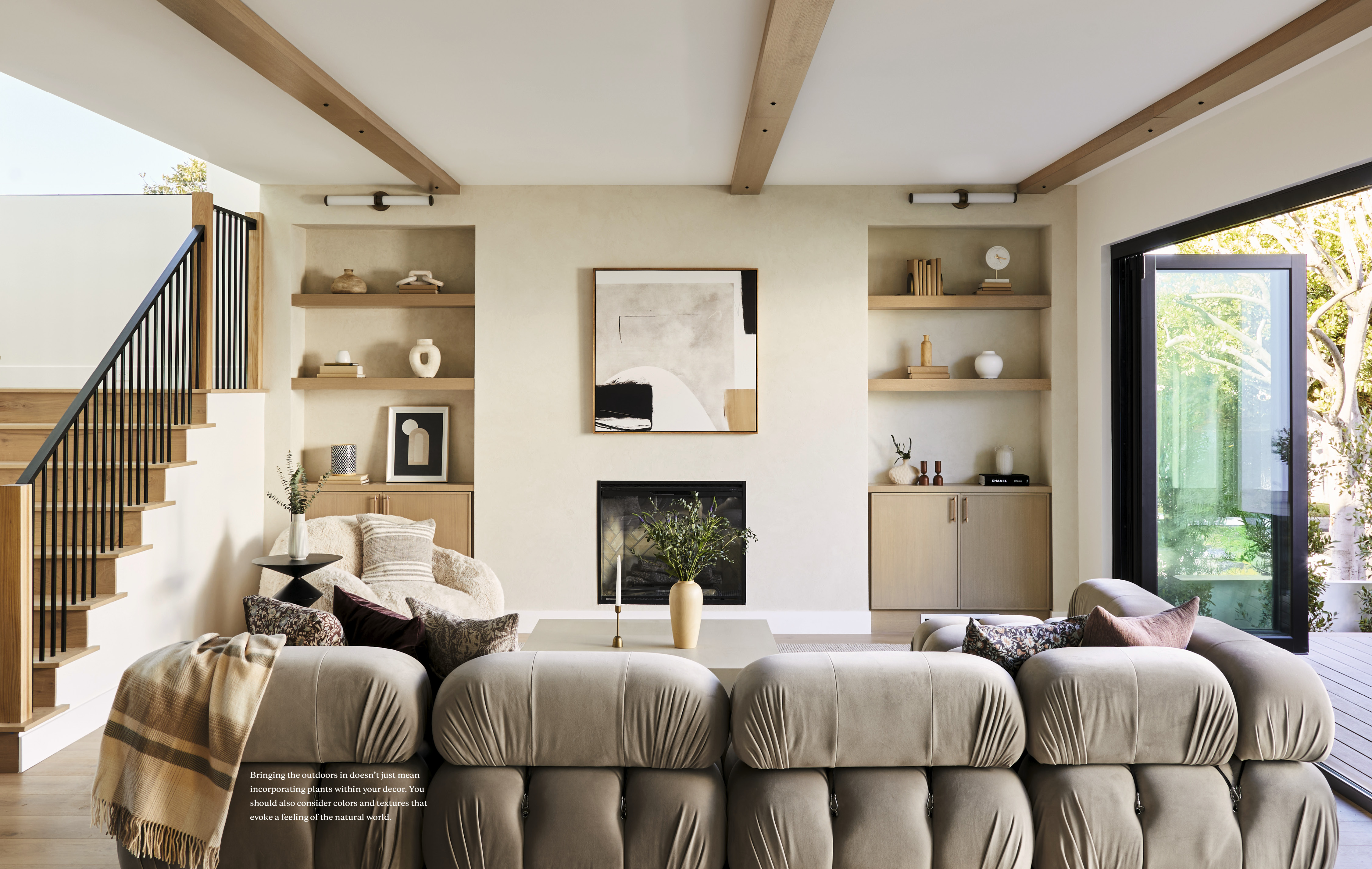
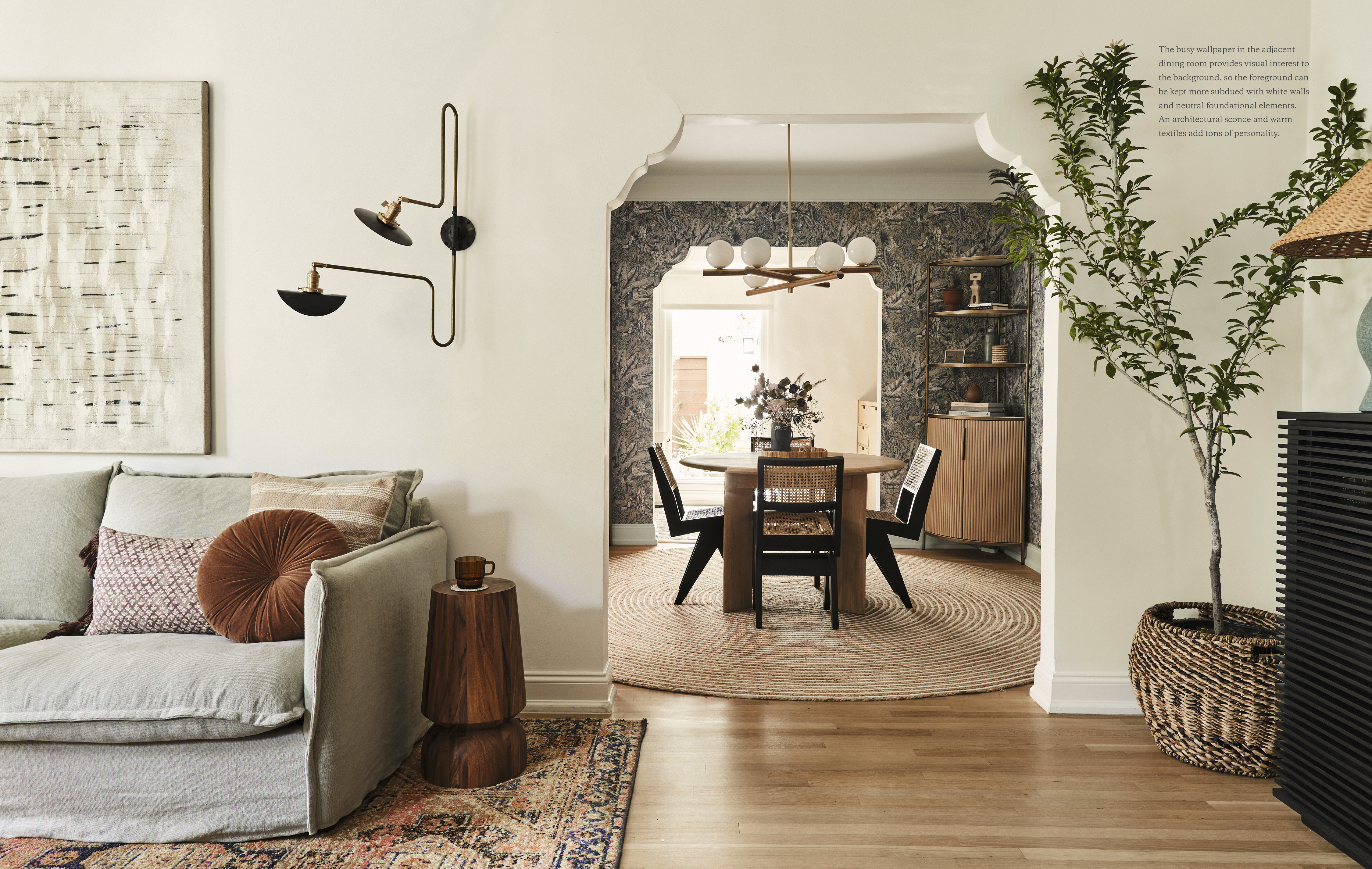
We may also gather inspiration from nature in a less direct way (say, through materials, motifs, colors, and shapes that remind us of things in nature). From a practical design perspective, we don’t always have the luxury of living alongside a wide-open meadow or expansive ocean view, but we can use interior design to evoke a specific feeling nature gives us. Certain natural materials like wood or brick may even stimulate an emotional response if connected to a memory or feeling of comfort (a fond memory of a family log cabin, for example). We can harness those feelings in our current space by incorporating similar materials.
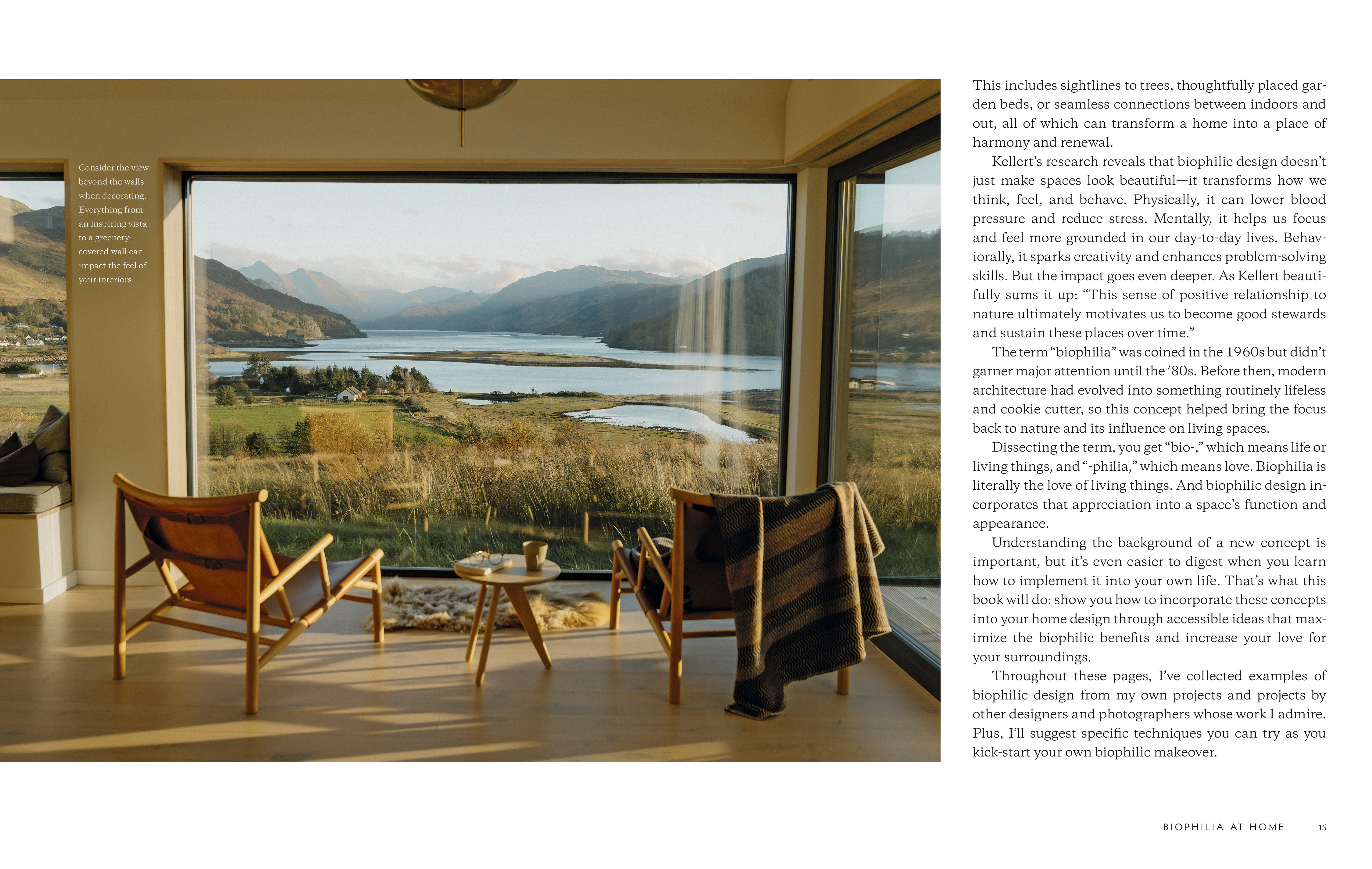
My dad has a master’s degree in landscape architecture, and he taught me how important interaction with nature is to a person’s mindset. I’d watch him design buildings and plan for landscaping that matched the style and purpose of each structure. I came to appreciate how outdoor elements aren’t just decorative, they’re essential to how we experience and move through a space. Dad was particularly passionate about pathways and flow, concepts that are integral to biophilic design. As we bring nature into our homes, it’s equally important to consider how the natural world outside our window interacts with our spaces.
This includes sightlines to trees, thoughtfully placed garden beds, or seamless connections between indoors and out, all of which can transform a home into a place of harmony and renewal.
Kellert’s research reveals that biophilic design doesn’t just make spaces look beautiful—it transforms how we think, feel, and behave. Physically, it can lower blood pressure and reduce stress. Mentally, it helps us focus and feel more grounded in our day-to-day lives. Behaviorally, it sparks creativity and enhances problem-solving skills. But the impact goes even deeper. As Kellert beautifully sums it up: “This sense of positive relationship to nature ultimately motivates us to become good stewards and sustain these places over time.”
The term “biophilia” was coined in the 1960s but didn’t garner major attention until the ’80s. Before then, modern architecture had evolved into something routinely lifeless and cookie cutter, so this concept helped bring the focus back to nature and its influence on living spaces.
Dissecting the term, you get “bio-,” which means life or living things, and “-philia,” which means love. Biophilia is literally the love of living things. And biophilic design incorporates that appreciation into a space’s function and appearance.
Understanding the background of a new concept is important, but it’s even easier to digest when you learn how to implement it into your own life. That’s what this book will do: show you how to incorporate these concepts into your home design through accessible ideas that maximize the biophilic benefits and increase your love for your surroundings.
Throughout these pages, I’ve collected examples of biophilic design from my own projects and projects by other designers and photographers whose work I admire. Plus, I’ll suggest specific techniques you can try as you kick-start your own biophilic makeover.
Copyright © 2026 by Anita Yokota. All rights reserved. No part of this excerpt may be reproduced or reprinted without permission in writing from the publisher.