IntroductionMy garden exists mostly deep within my brain. When I first started gardening in earnest in my twenties, I was hungry to find out everything I could about the topic. I thought that garden encyclopedias or how-to manuals would be the best source of knowledge. However, over those first years I was surprised to learn that a certain genre of books—garden essays—gave me so much more. These writings by twentieth-century authors, such as Thalassa Cruso, Elizabeth Lawrence, Henry Mitchell, Mirabel Osler, Eleanor Perényi, Michael Pollan, and Vita Sackville-West, taught me not only
how to garden but how to
think about gardening. Through them, I not only gained practical knowledge about horticulture but also absorbed abstract concepts like taste, style, and historical lore. I still keep stacks of these books on my nightstand as inspiration. They are a pleasure to read before bedtime and much more centering for my mental health than poking at my phone.
Today, when people want a horticultural answer, they search online for their specific gardening problems. While these sources are effective, they’re also transactional in a way that can deprive the gardener of the chance to discover something new and unexpected. The essays in this book are an analog counterpoint to today’s algorithmically derived online media. The act of reading a book gives us a much-needed respite from our phones, which have become the default we reach for instantly when we have an in-between moment to browse.
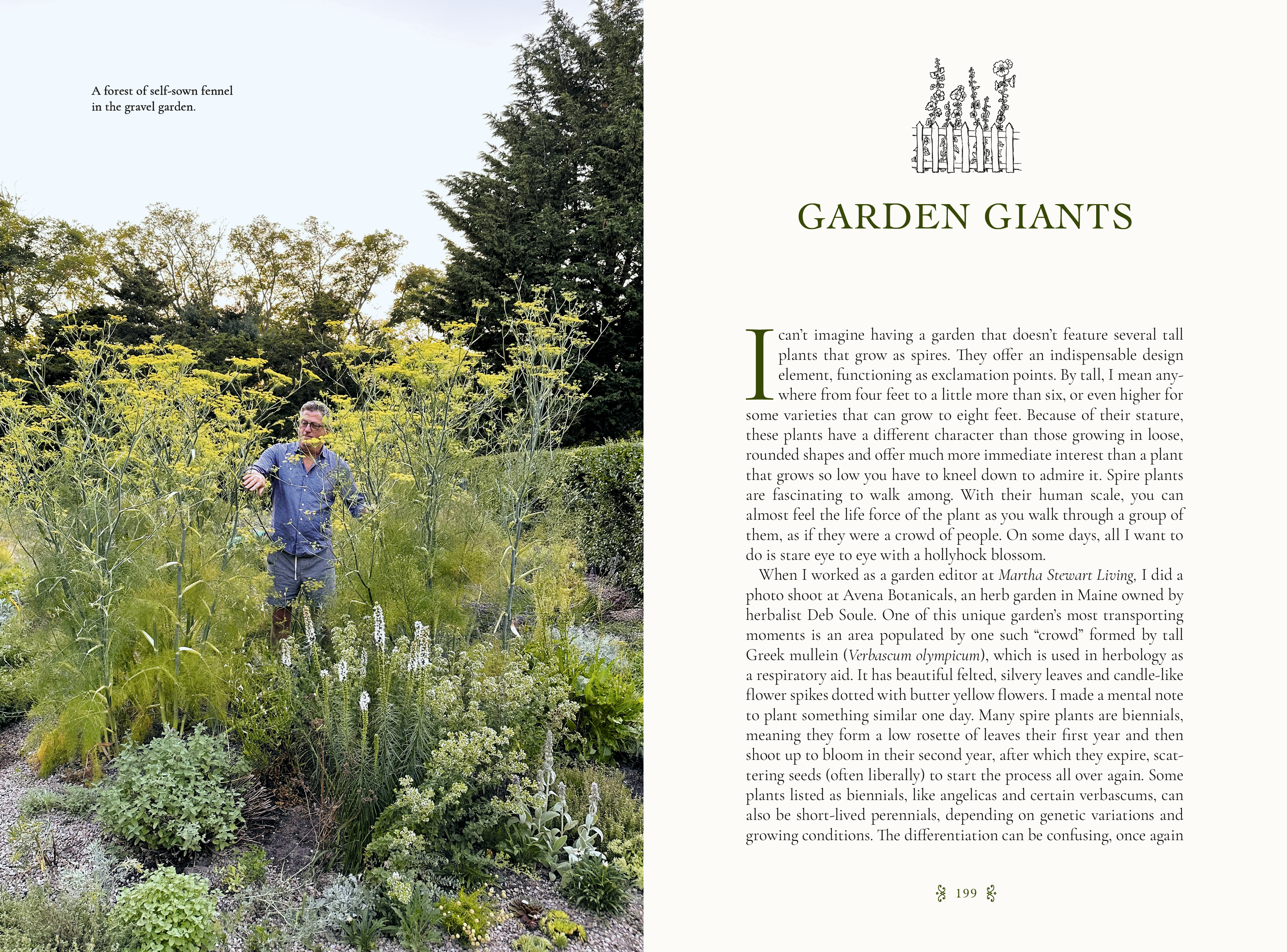
As with those works by the authors I mention above, this collection of essays explores my relationship to plants but more importantly nature, pulling from the four gardens my husband and I have created over the past decades. I want to highlight the emotional sense of well-being a gardener can experience while digging in the soil. Our gardens are that rare space where we can enter a state of creative flow and allow our thoughts to run. I hope to inspire more people to enjoy the offline pleasures of gardening as a refuge from technology and current events. But also, I want to entice them to engage with nature and reclaim some of the time they may have given over to the agitation of social media. Gardening improves not only our physical health but our mental health as well by helping to cut down on distractions and foster focus. I want to encourage the power that comes with merely sitting and observing the sheer wonder of plants whether they are in the woods, the sand dunes, or right in your own backyard.
Gardening should be an act of joy, but what I hear most from new gardeners is—trepidation. They worry about making a mistake, a fatal one because it involves killing a plant. Though I hate to waste my gardening budget, I have learned the most from what did not go as planned: the clematis I pruned at the wrong time, the houseplants I drowned, or the all-you-can-eat hosta buffet I generously provided to the local deer population. When things do not work out the way seed packets say they will, beginner gardeners often give up. Why not instead give yourself a little grace and view failure as a learning opportunity? Research the reasons something did not go well while observing nature’s lessons on how to avoid it from happening again.
•
The idea for this type of thought-inducing gardening book was born in the early part of the pandemic. My husband Chad and I spent that first year of lockdown in our apartment in Queens just minutes from the pandemic epicenter of Elmhurst Hospital. The fear, stress, and unscheduled hours of those early days caused many people to reevaluate their lives. What are we doing and why? Our first getaway, once things cleared up a bit that initial summer, was to Cape Cod, a place of singular natural beauty where, through a series of chance meetings and luck, we decided to buy a house. It was—and is—a big stretch for us in every way, but it has truly turned out to be our happy place.
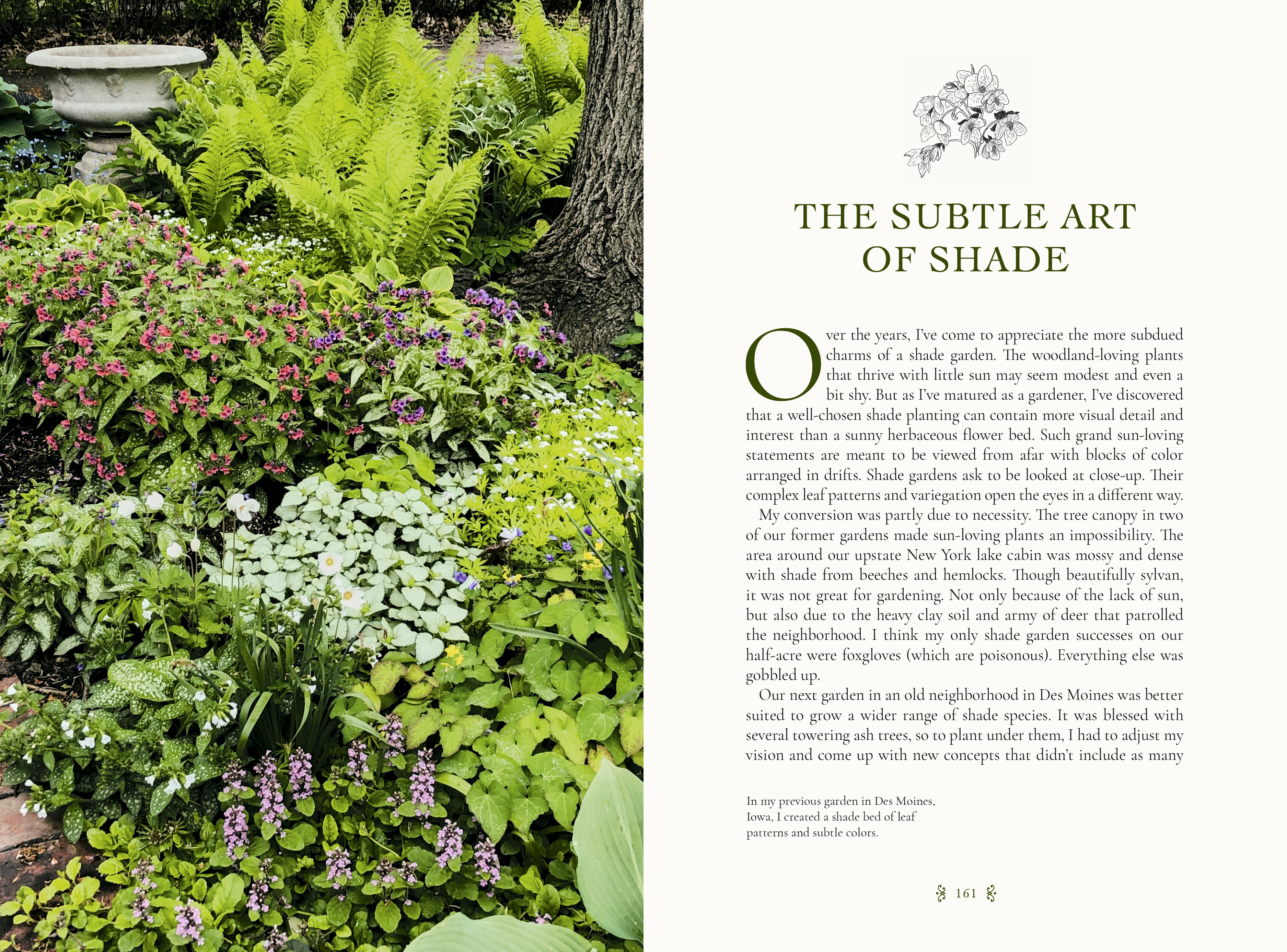
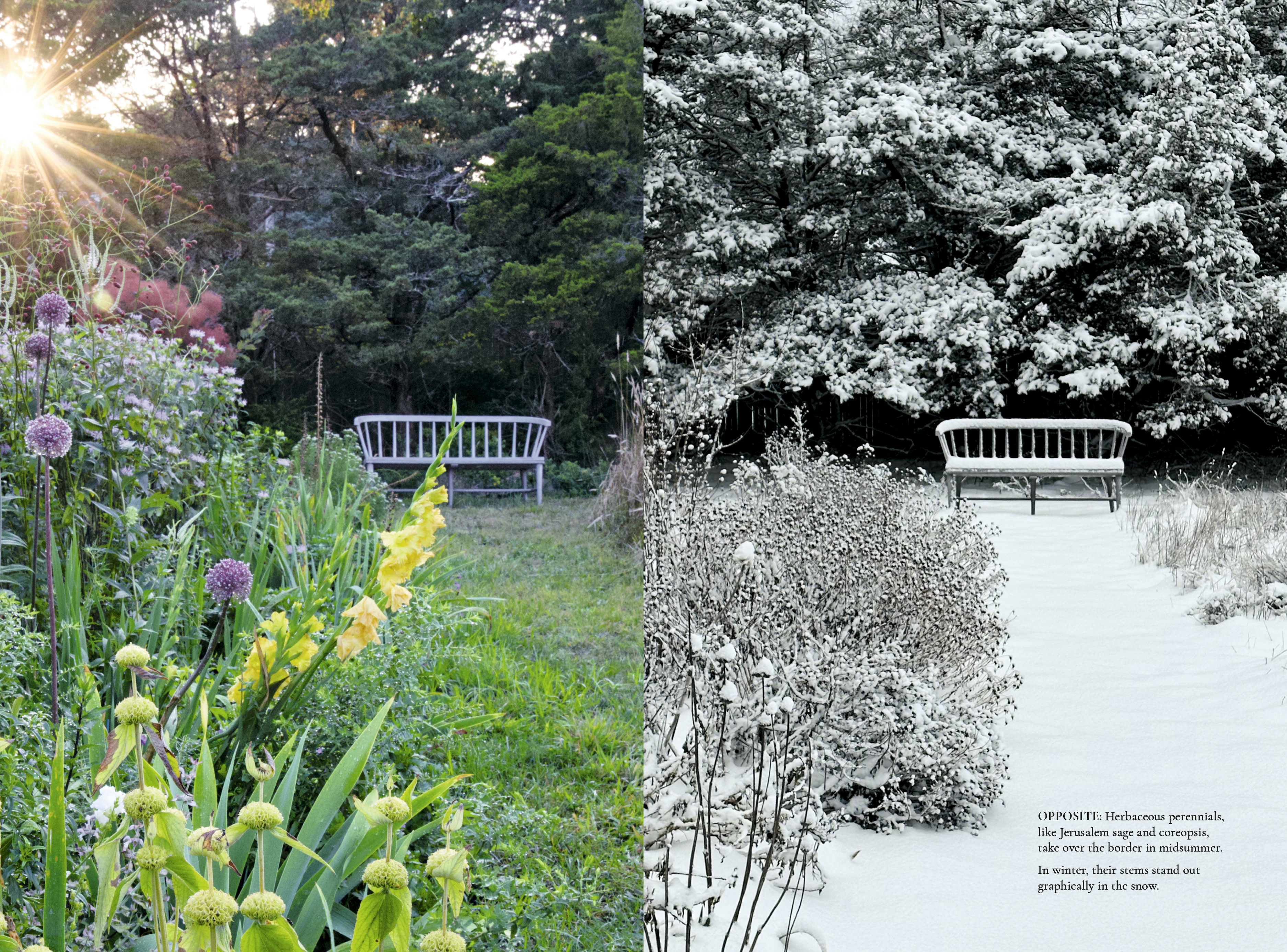
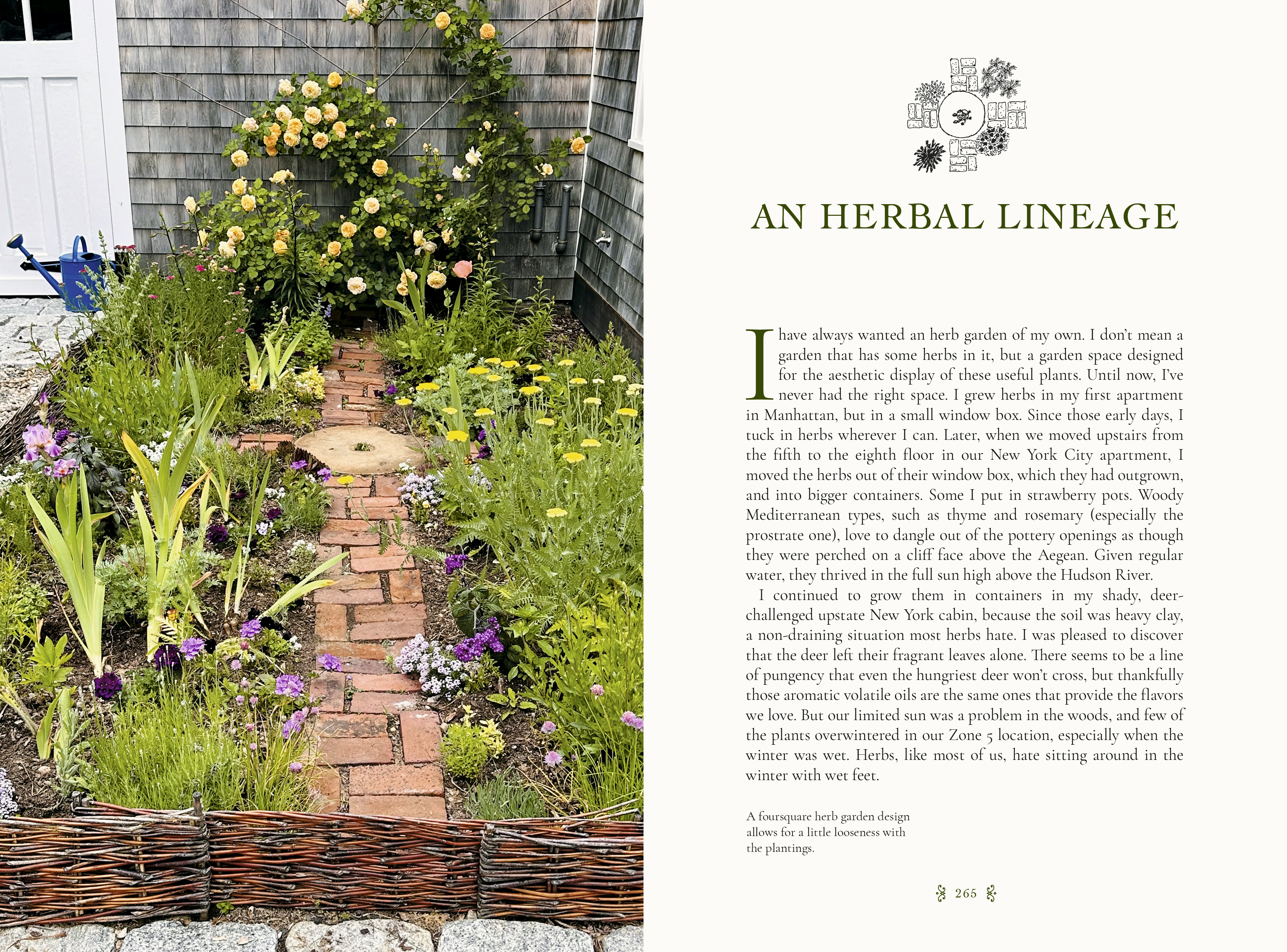
Making a garden at the Cape has been a challenge. But there have also been pluses. I fell in love with the resilient types of plants that grow well in our lean, sandy, seaside conditions—especially such Mediterranean plants as bearded iris, catmint, lavender, rosemary, sage, and thyme. I admire them for their scrappiness in the face of our dramatic storms. We are on the narrowest part of the Cape peninsula where some days I can hear the Atlantic ocean swells crashing on one side, and on others I can hear the waves hitting the opposing bay beaches. But the changing climate also brings more drought, as our spring seasons seem to be getting increasingly drier. The native plants we enjoy on our hikes through the Cape Cod National Seashore, such as scrub oak, white oak, serviceberries, wild bluberries, beach plums, sweetfern, and bayberry, are beautiful on their own. But I have also expanded my horticultural palette by bringing in soil and compost to create a richer environment for a kitchen garden and several flower borders of annuals and perennials. Now in our fourth year here, we are finding success on many levels, while at the same time, wondering what happened with certain plants.
This book is not only about our current garden. I also share the lessons I’ve learned from our past gardens in Manhattan, upstate New York, and Des Moines, Iowa, and through my experience as an author of garden books and editor at brands such as
Better Homes & Gardens, Domino, House & Garden, Martha Stewart Living, and
The New York Times. I always consider the experience of American gardeners nationwide, from Maine to California. It’s not easy to handle every situation—that will be for each gardener to experience and figure out—but I try to keep any lesson geographically adaptable. Every garden I have tended has yielded distinct lessons, in conditions ranging from coastal/waterwise to woodland/deer-plagued and in settings from urban/containers to suburban clay soil/shade.
In its present state, my Cape Cod garden is far from a showplace, though I may make it look appealing on Instagram with good light and carefully chosen camera angles. My yard functions more as an experimental lab, a space where I can learn through observation the ways plants want to exist in nature. I like to take chances and try things the experts say might be marginally cold hardy or too fragile for our stormy winds. I enjoy seeing a new gardener get a similar horticultural bug and watching them gain confidence over the years. I believe through the personal essay approach, gardeners of all ages can learn from my experiences, both positive and negative. I describe my communication style as opinion-rich, but judgment-free.
As Thomas Jefferson wrote in a letter at the age of sixty-eight, “No occupation is so delightful to me as the culture of the earth, & no culture comparable to that of the garden. . . . the failure of one thing repaired by the success of another. . . . but tho’ an old man, I am but a young gardener.” I can think of no better way to go through life, with one hand digging in the soil and the other tending a flower. I hope readers of
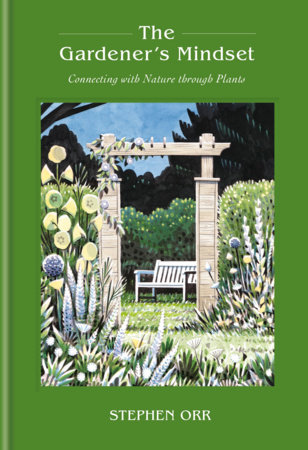
The Gardener’s Mindset will feel the same as they more closely examine the power gardening possesses to connect human intelligence to nature, serving as a reminder to stop and reflect on our place in an increasingly hectic world. Remember, if you need me, I’ll be out in the garden.
Copyright © 2026 by Stephen Orr. All rights reserved. No part of this excerpt may be reproduced or reprinted without permission in writing from the publisher.