Close Modal

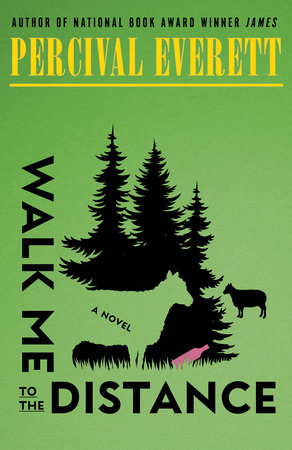
Walk Me to the Distance

A Novel

Look inside
Paperback
$18.00 US
5.16"W x 7.95"H x 0.67"D   | 8 oz | 24 per carton
On sale Oct 21, 2025 | 224 Pages | 9798217008483

Now with a brilliant new package, a re-issue of the sophomore novel  by Percival Everett, New York Times bestselling author of National Book Award winner James.

Haunting, provocative and bleakly funny, Walk Me to the Distance is Percival Everett’s brilliant reexamination of the Western, and a laconic tragicomedy about what it takes to survive in the last days of a bygone big-sky country.

In self-imposed exile after returning home from the war in Vietnam, David Larson meanders into the barren town of Slut’s Hole, Wyoming, where a local widow takes him under her wing. After making a sort of home among the town’s hardscrabble locals, David grudgingly adopts a young Vietnamese girl abandoned along the highway. This sets in motion a number of tragic turns as Western mythos and frontier justice clash against the tides of a changing world.

First published in 1985 by Clarion Books, Walk Me to the Distance was the sophomore novel of an iconic American voice. Over the course of his five decade career, Everett has written over twenty five books and been shortlisted for the Pulitzer Prize (for 2020’s Telephone), twice longlisted for the Booker Prize, and the recipient of the 2024 National Book Award for the “genius” (The Atlantic) James, a brilliantly imagined retelling of The Adventures of Huckleberry Finn told from the enslaved Jim’s point of view. James was a #1 New York Times bestseller and is being developed into film by Stephen Spielberg.
Praise for Percival Everett and Walk Me to the Distance

“Everett’s story has violence and pathos. . . . Unforgettable.”
People

“Everett manages to tell a great deal about one man’s moral dilemma and cluttered path to repatriation. The note of hope on which this moving story ends, though tentative, is fully deserved.”
Publishers Weekly

“God bless Percival Everett, whose dozens of idiosyncratic books demonstrate a majestic indifference to literary trends, the market or his critics.”
The Wall Street Journal

“[Everett is a] prolific genius. . . . A literary jukebox.”
Elle

“Percival Everett [is] our current Great American Novelist. . . . Everett is one of the most, if not the most, interesting writers working today.”
Chicago Tribune

“If the unexpected always happens in Everett’s individual novels, the variety across the work also astonishes.”
The Washington Post

“Percival Everett is a giant of American letters.”
—Hernan Diaz, author of Trust

“One of our culture’s preeminent novelists.”
Los Angeles Times

“Percival Everett is an audacious, beguiling American master, whose wild trajectory has reached astonishing highs in the past decade.”
—Jonathan Lethem, author of Brooklyn Crime Novel

“[Everett] is a first-rate word wrangler.”
The Guardian

“Everett is one of the most unpredictable and original novelists working today.”
—NPR

“It is hard to write or even think about his work without sounding like an inferior edition of Percival Everett. . . . One way to evaluate an artist is to observe the quantity and quality of misinterpretation his work begets. By this measure Everett ranks very highly.”
The New York Times Book Review

“Everett is a true American genius, a master artist.”
—Oprah Daily

“Everett continues to be an endlessly inventive, genre-devouring creator of thoughtful, tender, provocative, and absolutely unpredictable literary wonders.”
Booklist
© Charlotte Lesnick
PERCIVAL EVERETT is a Distinguished Professor of English at USC and the author of Pulitzer Prize and National Book Award winner James. His other most recent books include Dr. No (finalist for the NBCC Award for Fiction and winner of the PEN/Jean Stein Book Award), The Trees (finalist for the Booker Prize and the PEN/Faulkner Award for Fiction), Telephone (finalist for the Pulitzer Prize), So Much Blue, Erasure, and I Am Not Sidney Poitier. He has received the NBCC Ivan Sandrof Life Achievement Award, The Windham Campbell Prize from Yale University, and the Stowe Prize for Literary Activism. American Fiction, the feature film based on his novel Erasure, was released in 2023 and was awarded the Academy Award for Best Adapted Screenplay. He lives in Los Angeles with his wife, the writer Danzy Senna, and their children. View titles by Percival Everett
Chapter 1


It wasn’t that David Larson returned home from Vietnam to find that his girl had taken up with another man; he didn’t have a girl when he left. He’d spent his time in the army telling people that he was from Georgia, then trying to explain to them and, with time, to himself, why he didn’t have a southern accent; finally coming to “I guess I never had one.” He did have parents when he boarded that transport plane in San Francisco, but in his absence, their car had plunged from a bridge into the Savannah River and they had died. He did have a sister. But while he was gone, she had married a man who claimed to be the eighth and unrecognized (rightly so, thought David) member of the Chicago Seven. Of course, Jill and her new husband wanted nothing to do with a “soldier.” David hadn’t had the good sense, the keen foresight to get wounded and lose a limb, and though certainly affected by his tour, he did not come home emotionally or mentally scarred, suffering from flashbacks or a fear of thin people on bicycles. He returned as unremarkable as he had been when he left, in the last wave of States-­bound personnel, having been asked to sit, stupidly, around Saigon for three months before leaving. Just a soldier, a man without the courage, conviction, or cowardice to have run north to Montreal or Toronto.


“I don’t think it’s a good idea that you come by,” Jill had said on the phone.


David didn’t understand. He looked out the window of his motel room at Interstate 95 and then, for a lack of anything else to say, “I’m your brother.”


“I’ve changed.”


“What do you mean, you’ve changed? We have things to discuss.”


“We have nothing to discuss. Mom and Dad left us very little. Give me your address.”


“I don’t have an address.”


“Well, when you get settled, write me and I’ll send you what’s coming to you.”


“I’d like to see you.”


“It’s the times, David.”


David threw one of the motel glasses, still wrapped in paper, against the wall, breaking it. “What the hell is that supposed to mean? It’s the times. What kind of shit are you giving me? I’ve been in the jungle protecting you and your hippie husband.”


Click.


David bought a used Dodge Dart and left Savannah and Georgia. West was the direction he chose. The car performed well in the summer heat. He drove across Iowa, then Nebraska, stopping in the town of Chadron to look up a buddy. He didn’t find his friend, so he drove west across the prairie, his .45 in his lap. The game he played went one bullet per jackrabbit as he spotted them along the roadside. He’d hit only one, knicked its ear, hardly disturbed its stride. Then one of the tall, slender hares leaped across the highway in front of the car. He fired over the hood of the Dart, missed the rabbit, but got his engine. The bullet passed through the radiator. He studied the wound, the afternoon sun hitting the back of his neck. Slowly, a short distance at a time, allowing the engine to cool, he made his way to a gas station.


The station attendant, a lanky man with a salt-­and-­pepper beard, stepped toward the car, wiping his hands with an oily rag. He looked at the radiator, then at David. “Get him?” he asked. “You were shootin’ jackbunnies, weren’t you?”


David just looked at the man. “Can you fix my car?” he asked finally.


The man spat and slipped his oily rag into his hip pocket. “You need a new radiator.” He slammed the hood. “Two weeks.”


“Two weeks?”


“Maybe one. Depends on when I can get to Casper.” He scratched his head. “Might be able to find one in Ross.”


David was not ready for this. He looked out over the rolling grass and down the road at a little store and some other buildings.


“Yep, at least a week.” The mechanic walked over and lifted the lid of the pop machine, pulled out two Cokes. “Here you go. On me.”


David took the bottle. The soda was good and cold and burned pleasantly as it went down. “Where am I?”


“This here is Slut’s Hole, Wyoming.”


“Slut’s Hole.”


“Cowboys named it and the name ain’t never been changed.”


“Why Slut’s Hole?”


“Because everybody comes here and then they leave. That’s the story anyway.”


“You’re still here.”


The man smiled. “Born here.” He took a gulp from his bottle. “Name’s Mitch.”


“David Larson.” They shook hands. “I don’t suppose there’s a motel around here.”


Mitch shook his head. “There’s one in Ross. I know where you can rent a room, though. I’ll take you there.” Mitch rubbed the cold bottle across his forehead. “Just driving cross-­country?”


“Yeah. Just looking around.”


“Service?”


“Army.”


“Were you over there?”


David nodded.


“I wanted to go, but they said I was too light. I’ve filled out a little since then.” He noticed David looking at his graying hair. “Too old, to boot.”


“Yeah, well, you didn’t miss much. Where is this room?”


“I’ll take you. Let’s go.” Mitch dropped his bottle into the rack and started toward the old pickup parked alongside the station. “Grab your gear.”


“You don’t have to leave the station,” David said. “Just point me in the right direction.”


“Don’t worry about the gas. Folks’ll just leave the money by the pumps. Get in.”


Mitch drove David down and up a dusty, winding road, then off onto a bumpy drive to a two-story house. “The old woman’s name is Sixbury, Chloë Sixbury. Now, let me explain something; she’s got a wooden leg. She hates for people to look at it.” He pulled to a halt beside the house, beneath a cottonwood.


The old woman was down by the barn. There was a young man with her, carrying bags of feed from a pickup truck into the barn.


“That’s Patrick,” Mitch said, as they walked toward the barn, “Sixbury’s son. He’s an idiot. Don’t say nothing.”


Sixbury saw the two men approaching and walked over to meet them. “Hey there, Mitch.”


“Sixbury. Got a fella here who needs a room. David, Sixbury.”


“Ten dollars,” she said.


“Ten?” David shook his head. “I don’t know.”


Mitch put a hand on David’s shoulder. “She means a week.”


“Oh. Okay.”


“I cook the meals,” she said. She turned and looked at her son. “My son is retarded. He won’t say anything, but he’s a good boy. Harmless.”


Mitch left and Sixbury showed David to his room. It was downstairs, just off the kitchen, with a window that overlooked the barn lot. Sixbury lived on the small spread with only her son, raised about thirty sheep and a few chickens. She had two horses, an Appaloosa mare and a fourteen-hand, calf-­kneed quarter horse. She managed the ranch by herself, her son helping with the chores. She met the bills with money from mineral rights; her ranch was dotted with oil rigs.


Sixbury did not fool around when she sat down to a meal. Dinner that first evening was something to behold—­generous portions of lamb and potatoes, with beets and several other vegetables. Patrick had a hearty appetite and Sixbury did more than hold her own. David liked Sixbury, though she was only slightly more talkative than her son.


After dinner, David stepped outside. If the day sky of Wyoming had been big, the night sky was overwhelming. In the darkness, the slightly more than flat landscape of the basin ran into the sky. The stars were huge and bright.


Sixbury stepped out onto the porch while David was in the yard. She was holding a bottle and two glasses. “Some place, eh?” she said, sitting on the steps.


“Yes, indeed.”


“All I’ve got is bourbon.”


“Sounds good to me.”


She poured and handed a glass to David as he sat down beside her. “It’s a chilly night.”


“You know, I really missed this country.”


“It’s a big hunk of real estate. Where were you?”


“I was in Vietnam.”


“What’s wrong with your car?”


“I shot a hole in the engine.”


“Jackrabbits?”


David laughed. “A familiar sport in these parts, I take it.”


She knocked her whiskey back and poured herself another. “Mitch mentioned you were overseas.”


David looked at her. He didn’t know when Mitch could have told her.


“He called, to be sure everything was going okay. Were you in the fighting?”


“You might say that.”


“My Frank was in the Second War. He was with lots of women over there. Were you,” she cleared her throat, “active?”


“Moderately.”


“Frank denied it, but I know.”


“How did Frank die?” David took the bottle and poured another.


“Car crash. I lost my leg. I used to have a peg. I think I like it better.” She knocked on her prosthetic limb. “People never had to guess which one was phony.”


David smiled and looked at the old woman. “You know, I like you. I don’t like a whole lot of people, but I like you.”


“Yeah, well, it ain’t been a whole day yet.”


After a silence, David said, “I’ve been trying to figure out where I should live.”


“Where were you born?”


“Georgia.”


“Settle there. People should live where they have a history.”


“Don’t like it there. Never did.”


“Then go where God takes you.”

About

Now with a brilliant new package, a re-issue of the sophomore novel  by Percival Everett, New York Times bestselling author of National Book Award winner James.

Haunting, provocative and bleakly funny, Walk Me to the Distance is Percival Everett’s brilliant reexamination of the Western, and a laconic tragicomedy about what it takes to survive in the last days of a bygone big-sky country.

In self-imposed exile after returning home from the war in Vietnam, David Larson meanders into the barren town of Slut’s Hole, Wyoming, where a local widow takes him under her wing. After making a sort of home among the town’s hardscrabble locals, David grudgingly adopts a young Vietnamese girl abandoned along the highway. This sets in motion a number of tragic turns as Western mythos and frontier justice clash against the tides of a changing world.

First published in 1985 by Clarion Books, Walk Me to the Distance was the sophomore novel of an iconic American voice. Over the course of his five decade career, Everett has written over twenty five books and been shortlisted for the Pulitzer Prize (for 2020’s Telephone), twice longlisted for the Booker Prize, and the recipient of the 2024 National Book Award for the “genius” (The Atlantic) James, a brilliantly imagined retelling of The Adventures of Huckleberry Finn told from the enslaved Jim’s point of view. James was a #1 New York Times bestseller and is being developed into film by Stephen Spielberg.

Praise

Praise for Percival Everett and Walk Me to the Distance

“Everett’s story has violence and pathos. . . . Unforgettable.”
People

“Everett manages to tell a great deal about one man’s moral dilemma and cluttered path to repatriation. The note of hope on which this moving story ends, though tentative, is fully deserved.”
Publishers Weekly

“God bless Percival Everett, whose dozens of idiosyncratic books demonstrate a majestic indifference to literary trends, the market or his critics.”
The Wall Street Journal

“[Everett is a] prolific genius. . . . A literary jukebox.”
Elle

“Percival Everett [is] our current Great American Novelist. . . . Everett is one of the most, if not the most, interesting writers working today.”
Chicago Tribune

“If the unexpected always happens in Everett’s individual novels, the variety across the work also astonishes.”
The Washington Post

“Percival Everett is a giant of American letters.”
—Hernan Diaz, author of Trust

“One of our culture’s preeminent novelists.”
Los Angeles Times

“Percival Everett is an audacious, beguiling American master, whose wild trajectory has reached astonishing highs in the past decade.”
—Jonathan Lethem, author of Brooklyn Crime Novel

“[Everett] is a first-rate word wrangler.”
The Guardian

“Everett is one of the most unpredictable and original novelists working today.”
—NPR

“It is hard to write or even think about his work without sounding like an inferior edition of Percival Everett. . . . One way to evaluate an artist is to observe the quantity and quality of misinterpretation his work begets. By this measure Everett ranks very highly.”
The New York Times Book Review

“Everett is a true American genius, a master artist.”
—Oprah Daily

“Everett continues to be an endlessly inventive, genre-devouring creator of thoughtful, tender, provocative, and absolutely unpredictable literary wonders.”
Booklist

Author

© Charlotte Lesnick
PERCIVAL EVERETT is a Distinguished Professor of English at USC and the author of Pulitzer Prize and National Book Award winner James. His other most recent books include Dr. No (finalist for the NBCC Award for Fiction and winner of the PEN/Jean Stein Book Award), The Trees (finalist for the Booker Prize and the PEN/Faulkner Award for Fiction), Telephone (finalist for the Pulitzer Prize), So Much Blue, Erasure, and I Am Not Sidney Poitier. He has received the NBCC Ivan Sandrof Life Achievement Award, The Windham Campbell Prize from Yale University, and the Stowe Prize for Literary Activism. American Fiction, the feature film based on his novel Erasure, was released in 2023 and was awarded the Academy Award for Best Adapted Screenplay. He lives in Los Angeles with his wife, the writer Danzy Senna, and their children. View titles by Percival Everett

Excerpt

Chapter 1


It wasn’t that David Larson returned home from Vietnam to find that his girl had taken up with another man; he didn’t have a girl when he left. He’d spent his time in the army telling people that he was from Georgia, then trying to explain to them and, with time, to himself, why he didn’t have a southern accent; finally coming to “I guess I never had one.” He did have parents when he boarded that transport plane in San Francisco, but in his absence, their car had plunged from a bridge into the Savannah River and they had died. He did have a sister. But while he was gone, she had married a man who claimed to be the eighth and unrecognized (rightly so, thought David) member of the Chicago Seven. Of course, Jill and her new husband wanted nothing to do with a “soldier.” David hadn’t had the good sense, the keen foresight to get wounded and lose a limb, and though certainly affected by his tour, he did not come home emotionally or mentally scarred, suffering from flashbacks or a fear of thin people on bicycles. He returned as unremarkable as he had been when he left, in the last wave of States-­bound personnel, having been asked to sit, stupidly, around Saigon for three months before leaving. Just a soldier, a man without the courage, conviction, or cowardice to have run north to Montreal or Toronto.


“I don’t think it’s a good idea that you come by,” Jill had said on the phone.


David didn’t understand. He looked out the window of his motel room at Interstate 95 and then, for a lack of anything else to say, “I’m your brother.”


“I’ve changed.”


“What do you mean, you’ve changed? We have things to discuss.”


“We have nothing to discuss. Mom and Dad left us very little. Give me your address.”


“I don’t have an address.”


“Well, when you get settled, write me and I’ll send you what’s coming to you.”


“I’d like to see you.”


“It’s the times, David.”


David threw one of the motel glasses, still wrapped in paper, against the wall, breaking it. “What the hell is that supposed to mean? It’s the times. What kind of shit are you giving me? I’ve been in the jungle protecting you and your hippie husband.”


Click.


David bought a used Dodge Dart and left Savannah and Georgia. West was the direction he chose. The car performed well in the summer heat. He drove across Iowa, then Nebraska, stopping in the town of Chadron to look up a buddy. He didn’t find his friend, so he drove west across the prairie, his .45 in his lap. The game he played went one bullet per jackrabbit as he spotted them along the roadside. He’d hit only one, knicked its ear, hardly disturbed its stride. Then one of the tall, slender hares leaped across the highway in front of the car. He fired over the hood of the Dart, missed the rabbit, but got his engine. The bullet passed through the radiator. He studied the wound, the afternoon sun hitting the back of his neck. Slowly, a short distance at a time, allowing the engine to cool, he made his way to a gas station.


The station attendant, a lanky man with a salt-­and-­pepper beard, stepped toward the car, wiping his hands with an oily rag. He looked at the radiator, then at David. “Get him?” he asked. “You were shootin’ jackbunnies, weren’t you?”


David just looked at the man. “Can you fix my car?” he asked finally.


The man spat and slipped his oily rag into his hip pocket. “You need a new radiator.” He slammed the hood. “Two weeks.”


“Two weeks?”


“Maybe one. Depends on when I can get to Casper.” He scratched his head. “Might be able to find one in Ross.”


David was not ready for this. He looked out over the rolling grass and down the road at a little store and some other buildings.


“Yep, at least a week.” The mechanic walked over and lifted the lid of the pop machine, pulled out two Cokes. “Here you go. On me.”


David took the bottle. The soda was good and cold and burned pleasantly as it went down. “Where am I?”


“This here is Slut’s Hole, Wyoming.”


“Slut’s Hole.”


“Cowboys named it and the name ain’t never been changed.”


“Why Slut’s Hole?”


“Because everybody comes here and then they leave. That’s the story anyway.”


“You’re still here.”


The man smiled. “Born here.” He took a gulp from his bottle. “Name’s Mitch.”


“David Larson.” They shook hands. “I don’t suppose there’s a motel around here.”


Mitch shook his head. “There’s one in Ross. I know where you can rent a room, though. I’ll take you there.” Mitch rubbed the cold bottle across his forehead. “Just driving cross-­country?”


“Yeah. Just looking around.”


“Service?”


“Army.”


“Were you over there?”


David nodded.


“I wanted to go, but they said I was too light. I’ve filled out a little since then.” He noticed David looking at his graying hair. “Too old, to boot.”


“Yeah, well, you didn’t miss much. Where is this room?”


“I’ll take you. Let’s go.” Mitch dropped his bottle into the rack and started toward the old pickup parked alongside the station. “Grab your gear.”


“You don’t have to leave the station,” David said. “Just point me in the right direction.”


“Don’t worry about the gas. Folks’ll just leave the money by the pumps. Get in.”


Mitch drove David down and up a dusty, winding road, then off onto a bumpy drive to a two-story house. “The old woman’s name is Sixbury, Chloë Sixbury. Now, let me explain something; she’s got a wooden leg. She hates for people to look at it.” He pulled to a halt beside the house, beneath a cottonwood.


The old woman was down by the barn. There was a young man with her, carrying bags of feed from a pickup truck into the barn.


“That’s Patrick,” Mitch said, as they walked toward the barn, “Sixbury’s son. He’s an idiot. Don’t say nothing.”


Sixbury saw the two men approaching and walked over to meet them. “Hey there, Mitch.”


“Sixbury. Got a fella here who needs a room. David, Sixbury.”


“Ten dollars,” she said.


“Ten?” David shook his head. “I don’t know.”


Mitch put a hand on David’s shoulder. “She means a week.”


“Oh. Okay.”


“I cook the meals,” she said. She turned and looked at her son. “My son is retarded. He won’t say anything, but he’s a good boy. Harmless.”


Mitch left and Sixbury showed David to his room. It was downstairs, just off the kitchen, with a window that overlooked the barn lot. Sixbury lived on the small spread with only her son, raised about thirty sheep and a few chickens. She had two horses, an Appaloosa mare and a fourteen-hand, calf-­kneed quarter horse. She managed the ranch by herself, her son helping with the chores. She met the bills with money from mineral rights; her ranch was dotted with oil rigs.


Sixbury did not fool around when she sat down to a meal. Dinner that first evening was something to behold—­generous portions of lamb and potatoes, with beets and several other vegetables. Patrick had a hearty appetite and Sixbury did more than hold her own. David liked Sixbury, though she was only slightly more talkative than her son.


After dinner, David stepped outside. If the day sky of Wyoming had been big, the night sky was overwhelming. In the darkness, the slightly more than flat landscape of the basin ran into the sky. The stars were huge and bright.


Sixbury stepped out onto the porch while David was in the yard. She was holding a bottle and two glasses. “Some place, eh?” she said, sitting on the steps.


“Yes, indeed.”


“All I’ve got is bourbon.”


“Sounds good to me.”


She poured and handed a glass to David as he sat down beside her. “It’s a chilly night.”


“You know, I really missed this country.”


“It’s a big hunk of real estate. Where were you?”


“I was in Vietnam.”


“What’s wrong with your car?”


“I shot a hole in the engine.”


“Jackrabbits?”


David laughed. “A familiar sport in these parts, I take it.”


She knocked her whiskey back and poured herself another. “Mitch mentioned you were overseas.”


David looked at her. He didn’t know when Mitch could have told her.


“He called, to be sure everything was going okay. Were you in the fighting?”


“You might say that.”


“My Frank was in the Second War. He was with lots of women over there. Were you,” she cleared her throat, “active?”


“Moderately.”


“Frank denied it, but I know.”


“How did Frank die?” David took the bottle and poured another.


“Car crash. I lost my leg. I used to have a peg. I think I like it better.” She knocked on her prosthetic limb. “People never had to guess which one was phony.”


David smiled and looked at the old woman. “You know, I like you. I don’t like a whole lot of people, but I like you.”


“Yeah, well, it ain’t been a whole day yet.”


After a silence, David said, “I’ve been trying to figure out where I should live.”


“Where were you born?”


“Georgia.”


“Settle there. People should live where they have a history.”


“Don’t like it there. Never did.”


“Then go where God takes you.”