In one hardcover volume—the two most popular novels by one of the greatest twentieth-century novelists, whose psychologically rich stories of lost innocence combine sharp humor with a devastating gift for exposing hidden motivations
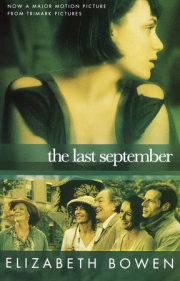
The Last September is a portrait of a young woman’s coming-of-age in a brutalized time and place, where the ordinariness of life is shadowed by the impending doom of history. In 1920, at their country home in County Cork, young Lois’s guardian, Sir Richard Naylor, and his family and friends stubbornly carry on with their tennis parties and dances, all while knowing that British rule in Ireland—and with it, their privileged way of life—is about to end.
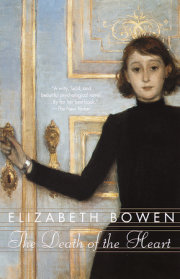
The Death of the Heart, perhaps Bowen’s masterpiece, is a devastating story of adolescent love and the betrayal of innocence. When orphaned sixteen-year-old Portia Quayne arrives in London and falls for Eddie, an attractive and carefree cad, their entanglement threatens to shatter the carefully built illusions of everyone in their politely treacherous social world.
Everyman's Library pursues the highest production standards, printing on acid-free cream-colored paper, with full-cloth cases with two-color foil stamping, decorative endpapers, silk ribbon markers, European-style half-round spines, and a full-color illustrated jacket. Contemporary Classics include an introduction, a select bibliography, and a chronology of the author's life and times.
“[The Last September is] brilliant . . . a successful combination of social comedy and private tragedy.” —The Times Literary Supplement (London)
“A witty, lucid, and beautiful psychological novel. . . . [The Death of the Heart] manages to make a major statement about human character. . . . We finish the book with that sense fiction nowadays rarely communicates, of life’s having been mysteriously enlarged.” —The New Yorker “In [Elizabeth Bowen’s] fictions, a deep strain of passionate emotion is controlled by strong intelligence and irony. . . . She said that she liked to write about ‘life with the lid on’: a strong code of behaviour not only contains but intensifies the emotion boiling up inside. No wonder that her novels and stories centre so often on disruptive children or adolescents, threatening whatever equilibrium the settled adults may have achieved at painful cost; she studies sympathetically both the boiling up and the efforts at containment, the double pulse of life’s renewal.” —from the Introduction by Tessa Hadley
Elizabeth Bowen was born in Dublin in 1899, the only child of an Irish lawyer and landowner. She wrote many acclaimed novels and short story collections, was awarded the CBE in 1948, and was made a Companion of Literature by the Royal Society of Literature in 1965. Her book Bowen's Court (1942) is the history of her family and their house, in County Cork. Throughout her life, she divided her time between London and Bowen's Court, which she inherited. She died in 1973.
In one hardcover volume—the two most popular novels by one of the greatest twentieth-century novelists, whose psychologically rich stories of lost innocence combine sharp humor with a devastating gift for exposing hidden motivations
The Last September is a portrait of a young woman’s coming-of-age in a brutalized time and place, where the ordinariness of life is shadowed by the impending doom of history. In 1920, at their country home in County Cork, young Lois’s guardian, Sir Richard Naylor, and his family and friends stubbornly carry on with their tennis parties and dances, all while knowing that British rule in Ireland—and with it, their privileged way of life—is about to end.
The Death of the Heart, perhaps Bowen’s masterpiece, is a devastating story of adolescent love and the betrayal of innocence. When orphaned sixteen-year-old Portia Quayne arrives in London and falls for Eddie, an attractive and carefree cad, their entanglement threatens to shatter the carefully built illusions of everyone in their politely treacherous social world.
Everyman's Library pursues the highest production standards, printing on acid-free cream-colored paper, with full-cloth cases with two-color foil stamping, decorative endpapers, silk ribbon markers, European-style half-round spines, and a full-color illustrated jacket. Contemporary Classics include an introduction, a select bibliography, and a chronology of the author's life and times.
Praise
“[The Last September is] brilliant . . . a successful combination of social comedy and private tragedy.” —The Times Literary Supplement (London)
“A witty, lucid, and beautiful psychological novel. . . . [The Death of the Heart] manages to make a major statement about human character. . . . We finish the book with that sense fiction nowadays rarely communicates, of life’s having been mysteriously enlarged.” —The New Yorker “In [Elizabeth Bowen’s] fictions, a deep strain of passionate emotion is controlled by strong intelligence and irony. . . . She said that she liked to write about ‘life with the lid on’: a strong code of behaviour not only contains but intensifies the emotion boiling up inside. No wonder that her novels and stories centre so often on disruptive children or adolescents, threatening whatever equilibrium the settled adults may have achieved at painful cost; she studies sympathetically both the boiling up and the efforts at containment, the double pulse of life’s renewal.” —from the Introduction by Tessa Hadley
Author
Elizabeth Bowen was born in Dublin in 1899, the only child of an Irish lawyer and landowner. She wrote many acclaimed novels and short story collections, was awarded the CBE in 1948, and was made a Companion of Literature by the Royal Society of Literature in 1965. Her book Bowen's Court (1942) is the history of her family and their house, in County Cork. Throughout her life, she divided her time between London and Bowen's Court, which she inherited. She died in 1973.