A luxurious and definitive exploration of how and why the Renaissance flourished in Italy for two centuries.
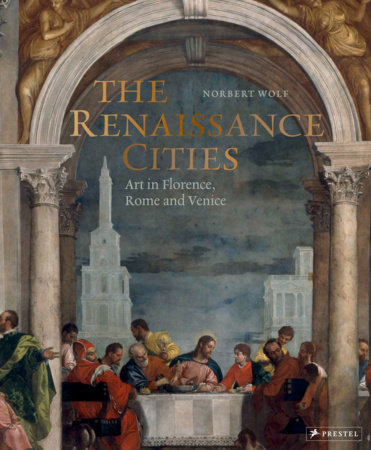
The idea of “renaissance,” or rebirth, arose in Italy as a way of reviving the art, science, and scholarship of the Classical era. It was also powered by a quest to document artistic “reality” according to newly discovered scientific and mathematical principles. By the late 15th century, Italy had become the recognized European leader in the fields of painting, architecture, and sculpture. But why was Florence the center of this burgeoning creativity, and how did it spread to other Italian cities? Brimming with vivid reproductions of works by Leonardo, Michelangelo, Botticelli, Raphael, Titian, and others, this book showcases the creative achievements that traveled from Florence to Rome to Venice. Art historian Norbert Wolf explores the influence of secular and religious patronage on artistic development; how the urban structure and way of life allowed for such a rich exchange of ideas; and how ideas of humanism informed artists reaching toward the future while clinging to the ideals of the past. Insightful, accessible, and fascinating, this thoroughly researched book highlights the connections and mutual influences of Florence, Rome, and Venice as well as their intriguing rivalries and interdependencies.
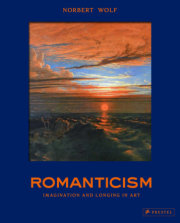
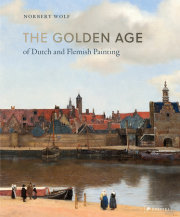
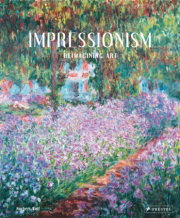
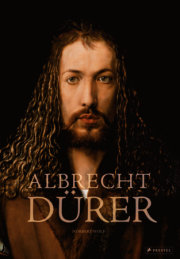
NORBERT WOLF is an art historian based in Munich. He has published several books with Prestel, including Art Nouveau, Art Deco, Impressionism, and The Golden Age of Dutch and Flemish Painting, as well as monographs on Albrecht Dürer and Titian.
A luxurious and definitive exploration of how and why the Renaissance flourished in Italy for two centuries.
The idea of “renaissance,” or rebirth, arose in Italy as a way of reviving the art, science, and scholarship of the Classical era. It was also powered by a quest to document artistic “reality” according to newly discovered scientific and mathematical principles. By the late 15th century, Italy had become the recognized European leader in the fields of painting, architecture, and sculpture. But why was Florence the center of this burgeoning creativity, and how did it spread to other Italian cities? Brimming with vivid reproductions of works by Leonardo, Michelangelo, Botticelli, Raphael, Titian, and others, this book showcases the creative achievements that traveled from Florence to Rome to Venice. Art historian Norbert Wolf explores the influence of secular and religious patronage on artistic development; how the urban structure and way of life allowed for such a rich exchange of ideas; and how ideas of humanism informed artists reaching toward the future while clinging to the ideals of the past. Insightful, accessible, and fascinating, this thoroughly researched book highlights the connections and mutual influences of Florence, Rome, and Venice as well as their intriguing rivalries and interdependencies.
Author
NORBERT WOLF is an art historian based in Munich. He has published several books with Prestel, including Art Nouveau, Art Deco, Impressionism, and The Golden Age of Dutch and Flemish Painting, as well as monographs on Albrecht Dürer and Titian.