Close Modal

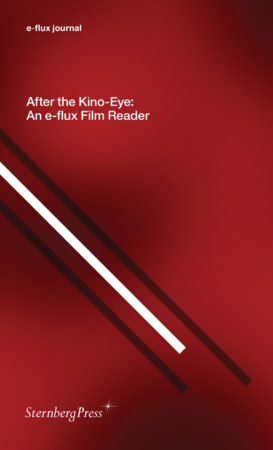
After the Kino-Eye

An e-flux Film Reader

Edited by Lukas Brasiskis
Paperback
$24.95 US
4"W x 7"H | 13 oz | 24 per carton
On sale Feb 02, 2027 | 296 Pages | 9781911745013

How art and cultural institutions can resist, critique, and build alternatives to the intersecting crises of racial capitalism, imperialism, neofascism, and neoliberal authoritarianism.

We are living in a time of global upheaval, genocide, and humanitarian disasters. Driven by big finance and new forms of imperialism, extractive racial capitalism is reaping mass casualties and ecological catastrophes around the world, as the inequalities between nations and the communities within them reach new extremes. Ascendent forms of neofascism, techno-feudalism, and violent systems of oppression have infiltrated our lives, redefining politics, work, leisure, the family, our forms of socialization, cultural production, and consumption. Meanwhile, new forms of censorship, self-censorship, repression, surveillance, and control have proliferated in the last decade—many implemented and escalated since the global pandemic by governments and corporations working in tandem via digital capitalism. Apparently unregulated, these forms have penetrated our social norms, habits, intellectual, public, and pedagogical structures to unprecedented degrees. Moreover, in supposedly democratic states we have witnessed a criminalization of peaceful protest, the normalization of anti-immigration and xenophobic rhetoric and policy, and the dismantling of collective action. Western nations that once defended ideals of liberalism, democracy, justice, and freedom of expression have readily discarded them, as demonstrated by the collective blind eye turned to the Israeli genocide of the Palestinian people in Gaza. 

Amid these polycrises, what were once autonomous cultural and educational institutions that fostered discursive critique and freedom of expression have, under the stranglehold of neoliberal privatization, increasingly acquiesced to neoconservative, far right, and neofascist ideologies. Despite the supposed social and political turn in contemporary art and its institutions in the wake of the Occupy and Black Lives Matter movements, the neoliberal public arts museum is arguably less political than it has ever been. This collection of essays addresses these issues, asking what role public arts and other cultural institutions, cultural workers, public intellectuals, arts educators, and practitioners can play—not just in resisting and critiquing right-wing populism and authoritarianism, but in imagining, materializing and mobilizing alternatives to this reactionary political horizon.

Contributors
Ben Burbridge, TJ Demos, Kodwo Eshun and Anjalika Sagar, Keith Hart, David Graeber and Nika Dubrovsky, Dan Hicks, Amanda Ju, Deeqa Ismail and Alana Lake, Sarah E. James, Yazan Khalili, Vera Mey, Fred Moten, Stefano Harney and Zun Lee, Jumana Manna, Philippe Pirotte, and Wenny Teo.

Copublished by Manchester School of Art.

About

How art and cultural institutions can resist, critique, and build alternatives to the intersecting crises of racial capitalism, imperialism, neofascism, and neoliberal authoritarianism.

We are living in a time of global upheaval, genocide, and humanitarian disasters. Driven by big finance and new forms of imperialism, extractive racial capitalism is reaping mass casualties and ecological catastrophes around the world, as the inequalities between nations and the communities within them reach new extremes. Ascendent forms of neofascism, techno-feudalism, and violent systems of oppression have infiltrated our lives, redefining politics, work, leisure, the family, our forms of socialization, cultural production, and consumption. Meanwhile, new forms of censorship, self-censorship, repression, surveillance, and control have proliferated in the last decade—many implemented and escalated since the global pandemic by governments and corporations working in tandem via digital capitalism. Apparently unregulated, these forms have penetrated our social norms, habits, intellectual, public, and pedagogical structures to unprecedented degrees. Moreover, in supposedly democratic states we have witnessed a criminalization of peaceful protest, the normalization of anti-immigration and xenophobic rhetoric and policy, and the dismantling of collective action. Western nations that once defended ideals of liberalism, democracy, justice, and freedom of expression have readily discarded them, as demonstrated by the collective blind eye turned to the Israeli genocide of the Palestinian people in Gaza. 

Amid these polycrises, what were once autonomous cultural and educational institutions that fostered discursive critique and freedom of expression have, under the stranglehold of neoliberal privatization, increasingly acquiesced to neoconservative, far right, and neofascist ideologies. Despite the supposed social and political turn in contemporary art and its institutions in the wake of the Occupy and Black Lives Matter movements, the neoliberal public arts museum is arguably less political than it has ever been. This collection of essays addresses these issues, asking what role public arts and other cultural institutions, cultural workers, public intellectuals, arts educators, and practitioners can play—not just in resisting and critiquing right-wing populism and authoritarianism, but in imagining, materializing and mobilizing alternatives to this reactionary political horizon.

Contributors
Ben Burbridge, TJ Demos, Kodwo Eshun and Anjalika Sagar, Keith Hart, David Graeber and Nika Dubrovsky, Dan Hicks, Amanda Ju, Deeqa Ismail and Alana Lake, Sarah E. James, Yazan Khalili, Vera Mey, Fred Moten, Stefano Harney and Zun Lee, Jumana Manna, Philippe Pirotte, and Wenny Teo.

Copublished by Manchester School of Art.