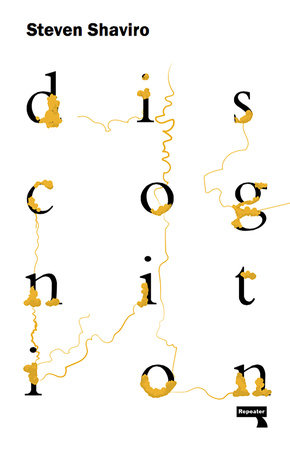
What is consciousness? What is it like to feel pain, or to see the color red? Do robots and computers really think? For that matter, do plants and amoebas think? If we ever meet intelligent aliens, will we be able to understand what they say to us? Philosophers and scientists are still unable to answer questions like these. Perhaps science fiction can help. In Discognition, Steven Shaviro looks at science fiction novels and stories that explore the extreme possibilities of human and alien sentience.
Winner of the University of California (Riverside) 2017 Science Fiction and Technoculture Studies Program Book Award
Steven Shaviro is the DeRoy Professor of English at Wayne State University. His books include Connected, Or, What It Means To Live in the Network Society (2003), Post-Cinematic Affect (2010), The Universe of Things (2014), and No Speed Limit: Three Essays on Accelerationism (2014). He blogs at The Pinocchio Theory.
What is consciousness? What is it like to feel pain, or to see the color red? Do robots and computers really think? For that matter, do plants and amoebas think? If we ever meet intelligent aliens, will we be able to understand what they say to us? Philosophers and scientists are still unable to answer questions like these. Perhaps science fiction can help. In Discognition, Steven Shaviro looks at science fiction novels and stories that explore the extreme possibilities of human and alien sentience.
Praise
Winner of the University of California (Riverside) 2017 Science Fiction and Technoculture Studies Program Book Award
Author
Steven Shaviro is the DeRoy Professor of English at Wayne State University. His books include Connected, Or, What It Means To Live in the Network Society (2003), Post-Cinematic Affect (2010), The Universe of Things (2014), and No Speed Limit: Three Essays on Accelerationism (2014). He blogs at The Pinocchio Theory.