Close Modal

How to Change Course

The Principles of Ecological Planning

Translated by David Broder
Beyond growth, ecological planning offers a realist, transformative path toward a balanced human ecological footprint by deepening economic democracy

After decades of ecological policy failures and fantasies about the virtues of the market, planning is rising as an alternative path to face the environmental catastrophe and advance human emancipation.This book looks back at the history of this notion in the 20th century, between war economies, developmental catch-up, and socialist experiments, revisits the classic debates between the proponents of the "price signal" and those of "calculation in kind", and shows how the current situation offers new possibilities for planning. The cautious deployment of digital tools, innovative accounting techniques, and the deepening of institutions of collective deliberation can give rise to a needs-based government of production. As long as they remain trapped in the straitjacket of the "free market", consumer eco-gestures will prove powerless. Beyond growth, ecological planning offers a realist, transformative path toward a balanced human ecological footprint by deepening economic democracy.
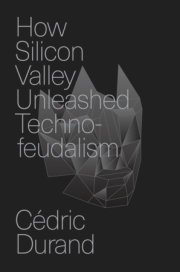
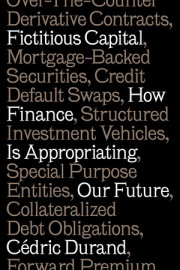
"Cédric Durand is Professor of political economy at the University of Geneva and the author of several books, including Fictitious Capital: How Finance is Appropriating our Future and How Silicon Valley Unleashed Techno-Feudalism: The Making of the Digital Economy. He regularly contributes to the New Left Review.

Razmig Keucheyan is Professor of sociology at Paris Cité University and the author of several books, including The Left Hemisphere: Mapping Critical Theory Today, and Nature is a Battlefield: Towards a Political Ecology. He regularly contributes to Le Monde diplomatique."
Acknowledgements
Introduction

Part I — Market, State, Ecological Crisis
Chapter One - The Antinomies of Green Capitalism
Chapter Two - Politicising the Economy

Part II — Governing According to Need
Chapter Three
The Two-Sided Universality of Needs
Chapter Four
Regaining Control

Part III — Ecological Calculation
A Note on Method. Institutional Utopias.
Chapter Five - Ecological Accounting
Chapter Six - Ecosocialist Investment
Chapter Seven - Emancipated Demand

Part IV — A New Political System
Chapter Eight - Ecological Federalism
Chapter Nine - The Political Institutions Useful for Ecological Planning
Chapter Ten - An Augmented Democracy
Chapter Eleven - Building a Majority Coalition

Conclusion

About

Beyond growth, ecological planning offers a realist, transformative path toward a balanced human ecological footprint by deepening economic democracy

After decades of ecological policy failures and fantasies about the virtues of the market, planning is rising as an alternative path to face the environmental catastrophe and advance human emancipation.This book looks back at the history of this notion in the 20th century, between war economies, developmental catch-up, and socialist experiments, revisits the classic debates between the proponents of the "price signal" and those of "calculation in kind", and shows how the current situation offers new possibilities for planning. The cautious deployment of digital tools, innovative accounting techniques, and the deepening of institutions of collective deliberation can give rise to a needs-based government of production. As long as they remain trapped in the straitjacket of the "free market", consumer eco-gestures will prove powerless. Beyond growth, ecological planning offers a realist, transformative path toward a balanced human ecological footprint by deepening economic democracy.

Author

"Cédric Durand is Professor of political economy at the University of Geneva and the author of several books, including Fictitious Capital: How Finance is Appropriating our Future and How Silicon Valley Unleashed Techno-Feudalism: The Making of the Digital Economy. He regularly contributes to the New Left Review.

Razmig Keucheyan is Professor of sociology at Paris Cité University and the author of several books, including The Left Hemisphere: Mapping Critical Theory Today, and Nature is a Battlefield: Towards a Political Ecology. He regularly contributes to Le Monde diplomatique."

Table of Contents

Acknowledgements
Introduction

Part I — Market, State, Ecological Crisis
Chapter One - The Antinomies of Green Capitalism
Chapter Two - Politicising the Economy

Part II — Governing According to Need
Chapter Three
The Two-Sided Universality of Needs
Chapter Four
Regaining Control

Part III — Ecological Calculation
A Note on Method. Institutional Utopias.
Chapter Five - Ecological Accounting
Chapter Six - Ecosocialist Investment
Chapter Seven - Emancipated Demand

Part IV — A New Political System
Chapter Eight - Ecological Federalism
Chapter Nine - The Political Institutions Useful for Ecological Planning
Chapter Ten - An Augmented Democracy
Chapter Eleven - Building a Majority Coalition

Conclusion