Jean-Paul Sartre, at the height of his powers, debates with Italy’s leading intellectuals
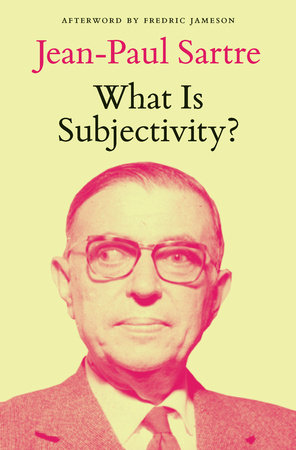
In 1961, the prolific French intellectual Jean-Paul Sartre was invited to give a talk at the Gramsci Institute in Rome. In attendance were some of Italy’s leading Marxist thinkers, such as Enzo Paci, Cesare Luporini, and Galvano Della Volpe, whose contributions to the long and remarkable discussion that followed are collected in this volume, along with the lecture itself. Sartre posed the question “What is subjectivity?”—a question of renewed importance today to contemporary debates concerning “the subject” in critical theory. This work includes a preface by Michel Kail and Raoul Kirchmayr and an afterword by Fredric Jameson, who makes a rousing case for the continued importance of Sartre’s philosophy.
“A valuable contribution to Sartre studies and contemporary Marxism, this text warrants serious consideration as more than merely a historical artifact: it offers an important view that continues to be relevant to contemporary philosophy and social theory.” —Choice
“Sartre, political activist, playwright, novelist, existentialist philosopher, biographer and literary critic, was considered one of the leading interpreters of the post-war generation’s world view.” —Guardian
“Long regarded as one of France’s reigning intellectuals, Sartre contributed profoundly to the social consciousness of the post-World War II generation.” —New York Times
“One of the most brilliant and versatile writers as well as one of the most original thinkers of the twentieth century.” —Times
Jean-Paul Sartre was a philosopher, novelist, public intellectual, biographer, playwright and founder of the journal Les Temps modernes. Born in Paris in 1905, Sartre was awarded the Nobel Prize for Literature in 1964—and turned it down. His books include Nausea, Intimacy, The Flies, No Exit, The Freud Scenario, War Diaries, Critique of Dialectical Reason, and the monumental treatise Being and Nothingness. He died in 1980.
Jean-Paul Sartre, at the height of his powers, debates with Italy’s leading intellectuals
In 1961, the prolific French intellectual Jean-Paul Sartre was invited to give a talk at the Gramsci Institute in Rome. In attendance were some of Italy’s leading Marxist thinkers, such as Enzo Paci, Cesare Luporini, and Galvano Della Volpe, whose contributions to the long and remarkable discussion that followed are collected in this volume, along with the lecture itself. Sartre posed the question “What is subjectivity?”—a question of renewed importance today to contemporary debates concerning “the subject” in critical theory. This work includes a preface by Michel Kail and Raoul Kirchmayr and an afterword by Fredric Jameson, who makes a rousing case for the continued importance of Sartre’s philosophy.
Praise
“A valuable contribution to Sartre studies and contemporary Marxism, this text warrants serious consideration as more than merely a historical artifact: it offers an important view that continues to be relevant to contemporary philosophy and social theory.” —Choice
“Sartre, political activist, playwright, novelist, existentialist philosopher, biographer and literary critic, was considered one of the leading interpreters of the post-war generation’s world view.” —Guardian
“Long regarded as one of France’s reigning intellectuals, Sartre contributed profoundly to the social consciousness of the post-World War II generation.” —New York Times
“One of the most brilliant and versatile writers as well as one of the most original thinkers of the twentieth century.” —Times
Author
Jean-Paul Sartre was a philosopher, novelist, public intellectual, biographer, playwright and founder of the journal Les Temps modernes. Born in Paris in 1905, Sartre was awarded the Nobel Prize for Literature in 1964—and turned it down. His books include Nausea, Intimacy, The Flies, No Exit, The Freud Scenario, War Diaries, Critique of Dialectical Reason, and the monumental treatise Being and Nothingness. He died in 1980.