When I was 14, I read the memoir of Black tennis legend Althea Gibson,
I Always Wanted to Be Somebody. I loved her story of grace and perseverance so much that I put it next to me while I slept, hoping the words would magically transfer her talent to me.
Stories will always have that power to inspire dreams. I hope this book will do the same for you.
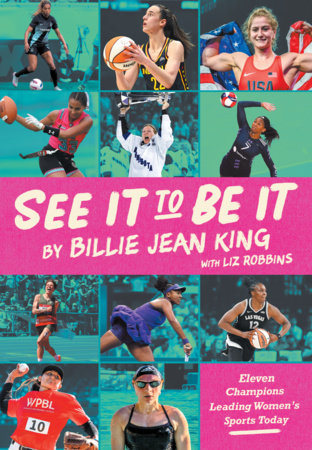
Many of the 11 athletes you’ll read about here also grew up with a book on their nightstands written by a famous female athlete. Caitlin Clark had soccer legend Mia Hamm’s book. Paralympic swimmer McKenzie Coan read the memoir of Olympic gymnastics champion, Shawn Johnson. Chelsea Gray had basketball legend Cynthia Cooper’s autobiography. One generation passed on wisdom to the next.
This book is coming at the perfect time because women’s sports are surging in popularity. Finally! Audiences are now celebrating these athletes for their talent. New professional leagues are giving women opportunities they never had before, careers both on the field and in the franchises’ front offices. Youth sports are expanding, and girls are flocking to sports like volleyball, wrestling, and flag football. Young people now have role models to guide them.
As I reflect on this era of incredible investment in women’s sports and electrifying superstars showcasing their success, I can’t help but look back to where it all started: the early lives of athletes.
The 11 athletes here, like so many before them, didn’t just dream about being champions; they dedicated themselves to that goal from an early age. They stayed late to practice, didn’t cut corners, and figured out how to balance schoolwork with sports. By the time they were teenagers competing in national and international showcases, they had already established routines that would last them a lifetime. They also had a lot of fun, fueled by their love for the sport and their achievements.
The athletes in the book make up a stacked roster of gold medalists, national champions, world champions, world No.1s, and MVPs. They have overcome discrimination based on their gender, their race, their sexual orientation, or their disability. They dealt with doubters and dream-crushers, debilitating injuries and life-threatening surgeries. They’ve suffered personal tragedies. They’ve rebounded and won.
Along the way, some have struggled with their mental health. They shared their stories so that people of all ages can feel like they’re not alone.
When I mentor young athletes, I always ask them if they’re a “We” person or a “Me” person. I’m looking for people who want to pave a way, not only for themselves, but for others.
These athletes are proud members of the “We” generation. Soccer player Midge Purce started the Black Women’s Player Collective and produced a streaming reality TV show about soccer. Kendall Coyne Schofield led an ice hockey players’ union that worked to form a professional league. Diana Flores, a quarterback for Mexico’s flag football team, advocated for Latinas in sports.
Distance runner Nikki Hiltz started an annual 5K race to support LGBTQ+ youth. Baseball player Kelsie Whitmore started a clothing brand, Be You, to inspire confidence. Tennis champion Naomi Osaka advocated for racial justice in the fateful summer of 2020, singlehandedly forcing tennis
officials to halt a tournament. In her rise to the No. 1 ranking, Osaka also helped change perceptions of biracial people in her native Japan.
When I was 11, I told my mom I was going to be No. 1 in tennis. When I was 12, I decided I was going to change the world. By the time I was 17, I won my first big tennis championship—the Wimbledon Doubles title with my 18-year-old partner Karen Hantze. I missed my high school graduation for the tournament—and I don’t regret it because that was the first of my 39 Grand Slam titles.
Many athletes in this book missed their proms or their First Communions or sleepovers with friends in pursuit of greatness. Their dedication paid off. So did their parents’ devotion. Being able to interview the moms and dads—like Elana Elor, the mother of Olympic wrestling champion Amit Elor, and Jermaine O’Neal, the NBA All-Star father of volleyball champion Asjia O’Neal—reminded me of how dedicated my own parents were in supporting my tennis dreams, especially my father. He was a true #girldad before the term became popular.
In my lifelong campaign to give girls and women equal opportunities as boys and men, I am probably most famous for my 1973 victory over a man. I defeated Bobby Riggs, a former No. 1 player in the world, with 90 million people around the world watching our so-called “Battle of the Sexes.” Emma Stone played me in the 2017 Battle of the Sexes movie, and she made that match come back to life.
In 1974, I was proud to found the Women’s Sports Foundation (WSF) in order to expand opportunities for girls and women in sports, while developing a new generation of coaches and leaders. Since the landmark 1972 law known as Title IX established that girls must have equal opportunities as boys in educational settings, we at the WSF continue to fight to protect those rights.
When people thank me for what I’ve done, I quickly add, “I’m not done yet!”
I still work every day. Together with my wife and business partner, Ilana Kloss, we helped form the Professional Women’s Hockey League. We are also part-owners of the Los Angeles Dodgers of Major League Baseball, and with that same ownership group also have a stake in the Los Angeles Lakers of the National Basketball Association, and the Los Angeles Sparks of the Women’s National Basketball Association. We are also an owner of Angel City FC of the National Women’s Soccer League.
We formed the Billie Jean King Foundation to fund organizations working at the intersection of education, activism, and sports. Then we created Billie Jean King Enterprises which supports companies for women, owned by women, such as media outlets like Just Women’s Sports, The Gist, and Togethxr (which makes those iconic “Everyone Watches Women’s Sports” T-shirts). We also present an award to a writer at the annual Associated Press Sports Editors conference for excellence in women’s sports reporting.
In terms of media coverage, though, women’s sports are still not even in the same ballpark as men’s sports. In 2025, stories about women’s sports amounted to only about 20 percent of sports coverage overall—another reason why I wanted to shake up the bookshelf.
You don’t have to be an athlete to enjoy these words, nor do you have to identify as female. You just have to be curious about history and about what makes champions tick. For each chapter, I chose one of my favorite quotes that captures the athlete’s impact.
The title of this book is the reason I wrote it, a mantra I have always repeated: “If you can see it, you can be it.”
I hope seeing the journeys these remarkable young people took to become trailblazers will inspire you to write your own story.—Billie Jean King
Copyright © 2026 by Billie Jean King; with Liz Robbins. All rights reserved. No part of this excerpt may be reproduced or reprinted without permission in writing from the publisher.