Close Modal

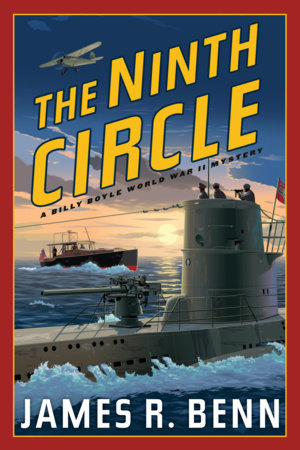
The Ninth Circle

Hardcover
$29.95 US
6"W x 9"H | 20 oz | 12 per carton
On sale Sep 01, 2026 | 400 Pages | 9781641297486

In the latest installment of this fan-favorite WWII mystery series, US Army Captain Billy Boyle is dispatched to Cuba, where he makes unlikely alliances to defeat a common enemy.

January, 1945: If Billy Boyle thinks a summons to Havana will give him a chance to sip a cold Hatuey under the Caribbean sun, the tropical fantasy is dead on arrival. Within hours of landing, Billy and his partner-in-crime-solving, Lieutenant Piotr Kazimierz, are assigned to investigate the murder of a Navy intelligence officer. But as the men wait for an informant at a beachside bar, a bomb goes off, and they narrowly escape with their lives. Then the informant—a Cuban taxi driver named Hector Díaz—is found dead outside his apartment. What did Hector know? And who was so desperate to silence him?

Thrust into a double-murder investigation, Billy and Kaz team up with the brass at the British Legation in Havana, including none other than Lieutenant Commander Ian Fleming, to gather intel from sources inside Havana’s criminal underworld. Their search takes them from Havana’s Chinatown to the Gran Casino Nacional, where notorious gangster Meyer Lansky offers his services if it means defeating the suspected common enemy—the Sicherheitsdienst, the intelligence wing of the Nazi military—and finding out what sort of intelligence they are so hell-bent on keeping top-secret at this late stage in the war.
Praise for James R. Benn

“Spirited wartime storytelling.”
The New York Times Book Review

“A fast-paced saga set in a period when the fate of civilization still hangs in the balance.”
The Wall Street Journal

“A meaty, old-fashioned, and thoroughly enjoyable tale of WWII-era murder and espionage.”
The Seattle Times

“This book has got it all—an instant classic.”
—Lee Child
James R. Benn is the author of the Billy Boyle World War II mysteries. The debut, Billy Boyle, was named one of five top mysteries of 2006 by Book Sense and was a Dilys Award nominee. A Blind Goddess was longlisted for the IMPAC Dublin Literary Award, and The Rest Is Silence was a Barry Award nominee. Benn, a former librarian, splits his time between the Gulf Coast of Florida and Connecticut with his wife Deborah Mandel. View titles by James R. Benn
Chapter One
January 1945

I drank my Hatuey as I watched the sun’s rays dance on the water. I was with my good friend Kaz and my new friend Max. We sat outside El Tiburón, a run-down bar along the waterfront with a view of the marina across the bay where boats bobbed on the incoming tide. In front of us a rickety wooden pier looked ready to collapse onto the rocky shore. The bar wasn’t in any better shape. El Tiburón was a small joint with nothing but unenthusiastic palm trees on one side and a stack of cinder blocks waiting to become a sturdier dive bar on the other. Constructed of weathered planks and rusted corrugated metal, it looked like the remnants of a hurricane. But the beer was cold, we had a clear view of anyone passing by, and we were alone.

Even the barman, Bembe, had disappeared out back. The fact that we were all sporting pistols may have caused him to vanish, but I doubted anyone in this neighborhood would swoon at the sight of a firearm.

I pulled the chair next to me closer so I could keep one hand on the small canvas carryall. Kaz rolled his eyes, but I couldn’t help being nervous. It’s not every day a guy waits in a seedy bar with twenty thousand pesos wrapped around thirty British gold sovereigns. The cash was close to a thousand bucks if my math was right. But the gold was serious money.

Which made me wonder, Why was our contact late?

Bembe had told us the man we were waiting for was expected in half an hour, but that was an hour ago. He’d refused to say anything else, not even when Max pressed a hundred peso note into his hand. As Max turned to search for the barman, his guayabera rode up, revealing a snub-nosed revolver tucked into his waistband. Max got up and walked to the shack, slammed his empty beer bottle down on the varnished bar, and called Bembe’s name.

Nothing.

“What is that?” Kaz said, pointing to the end of the bar. From my angle, I could see a scuffed leather case laid on its side.

“A briefcase,” Max said. “It wasn’t here before. Maybe Bembe left it.”

Kaz was up in one swift movement and at the bar in two strides, his ear cocked to the briefcase. I didn’t like the look on his face.

“Run!” Kaz shouted as he bounded to the embankment. He jumped to the stone-strewn shore with Max on his heels and me half a second behind. Once we hit the sand Max craned his neck to look back, but Kaz pulled him down as I pressed myself against the rock wall.

The explosion was a sharp crack that sent a shockwave through my body as I huddled against the embankment. A shattering boom followed as debris flew in every direction and cascaded down over us.

Kaz said something but my ears were ringing.

“What?”

“Ticking,” he shouted. “I heard ticking.”

“Bembe,” Max said, his revolver at the ready. “No wonder he left.”

“He’ll be back,” I said. The words echoed in my head as I struggled to overcome the effects of the blast.

“Or whoever paid him to place the bomb. Let’s move.”

“What about the money?” Kaz asked as a swirl of pesos blew out over our heads.

“That ought to distract any witnesses,” Max said with a smile. “But someone may come to retrieve the sovereigns. Someone who thinks we’re dead.”

I stuck my head up just enough to survey the area. The bar was smashed, shards of wood and metal scattered in every direction. Smoke and flame rose from the debris. Our chairs were nothing but twisted metal, and the bag was nowhere to be seen.

“Follow me,” I said as I climbed up the rocks and onto the embankment. I ran low as I made for the dirt road we’d driven in on. Max’s black Studebaker was parked close to the water, but I kept clear of it. It was an obvious target. Instead, we dove into a stand of tall grass and spindly pines at the end of the road. We didn’t have a lot of firepower, but we could see all the approaches. If they came by road, along the shore, or from the buildings behind the wreckage of El Tiburón, we’d see them before they knew our ashes hadn’t been scattered at sea.

“Not how I expected things to go today,” Kaz said as he brushed dirt off his linen suit. He pulled a Walther PPK automatic from his pocket. Not his usual choice of sidearm, but one that didn’t ruin the drape of his suit.

“I was enjoying the view,” I said. “Who do you think set this up, Max?”

“I don’t know,” Max said as he scanned the approaches. His gaze settled on the Studebaker, and he rubbed his chin. His forehead wrinkled as he spared a glance in my direction. “Why didn’t they wire my car? It would have been a sure thing.”

“Perhaps they did not possess that skill,” Kaz suggested.

“Maybe they wanted to watch us get blown to bits,” Max said. “For enjoyment.”

“How many such enemies have you made in your time here?” Kaz asked him. “You seem such a pleasant chap.”

“Look,” I said, careful to stay hidden behind the thick grasses. “First witnesses. Kids. You were right, Max. The pesos are a distraction.” Half a dozen young boys in dirty, worn clothes were scavenging the smoking ruins. Then one of them yelled and pointed to the waterline, where pesos floated on the rippling waves. They were well organized. Two boys stayed to pull a few intact bottles of rum out of the debris while the others gathered bills and stuffed them into their shirts.

They were also alert. One of the kids working the wreckage stopped and held up his hand to the others, who went quiet. He gave a shout and took off straight in our direction. The others followed, soggy banknotes and clanking rum bottles clutched in their hands. They were swift and sure, well-practiced in evading the hand of authority. The lead boy darted into the tall grass with the rest right behind him, running not six paces from where we hid. In seconds, they’d vanished, not a single tuft of grass disturbed in their wake.

“I like their style,” Max whispered. “I may come back and recruit them.”

He wasn’t kidding, but I didn’t have time to think about spies and their informers. Not with four armed men headed for the remnants of El Tiburón. They’d come along the shoreline, most likely from a two-story house five hundred yards back. It had a balcony facing the bay. The perfect spot to watch the explosion.

I shielded my eyes against the sun and kept my head low as I studied the figures. The fellow out front held a shotgun. Casually, as if he were used to wielding a scattergun in public and not having to answer a single damn question as to why. Two guys trailed ten paces behind. One wielded a shotgun and the other was empty-handed. Which meant he was the boss and could be counted on to have a pistol beneath his white windbreaker. Behind them was the cleanup man, with a tight grip on a US Army carbine and his head on a swivel to constantly check their six.

“Max?” Kaz asked. “Friends of yours?”

“No. But I recognize the man in the white jacket,” Max said. “Marcos Arango. A hoodlum and a thief. He sometimes takes on jobs for the Mafia. Your American gangsters.”

“They’re not my gangsters,” I said. “We need to get out of here.”

The man on point climbed onto the embankment near the bar. The others halted while he scouted out the smoldering wreckage. I tried to work out why the Mafia would’ve put out a hit on us. Our mission didn’t involve them. I doubted thirty gold sovereigns, as valuable as they were to everyday folks, would have attracted mob muscle to set up this explosive ambush. We were outgunned, not to mention outwitted.

“Max,” I whispered. “Can you make it to your car without being seen?” The Studebaker was parked facing the water, under a palm tree.

“If I work my way through the grasses and come up on the passenger’s side, they may not spot me. Unless they look in this direction,” he said.

“Which they will very soon, once they notice the absence of corpses,” Kaz said.

“All right,” Max said. “I’ll go. As soon as I start the car, I’ll back up and you jump in.”

Max faded into the thick grass, his wavy black hair visible every few yards as he worked his way forward. I heard shouts from the bar and saw the point man wave his boss forward. He pointed to an object on the shore, outside my line of vision. I hoped it was what was left of the canvas bag with the gold coins, which might divert their attention long enough for Max to start the car.

The point man jumped to the shore, where the boss and his bodyguard remained. Tail-End Charlie took up position near the bar, scanning the approaches. Not good. At this range, a shotgun might not be accurate, but the .30 carbine was a different story.

I heard the car door open and prayed the sound didn’t carry far. Then I tacked on a postscript pleading that the gang hadn’t also rigged a car bomb. If it was the mob, they’d be experts.

The engine turned over. Wheels spun out dirt as Max slammed it into reverse and sped our way. No explosion, just the sharp pop pop pop of the carbine followed Max’s acceleration. Slugs hit the ground ahead of him. Aiming for the tires was a good move, I had to admit.

The car jolted to a halt in front of us and we leapt in, Kaz taking the rear seat. More shots came our way, and one hit the fender with a harsh metallic zing. Within seconds we were out of the line of fire, speeding in reverse down the narrow dirt road. With a drainage ditch on one side and greenery on the other, there was no place to turn around.

“Steady!” I shouted, as if Max needed to be reminded not to run off the road. I rolled down the window and aimed my Colt .45 automatic at where I expected our pursuers to appear. It was the only one of our three weapons with any serious stopping power, although aiming while driving backward wasn’t a skill I’d thought to practice.

Tail-End Charlie walked into my sights. I fired. He knelt and fired, and I was pretty sure he hit the bumper. Max braked and I nearly dropped my pistol. Kaz was squeezing off rounds, and it took a second to realize he was firing in the opposite direction.

“Keep going!” I shouted as I turned to fire left-handed, another stance I needed to practice. Two men stood at the end of the drive, shotguns at the ready. I switched to a two-handed grip, and as we narrowed the gap to twenty yards, I dropped one of the hoods. My guess was they were used to intimidation and might not appreciate our desire not to fall into their hands.

We took a shotgun blast to the hood. The windscreen cracked and splintered. The remaining thug stepped aside and worked his pump-action shotgun, ready to fire at the driver.

Kaz was ready sooner. He put four slugs from his Walther PPK straight into his assailant’s chest. The thug staggered back with a look of shock on his face before he crumpled to the ground.

Max barreled out into the road, narrowly missing a truck as he braked again, shifted, and proceeded down the road. I watched for anyone following, but two dead men must have caused them to contemplate the wisdom of pursuit.

The Studebaker’s radiator was hissing steam. The body of the car was peppered with bullet holes, and I had to smash out what was left of the windscreen so Max could see where he was going.

“Your first day here,” Max said with a glint of maniacal glee, the sort of euphoria that comes from cheating death by a hair. “How do you like Cuba so far?”

About

In the latest installment of this fan-favorite WWII mystery series, US Army Captain Billy Boyle is dispatched to Cuba, where he makes unlikely alliances to defeat a common enemy.

January, 1945: If Billy Boyle thinks a summons to Havana will give him a chance to sip a cold Hatuey under the Caribbean sun, the tropical fantasy is dead on arrival. Within hours of landing, Billy and his partner-in-crime-solving, Lieutenant Piotr Kazimierz, are assigned to investigate the murder of a Navy intelligence officer. But as the men wait for an informant at a beachside bar, a bomb goes off, and they narrowly escape with their lives. Then the informant—a Cuban taxi driver named Hector Díaz—is found dead outside his apartment. What did Hector know? And who was so desperate to silence him?

Thrust into a double-murder investigation, Billy and Kaz team up with the brass at the British Legation in Havana, including none other than Lieutenant Commander Ian Fleming, to gather intel from sources inside Havana’s criminal underworld. Their search takes them from Havana’s Chinatown to the Gran Casino Nacional, where notorious gangster Meyer Lansky offers his services if it means defeating the suspected common enemy—the Sicherheitsdienst, the intelligence wing of the Nazi military—and finding out what sort of intelligence they are so hell-bent on keeping top-secret at this late stage in the war.

Praise

Praise for James R. Benn

“Spirited wartime storytelling.”
The New York Times Book Review

“A fast-paced saga set in a period when the fate of civilization still hangs in the balance.”
The Wall Street Journal

“A meaty, old-fashioned, and thoroughly enjoyable tale of WWII-era murder and espionage.”
The Seattle Times

“This book has got it all—an instant classic.”
—Lee Child

Author

James R. Benn is the author of the Billy Boyle World War II mysteries. The debut, Billy Boyle, was named one of five top mysteries of 2006 by Book Sense and was a Dilys Award nominee. A Blind Goddess was longlisted for the IMPAC Dublin Literary Award, and The Rest Is Silence was a Barry Award nominee. Benn, a former librarian, splits his time between the Gulf Coast of Florida and Connecticut with his wife Deborah Mandel. View titles by James R. Benn

Excerpt

Chapter One
January 1945

I drank my Hatuey as I watched the sun’s rays dance on the water. I was with my good friend Kaz and my new friend Max. We sat outside El Tiburón, a run-down bar along the waterfront with a view of the marina across the bay where boats bobbed on the incoming tide. In front of us a rickety wooden pier looked ready to collapse onto the rocky shore. The bar wasn’t in any better shape. El Tiburón was a small joint with nothing but unenthusiastic palm trees on one side and a stack of cinder blocks waiting to become a sturdier dive bar on the other. Constructed of weathered planks and rusted corrugated metal, it looked like the remnants of a hurricane. But the beer was cold, we had a clear view of anyone passing by, and we were alone.

Even the barman, Bembe, had disappeared out back. The fact that we were all sporting pistols may have caused him to vanish, but I doubted anyone in this neighborhood would swoon at the sight of a firearm.

I pulled the chair next to me closer so I could keep one hand on the small canvas carryall. Kaz rolled his eyes, but I couldn’t help being nervous. It’s not every day a guy waits in a seedy bar with twenty thousand pesos wrapped around thirty British gold sovereigns. The cash was close to a thousand bucks if my math was right. But the gold was serious money.

Which made me wonder, Why was our contact late?

Bembe had told us the man we were waiting for was expected in half an hour, but that was an hour ago. He’d refused to say anything else, not even when Max pressed a hundred peso note into his hand. As Max turned to search for the barman, his guayabera rode up, revealing a snub-nosed revolver tucked into his waistband. Max got up and walked to the shack, slammed his empty beer bottle down on the varnished bar, and called Bembe’s name.

Nothing.

“What is that?” Kaz said, pointing to the end of the bar. From my angle, I could see a scuffed leather case laid on its side.

“A briefcase,” Max said. “It wasn’t here before. Maybe Bembe left it.”

Kaz was up in one swift movement and at the bar in two strides, his ear cocked to the briefcase. I didn’t like the look on his face.

“Run!” Kaz shouted as he bounded to the embankment. He jumped to the stone-strewn shore with Max on his heels and me half a second behind. Once we hit the sand Max craned his neck to look back, but Kaz pulled him down as I pressed myself against the rock wall.

The explosion was a sharp crack that sent a shockwave through my body as I huddled against the embankment. A shattering boom followed as debris flew in every direction and cascaded down over us.

Kaz said something but my ears were ringing.

“What?”

“Ticking,” he shouted. “I heard ticking.”

“Bembe,” Max said, his revolver at the ready. “No wonder he left.”

“He’ll be back,” I said. The words echoed in my head as I struggled to overcome the effects of the blast.

“Or whoever paid him to place the bomb. Let’s move.”

“What about the money?” Kaz asked as a swirl of pesos blew out over our heads.

“That ought to distract any witnesses,” Max said with a smile. “But someone may come to retrieve the sovereigns. Someone who thinks we’re dead.”

I stuck my head up just enough to survey the area. The bar was smashed, shards of wood and metal scattered in every direction. Smoke and flame rose from the debris. Our chairs were nothing but twisted metal, and the bag was nowhere to be seen.

“Follow me,” I said as I climbed up the rocks and onto the embankment. I ran low as I made for the dirt road we’d driven in on. Max’s black Studebaker was parked close to the water, but I kept clear of it. It was an obvious target. Instead, we dove into a stand of tall grass and spindly pines at the end of the road. We didn’t have a lot of firepower, but we could see all the approaches. If they came by road, along the shore, or from the buildings behind the wreckage of El Tiburón, we’d see them before they knew our ashes hadn’t been scattered at sea.

“Not how I expected things to go today,” Kaz said as he brushed dirt off his linen suit. He pulled a Walther PPK automatic from his pocket. Not his usual choice of sidearm, but one that didn’t ruin the drape of his suit.

“I was enjoying the view,” I said. “Who do you think set this up, Max?”

“I don’t know,” Max said as he scanned the approaches. His gaze settled on the Studebaker, and he rubbed his chin. His forehead wrinkled as he spared a glance in my direction. “Why didn’t they wire my car? It would have been a sure thing.”

“Perhaps they did not possess that skill,” Kaz suggested.

“Maybe they wanted to watch us get blown to bits,” Max said. “For enjoyment.”

“How many such enemies have you made in your time here?” Kaz asked him. “You seem such a pleasant chap.”

“Look,” I said, careful to stay hidden behind the thick grasses. “First witnesses. Kids. You were right, Max. The pesos are a distraction.” Half a dozen young boys in dirty, worn clothes were scavenging the smoking ruins. Then one of them yelled and pointed to the waterline, where pesos floated on the rippling waves. They were well organized. Two boys stayed to pull a few intact bottles of rum out of the debris while the others gathered bills and stuffed them into their shirts.

They were also alert. One of the kids working the wreckage stopped and held up his hand to the others, who went quiet. He gave a shout and took off straight in our direction. The others followed, soggy banknotes and clanking rum bottles clutched in their hands. They were swift and sure, well-practiced in evading the hand of authority. The lead boy darted into the tall grass with the rest right behind him, running not six paces from where we hid. In seconds, they’d vanished, not a single tuft of grass disturbed in their wake.

“I like their style,” Max whispered. “I may come back and recruit them.”

He wasn’t kidding, but I didn’t have time to think about spies and their informers. Not with four armed men headed for the remnants of El Tiburón. They’d come along the shoreline, most likely from a two-story house five hundred yards back. It had a balcony facing the bay. The perfect spot to watch the explosion.

I shielded my eyes against the sun and kept my head low as I studied the figures. The fellow out front held a shotgun. Casually, as if he were used to wielding a scattergun in public and not having to answer a single damn question as to why. Two guys trailed ten paces behind. One wielded a shotgun and the other was empty-handed. Which meant he was the boss and could be counted on to have a pistol beneath his white windbreaker. Behind them was the cleanup man, with a tight grip on a US Army carbine and his head on a swivel to constantly check their six.

“Max?” Kaz asked. “Friends of yours?”

“No. But I recognize the man in the white jacket,” Max said. “Marcos Arango. A hoodlum and a thief. He sometimes takes on jobs for the Mafia. Your American gangsters.”

“They’re not my gangsters,” I said. “We need to get out of here.”

The man on point climbed onto the embankment near the bar. The others halted while he scouted out the smoldering wreckage. I tried to work out why the Mafia would’ve put out a hit on us. Our mission didn’t involve them. I doubted thirty gold sovereigns, as valuable as they were to everyday folks, would have attracted mob muscle to set up this explosive ambush. We were outgunned, not to mention outwitted.

“Max,” I whispered. “Can you make it to your car without being seen?” The Studebaker was parked facing the water, under a palm tree.

“If I work my way through the grasses and come up on the passenger’s side, they may not spot me. Unless they look in this direction,” he said.

“Which they will very soon, once they notice the absence of corpses,” Kaz said.

“All right,” Max said. “I’ll go. As soon as I start the car, I’ll back up and you jump in.”

Max faded into the thick grass, his wavy black hair visible every few yards as he worked his way forward. I heard shouts from the bar and saw the point man wave his boss forward. He pointed to an object on the shore, outside my line of vision. I hoped it was what was left of the canvas bag with the gold coins, which might divert their attention long enough for Max to start the car.

The point man jumped to the shore, where the boss and his bodyguard remained. Tail-End Charlie took up position near the bar, scanning the approaches. Not good. At this range, a shotgun might not be accurate, but the .30 carbine was a different story.

I heard the car door open and prayed the sound didn’t carry far. Then I tacked on a postscript pleading that the gang hadn’t also rigged a car bomb. If it was the mob, they’d be experts.

The engine turned over. Wheels spun out dirt as Max slammed it into reverse and sped our way. No explosion, just the sharp pop pop pop of the carbine followed Max’s acceleration. Slugs hit the ground ahead of him. Aiming for the tires was a good move, I had to admit.

The car jolted to a halt in front of us and we leapt in, Kaz taking the rear seat. More shots came our way, and one hit the fender with a harsh metallic zing. Within seconds we were out of the line of fire, speeding in reverse down the narrow dirt road. With a drainage ditch on one side and greenery on the other, there was no place to turn around.

“Steady!” I shouted, as if Max needed to be reminded not to run off the road. I rolled down the window and aimed my Colt .45 automatic at where I expected our pursuers to appear. It was the only one of our three weapons with any serious stopping power, although aiming while driving backward wasn’t a skill I’d thought to practice.

Tail-End Charlie walked into my sights. I fired. He knelt and fired, and I was pretty sure he hit the bumper. Max braked and I nearly dropped my pistol. Kaz was squeezing off rounds, and it took a second to realize he was firing in the opposite direction.

“Keep going!” I shouted as I turned to fire left-handed, another stance I needed to practice. Two men stood at the end of the drive, shotguns at the ready. I switched to a two-handed grip, and as we narrowed the gap to twenty yards, I dropped one of the hoods. My guess was they were used to intimidation and might not appreciate our desire not to fall into their hands.

We took a shotgun blast to the hood. The windscreen cracked and splintered. The remaining thug stepped aside and worked his pump-action shotgun, ready to fire at the driver.

Kaz was ready sooner. He put four slugs from his Walther PPK straight into his assailant’s chest. The thug staggered back with a look of shock on his face before he crumpled to the ground.

Max barreled out into the road, narrowly missing a truck as he braked again, shifted, and proceeded down the road. I watched for anyone following, but two dead men must have caused them to contemplate the wisdom of pursuit.

The Studebaker’s radiator was hissing steam. The body of the car was peppered with bullet holes, and I had to smash out what was left of the windscreen so Max could see where he was going.

“Your first day here,” Max said with a glint of maniacal glee, the sort of euphoria that comes from cheating death by a hair. “How do you like Cuba so far?”