Close Modal

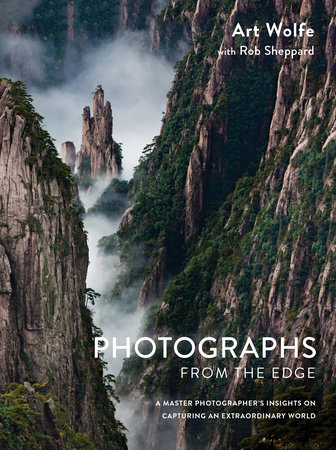
Photographs from the Edge

A Master Photographer's Insights on Capturing an Extraordinary World

Look inside
Legendary nature photographer Art Wolfe presents an intimate, behind-the-scenes guide to the experiences, decisions, and methods that helped him capture images from some of the most exciting locations across the globe.

In Photographs from the Edge, you'll discover the secrets behind forty years of awe-inspiring photography from around the world. Wolfe takes you from the mountains of the Himalayas to the sandy shores of Mnemba Island, with stops in the crowded streets of India and the alkali lakes of Africa along the way. You’ll learn the equipment, settings, and creative choices behind each photograph. From endangered species to cultural celebrations to natural wonders, Wolfe brings each subject to life through his stunning photography and the stories he shares in this one-of-a-kind photo safari.
"Art Wolfe has spent a career mixing his passion for artful photography and his passion for the diversity, nature wonder, and humanity of our world. With this collection we enjoy a grand tour of our world as only Art Wolfe can bring us. In a way, you could call Art the ultimate tour guide."
– Rick Steves, travel writer and public television host
© Yuri Choufour
Art Wolfe is one of the most celebrated wildlife/nature photographers in the United States today. His award-winning photography reflects a close study of both nature and composition, and is featured frequently in periodicals such as National Geographic, Smithsonian, Life, and Outdoor Photographer. Internationally, Art has worked with Germany's GEO & Stern, France's Terre Sauvage, Italy's Airone, Japan's Sinra, and England's BBC Wildlife magazines. His books include the acclaimed Light on the Land, Bears: Their Life and Behavior; The Art of Photographing Nature; Owls:Their Life and Behavior; Migrations; and Penguins, Puffins, and Auks. He lives in Seattle, Washington.

Donald F. Bruning, Ph.D., is chairman and curator of the Department of Ornithology at the New York Wildlife Conservation Society of the Bronx Zoo. He has worked with birds for more than thirty years and has been an active member in conservation efforts for birds around the world. He lives in Ardsley, New York. View titles by Art Wolfe
© Vicky Sheppard
Introduction 

All my life I have let my photos tell stories for me. After many years as a professional photographer—sometimes feeling more like a professional traveler—I have come to realize that many people are more interested in the when, where, and how of my photographs than the photos themselves. Question-and-answer sessions in my presentations sometimes feel nearly as long as the presentations themselves.

Quite simply, we humans love being told stories, being entertained by others’ exploits (good and bad) and that is what this book is all about. 

I have always loved nature, and was an environmentalist and conservationist long before I knew there were words for such things. I spent every spare moment exploring the wooded ravines around my childhood home in West Seattle. When I grew into my teens and had my own car, you couldn’t keep me out of the mountains on the weekends. When I climbed peaks, I would rename them in my own mind, even planting little flags at the summit as if I were the first to set foot there. I explored deep forested valleys, joined climbing clubs, and eventually became a climbing guide, leading clients to the summits of notable peaks around Washington State. 

From a very young age, I knew that I would be an artist and earn my living as such. I grew up experimenting with a variety of mediums as a painter; however, I was also very impatient. On more than one occasion, my parents would come home to find me “drying” my oil-on-canvas works in the oven, overwhelming the house with the stink of oil paints.

Attending the University of Washington in pursuit of an art degree, I imagined I’d be an art teacher while continuing to do my work on the side. At that time, in the 1970s, photography was not considered “art” and classes were off-limits to all but journalism majors. During my time out in nature, climbing and backpacking, I would take a camera with me on my outings simply to record the landscape as a reference point to then paint from later. With an ingrained drive to work fast and some ever-improving photographic skills (gained through trial and error), I soon realized that the photograph could be my artistic statement and I could create a dozen compositions in a single day with my camera rather than trying to paint them back at home.

It was only natural, then, that my early subjects were the beautiful mountain landscapes of the Pacific Northwest. Early in my career, I tried every angle I could to get my photos out into the world. I went to retail stores selling climbing clothing and outdoor gear and lobbied them to display my photos on their walls. They eventually agreed, and years later I would even have my first gallery in the flagship REI store in Seattle. REI (short for Recreational Equipment, Inc.) is a major outdoor clothing and gear retail outlet and was founded in Seattle. 

Many of the locations I have visited have come from reviewing photo and art books I’ve collected in my library over the years. If I feel a location has only barely been covered and there is a lot more left to explore, I’ll make a note to head there. But if it looks as though other photographers have captured the best the area has to offer, I’ll look elsewhere. Many people are surprised I have not been to some of the classic locations, such as the pyramids of Egypt or the city of Prague with its beautiful architecture. Instead, I’ve tried to open up new areas, exploring the tundra outside of Churchill, Canada, long before there were tundra buggies or spending three years waiting to get a permit to penetrate the jungles of Venezuela, the home to the Yanomami people. I photographed along Brooks Falls in Alaska some time before there were boardwalks, overlooks, and railings in place. My favorite location is honestly the last place I’ve been. I get energized and fill my soul with creating art and being in the field. Of course, I do have favorite locations for various subjects. India is so full of culture and color one could spend a lifetime exploring it. The Pantanal in Brazil has such a density of tropical birds that it is a birder’s paradise. South Georgia Island is a wonderful destination as the animals there have only seen the occasional photographer and as a result have little fear of humans.

About

Legendary nature photographer Art Wolfe presents an intimate, behind-the-scenes guide to the experiences, decisions, and methods that helped him capture images from some of the most exciting locations across the globe.

In Photographs from the Edge, you'll discover the secrets behind forty years of awe-inspiring photography from around the world. Wolfe takes you from the mountains of the Himalayas to the sandy shores of Mnemba Island, with stops in the crowded streets of India and the alkali lakes of Africa along the way. You’ll learn the equipment, settings, and creative choices behind each photograph. From endangered species to cultural celebrations to natural wonders, Wolfe brings each subject to life through his stunning photography and the stories he shares in this one-of-a-kind photo safari.

Praise

"Art Wolfe has spent a career mixing his passion for artful photography and his passion for the diversity, nature wonder, and humanity of our world. With this collection we enjoy a grand tour of our world as only Art Wolfe can bring us. In a way, you could call Art the ultimate tour guide."
– Rick Steves, travel writer and public television host

Author

© Yuri Choufour
Art Wolfe is one of the most celebrated wildlife/nature photographers in the United States today. His award-winning photography reflects a close study of both nature and composition, and is featured frequently in periodicals such as National Geographic, Smithsonian, Life, and Outdoor Photographer. Internationally, Art has worked with Germany's GEO & Stern, France's Terre Sauvage, Italy's Airone, Japan's Sinra, and England's BBC Wildlife magazines. His books include the acclaimed Light on the Land, Bears: Their Life and Behavior; The Art of Photographing Nature; Owls:Their Life and Behavior; Migrations; and Penguins, Puffins, and Auks. He lives in Seattle, Washington.

Donald F. Bruning, Ph.D., is chairman and curator of the Department of Ornithology at the New York Wildlife Conservation Society of the Bronx Zoo. He has worked with birds for more than thirty years and has been an active member in conservation efforts for birds around the world. He lives in Ardsley, New York. View titles by Art Wolfe
© Vicky Sheppard

Excerpt

Introduction 

All my life I have let my photos tell stories for me. After many years as a professional photographer—sometimes feeling more like a professional traveler—I have come to realize that many people are more interested in the when, where, and how of my photographs than the photos themselves. Question-and-answer sessions in my presentations sometimes feel nearly as long as the presentations themselves.

Quite simply, we humans love being told stories, being entertained by others’ exploits (good and bad) and that is what this book is all about. 

I have always loved nature, and was an environmentalist and conservationist long before I knew there were words for such things. I spent every spare moment exploring the wooded ravines around my childhood home in West Seattle. When I grew into my teens and had my own car, you couldn’t keep me out of the mountains on the weekends. When I climbed peaks, I would rename them in my own mind, even planting little flags at the summit as if I were the first to set foot there. I explored deep forested valleys, joined climbing clubs, and eventually became a climbing guide, leading clients to the summits of notable peaks around Washington State. 

From a very young age, I knew that I would be an artist and earn my living as such. I grew up experimenting with a variety of mediums as a painter; however, I was also very impatient. On more than one occasion, my parents would come home to find me “drying” my oil-on-canvas works in the oven, overwhelming the house with the stink of oil paints.

Attending the University of Washington in pursuit of an art degree, I imagined I’d be an art teacher while continuing to do my work on the side. At that time, in the 1970s, photography was not considered “art” and classes were off-limits to all but journalism majors. During my time out in nature, climbing and backpacking, I would take a camera with me on my outings simply to record the landscape as a reference point to then paint from later. With an ingrained drive to work fast and some ever-improving photographic skills (gained through trial and error), I soon realized that the photograph could be my artistic statement and I could create a dozen compositions in a single day with my camera rather than trying to paint them back at home.

It was only natural, then, that my early subjects were the beautiful mountain landscapes of the Pacific Northwest. Early in my career, I tried every angle I could to get my photos out into the world. I went to retail stores selling climbing clothing and outdoor gear and lobbied them to display my photos on their walls. They eventually agreed, and years later I would even have my first gallery in the flagship REI store in Seattle. REI (short for Recreational Equipment, Inc.) is a major outdoor clothing and gear retail outlet and was founded in Seattle. 

Many of the locations I have visited have come from reviewing photo and art books I’ve collected in my library over the years. If I feel a location has only barely been covered and there is a lot more left to explore, I’ll make a note to head there. But if it looks as though other photographers have captured the best the area has to offer, I’ll look elsewhere. Many people are surprised I have not been to some of the classic locations, such as the pyramids of Egypt or the city of Prague with its beautiful architecture. Instead, I’ve tried to open up new areas, exploring the tundra outside of Churchill, Canada, long before there were tundra buggies or spending three years waiting to get a permit to penetrate the jungles of Venezuela, the home to the Yanomami people. I photographed along Brooks Falls in Alaska some time before there were boardwalks, overlooks, and railings in place. My favorite location is honestly the last place I’ve been. I get energized and fill my soul with creating art and being in the field. Of course, I do have favorite locations for various subjects. India is so full of culture and color one could spend a lifetime exploring it. The Pantanal in Brazil has such a density of tropical birds that it is a birder’s paradise. South Georgia Island is a wonderful destination as the animals there have only seen the occasional photographer and as a result have little fear of humans.