Close Modal

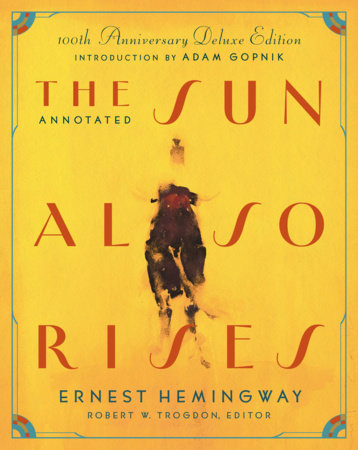
The Annotated Sun Also Rises

100th Anniversary Deluxe Edition

Introduction by Adam Gopnik
Edited by Robert Trogdon
Hardcover
$39.95 US
7-1/2"W x 9-1/4"H | 20 oz | 12 per carton
On sale Oct 13, 2026 | 364 Pages | 9781598538557

100th Anniversary Deluxe Edition: A richly illustrated, full-color, clothbound celebration of the novel that established Hemingway as the preeminent voice of the Lost Generation

Rediscover a literary masterpiece through illuminating commentary that brings its colorful world to vivid life


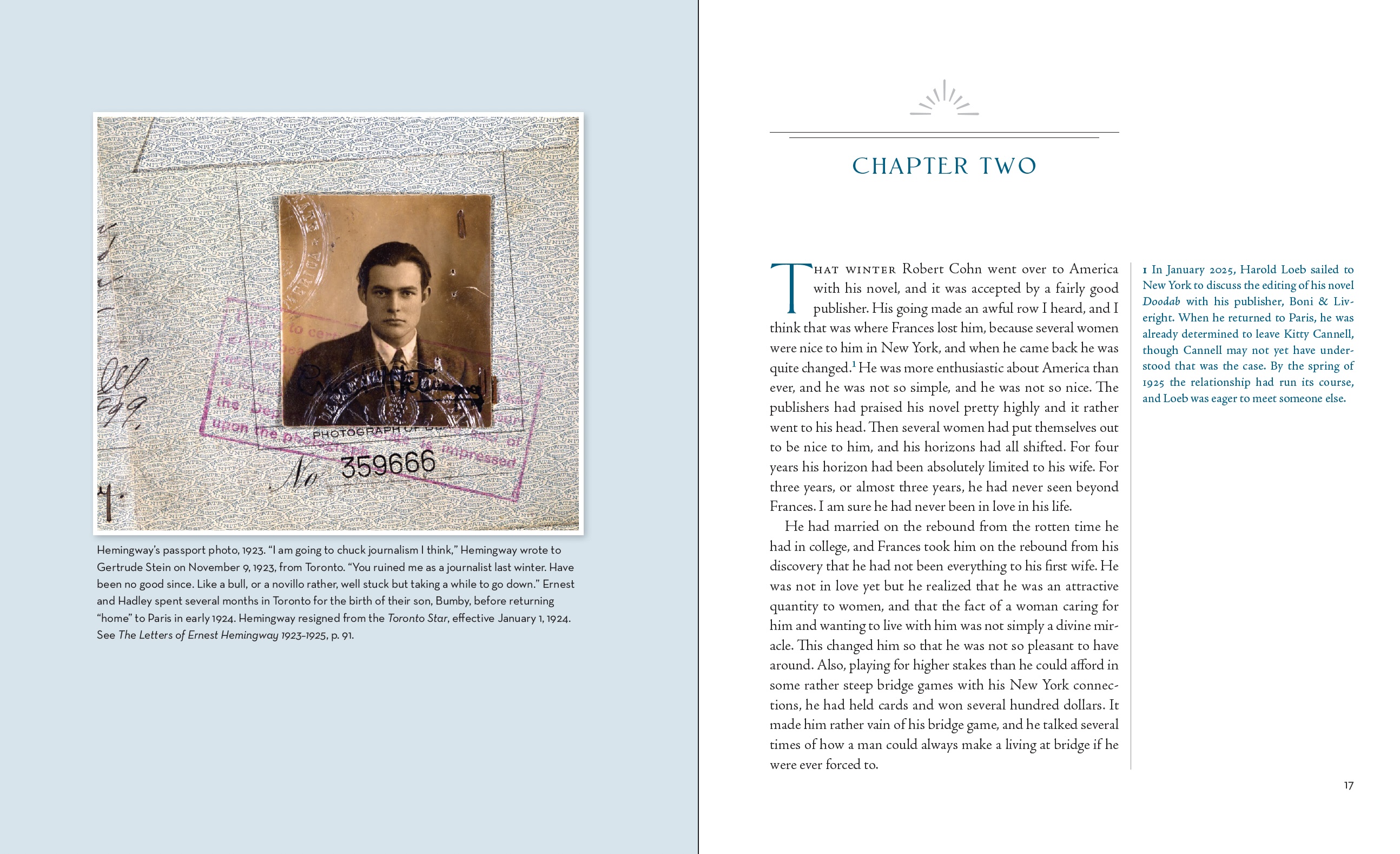
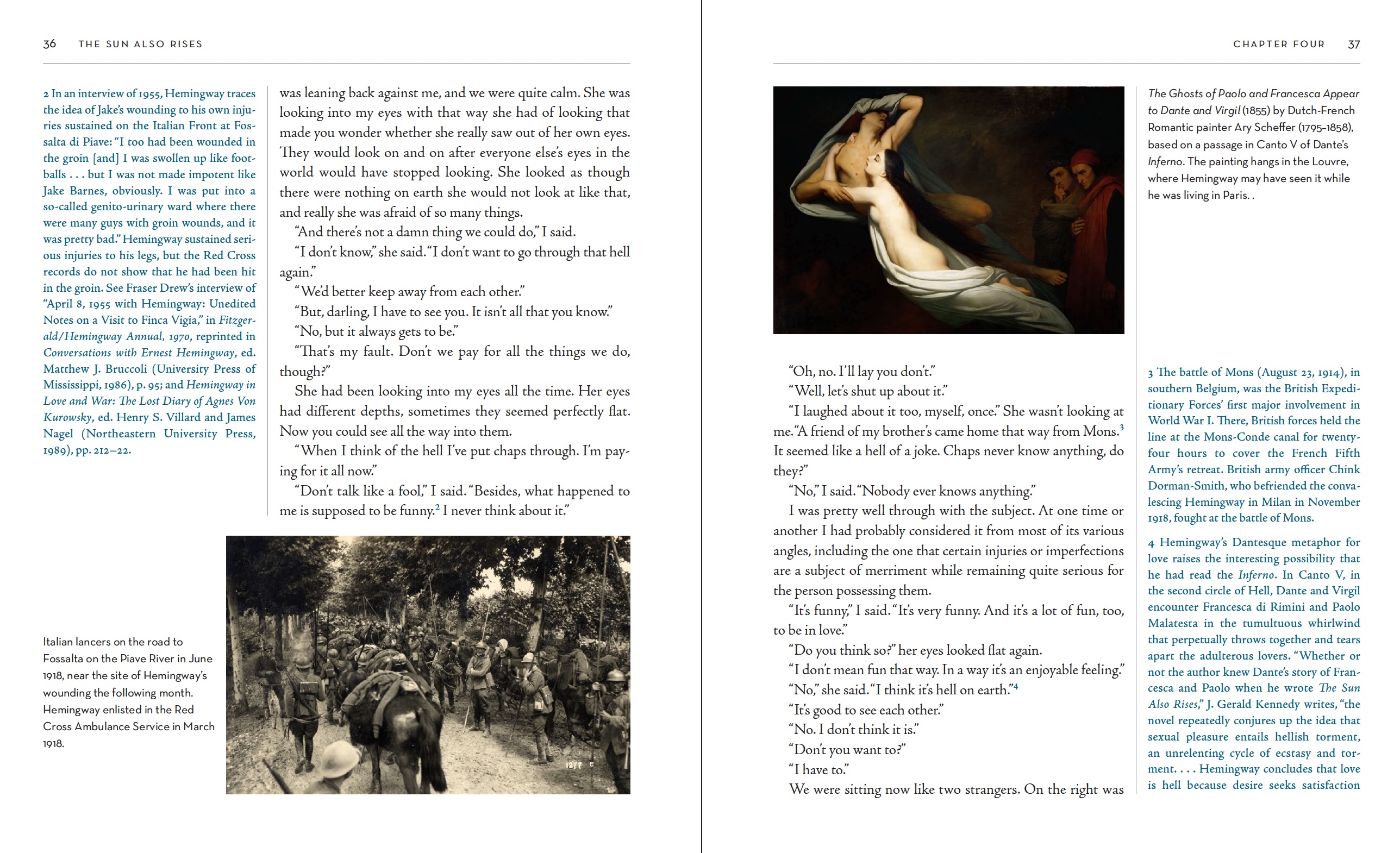
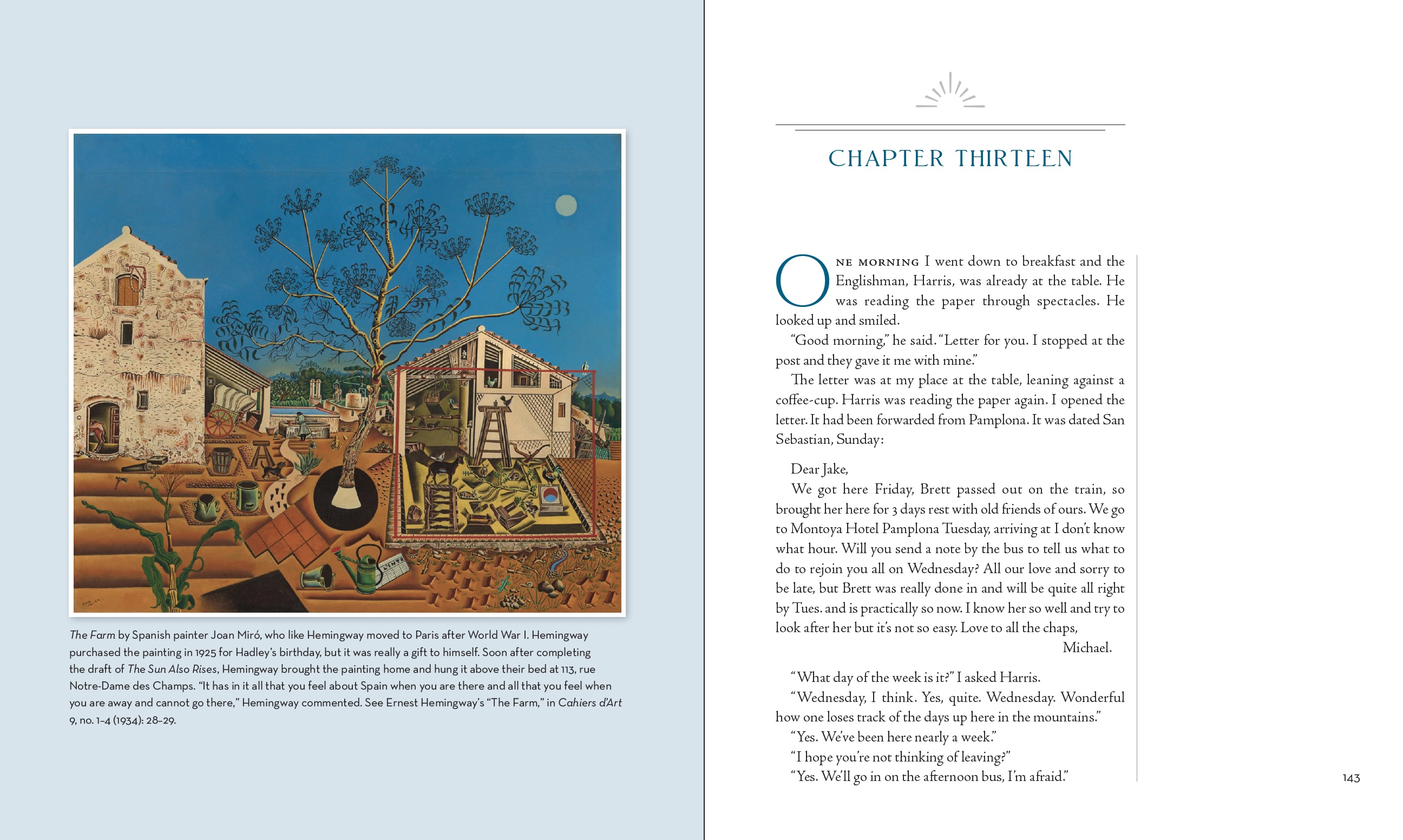
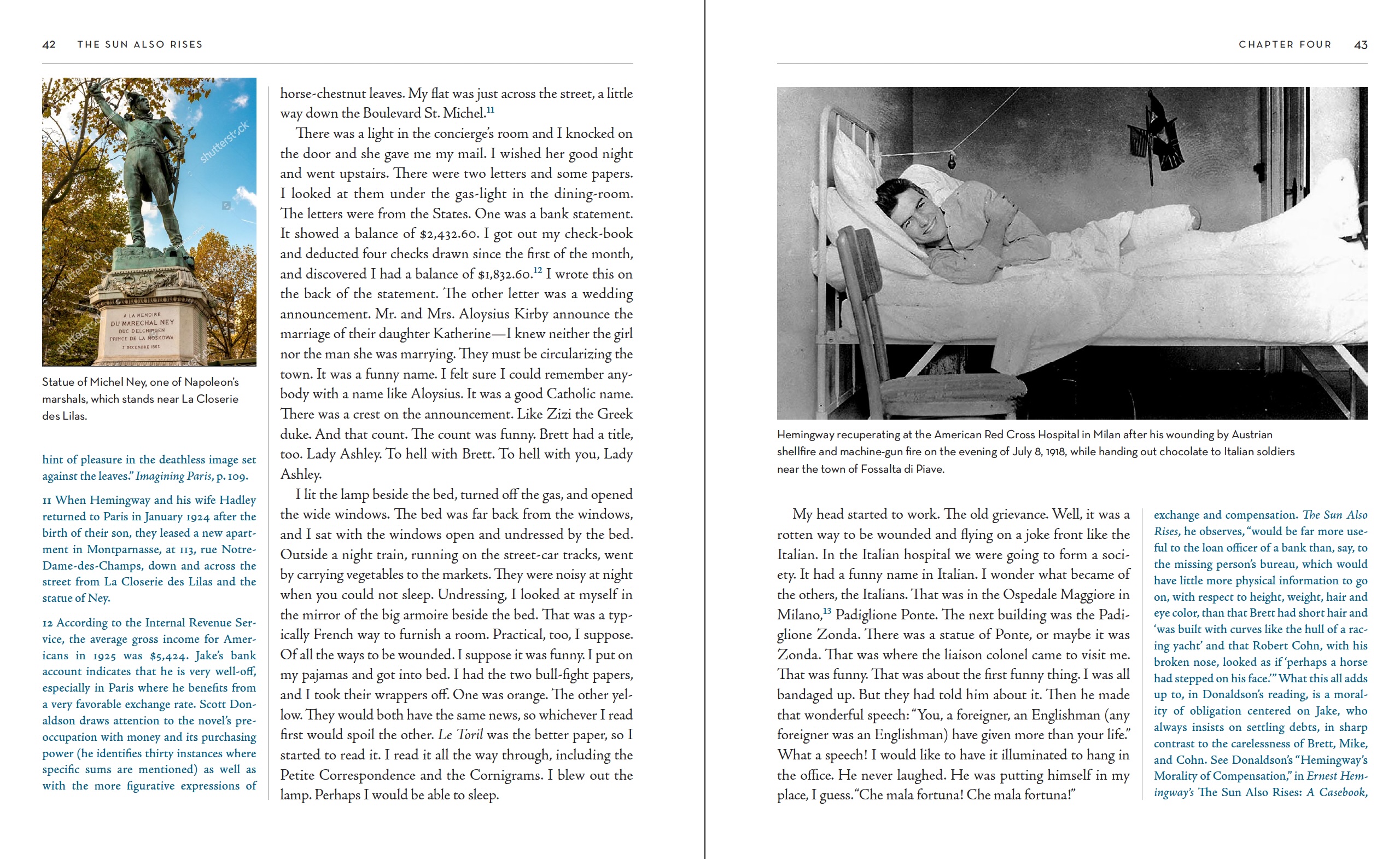
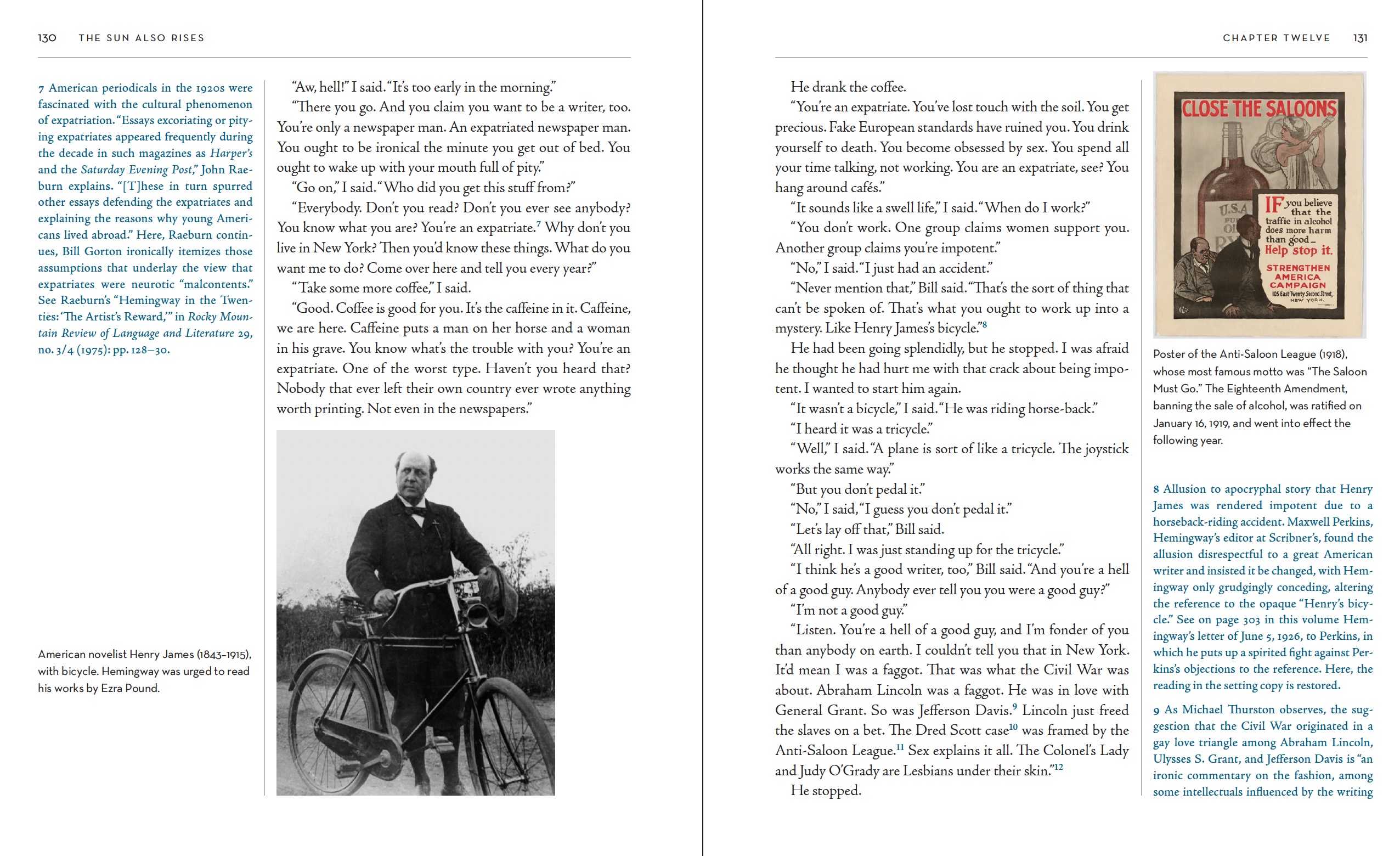
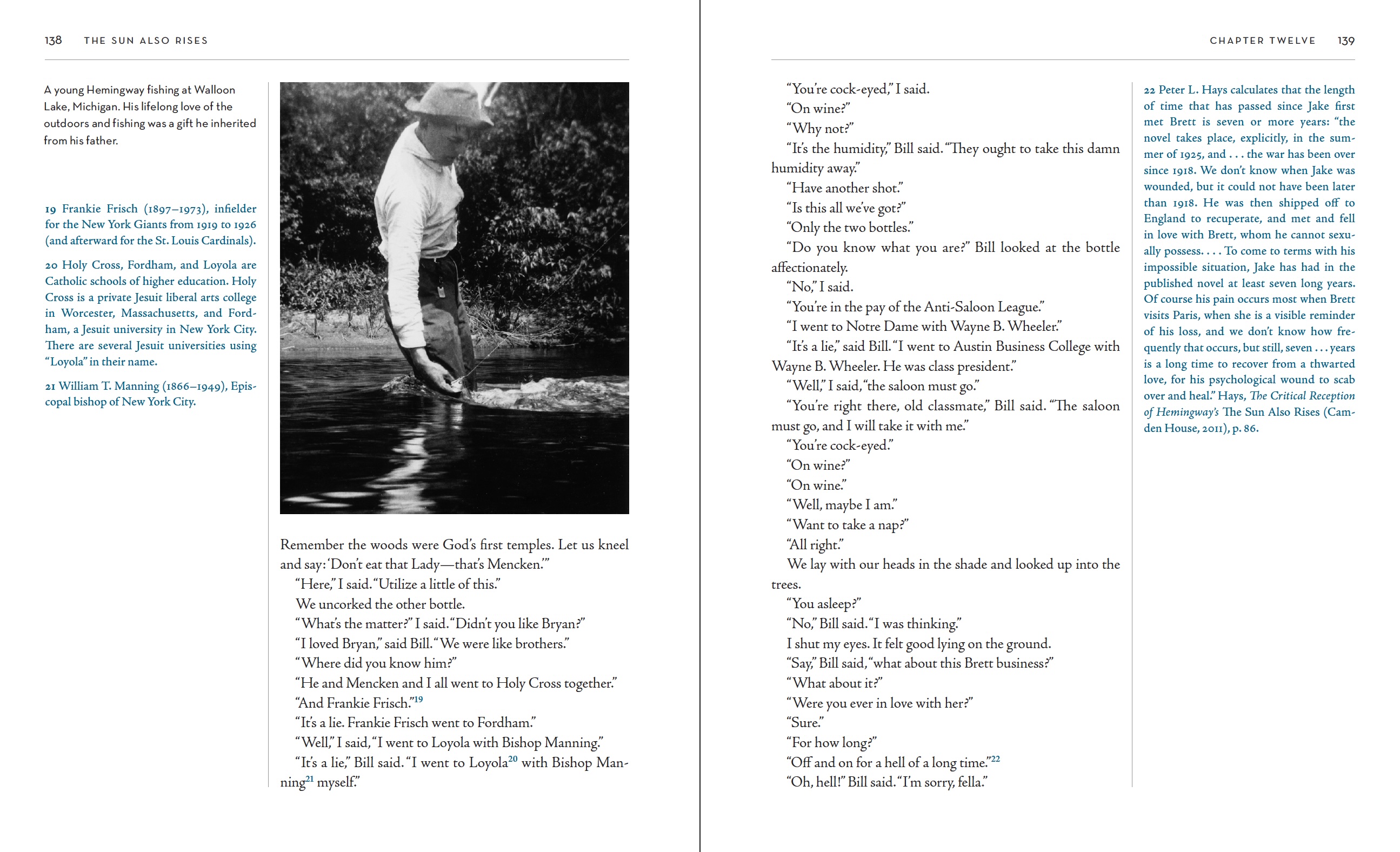
The Sun Also Rises is the novel that established Hemingway as the preeminent voice of the Lost Generation. Now, rediscover this classic work in a fully illustrated annotated centenary edition that features Library of America’s authoritative corrected text, including an introduction by The New Yorker's Adam Gopnik, some 140illustrations and photographs, and more than 200 fascinating marginal notes.

Drawn from the authoritative Library of America edition of Hemingway’s writings, this deluxe edition features: 
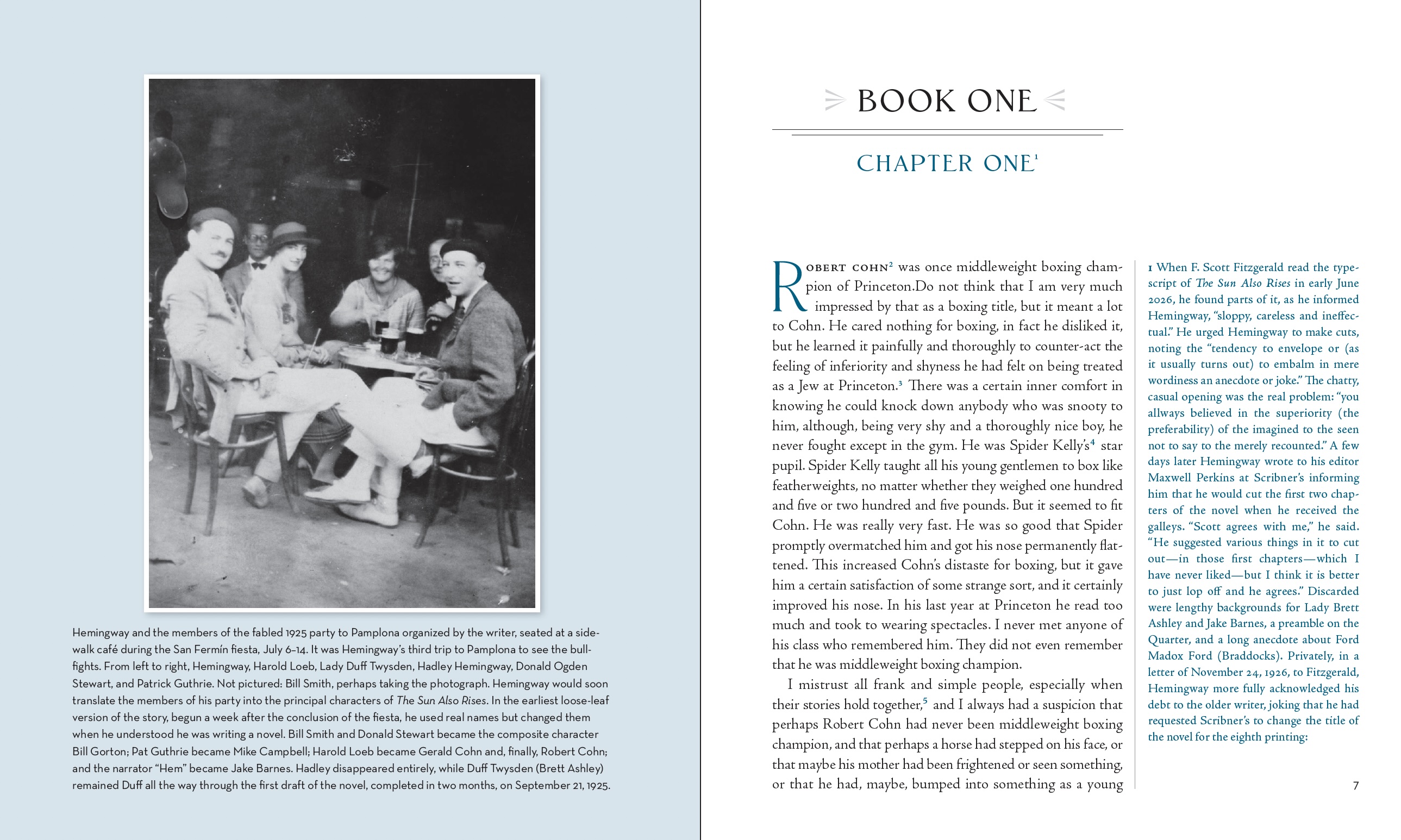
  • The novel’s original opening two chapters from his typescript, cut at the strong urging of his friend F. Scott Fitzgerald. 
  • A selection of letters from Hemingway to Maxwell Perkins, F. Scott Fitzgerald, and others that concern the composition, editing, and publication of The Sun Also Rises.
  • Other special features include an introduction by Adam Gopnik and a detailed chronology of Hemingway’s life and career. 

Throughout, Hemingway scholar Robert W. Trogdon offers fascinating insight into the novel's historical and biographical contexts, language, literary allusions, and contemporary references. The large cast of expat figures whom Hemingway fictionalizes in his book, the setting of 1920s Paris and Spain, the San Fermin festival in Pamplona, and, of course, bullfighting, as well as the novel’s rich cultural afterlife, are brought vividly to life as never before. 

The new, corrected text of the novel fixes numerous errors, restoring key changes made to his original punctuation—most notably in the novel’s famous final lines—to bring us closer than ever before to the groundbreaking modernist work Hemingway envisioned.

Born in the Chicago suburb of Oak Park Illinois in 1899, Ernest Hemingway left home at 17 to become a reporter for the Kansas City Star, then served as a Red Cross ambulance driver on the Italian front, where he suffered shrapnel wounds. He moved to Paris in 1921 and became part of an expatriate American scene that included Gertrude Stein and F. Scott Fitzgerald. His works include In Our Time (1925), The Sun Also Rises (1926), A Farewell to Arms (1929), For Whom the Bell Tolls (1940), and The Old Man and the Sea (1952). He was awarded the Nobel Prize for Literature in 1964. Hemingway died in Ketchum, Idaho in 1961.

Robert W. Trogdon, editor, is professor of English at Kent State University. A scholar of twentieth-century American literature and textual editing, he has published extensively on the writings of Ernest Hemingway and served as an editor for The Cambridge Edition of the Letters of Ernest Hemingway.

About

100th Anniversary Deluxe Edition: A richly illustrated, full-color, clothbound celebration of the novel that established Hemingway as the preeminent voice of the Lost Generation

Rediscover a literary masterpiece through illuminating commentary that brings its colorful world to vivid life


The Sun Also Rises is the novel that established Hemingway as the preeminent voice of the Lost Generation. Now, rediscover this classic work in a fully illustrated annotated centenary edition that features Library of America’s authoritative corrected text, including an introduction by The New Yorker's Adam Gopnik, some 140illustrations and photographs, and more than 200 fascinating marginal notes.

Drawn from the authoritative Library of America edition of Hemingway’s writings, this deluxe edition features: 
  • The novel’s original opening two chapters from his typescript, cut at the strong urging of his friend F. Scott Fitzgerald. 
  • A selection of letters from Hemingway to Maxwell Perkins, F. Scott Fitzgerald, and others that concern the composition, editing, and publication of The Sun Also Rises.
  • Other special features include an introduction by Adam Gopnik and a detailed chronology of Hemingway’s life and career. 

Throughout, Hemingway scholar Robert W. Trogdon offers fascinating insight into the novel's historical and biographical contexts, language, literary allusions, and contemporary references. The large cast of expat figures whom Hemingway fictionalizes in his book, the setting of 1920s Paris and Spain, the San Fermin festival in Pamplona, and, of course, bullfighting, as well as the novel’s rich cultural afterlife, are brought vividly to life as never before. 

The new, corrected text of the novel fixes numerous errors, restoring key changes made to his original punctuation—most notably in the novel’s famous final lines—to bring us closer than ever before to the groundbreaking modernist work Hemingway envisioned.

Author

Born in the Chicago suburb of Oak Park Illinois in 1899, Ernest Hemingway left home at 17 to become a reporter for the Kansas City Star, then served as a Red Cross ambulance driver on the Italian front, where he suffered shrapnel wounds. He moved to Paris in 1921 and became part of an expatriate American scene that included Gertrude Stein and F. Scott Fitzgerald. His works include In Our Time (1925), The Sun Also Rises (1926), A Farewell to Arms (1929), For Whom the Bell Tolls (1940), and The Old Man and the Sea (1952). He was awarded the Nobel Prize for Literature in 1964. Hemingway died in Ketchum, Idaho in 1961.

Robert W. Trogdon, editor, is professor of English at Kent State University. A scholar of twentieth-century American literature and textual editing, he has published extensively on the writings of Ernest Hemingway and served as an editor for The Cambridge Edition of the Letters of Ernest Hemingway.