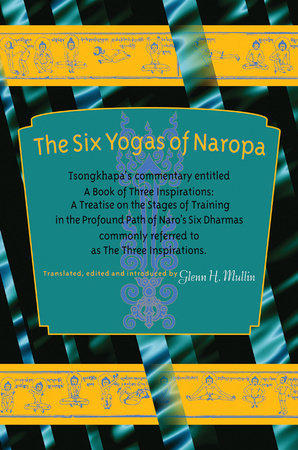
Tsongkhapa's commentary entitled A Book of Three Inspirations: A Treatise on the Stages of Training in the Profound Path of Naro's Six Dharmas is commonly referred to as The Three Inspirations. Anyone who has read more than a few books on Tibetan Buddhism will have encountered references to the Six Yogas of Naropa, a preeminent yogic technology system. The six practices—inner heat, illusory body, clear light, consciousness transference, forceful projection, and bardo yoga—gradually came to pervade thousands of monasteries, nunneries, and hermitages throughout Central Asia over the past five and a half centuries.
"Another example of Mullin's brilliance as a translator and interpreter of Tibetan tantricism."—Tibet Journal
"A veritable feast containing teachings that for centuries have been kept secret but that give one a clear sense of the enormous possibilities on the spiritual path."—Quest Magazine
"Glenn's study of the history, substance, and philosophical legacy of the Six Yogas of Naropa together with his translations of Tsongkhapa's treatise provides an invaluable guide to this tradition."—Buddhism Now
Je Tsong-kha-pa (1357–1419), founder of the Gelug school of Tibetan Buddhism, was one of Tibet's greatest philosophers and a prolific writer. His most famous work, The Great Treatise on the Stages of the Path, is a classic of Tibetan Buddhism.
Tsongkhapa's commentary entitled A Book of Three Inspirations: A Treatise on the Stages of Training in the Profound Path of Naro's Six Dharmas is commonly referred to as The Three Inspirations. Anyone who has read more than a few books on Tibetan Buddhism will have encountered references to the Six Yogas of Naropa, a preeminent yogic technology system. The six practices—inner heat, illusory body, clear light, consciousness transference, forceful projection, and bardo yoga—gradually came to pervade thousands of monasteries, nunneries, and hermitages throughout Central Asia over the past five and a half centuries.
Praise
"Another example of Mullin's brilliance as a translator and interpreter of Tibetan tantricism."—Tibet Journal
"A veritable feast containing teachings that for centuries have been kept secret but that give one a clear sense of the enormous possibilities on the spiritual path."—Quest Magazine
"Glenn's study of the history, substance, and philosophical legacy of the Six Yogas of Naropa together with his translations of Tsongkhapa's treatise provides an invaluable guide to this tradition."—Buddhism Now
Author
Je Tsong-kha-pa (1357–1419), founder of the Gelug school of Tibetan Buddhism, was one of Tibet's greatest philosophers and a prolific writer. His most famous work, The Great Treatise on the Stages of the Path, is a classic of Tibetan Buddhism.