IntroductionPoof was the word I hated most throughout the 1980s. In 1980, I turned ten, and around that time at school I began to hear “Poof” yelled across the playground at me—a label intended to cause me shame. The old saying, “Sticks and stones will break my bones but names will never hurt me,” could not have been further from the truth. Words, when hurled like stones, wound deeply.
It wasn’t long before
poof had recruited a whole gang of equally bruising words:
gaylord, woofter, pansy, poofter, shirt-lifter, gayboy, bender, queer.
The bombardment was daily, at times almost casual. It seemed that my peers had made up their minds about me and my sexuality long before I understood it. There is something particularly isolating and lonely about homophobic bullying when you experience it as a child, because who do you tell? In the 1980s, in the suburbs of Liverpool, being a “poof” was the very worst thing a boy could be.
School became an endurance test. The name-calling was soon joined by violence. I was punched, kicked, spat on, pushed over, chased, threatened, intimidated, had my lunch stolen, my school bag ripped to shreds, and my books thrown over a hedge. And I felt the impact of a variety of missiles. I did my best to pretend it wasn’t happening.
It was exhausting, watching myself, adjusting my behavior in an attempt to avoid it all.
Was this what my life would be? Ashamed and afraid of who I was, hiding my homosexuality, denying it even to myself?
Queer kids of my generation, and generations before mine, were deprived of queer knowledge in childhood; our history was hidden from us. There were no books in the school library and no lessons that showed us queer identities. There was no celebration of revolutionary queer people fighting for equality and freedom or visibility of ordinary LGBTQ+ people just living their lives. Queer or not, we were all left in the dark about homosexuality, bisexuality, and trans identities as natural ways of being. Told our feelings were unnatural, we were set adrift, left alone to search for positive glimpses of homosexuality, to lift ourselves into a place of acceptance.
I was deeply curious about being gay. I knew I wasn’t the only one, but where should I look to find others like me? Popular culture provided a peek. The merest suggestion that a character in a book might be gay had me hooked; the tiniest shimmer of ambiguity in a love song saw me reading and rereading the lyrics. I became an instant fan of anyone who stuck their head above the parapet: Boy George, Marilyn, Sandra Bernhard, Divine, John Waters. I scoured the TV guide for films with queer characters, which I furtively watched with the sound turned down low (so as not to be discovered) on the fuzzy black-and-white television in my bedroom. But the protests, the marches, the queer groups and organizations all eluded me.
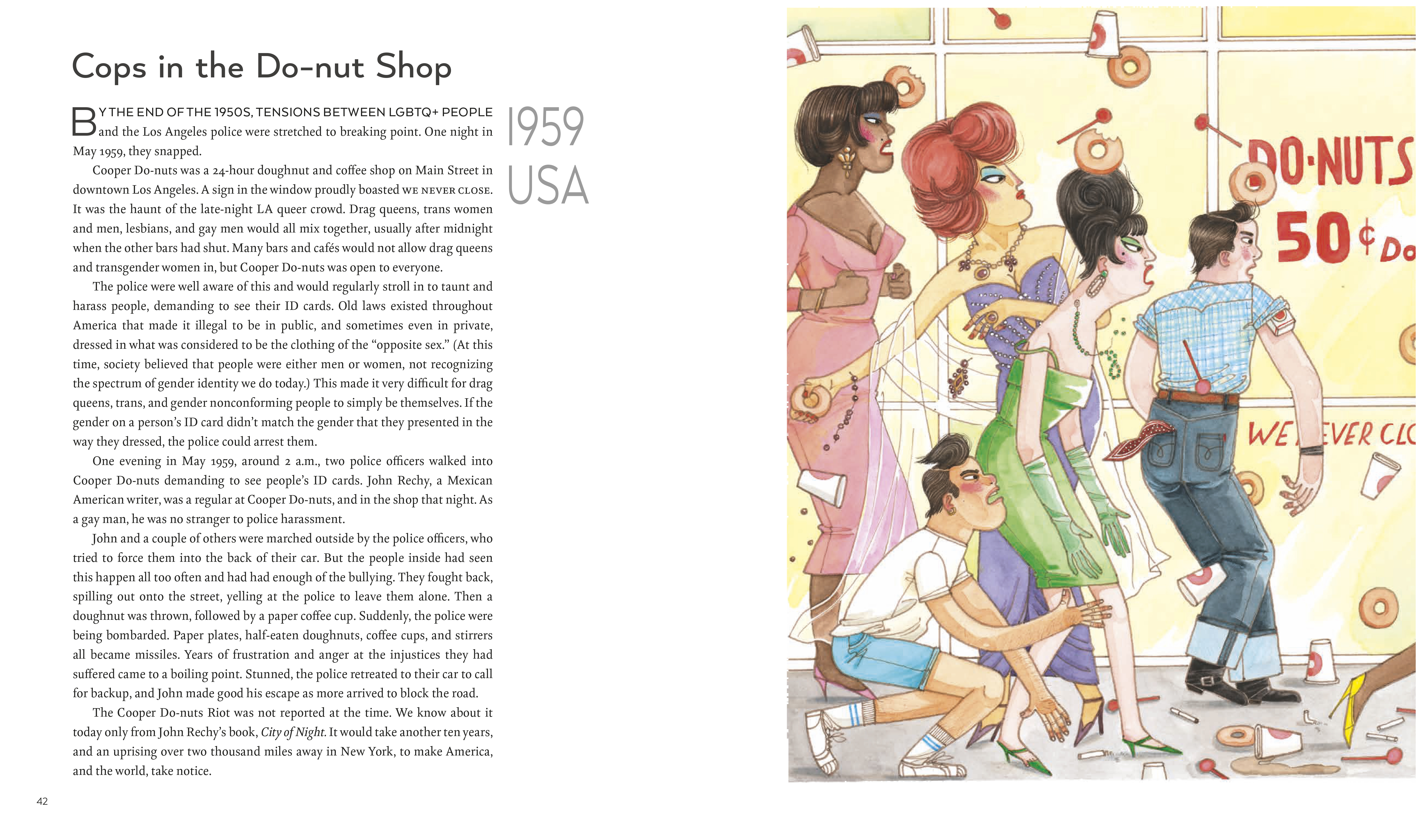
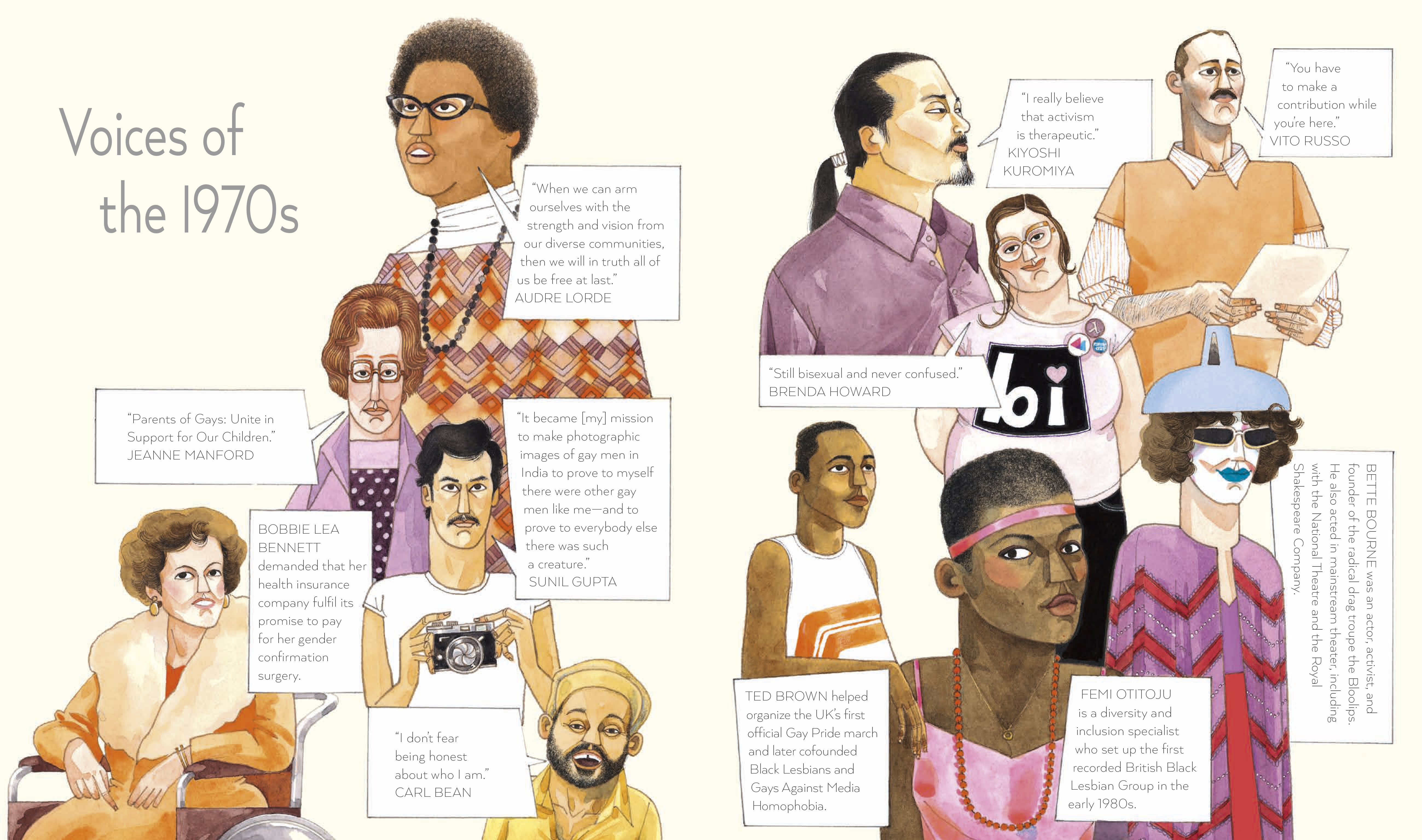
This book is absolutely not a definitive collection of LGBTQ+ activism. The subject is so vast, so sprawling, it would be impossible to capture a complete history in one book. I focused my research on stories from the UK and US that document the last fifty years of the twentieth century, a time of deeply rooted homophobia and expanding social change. These form just a glimpse of the numberless LGBTQ+ stories from around the world waiting to be explored.
I am not an expert on queer activism. I’m an enthusiast, a seeker of stories that illustrate the fight for the freedom of all queer people to be themselves without fear or persecution.
Of course, it’s impossible to know if, armed with knowledge of these stories, the teenage me would have felt any differently about myself. Shame, when it’s pinned to you, is hard to shake off.
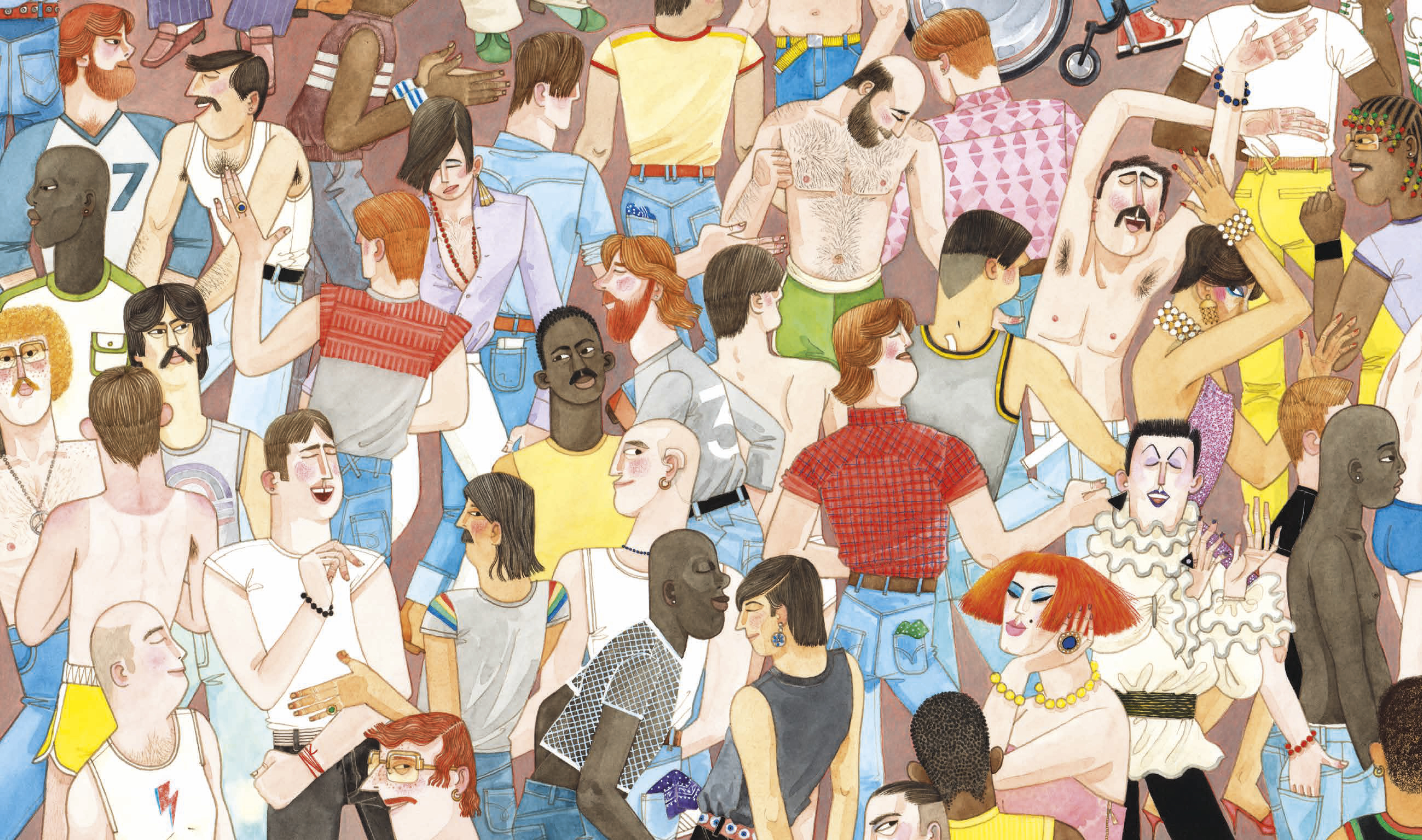
But had I known how queer activism wove its way through theater, politics, humor, fashion, art, music, and sports; how queer hands made banners, queer imaginations created slogans, queer lips openly kissed each other in protest and in love; how queer bodies, in life and in death, took up space and caused disruption; how queer voices sang and chanted, “Closets are for clothes!,” “Come out, be seen!,” “We’re here, we’re queer and we are everywhere . . . and we always have been”—then maybe there would have been no shame to feel—only pride.
Copyright © 2026 by David Roberts; Illustrated by David Roberts. All rights reserved. No part of this excerpt may be reproduced or reprinted without permission in writing from the publisher.