Hansel and GretelAt the edge of a great forest lived a woodcutter with his wife and two children—little Hansel and his big sister, Gretel. The family had always been very poor, but when a great famine swept over the land, their old oven stayed as empty as their hollow stomachs.
With nowhere to turn for help, the family worried about their future.
One night, while lying in bed, the husband said to his wife, “Tomorrow we shall take the children into the deepest part of the woods. We shall give them each a small piece of bread, build a fire, and leave them there.”
“No!” said the mother, horrified. “I will not abandon my beloved children. Wild animals will tear them to pieces!”
“If we don’t leave them, all four of us will soon starve to death,” the man replied quickly. “We have no other choice!” On and on he went until his wife—starving, desperate, and without hope—agreed.
But the children, plagued as they were by terrible hunger, had not been able to fall asleep that night and had overheard everything.
Little Hansel began to cry bitter tears, but Gretel, soothing him, said, “Don’t worry, little brother. I know exactly what to do. I promise to take care of you.”
As soon as their parents had fallen asleep, Gretel quietly got up and put on her coat. Then, walking on tiptoes, she snuck outside. The moon was shining brightly, making the white pebbles in front of the house sparkle like new silver coins. Gretel knelt down and filled her coat pockets until she could fit no more of the snow-white stones.
She crept back inside and silently climbed up to the attic, where little Hansel was waiting for her. “Go to sleep now. Everything will be all right,” she promised, and the children curled up together and soon fell asleep.
It was before sunrise when the father came to wake the children. “Get up! We are going into the forest today to fetch some wood. Here is a small piece of bread for each of you. Make sure to save it until midday. It is the only food you will have today.”
Gretel put the bread under her apron because her pockets were full of stones. Then the family set off into the woods. As they walked, Gretel kept stopping to peer back at their house. She did this so often that after a little while, the mother said, “Gretel, keep up or have you forgotten how to use your legs?”
“Ah, Mother,’’ said Gretel, “I’m looking at a little white cat that is sitting on the roof of our house and wants to say goodbye to me.”
The father chuckled and said, “You silly child! That’s not a cat; that’s just the morning sun shining on the chimney.”
Gretel, however, had not been pausing to look at a cat, but had, at every small stop, dropped a shiny white pebble from her pocket onto the path.
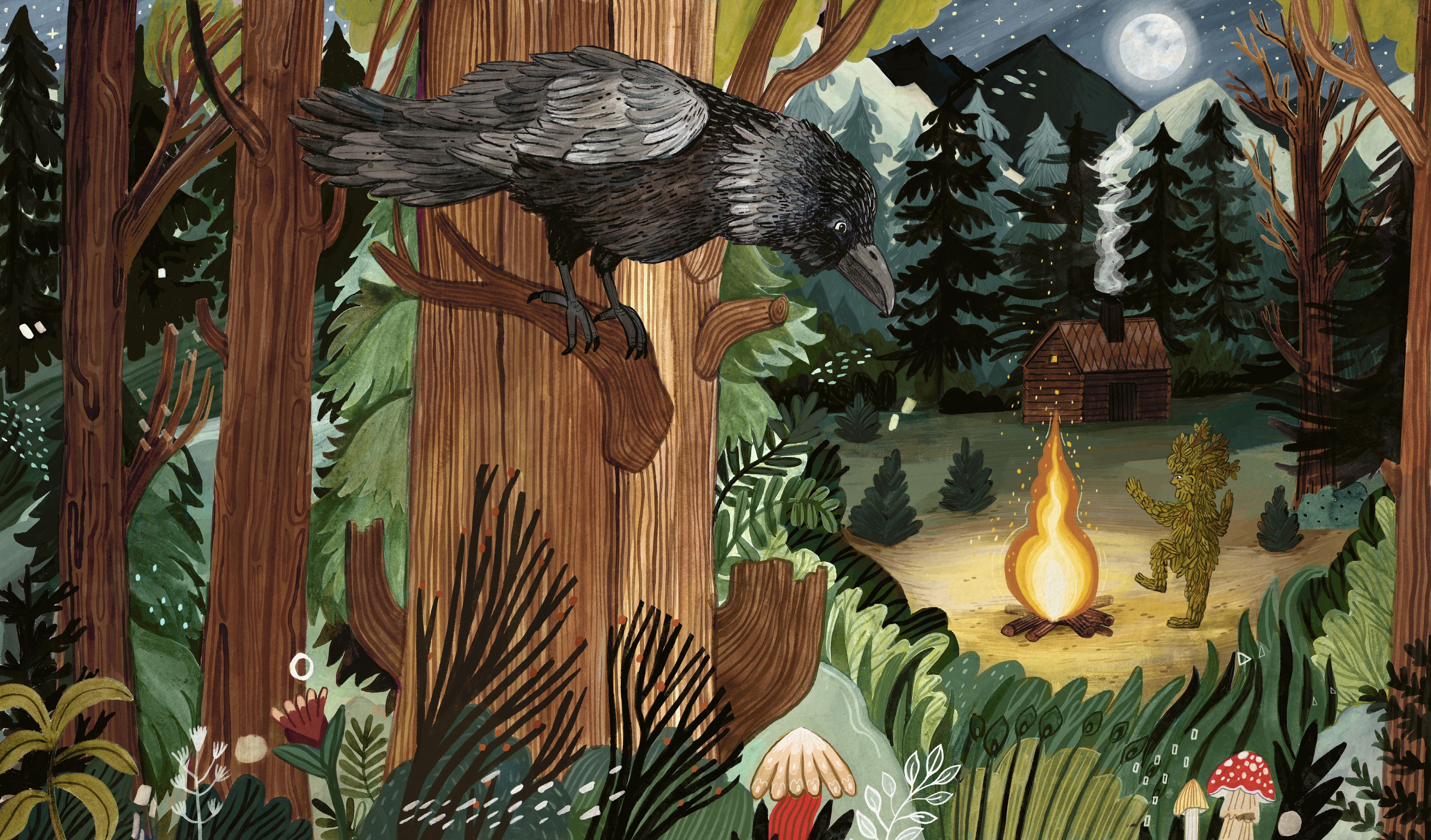
The family took a twisting and unfamiliar route into the deepest part of the forest. When they finally stopped walking, the father said, “Now, children, go and gather some wood. I will make a fire so you don’t freeze.” Hansel and Gretel gathered firewood and piled it as tall as a small mountain. The father set it alight and said, “Stay here, rest, and keep this fire going. Your mother and I will work in the forest and cut more wood. When we are done, we will come back and fetch you.”
Hansel and Gretel sat by the fire until midday and then ate their small pieces of bread.
They waited for a long time, but their parents did not return.
When night fell and the world grew darker, little Hansel began to cry, but Gretel calmly said, “Just wait a little longer until the moon comes up.”
At moonrise, Gretel took her brother by the hand. She showed him the pebbles, which shimmered like newly made coins in the silver moonlight, guiding them home. They walked for the rest of the night and at sunrise arrived at their parents’ house.
When their mother saw them, she hugged the children tightly, overjoyed to hold them in her arms again. The father pretended that he was happy, too, but secretly he was angry.
Copyright © 2025 by The Brothers Grimm, Sandra Dieckmann; Illustrated by Sandra Dieckmann. All rights reserved. No part of this excerpt may be reproduced or reprinted without permission in writing from the publisher.