Close Modal

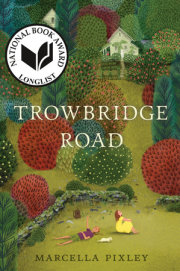
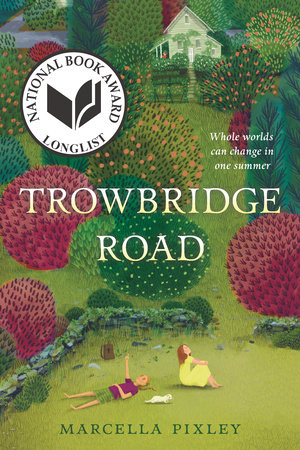
Trowbridge Road

Look inside
Paperback
$9.99 US
5.56"W x 8.25"H x 0.86"D   | 10 oz | 20 per carton
On sale May 10, 2022 | 320 Pages | 9781536226003
Age 10 and up | Grade 5 & Up
Reading Level: Lexile 770L | Fountas & Pinnell Z+

See Additional Formats
A 2020 National Book Award Long List Selection
A Shelf Awareness Best Book of 2020
A Reading Group Choices Best Book of 2020 
A Mighty Girl Best Book of 2020

In a stunning novel set in the 1980s, a girl with heavy secrets awakens her sleepy street to the complexities of love and courage.


It’s the summer of ’83 on Trowbridge Road, and June Bug Jordan is hungry. Months after her father’s death from complications from AIDS, her mother has stopped cooking and refuses to leave the house, instead locking herself away to scour at the germs she believes are everywhere. June Bug threatens this precarious existence by going out into the neighborhood, gradually befriending Ziggy, an imaginative boy who is living with his Nana Jean after experiencing troubles of his own. But as June Bug’s connection to the world grows stronger, her mother’s grows more distant — even dangerous — pushing June Bug to choose between truth and healing and the only home she has ever known.

Trowbridge Road paints an unwavering portrait of a girl and her family touched by mental illness and grief. Set in the Boston suburbs during the first years of the AIDS epidemic, the novel explores how a seemingly perfect neighborhood can contain restless ghosts and unspoken secrets. Written with deep insight and subtle lyricism by acclaimed author Marcella Pixley, Trowbridge Road demonstrates our power to rescue one another even when our hearts are broken.
  • LONGLIST | 2020
    National Book Award for Young People's Literature
June Bug narrates this work of historical realism with a magical, poetic quality, turning the ordinary extraordinary. June Bug and Ziggy’s fanciful adventures are likely to resonate with fans of Katherine Paterson’s Bridge to Terabithia (1977)...An exceptional story for readers who feel deeply.
—Kirkus Reviews (starred review)

Trowbridge Road is a luminous, heart-wrenching story that reminds us that love—maybe flawed, maybe messy—is what sustains us. Burbling over with lush details, Marcella Pixley’s novel takes the ordinary stuff of life—steam from a bowl of warm pasta, summer sunlight, the bond between two kids burdened by family secrets—and makes it extraordinary.”
—Esther Ehrlich, author of Nest

Told from the point of view of the two friends, the narrative is imaginative, flows smoothly, and has you routing for both characters by the end of the story...I truly enjoyed this well-written, plot-driven story and would recommend it for all middle schoolers. The book also reflects the lack of diversity that defined many communities in the 80s. Even though it is a work of historical fiction, there are many lessons in this book that all readers can learn from today.
—School Library Connection

Drawing comparisons to Bridge to Terabithia, this literary middle grade novel by Pixley (Ready to Fall) follows two lonely children awash in secrets and hurts...Heartbreaking and sometimes emotionally difficult, this novel will appeal to young teens looking for something serious to dig into.
—Publishers Weekly

A beautifully honest account of trauma and childhood friendship that takes place in the early 1980s...The text richly illustrates the inner lives of children, and the subject matter is handled in a way that is honest yet age appropriate. A solid choice for mature tweens who appreciate a story with literary and fantastical elements that also tackles realistic topics.
—School Library Journal

Fans of Kate DiCamillo’s Raymie Nightingale (BCCB 4/16) and its followups will find this similarly emotional and ultimately satisfying. A brief author’s note offers more information about AIDS and about mental illness.
—Bulletin of the Center for Children's Books
Marcella Pixley is the author of three highly praised books for young adults that have received multiple starred reviews, including Ready to Fall. She has been nominated for a Pushcart Prize for poetry and earned a master’s from Bread Loaf School of English at Middlebury College. She teaches writing to middle-schoolers in Massachusetts, where she lives with her family.
Something New

It was clear that the summer was about to change as soon as Jenny Karlo’s rusty old Chevy came clattering down Trowbridge Road at a quarter past two, the radio pounding heavy metal into the neighborhood, shattering the lazy Thursday afternoon like a rock through a dusty window.
When the door creaked open and Jenny stepped onto the cracked sidewalk with her black high-heeled boots, her bare legs, and her feathered red hair down past her shoulders, it seemed like the maple trees and the tall Victorian houses leaned in,
not because they were leering at her like so many of the fathers did, but because something about Jenny changed everything that came close to her.
She took a drag on her cigarette.
“Get out of the car, Ziggy,” she said.
The back door opened, but the boy did not emerge.
“You need me to go back there and pull you?”
“No,” muttered the boy. “I can do it.”
He unfolded from the backseat, a beanpole in green striped jogging shorts and a purple Return of the Jedi T-shirt. He had an unruly mop of long red hair down his back and a white ferret perched on his shoulder, snuffling at the wind.
He joined Jenny on the sidewalk. They stood side by side and looked up at the house. The boy reached for his mother’s hand. Hers were already occupied. One was holding the cigarette, and the other was hooked into the back pocket of her cutoff jeans. His hand flopped empty back down to his side.
“You got your stuff?” asked Jenny.
Ziggy nodded and lifted a battered suitcase with one shrugged shoulder.
“Okay, then. Let’s go.”
 
They walked together across the flagstones and then up the wooden steps.
Nana Jean swung open the door before they knocked. She made a strange sound — ​some kind of mixture between happy and sad, a sound that only a grandmother can make — ​and pulled Ziggy toward her. “It’s the right thing,” she said over his shoulder. “Oh, Jenny, Jenny, I know this is hard, but it’s the right thing. You’ll see.”
“Well, okay. It’s the right thing. Let’s hurry up before I change my mind.”
“We’ll stay in touch,” said Nana Jean breathlessly, rubbing the boy’s back. “I already made arrangements, and he can start school here with the other kids at the end of the summer, no problem. He’ll like it in Newton. No more bullies. No more teasing. Everything’s going to be just fine now. I’ll take really good care of him, Jenny. You hear me?”
“Yeah,” said Jenny. “I hear you. And I appreciate that. I really do. It sure has been a tough year.”
“I know,” said Nana Jean. “Let me worry about Ziggy, and you just work on getting yourself well. One day at a time. Right? Isn’t that what they say?”
“That’s what they say,” said Jenny.
She took one more drag on the cigarette, blew smoke over her shoulder, dropped the butt on the porch, and stamped it out with the heel of her boot.
The white ferret climbed down from the boy’s shoulder. Then it scrambled onto the porch, grabbed the butt in one claw, and started gnawing at it.
Nana Jean and Jenny both looked at the ferret because it was easier than looking at each other.
“Well, okay, Ziggy,” said Jenny. “You be good for Nana Jean. And don’t let that creature sleep in your pants. You hear me?” She took the boy by the shoulders and pulled him away from his grandmother. “Animals aren’t meant to sleep in people’s pants,” she said. “It’s disgusting. And it ruins them. Ferrets smell like skunk, you know. And clothes are expensive. Money doesn’t grow on trees, even here in Newton Highlands.”
“But Matthew likes being close to me,” said Ziggy. “He likes my scent.” Ziggy scooped the ferret from the ground, kissed him on the top of his white head, and then grinned at the creature. The ferret licked his teeth, his white tail twitching.
“Well, now,” said Nana Jean, pulling the ferret from Ziggy’s mouth and holding him in front of her like a dirty rag. “First things first. Let’s see what we can do to get you two settled in. I’ve got Jenny’s old room all ready, and I want you and Matthew to sleep any way that feels comfortable. If he wants to sleep in your pants, it’s okay with me as long as you’re out of them when he does it. No sleepless nights in Nana’s house. Nobody’s going to bother you anymore, Ziggy. Things are going to change now that Nana’s taking care of you. You hear me?”
“Thank you, Nana,” said Ziggy.
“Okay,” said Jenny. “I think I’d better go now.”
“Give him a kiss and tell him you love him,” said Nana Jean.
Obediently, Jenny knelt on the porch in front of her gangly boy.
Ziggy kissed his mother’s hair. “I love you, Jenny,” he said.
Jenny closed her eyes and leaned against him.
“You be the Walrus, Goo Goo Boy,” she said.
“I am,” said Ziggy. “I am the Walrus.”
Jenny got up from the ground. “Then give me a high slide,” she said.
Jenny put her hand out, and Ziggy ran his index finger down the length of her palm. Then he snapped and pointed at her. He had tears streaming down his cheeks.
“He’s the Walrus,” said Jenny, smiling now with
tears in her eyes. “He’s my Goo Goo Boy. No matter what happens.”
Nana Jean took Ziggy by the hand. She opened the screen door and led him into the house.
Jenny stood alone on the porch. She watched the old house swallow them and looked out over Trowbridge Road at the row of houses with their closed doors. After a while, she sighed and made her way back to the car. She got in, lit another cigarette, rolled down the window, started the engine, cranked up the radio, and clattered down Trowbridge Road and on toward town.

About

A 2020 National Book Award Long List Selection
A Shelf Awareness Best Book of 2020
A Reading Group Choices Best Book of 2020 
A Mighty Girl Best Book of 2020

In a stunning novel set in the 1980s, a girl with heavy secrets awakens her sleepy street to the complexities of love and courage.


It’s the summer of ’83 on Trowbridge Road, and June Bug Jordan is hungry. Months after her father’s death from complications from AIDS, her mother has stopped cooking and refuses to leave the house, instead locking herself away to scour at the germs she believes are everywhere. June Bug threatens this precarious existence by going out into the neighborhood, gradually befriending Ziggy, an imaginative boy who is living with his Nana Jean after experiencing troubles of his own. But as June Bug’s connection to the world grows stronger, her mother’s grows more distant — even dangerous — pushing June Bug to choose between truth and healing and the only home she has ever known.

Trowbridge Road paints an unwavering portrait of a girl and her family touched by mental illness and grief. Set in the Boston suburbs during the first years of the AIDS epidemic, the novel explores how a seemingly perfect neighborhood can contain restless ghosts and unspoken secrets. Written with deep insight and subtle lyricism by acclaimed author Marcella Pixley, Trowbridge Road demonstrates our power to rescue one another even when our hearts are broken.

Awards

  • LONGLIST | 2020
    National Book Award for Young People's Literature

Praise

June Bug narrates this work of historical realism with a magical, poetic quality, turning the ordinary extraordinary. June Bug and Ziggy’s fanciful adventures are likely to resonate with fans of Katherine Paterson’s Bridge to Terabithia (1977)...An exceptional story for readers who feel deeply.
—Kirkus Reviews (starred review)

Trowbridge Road is a luminous, heart-wrenching story that reminds us that love—maybe flawed, maybe messy—is what sustains us. Burbling over with lush details, Marcella Pixley’s novel takes the ordinary stuff of life—steam from a bowl of warm pasta, summer sunlight, the bond between two kids burdened by family secrets—and makes it extraordinary.”
—Esther Ehrlich, author of Nest

Told from the point of view of the two friends, the narrative is imaginative, flows smoothly, and has you routing for both characters by the end of the story...I truly enjoyed this well-written, plot-driven story and would recommend it for all middle schoolers. The book also reflects the lack of diversity that defined many communities in the 80s. Even though it is a work of historical fiction, there are many lessons in this book that all readers can learn from today.
—School Library Connection

Drawing comparisons to Bridge to Terabithia, this literary middle grade novel by Pixley (Ready to Fall) follows two lonely children awash in secrets and hurts...Heartbreaking and sometimes emotionally difficult, this novel will appeal to young teens looking for something serious to dig into.
—Publishers Weekly

A beautifully honest account of trauma and childhood friendship that takes place in the early 1980s...The text richly illustrates the inner lives of children, and the subject matter is handled in a way that is honest yet age appropriate. A solid choice for mature tweens who appreciate a story with literary and fantastical elements that also tackles realistic topics.
—School Library Journal

Fans of Kate DiCamillo’s Raymie Nightingale (BCCB 4/16) and its followups will find this similarly emotional and ultimately satisfying. A brief author’s note offers more information about AIDS and about mental illness.
—Bulletin of the Center for Children's Books

Author

Marcella Pixley is the author of three highly praised books for young adults that have received multiple starred reviews, including Ready to Fall. She has been nominated for a Pushcart Prize for poetry and earned a master’s from Bread Loaf School of English at Middlebury College. She teaches writing to middle-schoolers in Massachusetts, where she lives with her family.

Excerpt

Something New

It was clear that the summer was about to change as soon as Jenny Karlo’s rusty old Chevy came clattering down Trowbridge Road at a quarter past two, the radio pounding heavy metal into the neighborhood, shattering the lazy Thursday afternoon like a rock through a dusty window.
When the door creaked open and Jenny stepped onto the cracked sidewalk with her black high-heeled boots, her bare legs, and her feathered red hair down past her shoulders, it seemed like the maple trees and the tall Victorian houses leaned in,
not because they were leering at her like so many of the fathers did, but because something about Jenny changed everything that came close to her.
She took a drag on her cigarette.
“Get out of the car, Ziggy,” she said.
The back door opened, but the boy did not emerge.
“You need me to go back there and pull you?”
“No,” muttered the boy. “I can do it.”
He unfolded from the backseat, a beanpole in green striped jogging shorts and a purple Return of the Jedi T-shirt. He had an unruly mop of long red hair down his back and a white ferret perched on his shoulder, snuffling at the wind.
He joined Jenny on the sidewalk. They stood side by side and looked up at the house. The boy reached for his mother’s hand. Hers were already occupied. One was holding the cigarette, and the other was hooked into the back pocket of her cutoff jeans. His hand flopped empty back down to his side.
“You got your stuff?” asked Jenny.
Ziggy nodded and lifted a battered suitcase with one shrugged shoulder.
“Okay, then. Let’s go.”
 
They walked together across the flagstones and then up the wooden steps.
Nana Jean swung open the door before they knocked. She made a strange sound — ​some kind of mixture between happy and sad, a sound that only a grandmother can make — ​and pulled Ziggy toward her. “It’s the right thing,” she said over his shoulder. “Oh, Jenny, Jenny, I know this is hard, but it’s the right thing. You’ll see.”
“Well, okay. It’s the right thing. Let’s hurry up before I change my mind.”
“We’ll stay in touch,” said Nana Jean breathlessly, rubbing the boy’s back. “I already made arrangements, and he can start school here with the other kids at the end of the summer, no problem. He’ll like it in Newton. No more bullies. No more teasing. Everything’s going to be just fine now. I’ll take really good care of him, Jenny. You hear me?”
“Yeah,” said Jenny. “I hear you. And I appreciate that. I really do. It sure has been a tough year.”
“I know,” said Nana Jean. “Let me worry about Ziggy, and you just work on getting yourself well. One day at a time. Right? Isn’t that what they say?”
“That’s what they say,” said Jenny.
She took one more drag on the cigarette, blew smoke over her shoulder, dropped the butt on the porch, and stamped it out with the heel of her boot.
The white ferret climbed down from the boy’s shoulder. Then it scrambled onto the porch, grabbed the butt in one claw, and started gnawing at it.
Nana Jean and Jenny both looked at the ferret because it was easier than looking at each other.
“Well, okay, Ziggy,” said Jenny. “You be good for Nana Jean. And don’t let that creature sleep in your pants. You hear me?” She took the boy by the shoulders and pulled him away from his grandmother. “Animals aren’t meant to sleep in people’s pants,” she said. “It’s disgusting. And it ruins them. Ferrets smell like skunk, you know. And clothes are expensive. Money doesn’t grow on trees, even here in Newton Highlands.”
“But Matthew likes being close to me,” said Ziggy. “He likes my scent.” Ziggy scooped the ferret from the ground, kissed him on the top of his white head, and then grinned at the creature. The ferret licked his teeth, his white tail twitching.
“Well, now,” said Nana Jean, pulling the ferret from Ziggy’s mouth and holding him in front of her like a dirty rag. “First things first. Let’s see what we can do to get you two settled in. I’ve got Jenny’s old room all ready, and I want you and Matthew to sleep any way that feels comfortable. If he wants to sleep in your pants, it’s okay with me as long as you’re out of them when he does it. No sleepless nights in Nana’s house. Nobody’s going to bother you anymore, Ziggy. Things are going to change now that Nana’s taking care of you. You hear me?”
“Thank you, Nana,” said Ziggy.
“Okay,” said Jenny. “I think I’d better go now.”
“Give him a kiss and tell him you love him,” said Nana Jean.
Obediently, Jenny knelt on the porch in front of her gangly boy.
Ziggy kissed his mother’s hair. “I love you, Jenny,” he said.
Jenny closed her eyes and leaned against him.
“You be the Walrus, Goo Goo Boy,” she said.
“I am,” said Ziggy. “I am the Walrus.”
Jenny got up from the ground. “Then give me a high slide,” she said.
Jenny put her hand out, and Ziggy ran his index finger down the length of her palm. Then he snapped and pointed at her. He had tears streaming down his cheeks.
“He’s the Walrus,” said Jenny, smiling now with
tears in her eyes. “He’s my Goo Goo Boy. No matter what happens.”
Nana Jean took Ziggy by the hand. She opened the screen door and led him into the house.
Jenny stood alone on the porch. She watched the old house swallow them and looked out over Trowbridge Road at the row of houses with their closed doors. After a while, she sighed and made her way back to the car. She got in, lit another cigarette, rolled down the window, started the engine, cranked up the radio, and clattered down Trowbridge Road and on toward town.

Live Inspired with Compendium: Now Available from PRH!

Exciting news! Compendium has joined the Penguin Random House family, bringing a proven line of bestselling, sentiment-driven gifts to our extensive and ever-growing catalog. Since 1985, Compendium has been creating meaningful moments with beautiful, thoughtfully made gifts that center connection and celebrate occasions both big and small. From greeting cards to inspirational books to impulse-friendly add-ons, Compendium

Read more