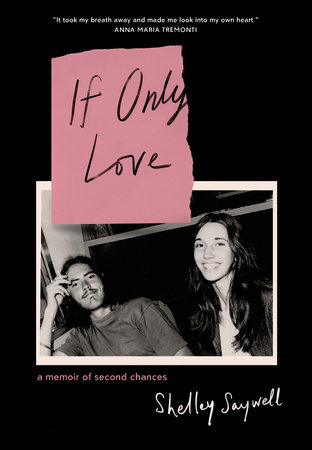
Phone Call Daniel was lying with his head in my lap. I traced the lines of his eyebrows, his cheekbones and jaw, feeling my way over the shapes and planes, the soft and rough surfaces I knew so well.
I loved to study his face.
In the years we were apart, I had often tried to picture it, wondering how it had changed from the face of a teenager into a man’s. When I finally saw him again after almost three decades, I shook my head and laughed. His eyes were the same as I remembered, a shifting hazel colour. The indent in his cheek when he smiled still had the power to slay me.
After twelve years of marriage I still snuck sideways glances at him, just to reassure myself. Yes, he was really here. Yes, it was really him. I wanted to know what he was thinking, loved the sound of his laughter, was set on fire by his touch. But staring at his face was my favourite thing. It was like looking into a deep well, his eyes pools of grey or jade green.
I stroked his beard with its flecks of grey, then traced his bottom lip.
“I wish you were coming with me.”
“Me too,” he sighed.
I was leaving for Italy. Daniel had encouraged me to go, to take a break after completing two documentary films back-to-back, one on domestic violence, the other on homeless musicians. He was returning to his rented condo in Washington, D.C., where he was part of a conservation team restoring murals painted by Constantino Brumidi in the 1800s to adorn the ceilings and hallways of the United States Senate. While the lawmakers were in recess during August, there would be fewer restrictions to working on site, and they could push towards their next deadline. For the past few years, the Brumidi Corridors had been more of a companion to him than I was, and though we had promised we would meet every three weeks, in D.C. or in our house in Toronto, deadlines too often kept us apart.
We were lounging around, listening to music, feeling a little blue because one of our infrequent weeks together was coming to an end. “All You Need Is Love” by the Beatles came up on the playlist. Daniel mimicked the trumpet notes through closed lips.
Love, love, love. “I read somewhere that Paul and Linda McCartney never spent a night apart in all the years of their marriage.” I made a long face.
“I know.” Daniel let out a sigh.
“If we aren’t careful, we’ll piss off the gods who reunited us.”
His laughter turned to a moan. “Don’t make me laugh, it hurts too much.” He had slipped on a scaffold and thrown out his back, and it didn’t seem to be getting better.
“Please get an X-ray when you get to D.C.”
He sat up and wrapped his arms around me, pressing his lips to my ear. “I will. And don’t worry, I promise I’ll come with you on holiday next time.”
In Rome I checked into my hotel and called Daniel, but he didn’t answer. I left a message, then sent a text. The next morning I took a train to Tuscany. My brother Jim and his husband, Keith, picked me up at the station. We drove past fields of sunflowers and olive groves and distant stone villages that had looked the same for five hundred years.
“Welcome to Pieve,” my brother said as we pulled up outside the sixteenth-century stone house he’d bought for a song when he was teaching architecture in Florence years before. He and Keith lived in Hong Kong, but every August they came back here to cook and paint and restore themselves.
I left my phone on the bedside table to charge, then joined them on the terrace overlooking the garden and raised a glass to missing family and friends.
“Daniel would adore this,” I said. “Too bad he has to work on the murals of an Italian master instead of enjoying
la dolce vita.”
x x x
The next afternoon, the Tuscan sun was burning hot, scorching the garden. We went inside to take a siesta in the cool stone rooms. I chose a novel from the bookshelf and settled into the sofa.
The phone rang.
“That’s strange,” said my brother. “No one ever calls on the landline.”
He picked it up. “
Pronto.”
I felt my stomach drop. My brother was listening to someone but looking at me.
“It’s Daniel,” Jim said, handing me the phone. He and Keith left the room to give me privacy.
“Honey, I’m sorry, I must have left my cellphone off. How did you get this number?” I asked without taking a breath.
Daniel’s voice was muffled, hard to make out. “This is a call I never wanted to make,” I thought I heard him say.
A thousand black birds clawed at my scalp, flapping their wings against my ears. “What’s happened?”
“I fainted from pain, went to emergency . . . had an MRI . . . they want to admit me.” He began to sob. I had never heard Daniel cry.
Something takes over when the brain can’t register. I’ve noticed this while making documentaries in conflict zones, seeing people in unimaginable situations slip into automatic mode. My mind was shuttering, blocking fear, focused on the practical. We didn’t have health coverage in the United States. We both had to get home.
“I’m going to hang up now,” I said. “I’ll call my dad and ask him to book us flights to Toronto. It’s too hard from here—the internet is sketchy. Keep your phone on.”
“I’m sorry, I’m sorry,” he was saying.
“No, baby, don’t say that. Soon we’ll be together, and we’ll figure everything out.”
Jim and Keith drove me back to the station. The scenery moved in reverse past the train window. Back in Rome, I checked into the hotel I’d left two days earlier, to wait for my flight in the morning.
I needed to get some air.
The streets surrounding the Spanish Steps were thick with end-of-summer crowds moving in slow motion, lethargic in the heat. Next to the fountain, across from the house where the poet Keats had died, a busker was singing “Hotel California” off-key. Time seemed inverted, collapsed, strange. Children slurped gelato as it dripped down from small plastic cups onto sticky fingers and melted on the uneven cobblestones beneath my feet. Against the sky, three lone palm trees wavered like a mirage.
I moved aimlessly, my mind splintered like the patterns of late-day sun refracted off shop windows. I found myself staring at a display of lingerie in pale blue lace.
Daniel would love it if I surprised him by wearing something like that, I thought. Then I was in the boutique, fishing out my credit card, paying the exorbitant price.
Everything will be okay, I told myself, clutching the bag with its fancy logo.
Outside, the crowds carried me along the busy shopping street until I stopped dead, forcing a stream of people to fork around me. How could this be happening after everything we’d been through, after all the years apart?
In the hotel room I rested my head on the pillow, knowing there would be no sleep. The air conditioner made a whirring noise like an old movie projector, and a filmstrip of memories played in my head.
There he was, a boy of seventeen, moving across the green towards me. He grinned, revealing a small gap between his front teeth. I was arguing a point, acting contrary to hold his attention, until he put a finger to my lips and said, “Hush.”
The scenes flickered and flashed through the decades until I reached the last one. He was heading out the front door to go to the airport. I called him back, demanding one last hug. He opened his arms and smiled, but he was pale, and dark smudges circled his eyes. Why hadn’t I noticed?
I turned on the light, the words he’d said on the phone finally sinking in.
“They think it might be cancer.”
My mind cast around, searching for something, anything to hold on to. It flew through a myriad of terrifying scenarios until, like a homing bird, it returned to a safe place, my fixed point.
We had imprinted at seventeen. Whatever happened, we had already proved that love can defy time.
Copyright © 2026 by Shelley Saywell. All rights reserved. No part of this excerpt may be reproduced or reprinted without permission in writing from the publisher.