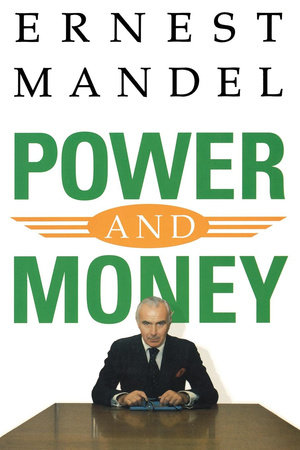
Analyses of bureaucratic power and privilege have an academic pedigree but have also long preoccupied socialists. The collapse of communist rule in the Soviet Union and Eastern Europe puts to a new test the classical theories concerning the relationship between bureaucracy and class. Power and Money is a timely contribution to this renewal of theory, exploring the social and historical roots of bureaucracy, both within the capitalist state and in workers’ mass organizations.
Ernest Mandel draws on archival and contemporary accounts in an analysis of both capitalist administration and the ideology and practice of bureaucratic dictatorship in the communist bloc. He measures the actual performance of western and eastern societies against the forecasts of Lenin and Trotsky, Ludwig von Mises and Roberto Michels, or the more recent reflections of Amitai Etzioni and Alvin Gouldner. This lucid study challenges those theories—Stalinist, Weberian or social-democratic—which claim that an autonomous officialdom is a necessary feature of modern societies. It also furnishes a perceptive account of the specific dynamics of communist and post-communist society.
Ernest Mandel (1923–95), historian, economist and activist, was a leading figure in the Fourth International from 1945 and was the author of a number of books, including Late Capitalism,Marxist Economic Theory, Long Waves of Capitalist Development, and The Meaning of the Second World War.
Analyses of bureaucratic power and privilege have an academic pedigree but have also long preoccupied socialists. The collapse of communist rule in the Soviet Union and Eastern Europe puts to a new test the classical theories concerning the relationship between bureaucracy and class. Power and Money is a timely contribution to this renewal of theory, exploring the social and historical roots of bureaucracy, both within the capitalist state and in workers’ mass organizations.
Ernest Mandel draws on archival and contemporary accounts in an analysis of both capitalist administration and the ideology and practice of bureaucratic dictatorship in the communist bloc. He measures the actual performance of western and eastern societies against the forecasts of Lenin and Trotsky, Ludwig von Mises and Roberto Michels, or the more recent reflections of Amitai Etzioni and Alvin Gouldner. This lucid study challenges those theories—Stalinist, Weberian or social-democratic—which claim that an autonomous officialdom is a necessary feature of modern societies. It also furnishes a perceptive account of the specific dynamics of communist and post-communist society.
Author
Ernest Mandel (1923–95), historian, economist and activist, was a leading figure in the Fourth International from 1945 and was the author of a number of books, including Late Capitalism,Marxist Economic Theory, Long Waves of Capitalist Development, and The Meaning of the Second World War.