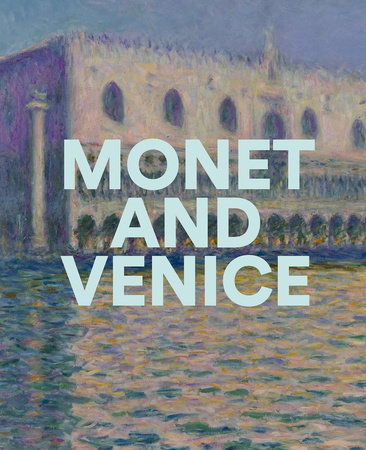
My Modern Met Best of 2025 (Top 10 Creative Coffee Table Books to Gift or To Treasure for Yourself): "Accompanying a groundbreaking exhibition of the same name at the Brooklyn Museum, Monet and Venice delves into the Impressionist artist’s Venetian cityscapes with unprecedented clarity. After all, these works have long been overlooked, if not forgotten, by the art world since their original debut in 1912. This catalog corrects that fact through stunning reproductions, newly commissioned texts, and maps of Monet’s views from Venice."
"But “Monet and Venice,” as this exhibition is called, is nothing short of a revelation. If Monet never painted these Venice works, the exhibition persuasively suggests, he never would’ve reached his full creative potential. To put it another way, without the Venice series, you don’t get some of the finest works he ever made, including the “Water Lilies” paintings that fill an entire gallery at the Museum of Modern Art in Manhattan." — ART NEWS
"'I was interested in focusing on this chapter in his career because it was so discreet,” says Small, who co-curated “Monet and Venice” with Melissa Buron, director of collections and chief curator of the Victoria and Albert Museum. While some of the Venice paintings have appeared in other shows over the years, the Brooklyn Museum’s new exhibition is the first “that really takes that group of work as its focus, as the heart of the exhibition since 1912,” Small adds." — SMITHSONIAN MAGAZINE
"It’s good to see Monet’s take on Venice, a unique, enchanting subject, and to think of it, as the exhibition does, in the context of Canaletto, Turner, Whistler, and Sargent, all players in Monet and Venice." — NATIONAL REVIEW
"Monet is well known for painting the same subject again and again, capturing different views of an otherwise identical scene based on the changing light at different times of the day and year. In Venice, he took a different approach, moving like clockwork throughout the day to return to different buildings on the same schedule.
In the end, Monet would exhibit paintings of nine motifs from across the Venetian landscape, canvases combining architecture, sky, and, predominantly, water in a mostly opalescent palette of blues, purples, pinks, and greens. The Palazzo Ducale and other landmarks seem to shimmer like a mirage above the glassy waters, their sparkling beauty at once fleeting and eternal." — ARTNET.COM
"In 1908, Claude Monet paid his first—and only—visit to Venice, at the encouragement of his wife Alice. At first, he was reluctant to leave his home in Giverny, but it didn’t take long for him to recognize and ultimately treasure Venice’s singular cityscape. It was there that Monet produced his last new works to ever be shown publicly during his lifetime, and it was there that he renewed his technical, thematic, and artistic skills." — MY MODERN MET