There are
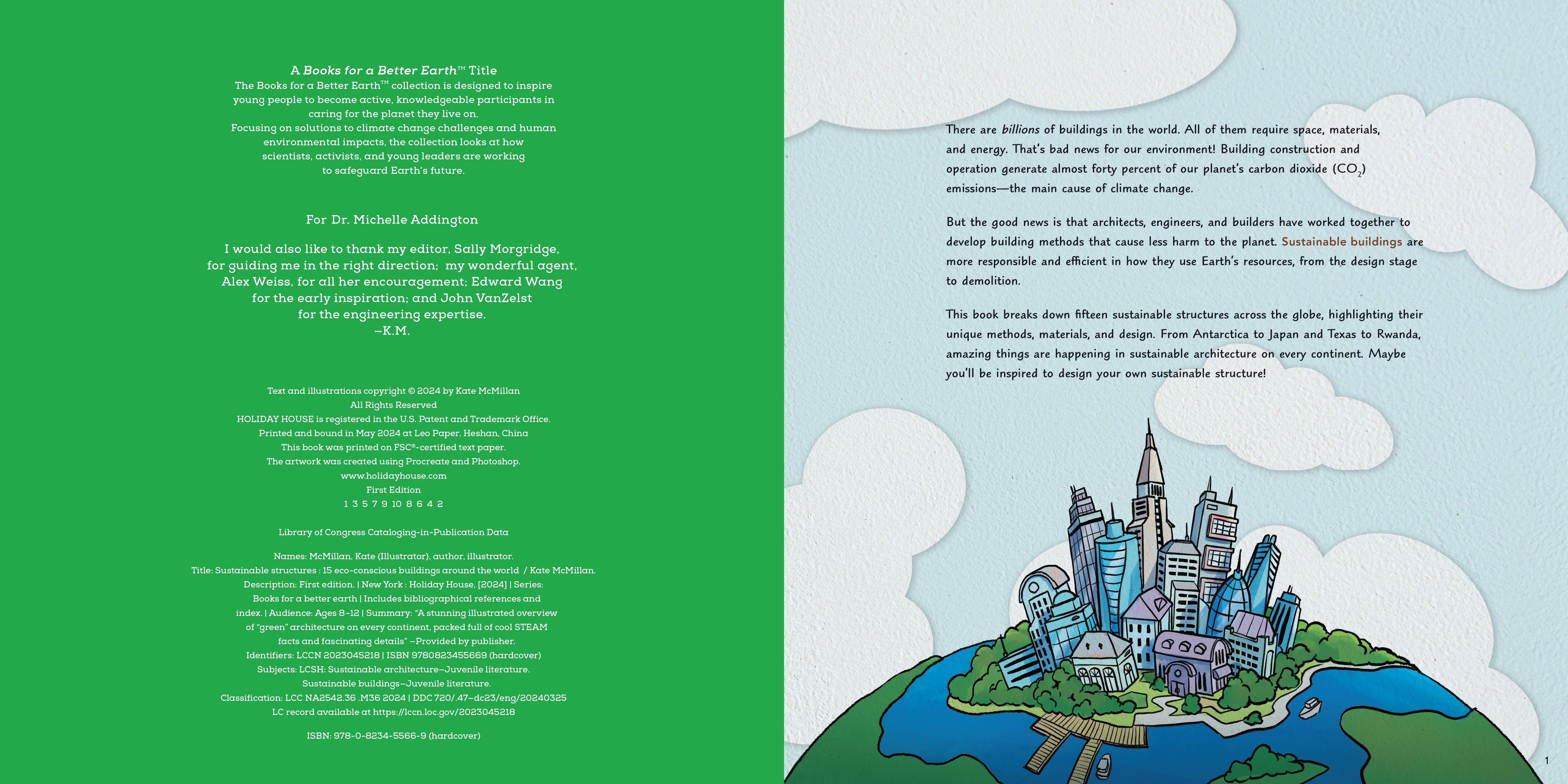
billions of buildings in the world. All of them require space, materials, and energy. That’s bad news for our environment! Building construction and operation generate almost forty percent of our planet’s carbon dioxide (CO2) emissions—the main cause of climate change.
But the good news is that architects, engineers, and builders have worked together to develop building methods that cause less harm to the planet. Sustainable buildings are more responsible and efficient in how they use Earth’s resources, from the design stage to demolition.
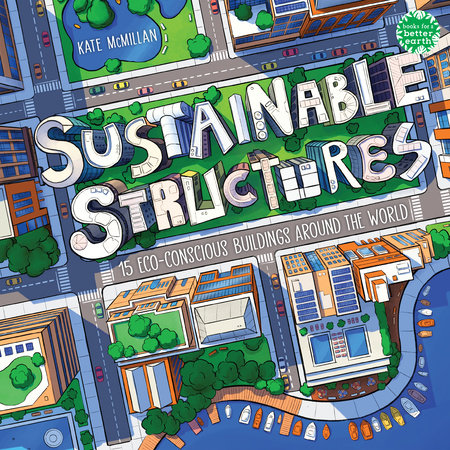
This book breaks down fifteen sustainable structures across the globe, highlighting their unique methods, materials, and design. From Antarctica to Japan and Texas to Rwanda, amazing things are happening in sustainable architecture on every continent. Maybe you’ll be inspired to design your own sustainable structure!
It’s lunchtime and your stomach growls. What do you do? Do you hop on a plane, then a train, two taxis, and a ferry to an island thousands of miles away to look for a snack? Or do you go to your kitchen and see what’s in the fridge?
Odds are you go with the second option. It requires a
lot less energy, money, and time to use available resources near you than to use something far away. The same is true for buildings! It’s much more energy efficient to source tile from a local salvage yard than to ship brand-new tile from a quarry across the sea (not to mention crossing your fingers and toes it doesn’t break on the way over!).
Let’s take a look at three buildings that used local materials to reduce unnecessary travel and energy consumption.
Copyright © 2026 by Kate McMillan. All rights reserved. No part of this excerpt may be reproduced or reprinted without permission in writing from the publisher.