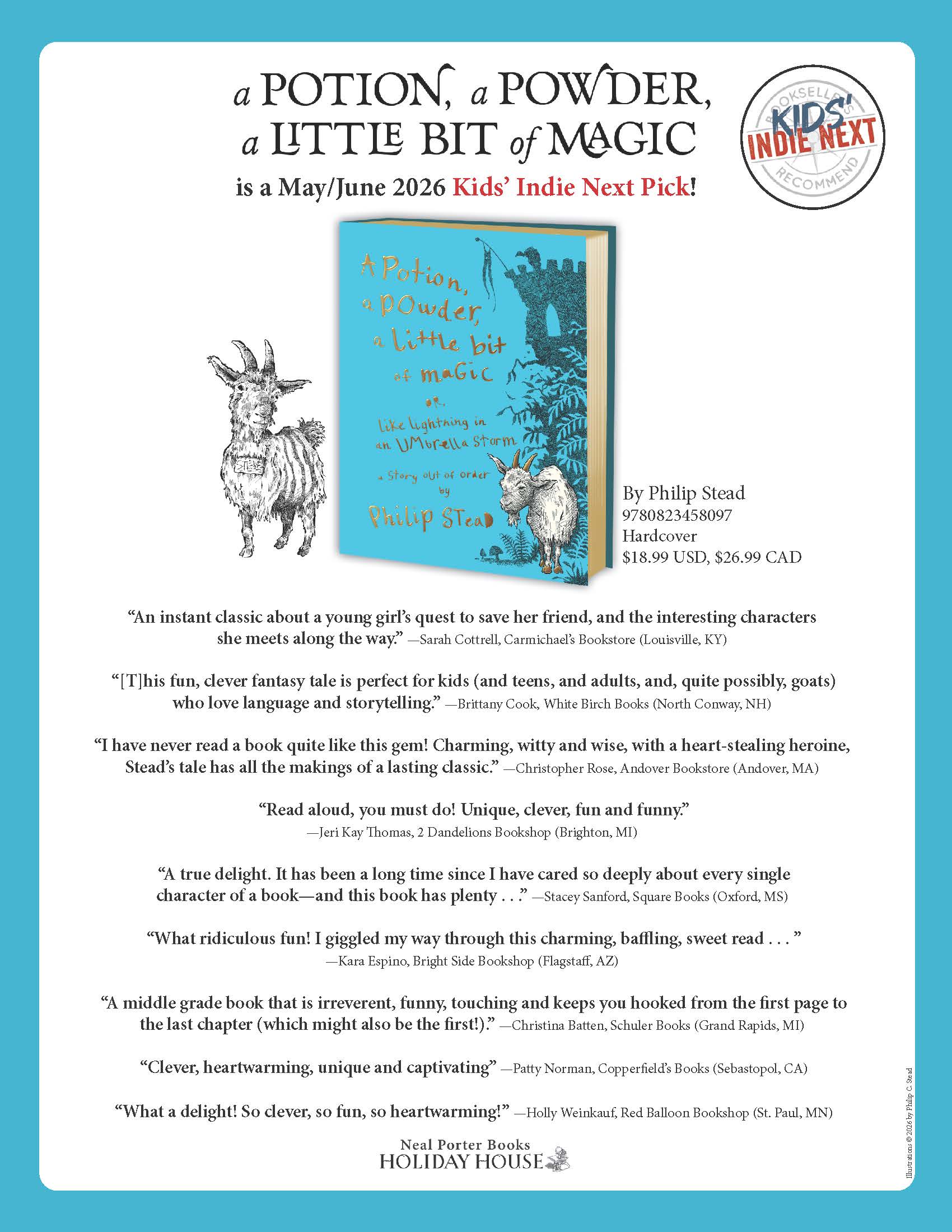
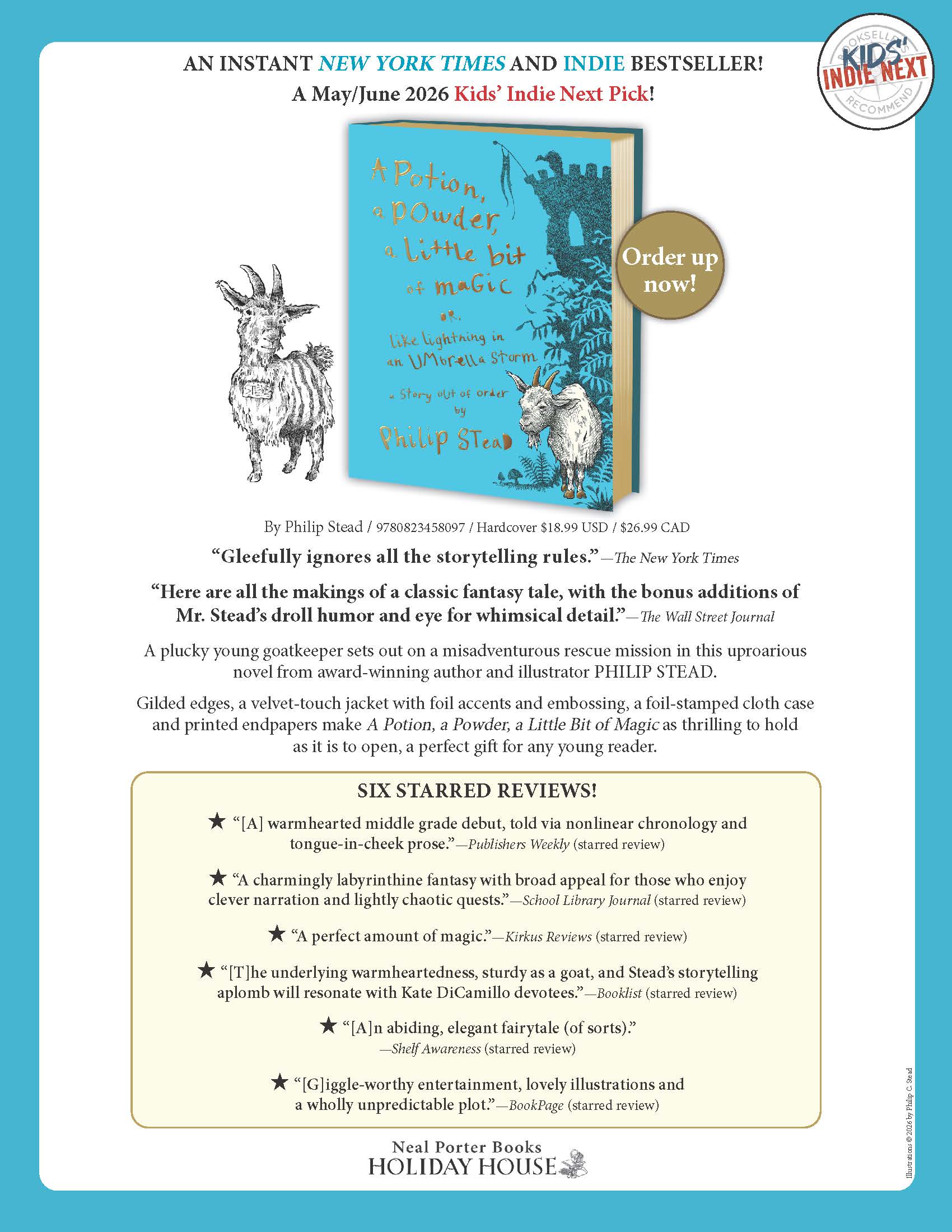
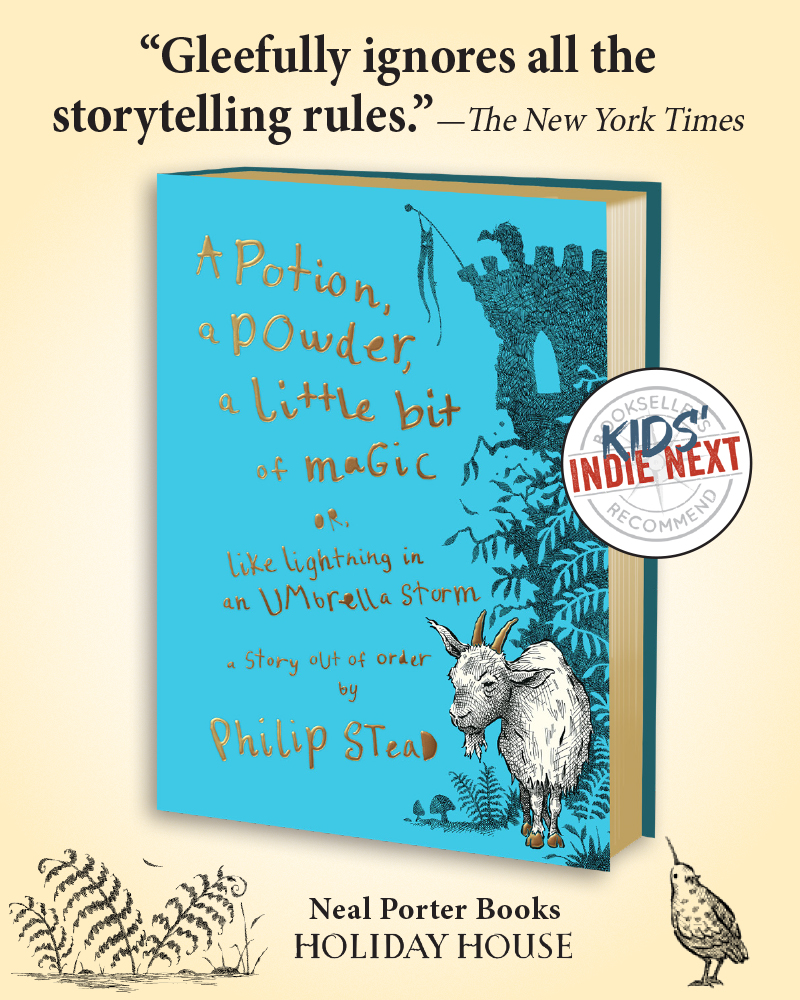
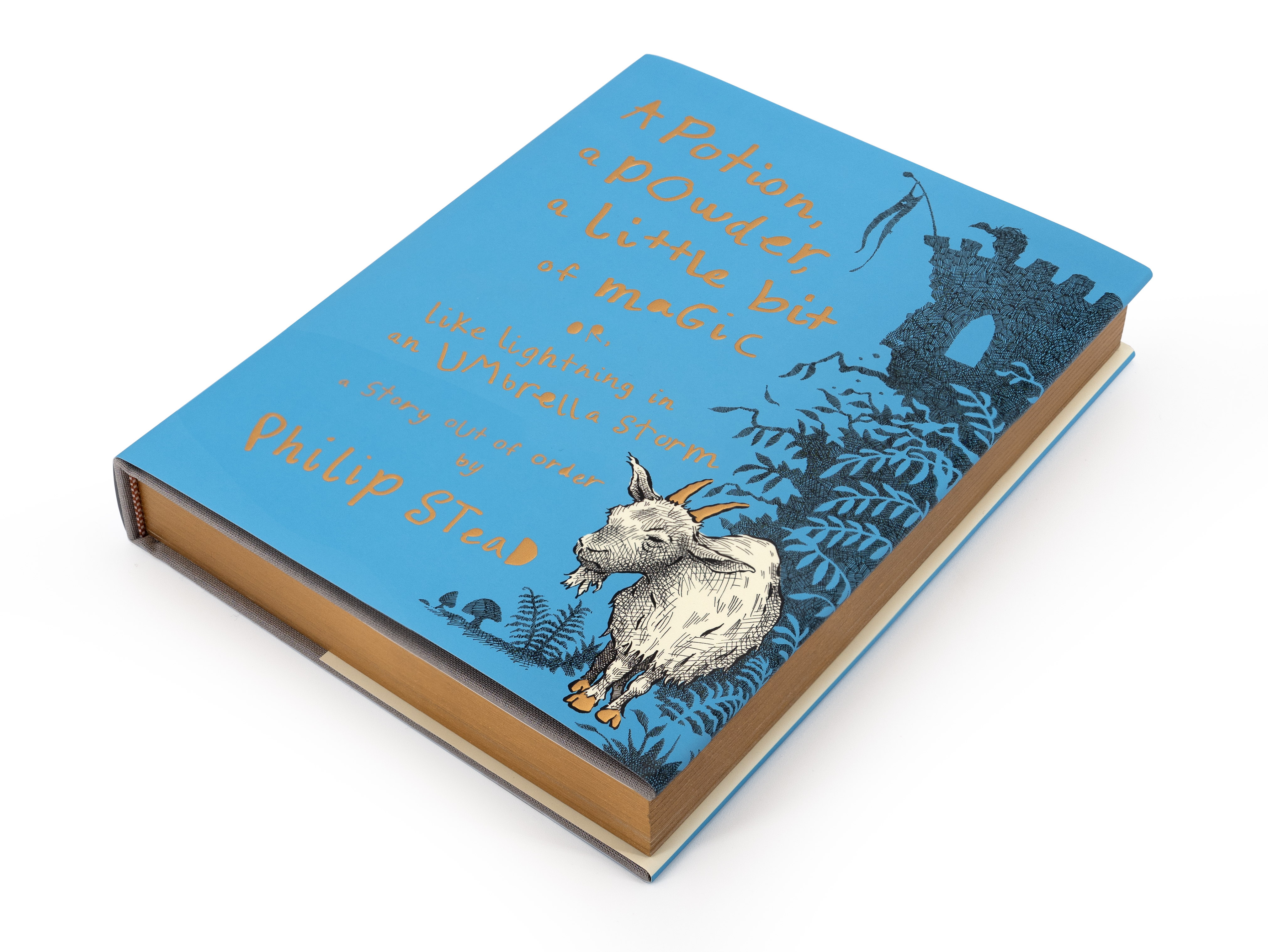
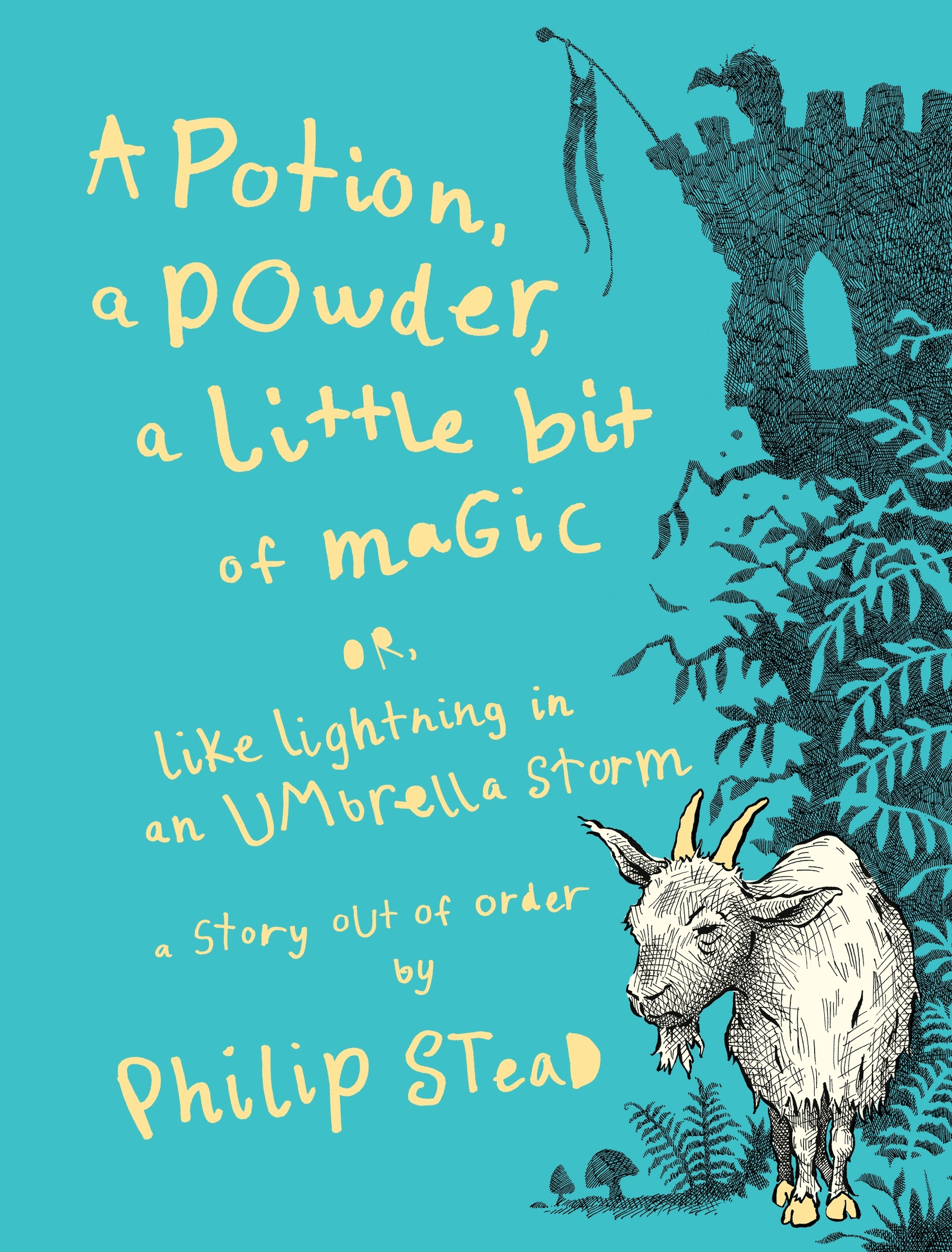
Hello! Welcome to the story! As you have probably noticed, it is a story with two titles. The author could not decide which he liked better. So he kept them both and placed them one right after the other.
It is important not to be wasteful! he thought. Then, because he was proud of it, he wrote his thought down in very large print and all capital letters, like this:
IT IS IMPORTANT NOT TO BE WASTEFUL!
He decided this should be the first moral of the story.
Most stories have only one moral. Some have none at all. This story has several—twenty-four, to be exact. The author encourages you to write them down as you go. He has provided blank pages at the end of the book for you to do so. As we will later learn in Chapter Fifteen, it is easier to remember a thing if it is written down.
The author was quite pleased with himself so far. But the more he looked at his first moral, written in very large print and all capital letters, he began to worry:
Is it impolite to shout? The author did not want to call
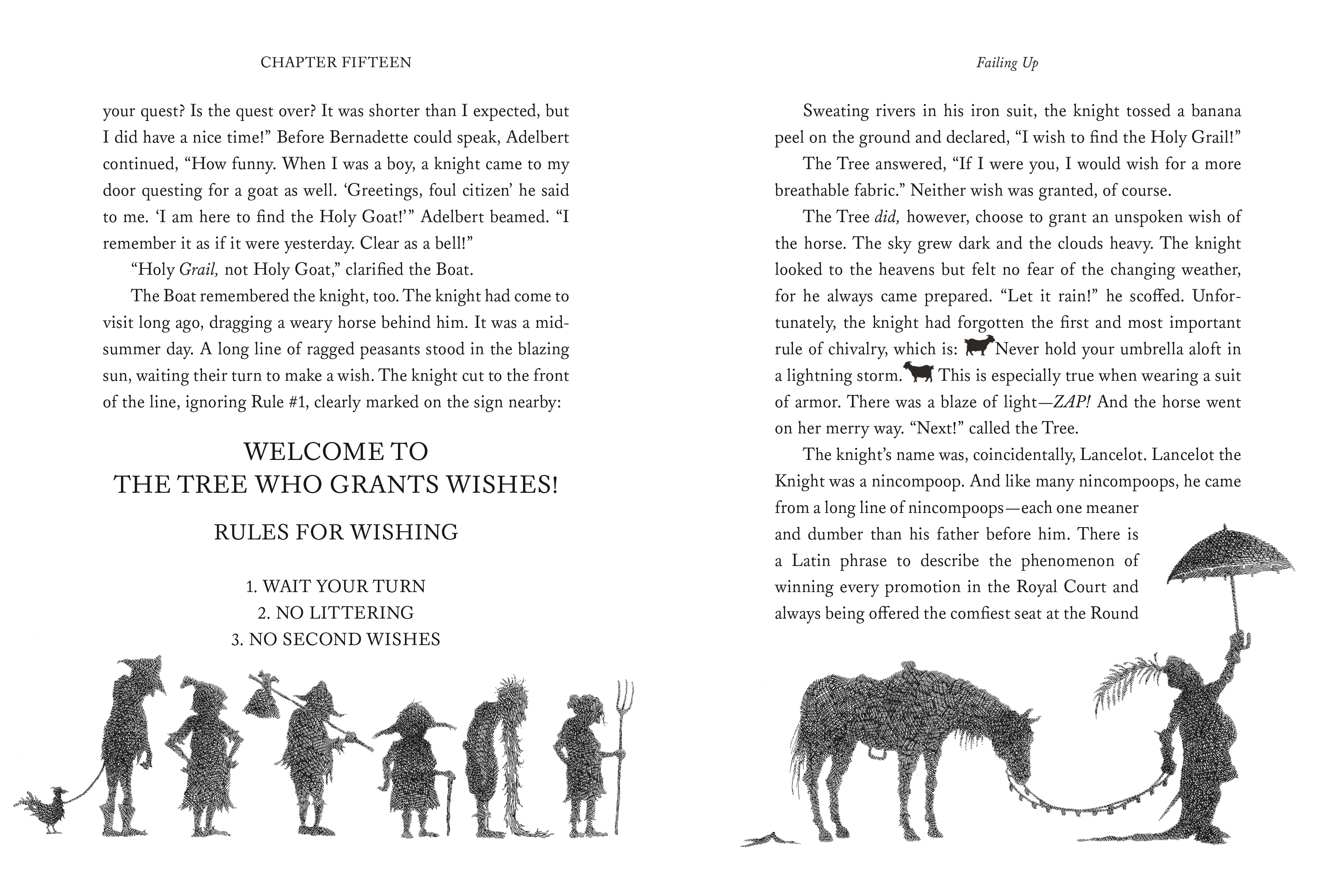
too much attention to the morals of his story—that would be obnoxious. So from here on, he decided, additional morals would be quietly and unobnoxiously sandwiched between two goats, like this:
It is important not to be wasteful!
There, thought the author,
that’s better. Twenty-three more to go!
You are probably wondering:
Why sandwich a moral between two goats? Ha! Why indeed! The answer to this question is, coincidentally, the eighth moral of the story.
Most authors choose a title only
after their story is complete. That way, they have time to learn what sorts of things happen in the story and what the story is really about. But the author of this particular story could not see the sense in waiting.
If a title is the first thing you read, he thought to himself,
then it should be the first thing written down. So he wrote down his two titles, figuring that, like the reader, he would learn what they meant as he went along.
It felt right to begin at the beginning. The author felt strongly that things with beginnings ought to begin at their beginning and move more or less in a straight line from there.
But on the other hand, he thought,
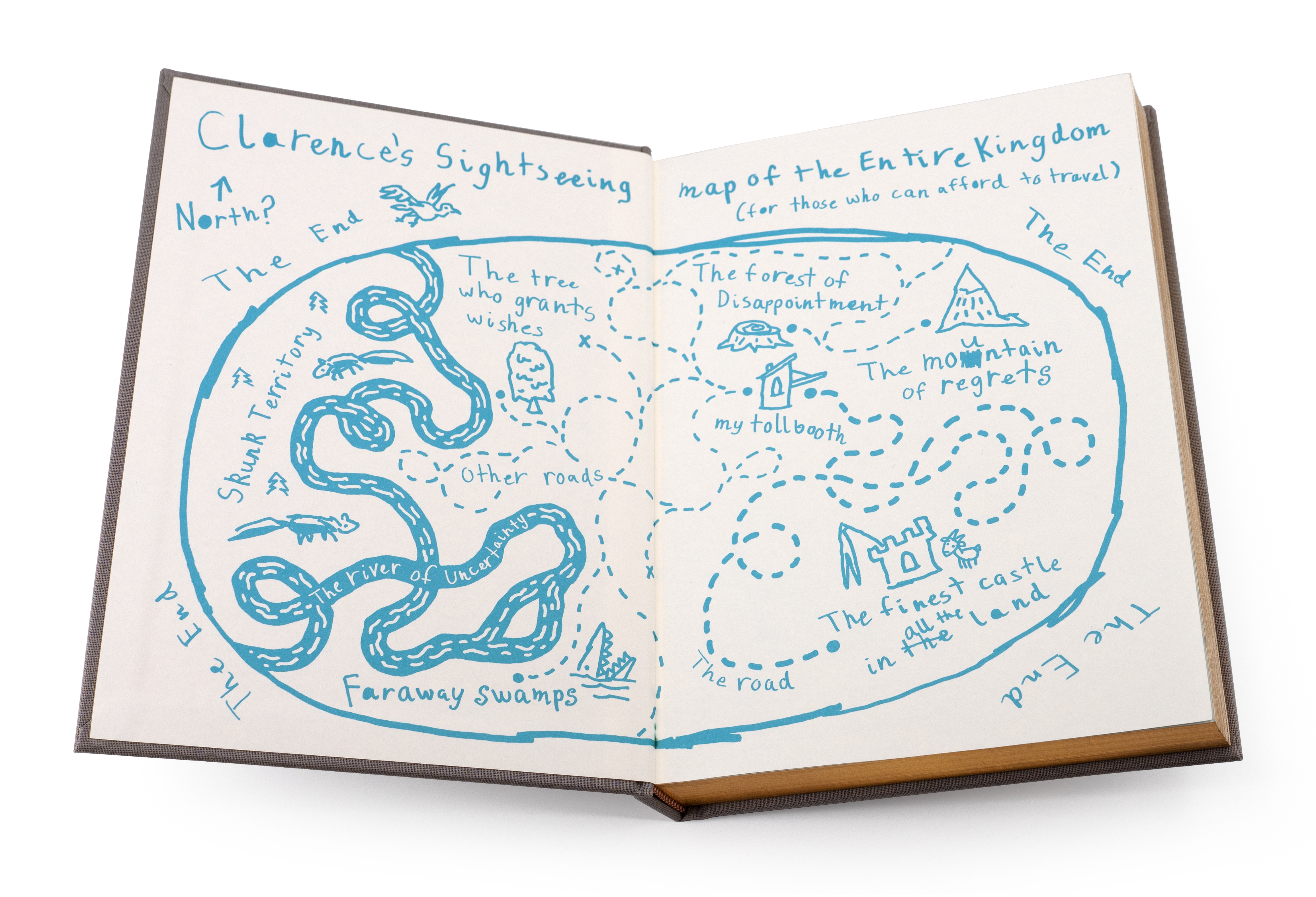
maybe the beginning is NOT the right place to begin. The author was always changing his mind about things. He sometimes felt that his mind was like a river of uncertainty, constantly shifting course.
“Statuere stultum est!” he called out to no one from his wobbly wooden writing table.
Statuere stultum est is a Latin phrase that means: “To decide is folly.” The author liked to sprinkle little Latin phrases into his speech whenever possible. He did this,
a solis ortu usque ad occasum, to the everlasting annoyance of his friends.
A solis ortu usque ad occasum is a phrase that means: “from sunup to sundown.”
The author knew all sorts of Latin phrases. His favorite one was:
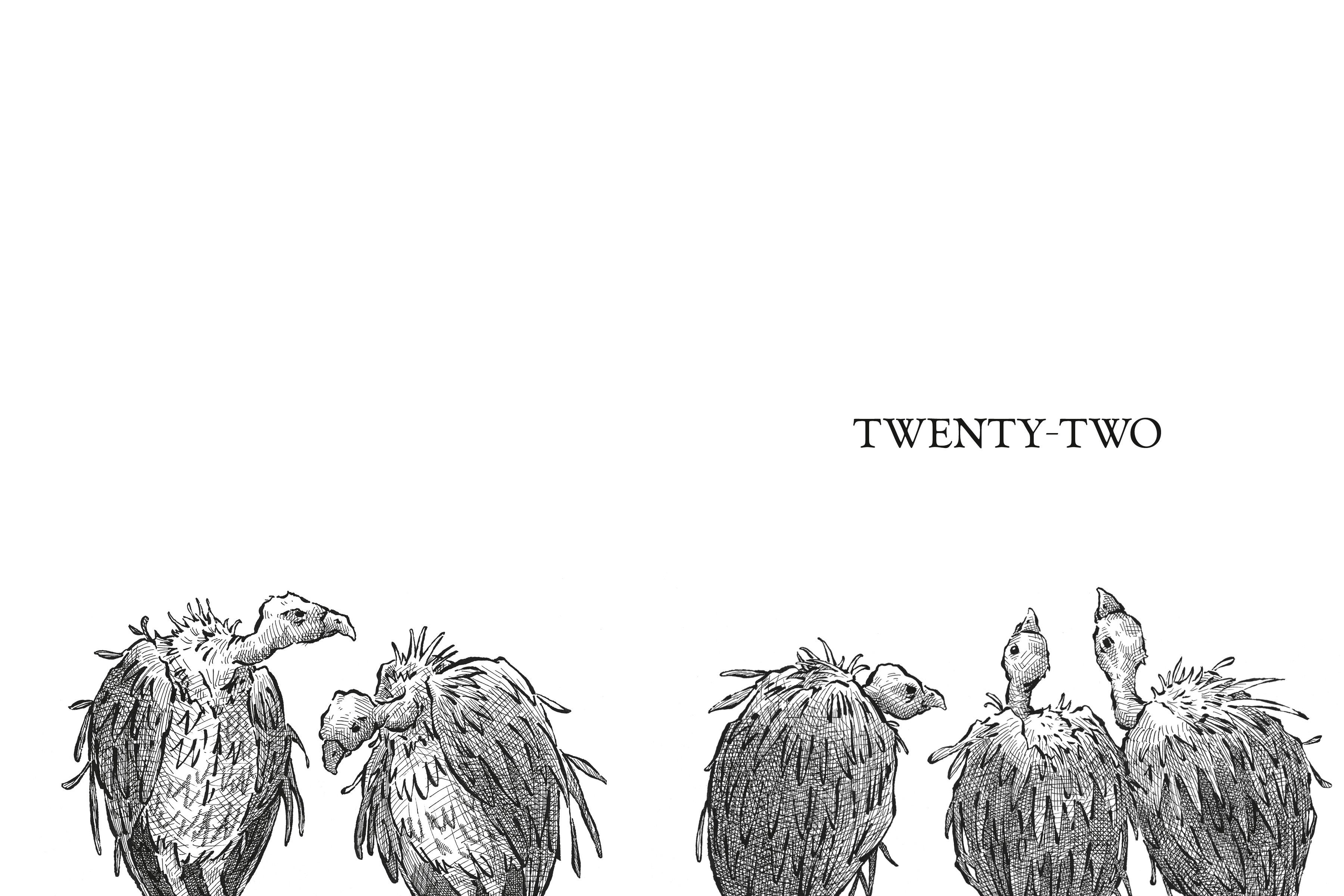
in medias res. It means: “in the middle of things,” and it’s used to describe a story that begins, for some reason, in its middle instead of its beginning. There is no good reason to begin a story in its middle. But there is no good reason to learn Latin, either, unless you are a magician, or someone who hopes to appear smarter than they really are. Of these two professions—magician/nincompoop—one is exceedingly rare. But the other is quite common. So we should not be surprised at all when we turn the next page and discover a story that begins not at its beginning, where it probably ought to, but instead
in medias res, at the start of
Chapter . . .
Copyright © 2026 by Philip C. Stead. All rights reserved. No part of this excerpt may be reproduced or reprinted without permission in writing from the publisher.