Close Modal

Weavingshaw

Look inside
Hardcover
$30.00 US
6.36"W x 9.56"H x 1.46"D   | 22 oz | 12 per carton
On sale Feb 24, 2026 | 464 Pages | 9780593982570

additional book photo
This yearning, slow-burn gothic fantasy romance follows a young woman haunted by the ghosts of her past and a ruthless merchant known as the Saint of Silence, who promises her greatest desire in return for her darkest secret. . . .

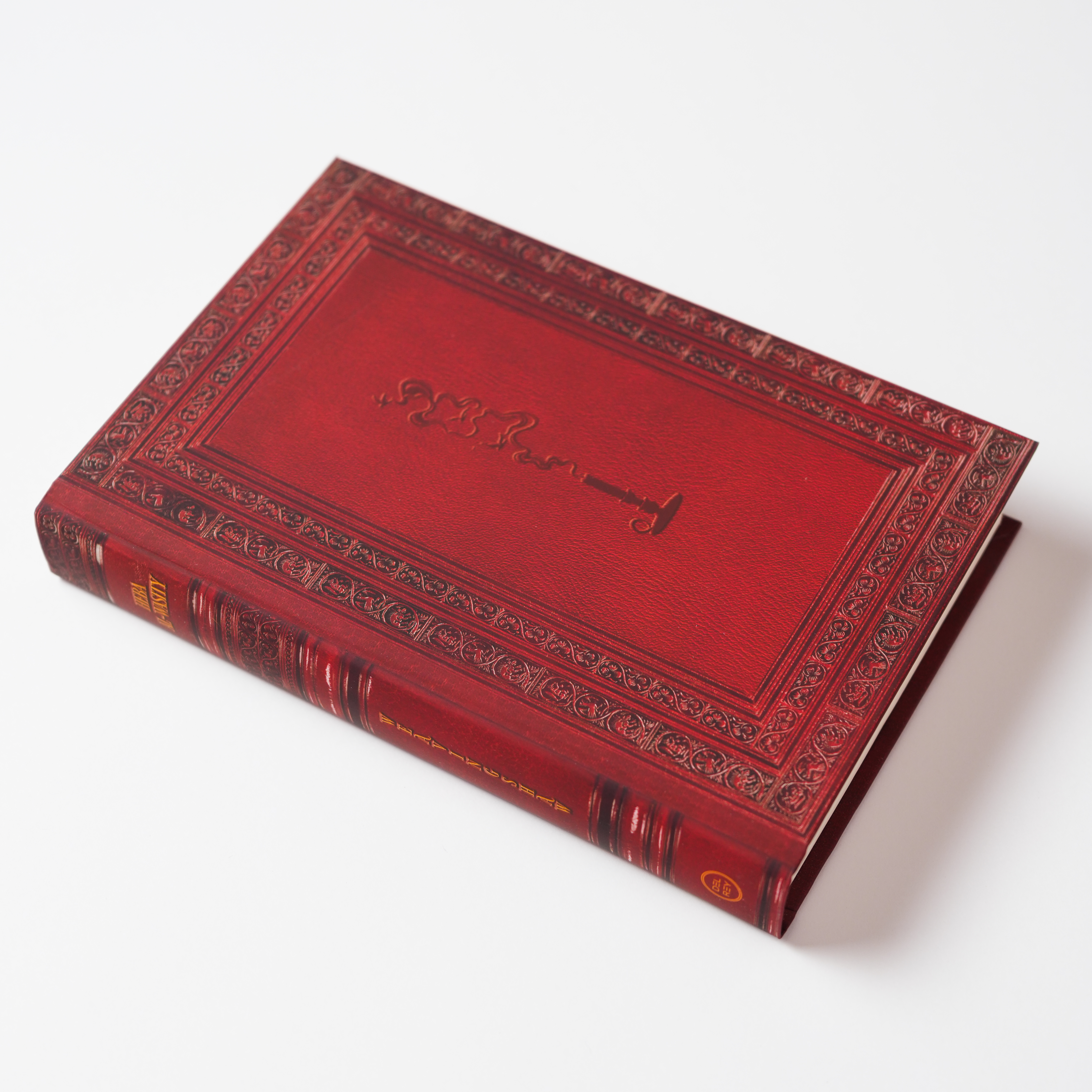
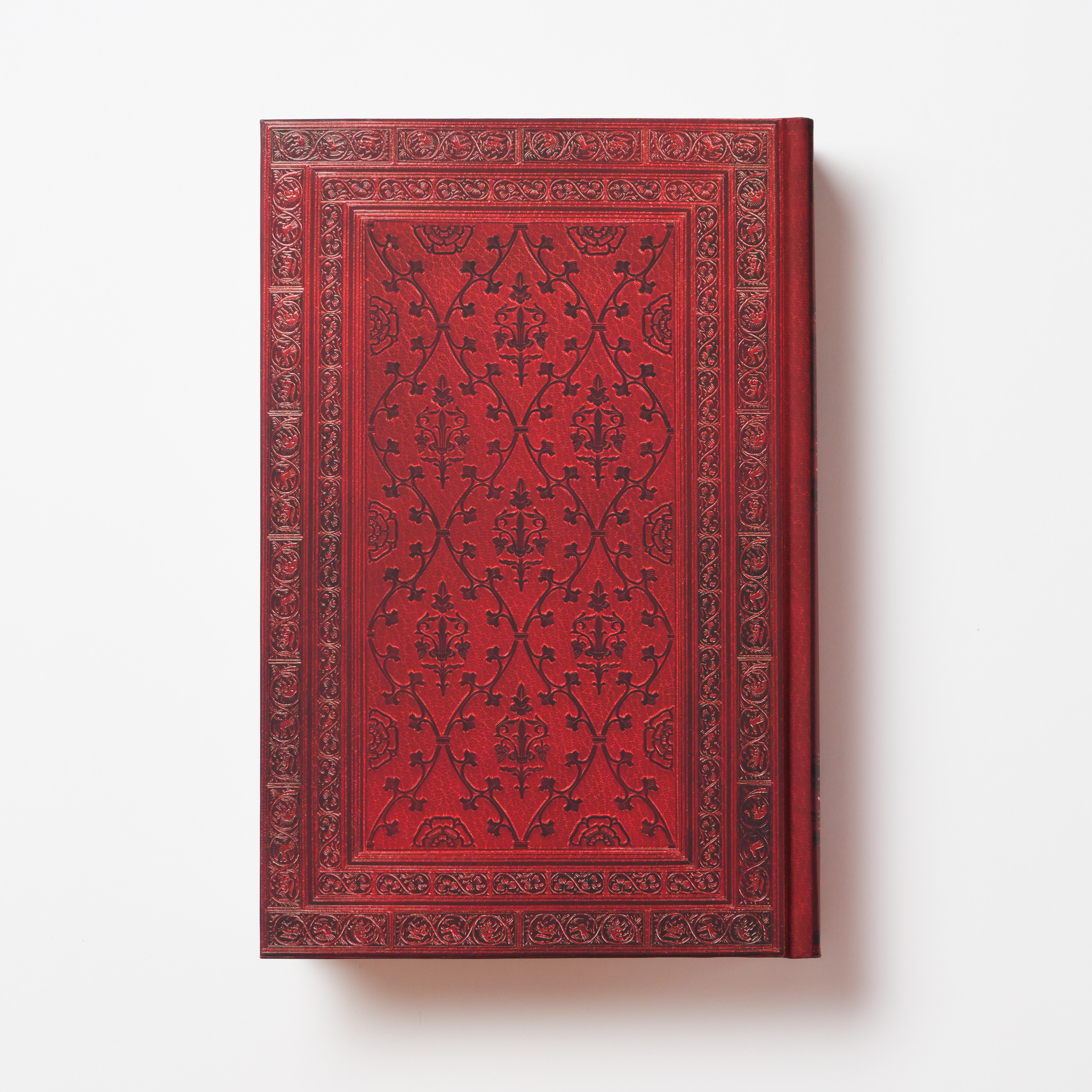
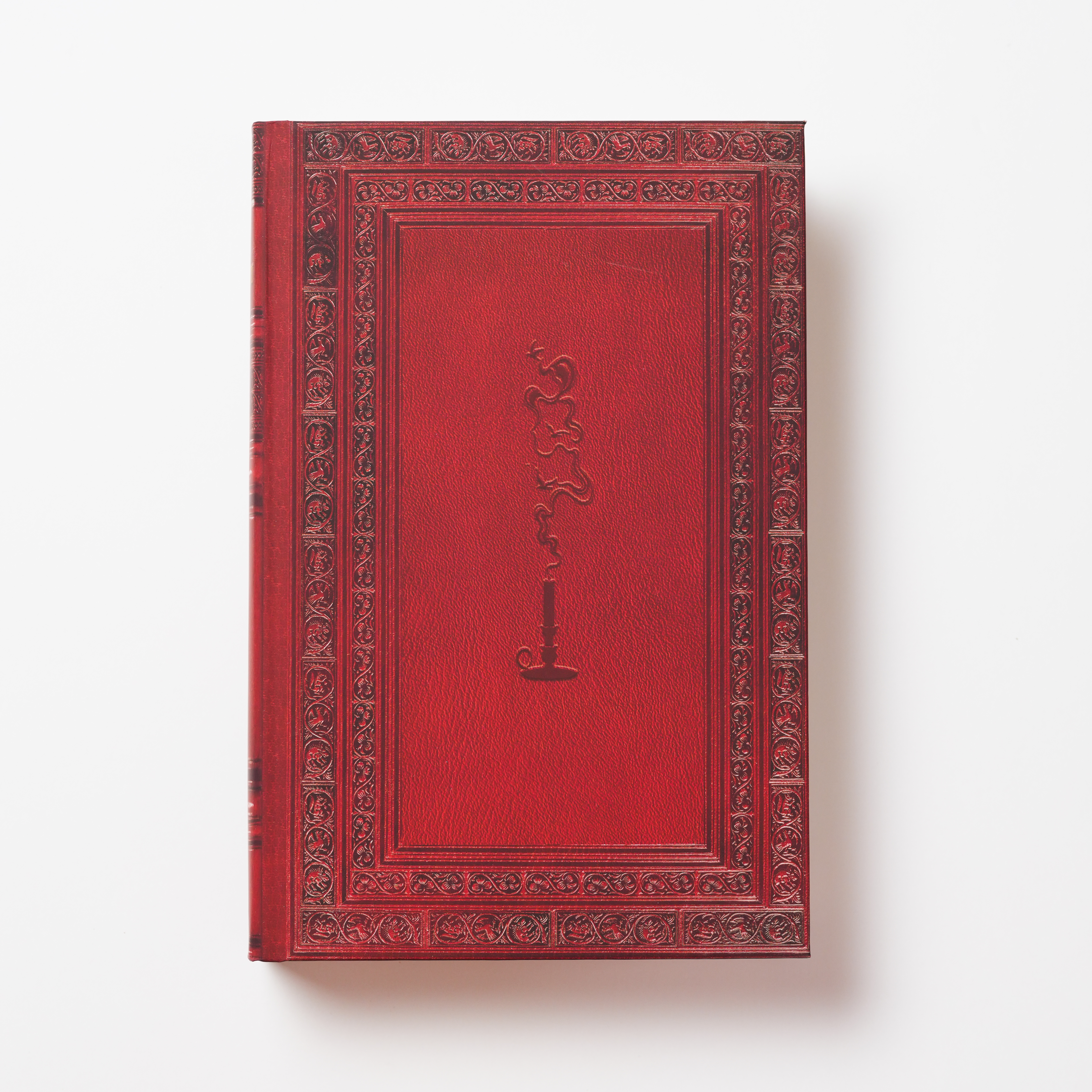
This gorgeous hardcover edition features an illustrated book case designed to simulate a leatherbound tome, as well as designed full-color endpapers and a deluxe jacket with foil.

Leena didn’t believe in monsters until she saw Weavingshaw.

The Saint of Silence trades coins for every sordid divulgence uttered to him: the darker the secret, the higher the price.

Leena has a secret, one that has haunted her since she was seventeen—she can see the dead. When her brother falls ill, she knows she must seek the Saint to afford a remedy.

But Leena’s secret is more valuable than she could have imagined. To save her brother, she will make a deal to find the ghost the Saint has been searching for.

All paths lead to Weavingshaw, a cursed estate on the moors. As Leena grows closer to the Saint and is plunged into his world of danger, deceit, and desire, she learns that he is hiding his own secrets—ones with the power to destroy them all.
“One part sumptuous Gothic mystery, another part all the yearning and coy wordplay of a Jane Austen novel . . . I adored every minute of Weavingshaw.”—Shannon Chakraborty, New York Times bestselling author of The Adventures of Amina al-Sirafi

“A searing, revolutionary gothic masterpiece with an exquisite slow burn romance, Weavingshaw will haunt you long after the last page. It’s a stunning, shadow-drenched debut.”—Nadia El-Fassi, author of Best Hex Ever

“Along with the story’s lush atmosphere and slow-burning romance, Al-Wasity’s engaging gothic tale highlights the struggle for acceptance and freedom.”—The Washington Post

“Intense, intriguing, and impossible to put down, Weavingshaw is a truly gorgeous gothic fantasy steeped in atmosphere and filled with yearning.”—Ellis Hunter, author of Blood Bound

“A twisty gothic oozing with angst that will have you turning the next page—but never guessing what’s next . . . With sharp haunted heroines and morally grey saints, Weavingshaw unfurls its shadows to examine how secrets are currency—and shields around your heart. I needed the next book yesterday!”—Katie Wu, author of Madder Lake

“Al-Wasity skillfully imbues her Victorian fantasy world with recognizable modern issues such as the rights of refugees and the inequality between the rich and poor. . . . Al-Wasity’s assured writing, energetic pacing, and creative twists are sure to keep readers captivated.”—Library Journal

“A highly promising debut . . . The details of Leena’s cultural heritage and refugee community are well-drawn and fascinating. . . . Captivating characters, unexpected romance, and a devastating cliffhanger ending will leave readers eager for more.”—Publishers Weekly
© Natalia Kyrtata
Heba Al-Wasity was inspired to write by her own experiences of being born an Iraqi refugee in Libya, growing up in Canada, and attending medical school in the UK. She has worked in emergency care and most recently in primary care, gaining firsthand insight into the ways that poverty and deprivation can lead to social inequalities. She currently lives with her husband near Manchester, England, just close enough to the moors to set her imagination alight. View titles by Heba Al-Wasity
1

The Saint of Silence

“Tell me how to seek the Saint.”

The old woman stared at the girl for a long moment, eyes narrowed, shriveled lips pursed. Without lowering her gaze, she inhaled a slow drag from her pipe. “Got a confession, Leena?”

Leena shrank back, although the emaciated form of the old woman posed no threat to her.

“Margery . . .” Leena began, then paused, her conviction dimming. “I only mean to seek him out.”

Faster than she thought the old woman could move, Margery dug her yellowed nails into the soft flesh of Leena’s forearm. “No one—and I mean no one—goes to see the Saint without a reason,” Margery snarled. “Are you looking for a bit of coin, girlie? Some pretty baubles?” Her grip bruised. “Do not seek him.”

Leena didn’t respond as, not for the first time, something else had caught her attention. Her gaze flickered to a point past Margery’s shoulder, and she stared at it for a second too long. When Margery turned to look, there was nothing there but peeling papered walls.

“What are you staring at, girlie?” Margery demanded.

Leena startled before shaking her head.

Leena’s eyes roved the interior of Margery’s home, directly abutting her own. Each house was an exact replica of the other—squat and terraced with sparse windows and a barely functioning fireplace, their only source of water an outside pump.

The old woman had lived here for as long as Leena could remember, the only resident in these clustered spaces of cramped houses who was not an Algaraan refugee. Unlike Leena, whose own parents had fled the Algaraan civil war more than twenty years ago before settling uneasily into Morland, Margery was salt-of-the-earth and Morish through and through.

Leena did not think the old woman had ventured once out of Golborne, Morland’s capital city, or even farther than the limit of her own house these days, her fluid-swollen legs barely carrying her past her front step.

Despite Margery’s lack of mobility, Leena never dared question how she always seemed to procure a steady stream of Tar.

Whenever Leena knocked on the old woman’s door, it was always the same picture: Margery hunched over a hookah, her eyes red from the cloying Tar smoke, her blue-veined hands shaking for the next addictive puff.

“Rami is unwell. He is going to . . .” Leena trailed off. “I need to see the Saint.”

“Your brother?”

It took all of Leena’s strength to force her voice to remain steady, even as terror slithered down her body at the mere utterance of the illness. “He has Sweeper’s Cough.”

Margery withdrew, leaving half-moon welts on Leena’s skin. “I had it once and barely survived it.”

Leena knew this, or else she would never have dared enter Margery’s house and invite the sickness into her home. Sweeper’s Cough could only be had once and never again—as long as one survived it. Baba had once said Leena had caught it as a young girl in the refugee camps, and she had been so unwell that the camp overseer had told her mother to start sewing a white burial shroud.

“So, you see, my worry is justified.” Leena pulled at a stray thread unraveling from the hemline of her skirt. “I must go see the Saint of Silence.”

“No—even that is not enough.” Margery swallowed harshly. “What secrets can a green girl like you have? The Saint of Silence does not accept schoolroom scandals.”

Once again, Leena’s eyes flickered to the nothingness behind Margery’s shoulder.

“Have you not heard the stories that swirl around the Saint?” Margery demanded again, and Leena stiffened.

Of course she had heard the rumors; everyone had. He was the first of his kind to pay for secrets; the more shameful the divulgence, the higher the price. But even the most trivial of confessions, seemingly useless to anyone, received some coin. So at first, the rest of the cityfolk—Leena included—thought it was an act of charity: another so-called philanthropist who had made his wealth in the factories, or abroad in the wars, and decided to give back. A do-gooder who had arrived suddenly in this soot-ridden city eight years ago and would disappear just as abruptly.

Although his name was St. Silas, he was often referred to as the Saint of Silence instead—a play on his surname, after the country’s oldest Saint, whose crumbled statues still littered the outside of cathedrals and cemeteries. A Saint who had once granted blessings in exchange for sins back when Golborne was a mere settlement, not a thriving metropolis built of smoke and greed.

No one prayed to any of the Saints anymore.

People wanted bread, not sacraments.

But if this new Saint of Silence, like his former namesake, was willing to offer coins for a few measly secrets—the fool—why stop him?

It soon became apparent that it was not charity.

And that he was no fool.

Rumors began to spring up. Those who confessed to him came back changed, as if despair and terror had carved a home between their eyes. Others—those St. Silas claimed had lied in their confessions—had their tongues cut out. Ribs cracked. A bloodied X sliced through their mouth, the vermilion border of the lips gouged and carved: the scar of the Saint.

Some never came back at all.

Leena knew all this, but her heart was already so engulfed with death and loss she could not bear burying a brother. She knew this—and she chose to seek the Saint of Silence anyway.

Margery saw the change in her face: the subtle lift of her chin, the determination that drew her dark brows in. The old woman lowered her voice. “Do you remember what he did to Mr. Jamil?”

Leena’s thoughts recoiled to the man who had once lived a couple of doors down from them. He had also been a refugee, escaping Algaraa at the same time as Leena’s parents did.

She remembered Baba’s distrust of Mr. Jamil; it was widely known in their small district that Mr. Jamil had been an informant for the Malik’s police back home. Gossip swirled that he’d been the one to turn in his own nephew for hiding illegal pamphlets belonging to the Liberation Party.

The nephew had been taken, then found a few weeks later, tortured into madness.

Leena had heard that the Malik had sent Mr. Jamil a slaughtered sheep for his acts of loyalty—a rarity as hunger swept through the country.

When the war broke out in Algaraa and the Liberation Party rose, Mr. Jamil had fled to Morland in fear of being captured and punished by the rebels for his terrible acts of service to the Malik.

Baba, ever the revolutionist, had warned Leena and Rami to stay away from Mr. Jamil, stating that those who turned on their countrymen on their own soil would not think twice of doing so in a foreign land.

Baba was not wrong.

Leena never forgot the way Mr. Jamil had looked after visiting the Saint of Silence nearly four years ago. They had found him in the morning, a crumpled mess on the stoop. The intersecting X on his mouth shone with blood, his broken body racked with shudders. I didn’t lie, he sobbed as Baba and a few other men carried him into his house. I swear I didn’t lie to the Saint.

He took to the bottle not long afterward. Hard drink. In one of his drunken stupors, he admitted to Baba that he’d thought no harm would come from telling the Saint of Silence small falsehoods about the neighbors to fill his gnawing hunger.

By that point, the alcohol had made Mr. Jamil’s belly protrude and the whites of his eyes turn a deep yellow.

He was dead by the spring.

“I do,” Leena said steadily, but her head throbbed. “Have you ever sought the Saint of Silence?”

Margery toyed with the pipe between her fingers. Finally, she nodded. “It wasn’t an act of release for me, though; it was reckoning. It felt like death . . .” She trailed off, a vague look in her rheumy eyes. “The nightmares that came afterward—he never even touched me—but the very act of confession . . . like being gutted . . . left to rot . . .”

The old woman took a long, desperate drag on the pipe, her eyelids fluttering from the effect of the drug. “Some say his mother’s a demon.”

“Demon?” Leena lifted her brows. Spirituality had faded in Morland with the first cropping of factories, leaving sparsely filled church pews in its staid and ghostly cathedrals, but some still clung firmly to their belief in Saints, demons, and curses.

Algaraans feared evil under a different name. Leena had grown up with stories of jinns, and even now her bedroom was filled with old charms shaped like eyes to ward them away.

There was not a lot of time in Leena’s life to debate the existence of jinns, demons, or even Saints, but all she knew was that none of them had helped her survive.

A faint humorous glint crossed Leena’s eyes. “Is he a Saint or a demon? He cannot be both.”

Photos

additional book photo

About

This yearning, slow-burn gothic fantasy romance follows a young woman haunted by the ghosts of her past and a ruthless merchant known as the Saint of Silence, who promises her greatest desire in return for her darkest secret. . . .

This gorgeous hardcover edition features an illustrated book case designed to simulate a leatherbound tome, as well as designed full-color endpapers and a deluxe jacket with foil.

Leena didn’t believe in monsters until she saw Weavingshaw.

The Saint of Silence trades coins for every sordid divulgence uttered to him: the darker the secret, the higher the price.

Leena has a secret, one that has haunted her since she was seventeen—she can see the dead. When her brother falls ill, she knows she must seek the Saint to afford a remedy.

But Leena’s secret is more valuable than she could have imagined. To save her brother, she will make a deal to find the ghost the Saint has been searching for.

All paths lead to Weavingshaw, a cursed estate on the moors. As Leena grows closer to the Saint and is plunged into his world of danger, deceit, and desire, she learns that he is hiding his own secrets—ones with the power to destroy them all.

Praise

“One part sumptuous Gothic mystery, another part all the yearning and coy wordplay of a Jane Austen novel . . . I adored every minute of Weavingshaw.”—Shannon Chakraborty, New York Times bestselling author of The Adventures of Amina al-Sirafi

“A searing, revolutionary gothic masterpiece with an exquisite slow burn romance, Weavingshaw will haunt you long after the last page. It’s a stunning, shadow-drenched debut.”—Nadia El-Fassi, author of Best Hex Ever

“Along with the story’s lush atmosphere and slow-burning romance, Al-Wasity’s engaging gothic tale highlights the struggle for acceptance and freedom.”—The Washington Post

“Intense, intriguing, and impossible to put down, Weavingshaw is a truly gorgeous gothic fantasy steeped in atmosphere and filled with yearning.”—Ellis Hunter, author of Blood Bound

“A twisty gothic oozing with angst that will have you turning the next page—but never guessing what’s next . . . With sharp haunted heroines and morally grey saints, Weavingshaw unfurls its shadows to examine how secrets are currency—and shields around your heart. I needed the next book yesterday!”—Katie Wu, author of Madder Lake

“Al-Wasity skillfully imbues her Victorian fantasy world with recognizable modern issues such as the rights of refugees and the inequality between the rich and poor. . . . Al-Wasity’s assured writing, energetic pacing, and creative twists are sure to keep readers captivated.”—Library Journal

“A highly promising debut . . . The details of Leena’s cultural heritage and refugee community are well-drawn and fascinating. . . . Captivating characters, unexpected romance, and a devastating cliffhanger ending will leave readers eager for more.”—Publishers Weekly

Author

© Natalia Kyrtata
Heba Al-Wasity was inspired to write by her own experiences of being born an Iraqi refugee in Libya, growing up in Canada, and attending medical school in the UK. She has worked in emergency care and most recently in primary care, gaining firsthand insight into the ways that poverty and deprivation can lead to social inequalities. She currently lives with her husband near Manchester, England, just close enough to the moors to set her imagination alight. View titles by Heba Al-Wasity

Excerpt

1

The Saint of Silence

“Tell me how to seek the Saint.”

The old woman stared at the girl for a long moment, eyes narrowed, shriveled lips pursed. Without lowering her gaze, she inhaled a slow drag from her pipe. “Got a confession, Leena?”

Leena shrank back, although the emaciated form of the old woman posed no threat to her.

“Margery . . .” Leena began, then paused, her conviction dimming. “I only mean to seek him out.”

Faster than she thought the old woman could move, Margery dug her yellowed nails into the soft flesh of Leena’s forearm. “No one—and I mean no one—goes to see the Saint without a reason,” Margery snarled. “Are you looking for a bit of coin, girlie? Some pretty baubles?” Her grip bruised. “Do not seek him.”

Leena didn’t respond as, not for the first time, something else had caught her attention. Her gaze flickered to a point past Margery’s shoulder, and she stared at it for a second too long. When Margery turned to look, there was nothing there but peeling papered walls.

“What are you staring at, girlie?” Margery demanded.

Leena startled before shaking her head.

Leena’s eyes roved the interior of Margery’s home, directly abutting her own. Each house was an exact replica of the other—squat and terraced with sparse windows and a barely functioning fireplace, their only source of water an outside pump.

The old woman had lived here for as long as Leena could remember, the only resident in these clustered spaces of cramped houses who was not an Algaraan refugee. Unlike Leena, whose own parents had fled the Algaraan civil war more than twenty years ago before settling uneasily into Morland, Margery was salt-of-the-earth and Morish through and through.

Leena did not think the old woman had ventured once out of Golborne, Morland’s capital city, or even farther than the limit of her own house these days, her fluid-swollen legs barely carrying her past her front step.

Despite Margery’s lack of mobility, Leena never dared question how she always seemed to procure a steady stream of Tar.

Whenever Leena knocked on the old woman’s door, it was always the same picture: Margery hunched over a hookah, her eyes red from the cloying Tar smoke, her blue-veined hands shaking for the next addictive puff.

“Rami is unwell. He is going to . . .” Leena trailed off. “I need to see the Saint.”

“Your brother?”

It took all of Leena’s strength to force her voice to remain steady, even as terror slithered down her body at the mere utterance of the illness. “He has Sweeper’s Cough.”

Margery withdrew, leaving half-moon welts on Leena’s skin. “I had it once and barely survived it.”

Leena knew this, or else she would never have dared enter Margery’s house and invite the sickness into her home. Sweeper’s Cough could only be had once and never again—as long as one survived it. Baba had once said Leena had caught it as a young girl in the refugee camps, and she had been so unwell that the camp overseer had told her mother to start sewing a white burial shroud.

“So, you see, my worry is justified.” Leena pulled at a stray thread unraveling from the hemline of her skirt. “I must go see the Saint of Silence.”

“No—even that is not enough.” Margery swallowed harshly. “What secrets can a green girl like you have? The Saint of Silence does not accept schoolroom scandals.”

Once again, Leena’s eyes flickered to the nothingness behind Margery’s shoulder.

“Have you not heard the stories that swirl around the Saint?” Margery demanded again, and Leena stiffened.

Of course she had heard the rumors; everyone had. He was the first of his kind to pay for secrets; the more shameful the divulgence, the higher the price. But even the most trivial of confessions, seemingly useless to anyone, received some coin. So at first, the rest of the cityfolk—Leena included—thought it was an act of charity: another so-called philanthropist who had made his wealth in the factories, or abroad in the wars, and decided to give back. A do-gooder who had arrived suddenly in this soot-ridden city eight years ago and would disappear just as abruptly.

Although his name was St. Silas, he was often referred to as the Saint of Silence instead—a play on his surname, after the country’s oldest Saint, whose crumbled statues still littered the outside of cathedrals and cemeteries. A Saint who had once granted blessings in exchange for sins back when Golborne was a mere settlement, not a thriving metropolis built of smoke and greed.

No one prayed to any of the Saints anymore.

People wanted bread, not sacraments.

But if this new Saint of Silence, like his former namesake, was willing to offer coins for a few measly secrets—the fool—why stop him?

It soon became apparent that it was not charity.

And that he was no fool.

Rumors began to spring up. Those who confessed to him came back changed, as if despair and terror had carved a home between their eyes. Others—those St. Silas claimed had lied in their confessions—had their tongues cut out. Ribs cracked. A bloodied X sliced through their mouth, the vermilion border of the lips gouged and carved: the scar of the Saint.

Some never came back at all.

Leena knew all this, but her heart was already so engulfed with death and loss she could not bear burying a brother. She knew this—and she chose to seek the Saint of Silence anyway.

Margery saw the change in her face: the subtle lift of her chin, the determination that drew her dark brows in. The old woman lowered her voice. “Do you remember what he did to Mr. Jamil?”

Leena’s thoughts recoiled to the man who had once lived a couple of doors down from them. He had also been a refugee, escaping Algaraa at the same time as Leena’s parents did.

She remembered Baba’s distrust of Mr. Jamil; it was widely known in their small district that Mr. Jamil had been an informant for the Malik’s police back home. Gossip swirled that he’d been the one to turn in his own nephew for hiding illegal pamphlets belonging to the Liberation Party.

The nephew had been taken, then found a few weeks later, tortured into madness.

Leena had heard that the Malik had sent Mr. Jamil a slaughtered sheep for his acts of loyalty—a rarity as hunger swept through the country.

When the war broke out in Algaraa and the Liberation Party rose, Mr. Jamil had fled to Morland in fear of being captured and punished by the rebels for his terrible acts of service to the Malik.

Baba, ever the revolutionist, had warned Leena and Rami to stay away from Mr. Jamil, stating that those who turned on their countrymen on their own soil would not think twice of doing so in a foreign land.

Baba was not wrong.

Leena never forgot the way Mr. Jamil had looked after visiting the Saint of Silence nearly four years ago. They had found him in the morning, a crumpled mess on the stoop. The intersecting X on his mouth shone with blood, his broken body racked with shudders. I didn’t lie, he sobbed as Baba and a few other men carried him into his house. I swear I didn’t lie to the Saint.

He took to the bottle not long afterward. Hard drink. In one of his drunken stupors, he admitted to Baba that he’d thought no harm would come from telling the Saint of Silence small falsehoods about the neighbors to fill his gnawing hunger.

By that point, the alcohol had made Mr. Jamil’s belly protrude and the whites of his eyes turn a deep yellow.

He was dead by the spring.

“I do,” Leena said steadily, but her head throbbed. “Have you ever sought the Saint of Silence?”

Margery toyed with the pipe between her fingers. Finally, she nodded. “It wasn’t an act of release for me, though; it was reckoning. It felt like death . . .” She trailed off, a vague look in her rheumy eyes. “The nightmares that came afterward—he never even touched me—but the very act of confession . . . like being gutted . . . left to rot . . .”

The old woman took a long, desperate drag on the pipe, her eyelids fluttering from the effect of the drug. “Some say his mother’s a demon.”

“Demon?” Leena lifted her brows. Spirituality had faded in Morland with the first cropping of factories, leaving sparsely filled church pews in its staid and ghostly cathedrals, but some still clung firmly to their belief in Saints, demons, and curses.

Algaraans feared evil under a different name. Leena had grown up with stories of jinns, and even now her bedroom was filled with old charms shaped like eyes to ward them away.

There was not a lot of time in Leena’s life to debate the existence of jinns, demons, or even Saints, but all she knew was that none of them had helped her survive.

A faint humorous glint crossed Leena’s eyes. “Is he a Saint or a demon? He cannot be both.”