Close Modal

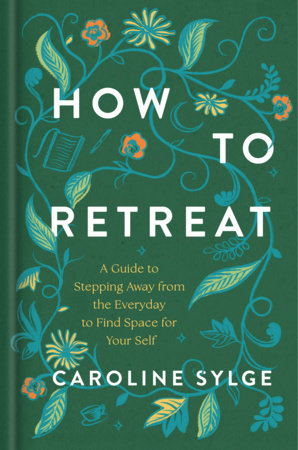
How to Retreat

A Guide to Stepping Away from the Everyday to Find Space for Your Self

Discover the magic of retreating, wherever you are and however much time you have.

What comes into your mind when you hear the word "retreat"? Meditation at a mountain monastery? A trip to far-flung places? The centuries-old practice of retreating is rooted in a person's inner life and belongs to everyone. This book offers you the wisdom and practical steps to retreat wherever you are, whether it’s for a long weekend, a day—or even an hour.

Using the seasons as an optional guide, each chapter delves into a simple theme to focus your exploration, taking you through a range of enticing activities to help you discover a happier version of yourself.

From decluttering your home to tapping into your creativity, from finding your flow to learning how to say no, this accessible and beautiful collection of retreats will enable you to restore, repair, and rejuvenate yourself.
Caroline Sylge is a poet, author and journalist who has been a trusted expert on retreats and retreating for over 30 years. She is the founder of Queen of Retreats, the trusted retreat platform powered by The Global Retreat Company. A retreat-focused journalist, whose credits include The Guardian, The Times, The Telegraph, Condé Nast Traveller, and National Geographic. The author of healthy travel guidebooks Body & Soul Escapes and Body & Soul Escapes: Britain & Ireland. A Carcanet-published poet, and a judge for the British Book Awards, Caroline lives in Devon, England, with her husband and daughter. View titles by Caroline Sylge
Introduction

‘Tell me, what is it you plan to do with
your one wild and precious life?’
Mary Oliver, ‘The Summer Day’

I first read the compelling words in the epigraph above on a writing retreat in my twenties. I didn’t know what I wanted to do with my life at the time, and I hadn’t thought of it as being either wild or precious. Oliver’s words made me want to make the most of things. To move away from the situations and selfsabotaging thoughts that were dragging me down, and instead take a more sustaining and remarkable path.

Since then, for more than thirty years, ‘retreating’ in all its forms has helped me do just that. To find different tracks to explore, and to honour my life as something that is wild and precious, as Oliver’s remarkable poem puts it. It’s why I’d like to share the practice of retreating with you, through this book, and, I hope, inspire you to retreat too.

Where does retreating come from?

For as long as there have been human societies, there have been those who have chosen to retreat from them. The word in English stems from the Old French word retret, which comes from the Latin retrahere, meaning to ‘pull back’. Arguably, the practice began as a spiritual one. For centuries, people from multiple traditions across the globe have physically withdrawn from the world to solitary, silent places in nature on a mission to find meaning in their existence. They may not have had journals or sleep schedules, but they knew the importance of taking time out in remote spots, both with themselves and with their various ‘gods’.

As far back as the Vedic period of India over 3,500 years ago, yogis, sages, ascetics and renunciates were retreating to forests, mountains and caves to contemplate. Indigenous peoples across continents were taking solitary journeys into nature, to use vision quests and fasts to find connection. Taoist practitioners headed for the Asian hills to meditate, while Buddhists established monasteries and nunneries as spiritual hubs where monks and nuns devoted years— sometimes lifetimes—to self-study.

Hermits in the Egyptian desert, meanwhile, looked for places to pray apart from society. Nomads elsewhere practised rituals and venerated ancestors as they travelled across spectacular landscapes, living in harmony with the natural world. Christians embraced pilgrimage as a form of spiritual getaway, while their anchorites and anchoresses took ‘staying put’ to a whole new level, choosing to live in intense enclosure, devoting their lives to poverty and prayer.

By the tenth century, Sufis were using music, sacred poetry and whirling to deepen their experience of spiritual retreating, known to them as khalwa. By the seventeenth century, Quakers were gathering together in silence to nurture deep listening and foster friendship in simple, peaceful settings. By the nineteenth century, Catholic laypeople, as well as their clergy, had begun the practice of retreating too.

What is retreating today?

Step forwards into the ­twenty-­first century and many of these enriching practices of withdrawal and connection continue. The ancient impulse to step back, regroup and renew oneself is alive and well ­everywhere—no faith necessarily required. Contemporary retreats tap into this delightful tapestry of traditions but give them a modern twist. For the guests who attend them, retreating is now less about dogma, and more about creating space for rest, reflection and personal growth.

Whatever your beliefs, or if you have none, retreating is a journey to the centre of your inner life. Withdrawing in order to advance. Slowing down in order to reenergise. Taking yourself away from everyday busyness, and into your being. Helping you to find out who you are in this moment, and how you might want to connect differently with yourself, your tribe, with nature and the world around you. Resetting yourself, so that you can live your life more effectively when you return to it.

Today’s retreat can still be a pilgrimage, involve a monasticstyle space, a visit to an ashram, extensive silence or Meditation. It can also take the form of a Yoga or hiking holiday, a week at a health spa, a nurturing break led by a therapist, a coaching escape to find a new direction, or even a relaxing weekend in a woodland bolthole.

In this book I’d also like to reclaim retreating as something we can do by ourselves, without having to attend a hosted retreat. As a place, space or practice that allows us to find the rest, replenishment and renewal that we need, in a space of our choosing, wherever we are in our lives. Retreating has always helped humans cope with life’s demands, and today it can belong to us all, at a time when the need to ‘press pause’ away from the stress, digital overload and general overwhelm of daily life has never been greater.

In this way a retreat can also be a quiet moment with yourself in the corner of a busy room. A mindful walk in your local park, or a rejuvenating session on a massage bed during a challenging week. A painting class or a therapy session. Your own home, or other chosen space, for a self-directed hour, day, weekend or week of retreating, with self-care woven into every part of it.

Retreating today is about being and feeling well in yourself, and yet it doesn’t have to focus on what we all habitually think of as ‘health’. What one person might get from a Qigong session, another person might get from a pottery class. Being ‘well’ means different things to different people. What does it mean to you?

We all already micro-retreat when we take a break inside our everyday lives. My dad, Herbie, likes ‘to sit in the early morning sun and count my blessings’. My mum, Ann, ‘to dead head the roses, breathing in their glorious scent’. For my husband Tom, it’s a surf or playing guitar. For my daughter, Annoushka, it’s listening to music or dancing freely in her room. For friends of all ages it’s to ­hula-­hoop on a beach, watch the sun rise over a moor, take a sea dip, stroke the dog or the cat, make art, go on ­phone-free walks, have a cup of tea in the sunshine, read a novel, play the piano, sing or write a song, climb a scary cliff, cycle or have a game of tennis, play records in a shed, potter in a greenhouse, or daydream.

You don’t have to be a particular type of person to retreat. You don’t have to be spiritual, a vegan, into Yoga, the owner of a shawl, a ‘stretchy’ person, or someone with oodles of time on your ­hands—although, of course, you can be any or all of those things. Retreating is an empowering, ­life-­affirming act for anyone, that honours both yourself and those around you. It takes FOMO, the ‘fear of missing out’, and turns it into the joy of doing so, whether you’re having an early night, gifting yourself a pyjama day, choosing water over wine (or wine over water—see Treat yourself, p. 126), or something else.

Retreating is a personal experience that will mean different things to different people at different times. How you need to retreat, and your personal version of it, will be defined by you, and change as you change, moment by moment, and throughout the stages of your life. I hope this book will meet you wherever you are, and help you start retreating at your own comfort level.

About

Discover the magic of retreating, wherever you are and however much time you have.

What comes into your mind when you hear the word "retreat"? Meditation at a mountain monastery? A trip to far-flung places? The centuries-old practice of retreating is rooted in a person's inner life and belongs to everyone. This book offers you the wisdom and practical steps to retreat wherever you are, whether it’s for a long weekend, a day—or even an hour.

Using the seasons as an optional guide, each chapter delves into a simple theme to focus your exploration, taking you through a range of enticing activities to help you discover a happier version of yourself.

From decluttering your home to tapping into your creativity, from finding your flow to learning how to say no, this accessible and beautiful collection of retreats will enable you to restore, repair, and rejuvenate yourself.

Author

Caroline Sylge is a poet, author and journalist who has been a trusted expert on retreats and retreating for over 30 years. She is the founder of Queen of Retreats, the trusted retreat platform powered by The Global Retreat Company. A retreat-focused journalist, whose credits include The Guardian, The Times, The Telegraph, Condé Nast Traveller, and National Geographic. The author of healthy travel guidebooks Body & Soul Escapes and Body & Soul Escapes: Britain & Ireland. A Carcanet-published poet, and a judge for the British Book Awards, Caroline lives in Devon, England, with her husband and daughter. View titles by Caroline Sylge

Excerpt

Introduction

‘Tell me, what is it you plan to do with
your one wild and precious life?’
Mary Oliver, ‘The Summer Day’

I first read the compelling words in the epigraph above on a writing retreat in my twenties. I didn’t know what I wanted to do with my life at the time, and I hadn’t thought of it as being either wild or precious. Oliver’s words made me want to make the most of things. To move away from the situations and selfsabotaging thoughts that were dragging me down, and instead take a more sustaining and remarkable path.

Since then, for more than thirty years, ‘retreating’ in all its forms has helped me do just that. To find different tracks to explore, and to honour my life as something that is wild and precious, as Oliver’s remarkable poem puts it. It’s why I’d like to share the practice of retreating with you, through this book, and, I hope, inspire you to retreat too.

Where does retreating come from?

For as long as there have been human societies, there have been those who have chosen to retreat from them. The word in English stems from the Old French word retret, which comes from the Latin retrahere, meaning to ‘pull back’. Arguably, the practice began as a spiritual one. For centuries, people from multiple traditions across the globe have physically withdrawn from the world to solitary, silent places in nature on a mission to find meaning in their existence. They may not have had journals or sleep schedules, but they knew the importance of taking time out in remote spots, both with themselves and with their various ‘gods’.

As far back as the Vedic period of India over 3,500 years ago, yogis, sages, ascetics and renunciates were retreating to forests, mountains and caves to contemplate. Indigenous peoples across continents were taking solitary journeys into nature, to use vision quests and fasts to find connection. Taoist practitioners headed for the Asian hills to meditate, while Buddhists established monasteries and nunneries as spiritual hubs where monks and nuns devoted years— sometimes lifetimes—to self-study.

Hermits in the Egyptian desert, meanwhile, looked for places to pray apart from society. Nomads elsewhere practised rituals and venerated ancestors as they travelled across spectacular landscapes, living in harmony with the natural world. Christians embraced pilgrimage as a form of spiritual getaway, while their anchorites and anchoresses took ‘staying put’ to a whole new level, choosing to live in intense enclosure, devoting their lives to poverty and prayer.

By the tenth century, Sufis were using music, sacred poetry and whirling to deepen their experience of spiritual retreating, known to them as khalwa. By the seventeenth century, Quakers were gathering together in silence to nurture deep listening and foster friendship in simple, peaceful settings. By the nineteenth century, Catholic laypeople, as well as their clergy, had begun the practice of retreating too.

What is retreating today?

Step forwards into the ­twenty-­first century and many of these enriching practices of withdrawal and connection continue. The ancient impulse to step back, regroup and renew oneself is alive and well ­everywhere—no faith necessarily required. Contemporary retreats tap into this delightful tapestry of traditions but give them a modern twist. For the guests who attend them, retreating is now less about dogma, and more about creating space for rest, reflection and personal growth.

Whatever your beliefs, or if you have none, retreating is a journey to the centre of your inner life. Withdrawing in order to advance. Slowing down in order to reenergise. Taking yourself away from everyday busyness, and into your being. Helping you to find out who you are in this moment, and how you might want to connect differently with yourself, your tribe, with nature and the world around you. Resetting yourself, so that you can live your life more effectively when you return to it.

Today’s retreat can still be a pilgrimage, involve a monasticstyle space, a visit to an ashram, extensive silence or Meditation. It can also take the form of a Yoga or hiking holiday, a week at a health spa, a nurturing break led by a therapist, a coaching escape to find a new direction, or even a relaxing weekend in a woodland bolthole.

In this book I’d also like to reclaim retreating as something we can do by ourselves, without having to attend a hosted retreat. As a place, space or practice that allows us to find the rest, replenishment and renewal that we need, in a space of our choosing, wherever we are in our lives. Retreating has always helped humans cope with life’s demands, and today it can belong to us all, at a time when the need to ‘press pause’ away from the stress, digital overload and general overwhelm of daily life has never been greater.

In this way a retreat can also be a quiet moment with yourself in the corner of a busy room. A mindful walk in your local park, or a rejuvenating session on a massage bed during a challenging week. A painting class or a therapy session. Your own home, or other chosen space, for a self-directed hour, day, weekend or week of retreating, with self-care woven into every part of it.

Retreating today is about being and feeling well in yourself, and yet it doesn’t have to focus on what we all habitually think of as ‘health’. What one person might get from a Qigong session, another person might get from a pottery class. Being ‘well’ means different things to different people. What does it mean to you?

We all already micro-retreat when we take a break inside our everyday lives. My dad, Herbie, likes ‘to sit in the early morning sun and count my blessings’. My mum, Ann, ‘to dead head the roses, breathing in their glorious scent’. For my husband Tom, it’s a surf or playing guitar. For my daughter, Annoushka, it’s listening to music or dancing freely in her room. For friends of all ages it’s to ­hula-­hoop on a beach, watch the sun rise over a moor, take a sea dip, stroke the dog or the cat, make art, go on ­phone-free walks, have a cup of tea in the sunshine, read a novel, play the piano, sing or write a song, climb a scary cliff, cycle or have a game of tennis, play records in a shed, potter in a greenhouse, or daydream.

You don’t have to be a particular type of person to retreat. You don’t have to be spiritual, a vegan, into Yoga, the owner of a shawl, a ‘stretchy’ person, or someone with oodles of time on your ­hands—although, of course, you can be any or all of those things. Retreating is an empowering, ­life-­affirming act for anyone, that honours both yourself and those around you. It takes FOMO, the ‘fear of missing out’, and turns it into the joy of doing so, whether you’re having an early night, gifting yourself a pyjama day, choosing water over wine (or wine over water—see Treat yourself, p. 126), or something else.

Retreating is a personal experience that will mean different things to different people at different times. How you need to retreat, and your personal version of it, will be defined by you, and change as you change, moment by moment, and throughout the stages of your life. I hope this book will meet you wherever you are, and help you start retreating at your own comfort level.