Close Modal

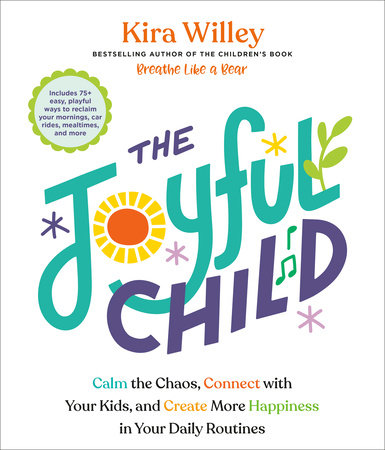
The Joyful Child

Calm the Chaos, Connect with Your Kids, and Create More Happiness in Your Daily Routines

Look inside
Rediscover the pure delight of parenting with 75+ playful activities that help kids focus their attention, calm their bodies, and let go of anxiety—from the bestselling author of Breathe Like a Bear.

What if your chaotic mornings, bedtime battles with your child, and their transition meltdowns could turn into moments of laughter, connection, and genuine joy between you? What if your child was able to manage their emotions, focus when needed, and stay in control even in challenging circumstances? You don’t need special training to bring about this magic—you need bestselling author, recording artist, and mindfulness teacher Kira Willey’s expert, energetic guidance. Her signature method prioritizes presence and play and honors a child’s natural love of music and movement as pathways to calm and focus. Rather than dealing with emotional overwhelm after it happens, her simple activities build lasting regulation skills in kids while making everyday moments more fun for the whole family.

The Joyful Child is organized by time of day—from “Wake-Up Wiggle!” which transforms mornings into celebration with fun movement, to “The Worry Box,” which gives children a place to leave their concerns at night. Each activity takes one minute or less but transforms ordinary routines into extraordinary opportunities for connection.

The Joyful Child includes:

QR codes to videos demonstrating songs and rhythm games that captivate children while helping them find focus and calm
Classroom adaptations for teachers to bring these practices to school
Curated song suggestions from the author’s award-winning catalog
“Calm Starts with You” tips for grounded, present parenting

Parents of young children need proactive solutions that prevent crises before they start—especially with children’s anxiety at an all-time high. Consider The Joyful Child your essential toolkit for creating the calm, joyful family life you’ve been craving.
“Warm, immediately practical, and fun, this book gives parents tools that can be used during the most stressful, chaotic parts of parenting. It reminds us that small, playful moments can create big, lasting change for building skills that help our kids thrive. If you thought mindfulness wasn’t for you or your kids, get ready to change your mind, and watch tricky moments become much easier!”—Tina Payne Bryson, PhD, New York Times bestselling co-author of The Whole-Brain Child and No-Drama Discipline

“Hope. This book brings simple hope that everything is going to be all right. A child’s behavior is a signpost to their deeper needs, and this book shows you the pathway to understanding and meeting those needs. Kira playfully prompts and encourages—there are no unrealistic expectations here, rather a feeling that someone is walking alongside you, telling you with quiet surety, ‘You’ve got this.’”—Kim John Payne, MEd, author of Simplicity Parenting and The Soul of Discipline and co-author of Emotionally Resilient Tweens & Teens

“Wow! Kira Willey has a special kind of magic. She takes profound concepts of child development and brain science and makes them instantly understandable and usable. Her great (and fast!) ideas for calming the chaos with children—with detailed scripts and adaptations—meet each individual child’s way of living in the world. Best of all, she gets that children are wired to move their bodies, to respond to music, and to extend their mighty imaginations. If we meet children in those places, the result is joyful, mindful connection.”—Lawrence J. Cohen, PhD, author of Playful Parenting
© RayLynn Photography
Kira Willey, author of Breathe Like a Bear and the Mindfulness Moments for Kids series, is a children’s music artist, kids’ yoga and mindfulness expert, and creator of Rockin’ Yoga school programs. She has released five albums of kids’ yoga and mindfulness songs; her work has won Parents’ Choice Gold, four Independent Music Awards, and the ASCAP Foundation Children’s Songwriting Award. Her hits include “Colors,” which was featured in a worldwide Dell ad campaign. Kira created and hosts several yoga-for-kids programs which air on PBS TV affiliates nationwide; and her TEDx talk, “Bite-Sized Mindfulness,” can be viewed online. Learn more at kirawilley.com! View titles by Kira Willey
1

A Joyful Way Forward

Our children are part of what many are calling “the anxious generation,” a reference to Jonathan Haidt’s thoroughly researched 2024 book, which offers compelling evidence for a mental health crisis among children. While Haidt’s insights are valuable, they’re also frankly terrifying for parents already doing their best in challenging times. It’s true that children’s mental health statistics are alarming, with anxiety, depression, and attention issues on the rise. Many parents, maybe including you, are understandably worried, searching for solutions and doing the best they can while carrying their own heavy burdens of stress and uncertainty.

Let’s Change the Story

I want to shift this narrative. Operating out of fear helps no one. When we parent from a place of anxiety and worry, our children pick up on it. Our stress becomes their stress, our fears become their fears. This constant state of alarm doesn’t lead to better parenting decisions—­just the opposite: chronic stress actually narrows our perspective, causing us to make poorer decisions and to miss creative solutions.

Living in a state of parental panic doesn’t protect our children; it only diminishes our joy in raising them day to day. Not to mention, it models anxiety and worry as default responses to life’s challenges. No thanks.

What if, instead of an anxious generation, we could nurture a joyful one? I truly believe this is possible. When we approach parenting through the lens of joyful, mindful connection—­honoring our children’s natural tendencies and building their emotional resources through playful, present-­moment engagement—­we’re not just helping our individual families, we’re contributing to a larger shift in how children experience childhood.

Imagine children growing up able to regulate their emotions, focus their attention when needed, and maintain a sense of composure and steadiness even in challenging circumstances. Imagine them carrying these capabilities into adolescence and adulthood, approaching life’s inevitable difficulties with resilience and optimism rather than anxiety and avoidance.

This vision is entirely doable. It begins with small, daily moments of connection in your home, but its effects ripple outward. Your (relatively) calm, regulated child influences their classroom environment. Your family’s approach to challenges shifts how extended family and friends interact with their own children. Your lived example offers hope to other parents searching for a better way.

Here’s What It Looks Like

My son was that kid. You know the one—­while other three-­year-­olds happily sat in their grown-ups’ laps during music class, mine was looping around the room, running in circles while I chased him, my face burning.

“Sit down,” I’d stage-­whisper through gritted teeth. “Look, everyone else is sitting! SIT DOWN.” The teacher would give me that sympathetic smile that makes you feel worse; the other moms looked away politely as I wrestled my little tornado.

I tried all the things: threats, bribes, holding him tightly while he squirmed like an eel. I’d leave feeling defeated, wondering what was wrong with me, my kid, and why he couldn’t just crisscross applesauce like everyone else.

Fast-­forward nearly two decades. I’ve spent years figuring out how to meet kids exactly where they are—­in their world of movement, imagination, and play. Instead of fighting their natural inclination to wiggle, dance, and explore, I discovered how to harness that energy to create joyful connection.

Compare that scene with my son to this one: I walk onstage in a school gym buzzing with fluorescent lights and packed with 350 kindergartners. They’re incredibly wiggly and chatty, elbowing their neighbors; the noise level in the cavernous room is high. Teachers weave through the chaos, ­cajoling/commanding/yelling at the kids to be quiet and hold still.

I don’t even say hello—­I start to clap a steady beat. Instantly, curious children turn toward me; faces light up. I lead a simple, imitation-­based rhythm and movement game, adding in long, deep breaths. In less than a minute, the room is quiet, the energy is focused, and all eyes are on me.

Magic? Nope.

Here’s the difference between the first scene and the second one: In the first, I was fighting against my child’s nature—­trying to force him to be something he wasn’t. (As a new-­ish mom, success to me meant getting him to sit still, be quiet, and do what the teacher said.) What I didn’t understand then was that my son wasn’t being defiant or disrespectful. He was actually doing exactly what his developing brain and body needed him to do. While I was desperately trying to make him sit still, he was just trying to get the movement that helped him manage his body and emotions.

But at the assembly in the gym, I did the opposite. I started by tapping into children’s natural love of movement and rhythm, then channeled that energy into focused attention. I didn’t demand stillness; I invited engagement and created connection. The result? Those 350 kindergartners were more focused and attentive than my one little boy ever was in that music class—­and it was (for sure) not because they were “better behaved.” That had nothing to do with it. It was because I finally understood how children actually learn best.

Kids are hardwired for movement, play, and imagination. They come to life when we engage with them on their terms—­they weren’t made to sit still and not make a sound, or to listen to verbal instructions all day long. They’re born to move, to clap, wiggle, and dance. To play games. To be silly and to have fun.

When we connect with children this way, two amazing things happen. First, we find that we no longer need to repeat ourselves constantly, raise our voices, and plead for them to pay attention and listen. We’re not going to battle stations about getting in the car or finding shoes, not to mention all the other tiny flashpoints that can totally hijack your basic Tuesday with a young child.

This shift can be nothing short of revolutionary. Imagine your stress levels coming way down as you stop feeling like a broken record stuck on an endless loop of “Please find your backpack.” Your blood pressure isn’t spiking every time you need to transition from one activity to another, expecting resistance. You’re not battling that feeling of failing at this whole parenting thing because your child can hear the sound of a Twix wrapper from a mile away but somehow doesn’t hear you call them to come sit at the table.

Instead, you become a much more calm, confident parent, easily able to navigate a grocery store trip with the kids without bribing, threatening, or leaving your cart in aisle five and making a run for it. You’ll find yourself with way more energy for the things that actually matter, because you’re not in a constant power struggle. The atmosphere at home will shift from chaotic battleground to (mostly) peaceful—­and there will be a lot more laughter and fun.

And most important, you’ll discover more joy in your relationship with your child as your time with them becomes less about managing everything and just getting through the day, and more about nurturing genuine, loving connection.

Here’s the second awesome thing that happens when you consistently connect with your child in this way: they experience powerful positive changes both now and for years to come—­immediate benefits you’ll see right away, and long-­term developmental ones that will serve them throughout life.

What You’ll See Right Away

Your child will quickly begin to:

• Feel calmer in their body

• Pay attention more easily

• Handle their emotions better instead of melting down

• Expand their capacity for learning

Your child will experience the profound relief of being understood and engaged on their own terms. Instead of constantly hearing “Sit still,” “Be quiet,” “Pay attention!,” they discover they can learn in ways that actually make sense to their wiggly, playful bodies. Their frustration level drops because they’re developing age-­appropriate skills to handle Big Feelings, instead of being bewildered and ambushed by their strong emotions until they inevitably explode.

About

Rediscover the pure delight of parenting with 75+ playful activities that help kids focus their attention, calm their bodies, and let go of anxiety—from the bestselling author of Breathe Like a Bear.

What if your chaotic mornings, bedtime battles with your child, and their transition meltdowns could turn into moments of laughter, connection, and genuine joy between you? What if your child was able to manage their emotions, focus when needed, and stay in control even in challenging circumstances? You don’t need special training to bring about this magic—you need bestselling author, recording artist, and mindfulness teacher Kira Willey’s expert, energetic guidance. Her signature method prioritizes presence and play and honors a child’s natural love of music and movement as pathways to calm and focus. Rather than dealing with emotional overwhelm after it happens, her simple activities build lasting regulation skills in kids while making everyday moments more fun for the whole family.

The Joyful Child is organized by time of day—from “Wake-Up Wiggle!” which transforms mornings into celebration with fun movement, to “The Worry Box,” which gives children a place to leave their concerns at night. Each activity takes one minute or less but transforms ordinary routines into extraordinary opportunities for connection.

The Joyful Child includes:

QR codes to videos demonstrating songs and rhythm games that captivate children while helping them find focus and calm
Classroom adaptations for teachers to bring these practices to school
Curated song suggestions from the author’s award-winning catalog
“Calm Starts with You” tips for grounded, present parenting

Parents of young children need proactive solutions that prevent crises before they start—especially with children’s anxiety at an all-time high. Consider The Joyful Child your essential toolkit for creating the calm, joyful family life you’ve been craving.

Praise

“Warm, immediately practical, and fun, this book gives parents tools that can be used during the most stressful, chaotic parts of parenting. It reminds us that small, playful moments can create big, lasting change for building skills that help our kids thrive. If you thought mindfulness wasn’t for you or your kids, get ready to change your mind, and watch tricky moments become much easier!”—Tina Payne Bryson, PhD, New York Times bestselling co-author of The Whole-Brain Child and No-Drama Discipline

“Hope. This book brings simple hope that everything is going to be all right. A child’s behavior is a signpost to their deeper needs, and this book shows you the pathway to understanding and meeting those needs. Kira playfully prompts and encourages—there are no unrealistic expectations here, rather a feeling that someone is walking alongside you, telling you with quiet surety, ‘You’ve got this.’”—Kim John Payne, MEd, author of Simplicity Parenting and The Soul of Discipline and co-author of Emotionally Resilient Tweens & Teens

“Wow! Kira Willey has a special kind of magic. She takes profound concepts of child development and brain science and makes them instantly understandable and usable. Her great (and fast!) ideas for calming the chaos with children—with detailed scripts and adaptations—meet each individual child’s way of living in the world. Best of all, she gets that children are wired to move their bodies, to respond to music, and to extend their mighty imaginations. If we meet children in those places, the result is joyful, mindful connection.”—Lawrence J. Cohen, PhD, author of Playful Parenting

Author

© RayLynn Photography
Kira Willey, author of Breathe Like a Bear and the Mindfulness Moments for Kids series, is a children’s music artist, kids’ yoga and mindfulness expert, and creator of Rockin’ Yoga school programs. She has released five albums of kids’ yoga and mindfulness songs; her work has won Parents’ Choice Gold, four Independent Music Awards, and the ASCAP Foundation Children’s Songwriting Award. Her hits include “Colors,” which was featured in a worldwide Dell ad campaign. Kira created and hosts several yoga-for-kids programs which air on PBS TV affiliates nationwide; and her TEDx talk, “Bite-Sized Mindfulness,” can be viewed online. Learn more at kirawilley.com! View titles by Kira Willey

Excerpt

1

A Joyful Way Forward

Our children are part of what many are calling “the anxious generation,” a reference to Jonathan Haidt’s thoroughly researched 2024 book, which offers compelling evidence for a mental health crisis among children. While Haidt’s insights are valuable, they’re also frankly terrifying for parents already doing their best in challenging times. It’s true that children’s mental health statistics are alarming, with anxiety, depression, and attention issues on the rise. Many parents, maybe including you, are understandably worried, searching for solutions and doing the best they can while carrying their own heavy burdens of stress and uncertainty.

Let’s Change the Story

I want to shift this narrative. Operating out of fear helps no one. When we parent from a place of anxiety and worry, our children pick up on it. Our stress becomes their stress, our fears become their fears. This constant state of alarm doesn’t lead to better parenting decisions—­just the opposite: chronic stress actually narrows our perspective, causing us to make poorer decisions and to miss creative solutions.

Living in a state of parental panic doesn’t protect our children; it only diminishes our joy in raising them day to day. Not to mention, it models anxiety and worry as default responses to life’s challenges. No thanks.

What if, instead of an anxious generation, we could nurture a joyful one? I truly believe this is possible. When we approach parenting through the lens of joyful, mindful connection—­honoring our children’s natural tendencies and building their emotional resources through playful, present-­moment engagement—­we’re not just helping our individual families, we’re contributing to a larger shift in how children experience childhood.

Imagine children growing up able to regulate their emotions, focus their attention when needed, and maintain a sense of composure and steadiness even in challenging circumstances. Imagine them carrying these capabilities into adolescence and adulthood, approaching life’s inevitable difficulties with resilience and optimism rather than anxiety and avoidance.

This vision is entirely doable. It begins with small, daily moments of connection in your home, but its effects ripple outward. Your (relatively) calm, regulated child influences their classroom environment. Your family’s approach to challenges shifts how extended family and friends interact with their own children. Your lived example offers hope to other parents searching for a better way.

Here’s What It Looks Like

My son was that kid. You know the one—­while other three-­year-­olds happily sat in their grown-ups’ laps during music class, mine was looping around the room, running in circles while I chased him, my face burning.

“Sit down,” I’d stage-­whisper through gritted teeth. “Look, everyone else is sitting! SIT DOWN.” The teacher would give me that sympathetic smile that makes you feel worse; the other moms looked away politely as I wrestled my little tornado.

I tried all the things: threats, bribes, holding him tightly while he squirmed like an eel. I’d leave feeling defeated, wondering what was wrong with me, my kid, and why he couldn’t just crisscross applesauce like everyone else.

Fast-­forward nearly two decades. I’ve spent years figuring out how to meet kids exactly where they are—­in their world of movement, imagination, and play. Instead of fighting their natural inclination to wiggle, dance, and explore, I discovered how to harness that energy to create joyful connection.

Compare that scene with my son to this one: I walk onstage in a school gym buzzing with fluorescent lights and packed with 350 kindergartners. They’re incredibly wiggly and chatty, elbowing their neighbors; the noise level in the cavernous room is high. Teachers weave through the chaos, ­cajoling/commanding/yelling at the kids to be quiet and hold still.

I don’t even say hello—­I start to clap a steady beat. Instantly, curious children turn toward me; faces light up. I lead a simple, imitation-­based rhythm and movement game, adding in long, deep breaths. In less than a minute, the room is quiet, the energy is focused, and all eyes are on me.

Magic? Nope.

Here’s the difference between the first scene and the second one: In the first, I was fighting against my child’s nature—­trying to force him to be something he wasn’t. (As a new-­ish mom, success to me meant getting him to sit still, be quiet, and do what the teacher said.) What I didn’t understand then was that my son wasn’t being defiant or disrespectful. He was actually doing exactly what his developing brain and body needed him to do. While I was desperately trying to make him sit still, he was just trying to get the movement that helped him manage his body and emotions.

But at the assembly in the gym, I did the opposite. I started by tapping into children’s natural love of movement and rhythm, then channeled that energy into focused attention. I didn’t demand stillness; I invited engagement and created connection. The result? Those 350 kindergartners were more focused and attentive than my one little boy ever was in that music class—­and it was (for sure) not because they were “better behaved.” That had nothing to do with it. It was because I finally understood how children actually learn best.

Kids are hardwired for movement, play, and imagination. They come to life when we engage with them on their terms—­they weren’t made to sit still and not make a sound, or to listen to verbal instructions all day long. They’re born to move, to clap, wiggle, and dance. To play games. To be silly and to have fun.

When we connect with children this way, two amazing things happen. First, we find that we no longer need to repeat ourselves constantly, raise our voices, and plead for them to pay attention and listen. We’re not going to battle stations about getting in the car or finding shoes, not to mention all the other tiny flashpoints that can totally hijack your basic Tuesday with a young child.

This shift can be nothing short of revolutionary. Imagine your stress levels coming way down as you stop feeling like a broken record stuck on an endless loop of “Please find your backpack.” Your blood pressure isn’t spiking every time you need to transition from one activity to another, expecting resistance. You’re not battling that feeling of failing at this whole parenting thing because your child can hear the sound of a Twix wrapper from a mile away but somehow doesn’t hear you call them to come sit at the table.

Instead, you become a much more calm, confident parent, easily able to navigate a grocery store trip with the kids without bribing, threatening, or leaving your cart in aisle five and making a run for it. You’ll find yourself with way more energy for the things that actually matter, because you’re not in a constant power struggle. The atmosphere at home will shift from chaotic battleground to (mostly) peaceful—­and there will be a lot more laughter and fun.

And most important, you’ll discover more joy in your relationship with your child as your time with them becomes less about managing everything and just getting through the day, and more about nurturing genuine, loving connection.

Here’s the second awesome thing that happens when you consistently connect with your child in this way: they experience powerful positive changes both now and for years to come—­immediate benefits you’ll see right away, and long-­term developmental ones that will serve them throughout life.

What You’ll See Right Away

Your child will quickly begin to:

• Feel calmer in their body

• Pay attention more easily

• Handle their emotions better instead of melting down

• Expand their capacity for learning

Your child will experience the profound relief of being understood and engaged on their own terms. Instead of constantly hearing “Sit still,” “Be quiet,” “Pay attention!,” they discover they can learn in ways that actually make sense to their wiggly, playful bodies. Their frustration level drops because they’re developing age-­appropriate skills to handle Big Feelings, instead of being bewildered and ambushed by their strong emotions until they inevitably explode.