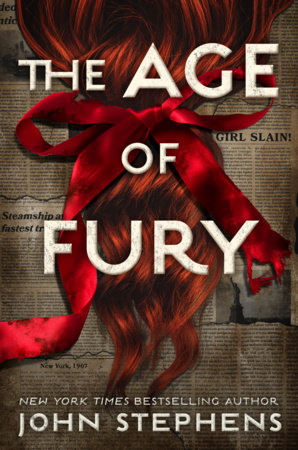
In Gilded Age New York, a fierce seventeen year-old Irish girl joins forces with a notorious gangster to hunt down her sister's killer. Told from both perspectives, their search for justice pulls them from the city’s darkest corners to glittering ballrooms, where a secret can mean death, and love comes at a perilous price. Two unlikely allies must venture into dangerous places--perhaps into each other's arms--to solve a brutal crime.
Caitlin Mary, my darling twin. I came on the instant of getting your letter. Leaving home in Ireland, crossing the ocean and still arriving too late. Because you're gone. Murdered and left in a dark alley! But I will avenge you, my love. I swear it. Even if I must make a deal with the devil. Or, in this case, the most blood-soaked gangster in New York.
William There is blood on my hands I cannot wash away. But if finding this girl's killer proves that I am more than the dark thing inside me, more than a monster, then I will. Only I did not forsee Caitlin. Now I have to make a choice. About who I am, who I will be, and who I love.
A producer, director, and writer for shows like Gossip Girl, Gilmore Girls, The O.C., and Gotham turns his attention to the underbelly of Gilded Age New York in this riveting suspense novel that blends tension and humanity--and deftly showcases a heart-stirring exploration of truth, identity, and love.
John Stephens is a veteran of many highly successful TV shows for teens. He was a writer for Gilmore Girls, producer for The O.C., and executive producer of Gossip Girl and Gotham. He is also the New York Times bestselling author of the middle-grade fantasy trilogy Books of Beginning. He lives with his family in Pasadena, California.
View titles by John Stephens
CHAPTER ONE
Caitlin
15 Dec 1907
New York, NY
Dearest Mary,
Just a short note to tell you I’ve arrived.
The crossing started horribly enough, as leaving Cork we sailed straight into a right blower of a storm. All day and all night we were tossed about. You’ve never seen folks so sick. Or perhaps you have, I don’t know. Belowdecks was like one of those plagues in old Egypt. First one fella vomits. Then another fella vomits. Then another. Then everyone’s heaving their guts out like some kind of vomiting symphony.
Also, I stabbed one of the sailors. Now, before you go jumping to conclusions, Mary, this fella’s idea of a good time was to hide himself outside the loo in the middle of the night, waiting for young girls stumbling along, all queasy from the rocking and the swaying and desperate not to spew in their cabins. Then he’d leap on them from the shadows and have himself a good ole grope. Well, he tried his game with the wrong lass as I had Da’s old bone-handled clasp knife and when he came I was ready. I heard he might lose a finger. Only serves the bastard right, I say.
Anyways, the weather did finally clear and then every day it was just water water water water. Why anyone would choose a seafaring life is beyond me. Perhaps if you were at war so you could be blasting at folks to break up the monotony, but otherwise, no thank you.
It was this morning that we at last hailed New York, and all us poor souls pressed in tight at the railing, all hoping to get a glimpse of old Lady Liberty and the Promised Land before we froze to death. What a cold! The harbor was choked and gray with ice, and the wind cut right through our huddled bodies. None of which stopped the eejits around me from cheering themselves hoarse.
It took us forever and a day to dock, and we did so beside a ship so big it dwarfed our own—I believe it’s called the Juno—and right away we were herded onto a ferry which took us to that little island off the coast, you know the one, where they funnel you through like cattle before they let you into their wonderful country, and I was standing in line with my bag like everyone else, stamping my feet to try and keep the blood flowing, when these two gorillas with badges come up—
“Caitlin Quinn?”
“Aye.”
And without another word one of the gorillas takes me by the arm, the other grabs my bag, and they drag me off to a little room where they dump everything willy-nilly onto a table. I was having none of that, as you can imagine, and told them so plainly, but they bade me shut my bog-stinking, potato-eating hole unless I wanted a smack. A very fine welcome to America.
Then they dragged me into another room, where this puffed-up whelp with a uniform and a pencil was sitting behind a desk and beside a little coal stove that kept him all nice and toasty warm. You should’ve seen how proud this fella was, Mary. Honestly, the airs that a uniform and a government job will give some folk. You would’ve thought he was personally responsible for the safety of each and every soul in the entire United States of America.
You know who he looked like? Tommy O’Neill from back home. You remember Tommy, how he was the baby Jesus in the Christmas play every year, all on account of his ma owning the bakery and providing rolls for the meal after. Toward the end, he was bigger than bloody Joseph. Well, this fella could’ve been his brother. And he looked just as pleased as Tommy used to, with his legs poking out the end of the manger. A great pink baby playing at dress-up.
One of the gorillas pushed me down into the seat across from him. The other gorilla handed the whelp Da’s old clasp knife, which he’d already relieved me of, and near half the contents of me bag, including the letter from Father McDonagh, the letter you sent, and the thick stack of letters I’d written you but never posted for reasons you well know. That was the last straw. I was on my feet—
“Those are my private letters!” Oh, I could have killed them all then and there, Mary, I swear I could’ve. “You return them this instant!”
The government whelp didn’t even glance up. “You have no say in the matter.” And he gave a little wave and one of the gorillas shoved me back down.
Now, of course the only letters I cared about were the ones I’d written you. I would have no one else read them. I wasn’t even sure I wanted you to read them. But what could I do? I bit my tongue and sat there cursing the whelp and both his gorillas. And George Washington and Abraham Lincoln for good measure.
The whelp then asked my name—Caitlin Agnes Quinn—how old I was—seventeen—where I was from—Ballykelly, Ireland—writing everything down on his little piece of paper.
“Why have you come to America?”
I must’ve thought about that for a second, for he said, “Do you understand the question?”
He was all efficiency, this fella. I wanted to tell him I understood the question perfectly well, but I was not in the habit of sharing my business with complete strangers, especially not ones who looked like puffed-up baby-men. But what I said instead, after taking a deep, calming breath—
“Sure anyone with half a brain knows America’s the greatest country in the world,” which is all any of them want to hear, Mary. “We Irish could learn a thing or two from you. Not least how you kicked out the bloody English.”
Our man stopped writing and looked up, an ugly scowl creasing his soft pink forehead.
“I’m from England.”
I saw I’d been maybe a bit too smart. Only how was I to know? Where was his bleeding accent? Still, there was nothing for it. I forged on,
“I don’t mean any insult to England, mind. There wouldn’t be an America it weren’t for England. Well, there would, only it’d still belong to those Indian fellas you took it from. And they wouldn’t call it America, would they? My point is, the whole world looks to America. It’s the land of opportunity.” Then I added, “Except for those Indian fellas.”
The whelp said nothing. I gave him a smile. I was determined to get past him and his pencil, and a smile didn’t cost me anything. It wasn’t much different from smiling at Queen Margaret when we used to bring her oats in the morning. I had to stop myself from reaching over and patting him on the head.
“It is my job,” he said finally, “to keep the criminal element from entering the United States. We have a report of you attacking and wounding a crew member aboard your ship.”
So that was it. Someone—if not the gropey sailor himself then one of his mates—had blabbed to the immigration rozzers to try and keep me out of the country.
I suppose I must’ve laughed because the whelp asked if I thought this was funny. No, I said. And I told him about the sailor’s game of hiding near the loo at night to snatch himself a feel from the young girl passengers and how I’d simply been defending myself.
The fella said, “That’s your story.”
“It’s the God’s truth. Just ask the other girls. Half had his nasty hands all over them. I don’t suppose you can take fingerprints off breasts and bums, can you?”
He said, “No.”
Then he said, “You still haven’t told me why you’ve come to America.”
Then I said, “To be honest, I don’t see how it’s any of your fucking business.”
I know, Mary, I know. But it was him asking it the way he was asking it, and me thinking how far I’d come and how if I could only get past this smug bastard I would get to see you again. Hold you tight in my arms. Added to which, I will say, the heat in that close little room after the cold outside was making me lightheaded. The words just spilled out.
He told one of the gorillas to take me to the other room. And I stewed there awhile, plotting my revenge and how if necessary I would topple the entire government of the United States if that was required to get through to you.
I even—and this is how desperate I was—contemplated telling the truth, that my sister, the only person I loved in this entire stinking pisspot of a world—despite her lacking the sense God gave a goose, I’m sorry, Mary, but it’s true—and who had run off without any sort of proper goodbye, that after having heard nothing from her for more than a year (fourteen months, two weeks and a day, to be exact, but who’s counting) I had received a letter, forwarded from this Father McDonagh in New York, and in this letter my only beloved sister asks forgiveness for running off (unnecessary, I forgave you the moment you left, you stupid sow) and says that she is in trouble. What’s more, she is afraid. Though of what, she dare not say. And I would tell this whelp how I straightaway sold Queen Margaret to Padraig Thomas to pay for the passage—and yes, I know we’ve had her our whole lives, but she is a horse, Mary—and now I am here. Your Cait is here.
And if that failed, my plan was that I would cause such a scene of bedlam they would throw me in the bughouse. At least, I reasoned, it would be a bughouse in America.
But none of this was necessary, for people will surprise you, Mary. Usually for the worse, but every now and then for the better. Here is what happened: After pacing back and forth in this little room and hatching my schemes, I was brought back to the government fella and I saw that all my letters, the one from Father McDonagh, the one you wrote me, the thick stack that I wrote you, were on the desk in front of him in a neat little pile, and he says—
“I’ve only read the letters from your sister and this Father McDonagh. The rest I left unopened.”
I gave him an old nod. Not a nod of thanks, since why should I be thanking him for only doing what was right and decent? Just a nod to show I heard.
Then he says—
“I was five when I came to America. My sister brought me. She was thirteen. Our brother and baby sister, both our parents, had all died back home. My sister thought we’d have a better life here. And we did. Till she died a few years later.”
The fella stared down at his hands.
How is it, Mary, that you can see someone and still not see them at all? For once I looked past the uniform—he really didn’t look much like Tommy O’Neill—it was clear he was just a sad, lonely soul.
“What was her name?”
“Clare.” He wiped at his eyes with the back of his sleeve. “You’re here to help your sister, aren’t you?”
“Aye.”
Then he gathered up all my letters and held them out and gave such a small, shy smile it near broke my heart. “Welcome to America.”
And that was that.
Or not exactly, as first I was taken off to be poked and prodded by a doctor who coughed and coughed all over me before pronouncing me healthy (which I could’ve told him, for as you know I’ve never been ill a day in my life; indeed it was him I was worried about), and then it was another boat back across to Manhattan, but finally, there I was, in America.
Father McDonagh had sent instructions. His church, St. Veronica’s, is somewhere called Greenwich Village, but I was to make my way uptown to the New York Foundling, which is run by the Sisters of Charity (the same as ran the school in Enniskerry, remember that gaggle of evil bitches? But I was determined to give these new ones the benefit of the doubt), and where he had arranged for me to stay.
Father McDonagh had written to hire a cab, but I saw no reason to throw away good money when both my legs still worked, and after being trapped on that boat, I wanted a walk. Not to mention, it was a chance to see this city everyone talks about. I will save my impressions for when I see you and only say now that New York seems a very dirty, smelly, crowded, gaudy, noisy, manure-laden, dirty—I said that, didn’t I?—and utterly, blood-stoppingly cold place. But perhaps it grows on you. Like black fungus.
The New York Foundling—I did eventually arrive, footsore and no longer able to feel the tip of my nose—turns out to be a place where unwanted babies can be left with no questions asked, and there are rooms crammed full of the yowling creatures. Indeed, the front hall is left open all night so that anybody might nip in and deposit their unwanted progeny in a crib set there for the purpose. If you ask me, that’s too much temptation to put before a tired ma or da. But that’s where I am staying and where I am writing this.
It occurs to me it could be seen as odd, writing you a letter when I am determined that tomorrow, after I meet the famous Father McDonagh, he will take me to see you and I can tell you all this myself. But I have been writing to you this long year and more that you’ve been gone and see no reason to stop now. I know this is news to you as you’ve not read a word I’ve written, and I will only say that it became so hard not having you there that one day I just picked up pen and paper and started telling you what had happened with Queen Margaret, what that idiot nose-picker Billy Thompkins had said, about the trout that Gerry Mullins caught that got him mentioned in Freeman’s Journal, how I went about setting the spuds alone, a job we used to do together, talking back and forth as we walked the fields till our legs were heavy with mud. I told you everything that happened. Everything you were missing. And I told you how I felt. The loneliness. The anger at being abandoned by the one person I loved. And other things. Things I never told anyone. Even you. You understand now why I would not want that government fella poring over the pages in which I laid myself bare!
But what is this trouble you’re in, Mary? Why do you say you’re scared? Who are you scared of? I have been able to hold this panic at bay all the way across the vast cold Atlantic, but now that I’m here, my fears have crowded in close.
I hear them ringing the bell for dinner. At least let us hope this is dinner, since I’d hate to end my first night in America by murdering a score of nuns for the sheer hunger of it. Here is what matters. Tomorrow I will meet Father McDonagh, and he will take me to see you, and that thought fills me with more joy than I can say. My heart is bursting. We shall be together again, Mary. We shall be whole.
In Gilded Age New York, a fierce seventeen year-old Irish girl joins forces with a notorious gangster to hunt down her sister's killer. Told from both perspectives, their search for justice pulls them from the city’s darkest corners to glittering ballrooms, where a secret can mean death, and love comes at a perilous price. Two unlikely allies must venture into dangerous places--perhaps into each other's arms--to solve a brutal crime.
Caitlin Mary, my darling twin. I came on the instant of getting your letter. Leaving home in Ireland, crossing the ocean and still arriving too late. Because you're gone. Murdered and left in a dark alley! But I will avenge you, my love. I swear it. Even if I must make a deal with the devil. Or, in this case, the most blood-soaked gangster in New York.
William There is blood on my hands I cannot wash away. But if finding this girl's killer proves that I am more than the dark thing inside me, more than a monster, then I will. Only I did not forsee Caitlin. Now I have to make a choice. About who I am, who I will be, and who I love.
A producer, director, and writer for shows like Gossip Girl, Gilmore Girls, The O.C., and Gotham turns his attention to the underbelly of Gilded Age New York in this riveting suspense novel that blends tension and humanity--and deftly showcases a heart-stirring exploration of truth, identity, and love.
Author
John Stephens is a veteran of many highly successful TV shows for teens. He was a writer for Gilmore Girls, producer for The O.C., and executive producer of Gossip Girl and Gotham. He is also the New York Times bestselling author of the middle-grade fantasy trilogy Books of Beginning. He lives with his family in Pasadena, California.
View titles by John Stephens
Excerpt
CHAPTER ONE
Caitlin
15 Dec 1907
New York, NY
Dearest Mary,
Just a short note to tell you I’ve arrived.
The crossing started horribly enough, as leaving Cork we sailed straight into a right blower of a storm. All day and all night we were tossed about. You’ve never seen folks so sick. Or perhaps you have, I don’t know. Belowdecks was like one of those plagues in old Egypt. First one fella vomits. Then another fella vomits. Then another. Then everyone’s heaving their guts out like some kind of vomiting symphony.
Also, I stabbed one of the sailors. Now, before you go jumping to conclusions, Mary, this fella’s idea of a good time was to hide himself outside the loo in the middle of the night, waiting for young girls stumbling along, all queasy from the rocking and the swaying and desperate not to spew in their cabins. Then he’d leap on them from the shadows and have himself a good ole grope. Well, he tried his game with the wrong lass as I had Da’s old bone-handled clasp knife and when he came I was ready. I heard he might lose a finger. Only serves the bastard right, I say.
Anyways, the weather did finally clear and then every day it was just water water water water. Why anyone would choose a seafaring life is beyond me. Perhaps if you were at war so you could be blasting at folks to break up the monotony, but otherwise, no thank you.
It was this morning that we at last hailed New York, and all us poor souls pressed in tight at the railing, all hoping to get a glimpse of old Lady Liberty and the Promised Land before we froze to death. What a cold! The harbor was choked and gray with ice, and the wind cut right through our huddled bodies. None of which stopped the eejits around me from cheering themselves hoarse.
It took us forever and a day to dock, and we did so beside a ship so big it dwarfed our own—I believe it’s called the Juno—and right away we were herded onto a ferry which took us to that little island off the coast, you know the one, where they funnel you through like cattle before they let you into their wonderful country, and I was standing in line with my bag like everyone else, stamping my feet to try and keep the blood flowing, when these two gorillas with badges come up—
“Caitlin Quinn?”
“Aye.”
And without another word one of the gorillas takes me by the arm, the other grabs my bag, and they drag me off to a little room where they dump everything willy-nilly onto a table. I was having none of that, as you can imagine, and told them so plainly, but they bade me shut my bog-stinking, potato-eating hole unless I wanted a smack. A very fine welcome to America.
Then they dragged me into another room, where this puffed-up whelp with a uniform and a pencil was sitting behind a desk and beside a little coal stove that kept him all nice and toasty warm. You should’ve seen how proud this fella was, Mary. Honestly, the airs that a uniform and a government job will give some folk. You would’ve thought he was personally responsible for the safety of each and every soul in the entire United States of America.
You know who he looked like? Tommy O’Neill from back home. You remember Tommy, how he was the baby Jesus in the Christmas play every year, all on account of his ma owning the bakery and providing rolls for the meal after. Toward the end, he was bigger than bloody Joseph. Well, this fella could’ve been his brother. And he looked just as pleased as Tommy used to, with his legs poking out the end of the manger. A great pink baby playing at dress-up.
One of the gorillas pushed me down into the seat across from him. The other gorilla handed the whelp Da’s old clasp knife, which he’d already relieved me of, and near half the contents of me bag, including the letter from Father McDonagh, the letter you sent, and the thick stack of letters I’d written you but never posted for reasons you well know. That was the last straw. I was on my feet—
“Those are my private letters!” Oh, I could have killed them all then and there, Mary, I swear I could’ve. “You return them this instant!”
The government whelp didn’t even glance up. “You have no say in the matter.” And he gave a little wave and one of the gorillas shoved me back down.
Now, of course the only letters I cared about were the ones I’d written you. I would have no one else read them. I wasn’t even sure I wanted you to read them. But what could I do? I bit my tongue and sat there cursing the whelp and both his gorillas. And George Washington and Abraham Lincoln for good measure.
The whelp then asked my name—Caitlin Agnes Quinn—how old I was—seventeen—where I was from—Ballykelly, Ireland—writing everything down on his little piece of paper.
“Why have you come to America?”
I must’ve thought about that for a second, for he said, “Do you understand the question?”
He was all efficiency, this fella. I wanted to tell him I understood the question perfectly well, but I was not in the habit of sharing my business with complete strangers, especially not ones who looked like puffed-up baby-men. But what I said instead, after taking a deep, calming breath—
“Sure anyone with half a brain knows America’s the greatest country in the world,” which is all any of them want to hear, Mary. “We Irish could learn a thing or two from you. Not least how you kicked out the bloody English.”
Our man stopped writing and looked up, an ugly scowl creasing his soft pink forehead.
“I’m from England.”
I saw I’d been maybe a bit too smart. Only how was I to know? Where was his bleeding accent? Still, there was nothing for it. I forged on,
“I don’t mean any insult to England, mind. There wouldn’t be an America it weren’t for England. Well, there would, only it’d still belong to those Indian fellas you took it from. And they wouldn’t call it America, would they? My point is, the whole world looks to America. It’s the land of opportunity.” Then I added, “Except for those Indian fellas.”
The whelp said nothing. I gave him a smile. I was determined to get past him and his pencil, and a smile didn’t cost me anything. It wasn’t much different from smiling at Queen Margaret when we used to bring her oats in the morning. I had to stop myself from reaching over and patting him on the head.
“It is my job,” he said finally, “to keep the criminal element from entering the United States. We have a report of you attacking and wounding a crew member aboard your ship.”
So that was it. Someone—if not the gropey sailor himself then one of his mates—had blabbed to the immigration rozzers to try and keep me out of the country.
I suppose I must’ve laughed because the whelp asked if I thought this was funny. No, I said. And I told him about the sailor’s game of hiding near the loo at night to snatch himself a feel from the young girl passengers and how I’d simply been defending myself.
The fella said, “That’s your story.”
“It’s the God’s truth. Just ask the other girls. Half had his nasty hands all over them. I don’t suppose you can take fingerprints off breasts and bums, can you?”
He said, “No.”
Then he said, “You still haven’t told me why you’ve come to America.”
Then I said, “To be honest, I don’t see how it’s any of your fucking business.”
I know, Mary, I know. But it was him asking it the way he was asking it, and me thinking how far I’d come and how if I could only get past this smug bastard I would get to see you again. Hold you tight in my arms. Added to which, I will say, the heat in that close little room after the cold outside was making me lightheaded. The words just spilled out.
He told one of the gorillas to take me to the other room. And I stewed there awhile, plotting my revenge and how if necessary I would topple the entire government of the United States if that was required to get through to you.
I even—and this is how desperate I was—contemplated telling the truth, that my sister, the only person I loved in this entire stinking pisspot of a world—despite her lacking the sense God gave a goose, I’m sorry, Mary, but it’s true—and who had run off without any sort of proper goodbye, that after having heard nothing from her for more than a year (fourteen months, two weeks and a day, to be exact, but who’s counting) I had received a letter, forwarded from this Father McDonagh in New York, and in this letter my only beloved sister asks forgiveness for running off (unnecessary, I forgave you the moment you left, you stupid sow) and says that she is in trouble. What’s more, she is afraid. Though of what, she dare not say. And I would tell this whelp how I straightaway sold Queen Margaret to Padraig Thomas to pay for the passage—and yes, I know we’ve had her our whole lives, but she is a horse, Mary—and now I am here. Your Cait is here.
And if that failed, my plan was that I would cause such a scene of bedlam they would throw me in the bughouse. At least, I reasoned, it would be a bughouse in America.
But none of this was necessary, for people will surprise you, Mary. Usually for the worse, but every now and then for the better. Here is what happened: After pacing back and forth in this little room and hatching my schemes, I was brought back to the government fella and I saw that all my letters, the one from Father McDonagh, the one you wrote me, the thick stack that I wrote you, were on the desk in front of him in a neat little pile, and he says—
“I’ve only read the letters from your sister and this Father McDonagh. The rest I left unopened.”
I gave him an old nod. Not a nod of thanks, since why should I be thanking him for only doing what was right and decent? Just a nod to show I heard.
Then he says—
“I was five when I came to America. My sister brought me. She was thirteen. Our brother and baby sister, both our parents, had all died back home. My sister thought we’d have a better life here. And we did. Till she died a few years later.”
The fella stared down at his hands.
How is it, Mary, that you can see someone and still not see them at all? For once I looked past the uniform—he really didn’t look much like Tommy O’Neill—it was clear he was just a sad, lonely soul.
“What was her name?”
“Clare.” He wiped at his eyes with the back of his sleeve. “You’re here to help your sister, aren’t you?”
“Aye.”
Then he gathered up all my letters and held them out and gave such a small, shy smile it near broke my heart. “Welcome to America.”
And that was that.
Or not exactly, as first I was taken off to be poked and prodded by a doctor who coughed and coughed all over me before pronouncing me healthy (which I could’ve told him, for as you know I’ve never been ill a day in my life; indeed it was him I was worried about), and then it was another boat back across to Manhattan, but finally, there I was, in America.
Father McDonagh had sent instructions. His church, St. Veronica’s, is somewhere called Greenwich Village, but I was to make my way uptown to the New York Foundling, which is run by the Sisters of Charity (the same as ran the school in Enniskerry, remember that gaggle of evil bitches? But I was determined to give these new ones the benefit of the doubt), and where he had arranged for me to stay.
Father McDonagh had written to hire a cab, but I saw no reason to throw away good money when both my legs still worked, and after being trapped on that boat, I wanted a walk. Not to mention, it was a chance to see this city everyone talks about. I will save my impressions for when I see you and only say now that New York seems a very dirty, smelly, crowded, gaudy, noisy, manure-laden, dirty—I said that, didn’t I?—and utterly, blood-stoppingly cold place. But perhaps it grows on you. Like black fungus.
The New York Foundling—I did eventually arrive, footsore and no longer able to feel the tip of my nose—turns out to be a place where unwanted babies can be left with no questions asked, and there are rooms crammed full of the yowling creatures. Indeed, the front hall is left open all night so that anybody might nip in and deposit their unwanted progeny in a crib set there for the purpose. If you ask me, that’s too much temptation to put before a tired ma or da. But that’s where I am staying and where I am writing this.
It occurs to me it could be seen as odd, writing you a letter when I am determined that tomorrow, after I meet the famous Father McDonagh, he will take me to see you and I can tell you all this myself. But I have been writing to you this long year and more that you’ve been gone and see no reason to stop now. I know this is news to you as you’ve not read a word I’ve written, and I will only say that it became so hard not having you there that one day I just picked up pen and paper and started telling you what had happened with Queen Margaret, what that idiot nose-picker Billy Thompkins had said, about the trout that Gerry Mullins caught that got him mentioned in Freeman’s Journal, how I went about setting the spuds alone, a job we used to do together, talking back and forth as we walked the fields till our legs were heavy with mud. I told you everything that happened. Everything you were missing. And I told you how I felt. The loneliness. The anger at being abandoned by the one person I loved. And other things. Things I never told anyone. Even you. You understand now why I would not want that government fella poring over the pages in which I laid myself bare!
But what is this trouble you’re in, Mary? Why do you say you’re scared? Who are you scared of? I have been able to hold this panic at bay all the way across the vast cold Atlantic, but now that I’m here, my fears have crowded in close.
I hear them ringing the bell for dinner. At least let us hope this is dinner, since I’d hate to end my first night in America by murdering a score of nuns for the sheer hunger of it. Here is what matters. Tomorrow I will meet Father McDonagh, and he will take me to see you, and that thought fills me with more joy than I can say. My heart is bursting. We shall be together again, Mary. We shall be whole.