Close Modal

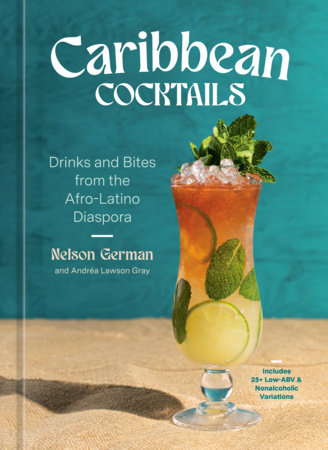
Caribbean Cocktails

Drinks and Bites from the Afro-Latino Diaspora [A Cocktail and Non-Alcoholic Drink Recipe Book]

Look inside
Hardcover (Paper-over-Board, no jacket)
$24.00 US
6.8"W x 9.3"H x 0.78"D   | 21 oz | 24 per carton
On sale Jun 02, 2026 | 176 Pages | 9780593837740

Sip and savor the bold flavors and vibrant culture of the Afro-Latino diaspora with over 40 drink recipes and 20 food recipes from Top Chef alum and acclaimed chef-restaurateur Nelson German, the culinary visionary behind Meski, Sobre Mesa, and alaMar Kitchen and Bar.

For Afro-Dominican chef Nelson German, drinks and food are about connection—whether it's sharing stories over cocktails on a stoop in Washington Heights or gathering with friends under the warm, buzzy lights of his restaurants. In Caribbean Cocktails, he brings the rich culinary history of the Afro-Latino diaspora straight to your home bar and kitchen, blending tradition, personal storytelling, and modern mixology. Inside, you’ll find cocktail recipes easy enough for home bartenders yet inventive enough for seasoned mixologists, along with an ingredient index to help you make the most of every bottle on your bar cart, tips for batching drinks, plus low-ABV and alcohol-free variations for every kind of celebration.

Reflecting the vibrant drinking and food culture of the Afro-Latino diaspora, Caribbean Cocktails presents a rich selection of recipes from celebrated bartenders and chefs, spanning refreshing spritzes and bold island classics to tasty small plates. Each chapter highlights a distinct flavor profile, including concoctions for:

  • Warm and sweet flavors like The Heights Mamajuana, Gingerbread Holiday Milk Punch, and Coconut Rum Caramelized Sweet Plantains
  • Floral, fruity, and herbal flavors like Coconut Daiquiri, Zombie Revier No. 2, and Dominican Chorizo “Kipe” Bites
  • Sour and bitter flavors like Cafecito de la Mesa, La Cultura Old-Fashioned, and Coffee Cake with Guavaberry Caramel Sauce
  • Spicy flavors like Spice Me Down, Dominican Date Sour, and Afro-Cuban Mojo Olives with Peanuts
  • Salty and smoky flavors like El Premio, Mayaimi Swizzle, and Dungeness Stuffed Piquillo Peppers
With the unique, culturally rooted, flavorful recipes in Caribbean Cocktails, you’ll soon be entertaining impressively at home.
“The debut effort from German, chef, restaurateur, and Top Chef contestant, delivers a vibrant collection of Caribbean cocktails. . . . Each recipe is thoughtfully laid out with notes on required equipment, glassware, and ice so new mixologists know exactly what to expect . . . this will be a hit for those who are looking to add island-influenced and sophisticated vibes to their home beverage program.”—Sarah Tansley, Booklist
Nelson German is the Dominican American chef-owner behind Oakland's alaMar Kitchen & Bar, the Afro-Latin cocktail lounge Sobre Mesa, and Meski, a soulful Afro-Latin brunch and dinner destination in San Francisco. A Top Chef Season 18 contestant and one of Plate’s “2020 Chefs to Watch,” Nelson's unorthodox culinary style blends his Dominican heritage, African roots, and Mediterranean and Asian influences with a deep love of local, sustainable California ingredients. His work has been featured in the New York Times, SF Chronicle, Ebony, Forbes, KQED, KRON, and more.

Andréa Lawson Gray is a James Beard Award–winning food writer who has shared the richness of Latino culture, history, and cuisine through her cookbooks Convivir and Celebraciones Mexicanas.
The First Pour

First Fridays in Oakland, California, where I own and operate my two restaurants, are busy and buzzy. Back when First Fridays started in 2011, they were a great way to support Oakland’s then-budding (now blossoming) restaurant scene. For AlaMar, my first restaurant, First Friday was the busiest night of the month. It wasn’t a great night to be short-staffed, much less at the bar. But that’s exactly what happened in 2018.

As a small business owner, you jump in where you’re needed, so I jumped behind the bar. Thing is though—I had no experience as a mixologist or when it came to interacting with our customers. I had always been in the kitchen, cooking my heart out. So there I was, feeling something between cool and nervous, adrenaline flowing for sure. The first cocktail I made was a twist on a daiquiri, tapping into what I had seen other bartenders do. Of course, I used rum—the most Dominican of liquors and a very familiar ingredient to me.

Before long, I realized riffing on cocktails felt kinda like cooking. To be honest, AlaMar was a success, and with everything running relatively smoothly, a kind of ennui had set in. Jumping behind the bar was a spur-of-the-moment choice at the time, but it gave me a much-needed spark, a new challenge. Creating cocktails felt familiar, but also different, fresh, and exciting.

Being face-to-face with the guests was also new, but to my surprise, the showmanship and storytelling that come part and parcel with bartending came naturally to me. It transported me back to hot New York summer evenings in The Heights (Washington Heights) where I grew up, to block parties and chismeando (gossiping) on the stoop. In a way, that first night behind the bar at AlaMar set me on the path that would eventually put me in front of the camera on Top Chef, and it laid the groundwork for other TV and social appearances—and for this book.

When I first started bartending, I was eager to learn, and eager to show my respect for those who had been behind the bar for years. Immersing myself in the craft deepened my appreciation for its artistry. I found inspiration

from talking to colleagues and neighbors, learning their perspectives and techniques. It was especially exciting to engage with other people of color in the industry, hearing their stories and building a supportive network. I am honored to have several of these talented individuals contributing recipes to this book as “guest bartenders.” This sense of community has been integral in shaping my journey.

Creating cocktails is really an art form, a craft—just like making food. I started to look for excuses to put myself behind the bar, honing my craft until it became my new passion. Soon, word spread, and friends started showing up to support me, hang out, and share stories. I was having fun—fun with friends, fun with customers who would become friends, and fun using my knowledge of flavors and ingredients in a new way.

What started as a spontaneous decision slowly turned into something real. And now, years later, it’s come full circle: I have a bar of my own in Oakland where those same kinds of connections are still being made, one cocktail at a time. It’s also where I get to bring in the lessons I learned from my uncles—the ones who taught me how to pour rum with respect, how to make Mamajuana, and that every bottle comes with a story. Those early conversations, shared over music, laughter, and family meals, are the root of everything I create behind the bar at Sobre Mesa today.

My Culinary Soul

Wherever people of African origin found themselves because of the Atlantic slave trade, they created food. That food is now foundational to the Afro-Latino communal identity not only in the Dominican Republic, where my mother was born, but throughout the diaspora.

This book is an exploration of my Afro-Latino roots, of my never-ending personal journey of discovery, shared through a culinary lens. Some of the recipes in this book are my mother’s dishes; others are my interpretations of my Dominican grandmother’s beloved recipes. Some are creations all my own, still informed by everything that came before me.

Coming to realize, truly understand, and embrace my dual identity was a game-changer. Life in my Dominican NYC neighborhood of Washington Heights revolved around community. Everybody knew each other by block; we shared food and swapped stories. The neighborhood smelled and sounded Dominican, with aromas wafting from the open windows as everyone’s moms made fried plantains, gallina guisada (stewed chicken), and moro (Dominican beans and rice), all punctuated by the sounds of merengue and bachata music.

No one talked about our African roots, much less acknowledged them. We were Latinos. We were not from Africa. Only it turns out, we were. In fact, my memories of my childhood—those smells wafting down the block, the food I ate growing up—are what would eventually lead me to explore my African heritage, and later express and share it through my cooking and bartending.

I remember the day a Black family dining at my first restaurant, AlaMar, asked about the Black owner they had heard about. A staff member responded, “This isn’t a Black-owned restaurant; this is a Dominican-owned restaurant.” That hit me hard. My family are Black Dominican Americans—part of the Spanish-speaking African diaspora. I realized I hadn’t done enough to highlight my Blackness or its role in shaping who I am. And it made me think about how much the African continent has influenced the culinary world.

I saw that what I was doing with drinks wasn’t just creative—it was cultural reclamation.

That realization deepened when I appeared on Top Chef, where a challenge centered on African cuisine brought everything into focus. It reminded me that the flavors I grew up with—plantains, braised meats, rich spice blends—weren’t just Dominican; they were African, too.

The food world has gradually started to make space for these connections and embrace a wider array of ingredients and culinary history—but the cocktail world is still catching up. Too often, the contributions of the African diaspora flavors—ingredients like sorrel, kola nut, tamarind, Grains of Paradise—are left out of the conversation entirely. The stories behind these ingredients, the ancestral knowledge, the migration paths they’ve taken—they’re all right there, just waiting to be explored. I had already opened Sobre Mesa less than a year before filming Top Chef, but that experience shifted something in me. I saw that what I was doing with drinks wasn’t just creative—it was cultural reclamation. It was time to bring the full weight of our flavors and stories into the cocktail glass.

Initially, my bar leaned more into Latino flavors, but after my experience on Top Chef, I knew I had to dive even deeper. The cocktail world was underrepresenting and under-utilizing the spices, ingredients, and stories tied to the African diaspora. I wanted to change that. I wanted to honor this vast history and culture not just through food but also through drinks, blending them together to tell a richer story.

You can see it in the Top Chef episode—the joy, the recognition, and the memories sparked by that meal. Eating that food, experiencing those flavors, and recognizing the connections gave me a renewed sense of purpose. It was the moment I truly understood the depth of my culinary identity and the path I wanted to take.

These moments didn’t just make me reflect on my own identity—they reminded me of how gatherings are central to Dominican culture, and how much we rely on food and drink to bring people together. I experienced it every day growing up. Whether it was a wedding, a baptism, or a Sunday with family, we weren’t just sharing a meal—we were building community. My aunties, my grandmother, my tíos—all of them knew how to set a table that felt like home. And while the plates were full of Dominican staples, there was always something to sip on, too. There were homemade juices made from whatever fruit might be growing in someone’s yard—passion fruit, guava, sour orange, tamarind, mango. And tucked somewhere behind the bottles, there was always Mamajuana (see page 40)—dark, spiced, a little mysterious. Every family had their own mix and method for it.

The women taught me how to cook—how to build flavor, feed a crowd, and show love through food. The men taught me about rum.

About

Sip and savor the bold flavors and vibrant culture of the Afro-Latino diaspora with over 40 drink recipes and 20 food recipes from Top Chef alum and acclaimed chef-restaurateur Nelson German, the culinary visionary behind Meski, Sobre Mesa, and alaMar Kitchen and Bar.

For Afro-Dominican chef Nelson German, drinks and food are about connection—whether it's sharing stories over cocktails on a stoop in Washington Heights or gathering with friends under the warm, buzzy lights of his restaurants. In Caribbean Cocktails, he brings the rich culinary history of the Afro-Latino diaspora straight to your home bar and kitchen, blending tradition, personal storytelling, and modern mixology. Inside, you’ll find cocktail recipes easy enough for home bartenders yet inventive enough for seasoned mixologists, along with an ingredient index to help you make the most of every bottle on your bar cart, tips for batching drinks, plus low-ABV and alcohol-free variations for every kind of celebration.

Reflecting the vibrant drinking and food culture of the Afro-Latino diaspora, Caribbean Cocktails presents a rich selection of recipes from celebrated bartenders and chefs, spanning refreshing spritzes and bold island classics to tasty small plates. Each chapter highlights a distinct flavor profile, including concoctions for:

  • Warm and sweet flavors like The Heights Mamajuana, Gingerbread Holiday Milk Punch, and Coconut Rum Caramelized Sweet Plantains
  • Floral, fruity, and herbal flavors like Coconut Daiquiri, Zombie Revier No. 2, and Dominican Chorizo “Kipe” Bites
  • Sour and bitter flavors like Cafecito de la Mesa, La Cultura Old-Fashioned, and Coffee Cake with Guavaberry Caramel Sauce
  • Spicy flavors like Spice Me Down, Dominican Date Sour, and Afro-Cuban Mojo Olives with Peanuts
  • Salty and smoky flavors like El Premio, Mayaimi Swizzle, and Dungeness Stuffed Piquillo Peppers
With the unique, culturally rooted, flavorful recipes in Caribbean Cocktails, you’ll soon be entertaining impressively at home.

Praise

“The debut effort from German, chef, restaurateur, and Top Chef contestant, delivers a vibrant collection of Caribbean cocktails. . . . Each recipe is thoughtfully laid out with notes on required equipment, glassware, and ice so new mixologists know exactly what to expect . . . this will be a hit for those who are looking to add island-influenced and sophisticated vibes to their home beverage program.”—Sarah Tansley, Booklist

Author

Nelson German is the Dominican American chef-owner behind Oakland's alaMar Kitchen & Bar, the Afro-Latin cocktail lounge Sobre Mesa, and Meski, a soulful Afro-Latin brunch and dinner destination in San Francisco. A Top Chef Season 18 contestant and one of Plate’s “2020 Chefs to Watch,” Nelson's unorthodox culinary style blends his Dominican heritage, African roots, and Mediterranean and Asian influences with a deep love of local, sustainable California ingredients. His work has been featured in the New York Times, SF Chronicle, Ebony, Forbes, KQED, KRON, and more.

Andréa Lawson Gray is a James Beard Award–winning food writer who has shared the richness of Latino culture, history, and cuisine through her cookbooks Convivir and Celebraciones Mexicanas.

Excerpt

The First Pour

First Fridays in Oakland, California, where I own and operate my two restaurants, are busy and buzzy. Back when First Fridays started in 2011, they were a great way to support Oakland’s then-budding (now blossoming) restaurant scene. For AlaMar, my first restaurant, First Friday was the busiest night of the month. It wasn’t a great night to be short-staffed, much less at the bar. But that’s exactly what happened in 2018.

As a small business owner, you jump in where you’re needed, so I jumped behind the bar. Thing is though—I had no experience as a mixologist or when it came to interacting with our customers. I had always been in the kitchen, cooking my heart out. So there I was, feeling something between cool and nervous, adrenaline flowing for sure. The first cocktail I made was a twist on a daiquiri, tapping into what I had seen other bartenders do. Of course, I used rum—the most Dominican of liquors and a very familiar ingredient to me.

Before long, I realized riffing on cocktails felt kinda like cooking. To be honest, AlaMar was a success, and with everything running relatively smoothly, a kind of ennui had set in. Jumping behind the bar was a spur-of-the-moment choice at the time, but it gave me a much-needed spark, a new challenge. Creating cocktails felt familiar, but also different, fresh, and exciting.

Being face-to-face with the guests was also new, but to my surprise, the showmanship and storytelling that come part and parcel with bartending came naturally to me. It transported me back to hot New York summer evenings in The Heights (Washington Heights) where I grew up, to block parties and chismeando (gossiping) on the stoop. In a way, that first night behind the bar at AlaMar set me on the path that would eventually put me in front of the camera on Top Chef, and it laid the groundwork for other TV and social appearances—and for this book.

When I first started bartending, I was eager to learn, and eager to show my respect for those who had been behind the bar for years. Immersing myself in the craft deepened my appreciation for its artistry. I found inspiration

from talking to colleagues and neighbors, learning their perspectives and techniques. It was especially exciting to engage with other people of color in the industry, hearing their stories and building a supportive network. I am honored to have several of these talented individuals contributing recipes to this book as “guest bartenders.” This sense of community has been integral in shaping my journey.

Creating cocktails is really an art form, a craft—just like making food. I started to look for excuses to put myself behind the bar, honing my craft until it became my new passion. Soon, word spread, and friends started showing up to support me, hang out, and share stories. I was having fun—fun with friends, fun with customers who would become friends, and fun using my knowledge of flavors and ingredients in a new way.

What started as a spontaneous decision slowly turned into something real. And now, years later, it’s come full circle: I have a bar of my own in Oakland where those same kinds of connections are still being made, one cocktail at a time. It’s also where I get to bring in the lessons I learned from my uncles—the ones who taught me how to pour rum with respect, how to make Mamajuana, and that every bottle comes with a story. Those early conversations, shared over music, laughter, and family meals, are the root of everything I create behind the bar at Sobre Mesa today.

My Culinary Soul

Wherever people of African origin found themselves because of the Atlantic slave trade, they created food. That food is now foundational to the Afro-Latino communal identity not only in the Dominican Republic, where my mother was born, but throughout the diaspora.

This book is an exploration of my Afro-Latino roots, of my never-ending personal journey of discovery, shared through a culinary lens. Some of the recipes in this book are my mother’s dishes; others are my interpretations of my Dominican grandmother’s beloved recipes. Some are creations all my own, still informed by everything that came before me.

Coming to realize, truly understand, and embrace my dual identity was a game-changer. Life in my Dominican NYC neighborhood of Washington Heights revolved around community. Everybody knew each other by block; we shared food and swapped stories. The neighborhood smelled and sounded Dominican, with aromas wafting from the open windows as everyone’s moms made fried plantains, gallina guisada (stewed chicken), and moro (Dominican beans and rice), all punctuated by the sounds of merengue and bachata music.

No one talked about our African roots, much less acknowledged them. We were Latinos. We were not from Africa. Only it turns out, we were. In fact, my memories of my childhood—those smells wafting down the block, the food I ate growing up—are what would eventually lead me to explore my African heritage, and later express and share it through my cooking and bartending.

I remember the day a Black family dining at my first restaurant, AlaMar, asked about the Black owner they had heard about. A staff member responded, “This isn’t a Black-owned restaurant; this is a Dominican-owned restaurant.” That hit me hard. My family are Black Dominican Americans—part of the Spanish-speaking African diaspora. I realized I hadn’t done enough to highlight my Blackness or its role in shaping who I am. And it made me think about how much the African continent has influenced the culinary world.

I saw that what I was doing with drinks wasn’t just creative—it was cultural reclamation.

That realization deepened when I appeared on Top Chef, where a challenge centered on African cuisine brought everything into focus. It reminded me that the flavors I grew up with—plantains, braised meats, rich spice blends—weren’t just Dominican; they were African, too.

The food world has gradually started to make space for these connections and embrace a wider array of ingredients and culinary history—but the cocktail world is still catching up. Too often, the contributions of the African diaspora flavors—ingredients like sorrel, kola nut, tamarind, Grains of Paradise—are left out of the conversation entirely. The stories behind these ingredients, the ancestral knowledge, the migration paths they’ve taken—they’re all right there, just waiting to be explored. I had already opened Sobre Mesa less than a year before filming Top Chef, but that experience shifted something in me. I saw that what I was doing with drinks wasn’t just creative—it was cultural reclamation. It was time to bring the full weight of our flavors and stories into the cocktail glass.

Initially, my bar leaned more into Latino flavors, but after my experience on Top Chef, I knew I had to dive even deeper. The cocktail world was underrepresenting and under-utilizing the spices, ingredients, and stories tied to the African diaspora. I wanted to change that. I wanted to honor this vast history and culture not just through food but also through drinks, blending them together to tell a richer story.

You can see it in the Top Chef episode—the joy, the recognition, and the memories sparked by that meal. Eating that food, experiencing those flavors, and recognizing the connections gave me a renewed sense of purpose. It was the moment I truly understood the depth of my culinary identity and the path I wanted to take.

These moments didn’t just make me reflect on my own identity—they reminded me of how gatherings are central to Dominican culture, and how much we rely on food and drink to bring people together. I experienced it every day growing up. Whether it was a wedding, a baptism, or a Sunday with family, we weren’t just sharing a meal—we were building community. My aunties, my grandmother, my tíos—all of them knew how to set a table that felt like home. And while the plates were full of Dominican staples, there was always something to sip on, too. There were homemade juices made from whatever fruit might be growing in someone’s yard—passion fruit, guava, sour orange, tamarind, mango. And tucked somewhere behind the bottles, there was always Mamajuana (see page 40)—dark, spiced, a little mysterious. Every family had their own mix and method for it.

The women taught me how to cook—how to build flavor, feed a crowd, and show love through food. The men taught me about rum.

Live Inspired with Compendium: Now Available from PRH!

Exciting news! Compendium has joined the Penguin Random House family, bringing a proven line of bestselling, sentiment-driven gifts to our extensive and ever-growing catalog. Since 1985, Compendium has been creating meaningful moments with beautiful, thoughtfully made gifts that center connection and celebrate occasions both big and small. From greeting cards to inspirational books to impulse-friendly add-ons, Compendium

Read more