IntroductionWelcome to
The Tupperware Cookbook. The story of Tupperware begins in the years after World War II. This was a time when American families were adapting to a new way of life—a strong postwar economy led to middleclass growth, and suburban living was on the rise. Americans suddenly had larger homes, plus more money, so they could take advantage of the latest technological advances. This was also the age of refrigerators, which replaced the need for inefficient ice boxes. Homemakers could cook ahead and store their leftovers and ingredients more easily than ever before. But food storage options were limited.
Enter Earl Tupper, a chemist and inventor at DuPont who saw an opportunity. He transformed humble discarded material into a lightweight, durable bowl with a magic seal. Inspired by the tight closure of a paint can, he designed an airtight lid that, with a signature “burp,” expelled air and locked in freshness (now known as the famous Tupperware Seal).
In 1946, his invention—called the Wonderlier Bowl—debuted in retail stores, offering a completely new way to keep food fresh. Yet for all its innovation, it didn’t fly off the shelves. Shoppers were accustomed to glass and ceramic—plastic, even innovative plastic, was foreign.
Brownie Wise changed that. A single mother in Detroit with an entrepreneurial spirit and a gift for storytelling, she introduced a new way to sell: the Tupperware party. It was simple but revolutionary. Friends and neighbors gathered to see the products firsthand—not just as buyers but as part of a community. Instead of retail purchases, Tupperware parties and direct sales became the
only way to buy Tupperware products.
By 1951, Earl Tupper saw Wise’s impact and brought her on as vice president of marketing, making her one of the first women to hold such a high-ranking corporate position in the United States. Under her leadership, the home-party model exploded in popularity, spreading across North America and beyond.
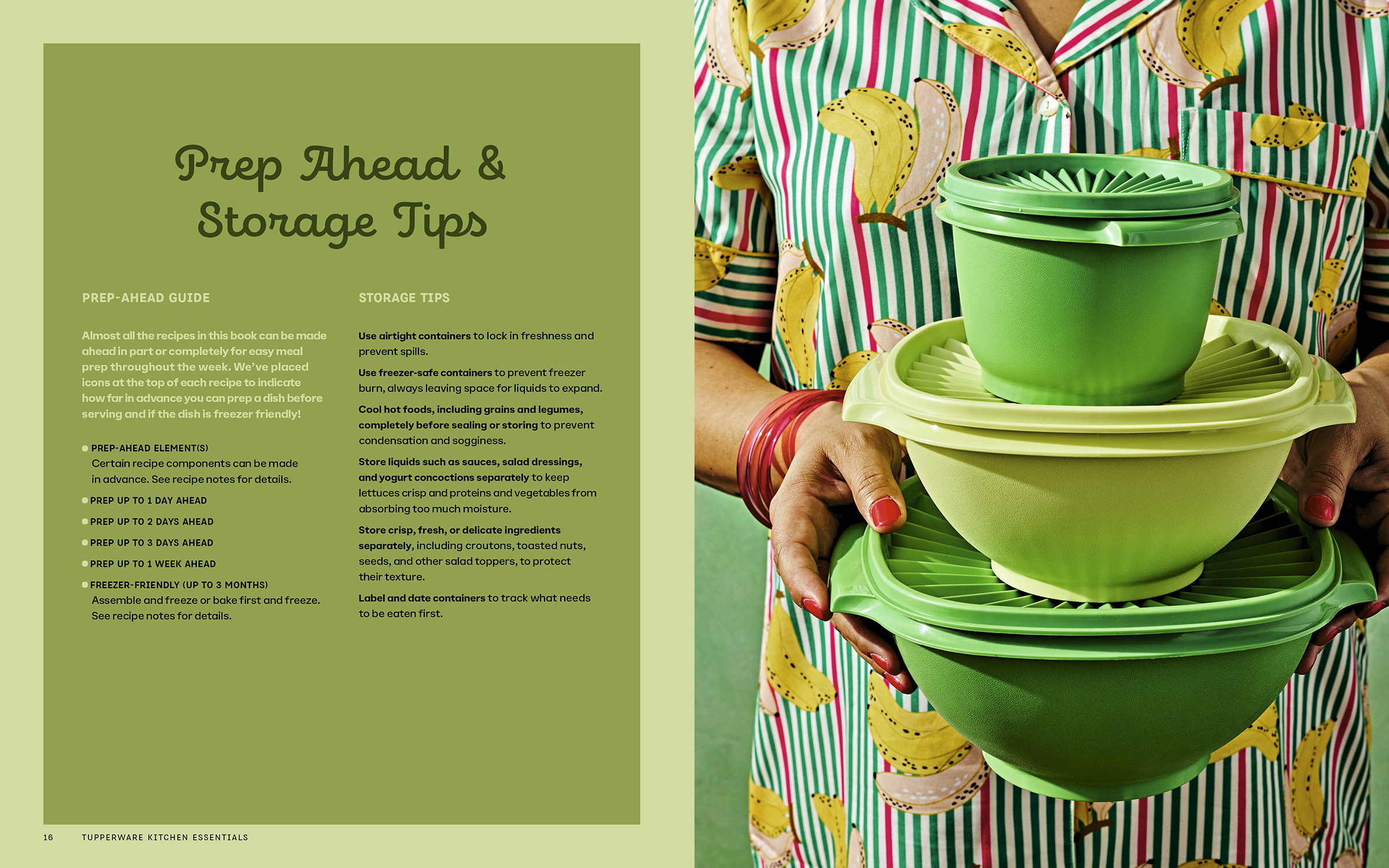
For many today, the words Tupperware party invoke visions of retro gatherings where women—mostly homemakers—would meet to chat, snack, and take a look at the latest Tupperware product release. Who could forget their parents’ beloved avocado-green Tupperware bowl with the sunburst lid? Or the family Cake Taker, which frequently transported decadent desserts to parties and school bake sales? And, of course, there was the ever-present CHIP’N DIP set.
These parties were a chance to trade kitchen secrets over cookies and punch and to bond with friends and neighbors, but there was also something more powerful at work: These gatherings offered ways for our mothers and grandmothers to contribute to their families with extra income. And for women in the years after World War II, the ability to tap into their entrepreneurial spirit was particularly powerful. Throughout the 1960s and ’70s, women across the world—many with limited access to means of earning income—used this model to build businesses of their own.
And it’s that path that leads us to the present. For generations, the Tupperware brand has been more than just a collection of products. It has been a symbol of quality, innovation, connection, and opportunity—an enduring cultural icon that has shaped how families conserve food, how communities gather, and how women create their own opportunities. Today, we’re finding new ways to bring Tupperware products into the modern kitchen—saving money and time, and creating a library of healthy, make-ahead, lowwaste recipes to cook and eat with your family, friends, or just on your own.
The recipes in this book take inspiration in part from the early days of Tupperware parties—from the smart prep, ingenious food hacks, and clever kitchen know-how passed down through generations, with an emphasis on spending less time in the kitchen and bringing joy by sharing and gathering (and more time around a CHIP’N DIP set!). The recipes also look to the future: for harried parents, busy career men and women, vibrant party throwers, eco-conscious and veg-forward alike. Because in the end, great meals are more than just about what’s on the plate. They’re about the experiences, traditions, and memories they create.
Welcome to the Tupperware kitchen!
Copyright © 2026 by Tupperware with Theresa Gambacorta. All rights reserved. No part of this excerpt may be reproduced or reprinted without permission in writing from the publisher.