IntroductionMy family was quite poor until I was about seven years old, but I remember this time only as magical. I didn’t realize that my parents struggled to make ends meet and that the main reason my dad went spearfishing for food was to save money. Nor did I realize that the lessons and values my mom taught me—of respecting nature and using every morsel without waste—was led by her need to be financially resourceful. All I knew is that I was happy living in our rented shack of rotting wood in the rainy and rural town of Haiku, Maui. And that I loved following Dad around in the deep blue sea and watching in awe as he’d hold his breath, disappear into the depths below, and return to the surface with my favorite dinners in hand. Fried fish, sashimi, lobsters, Kona crab—these are the meals that still make me smile when I think back to those times.
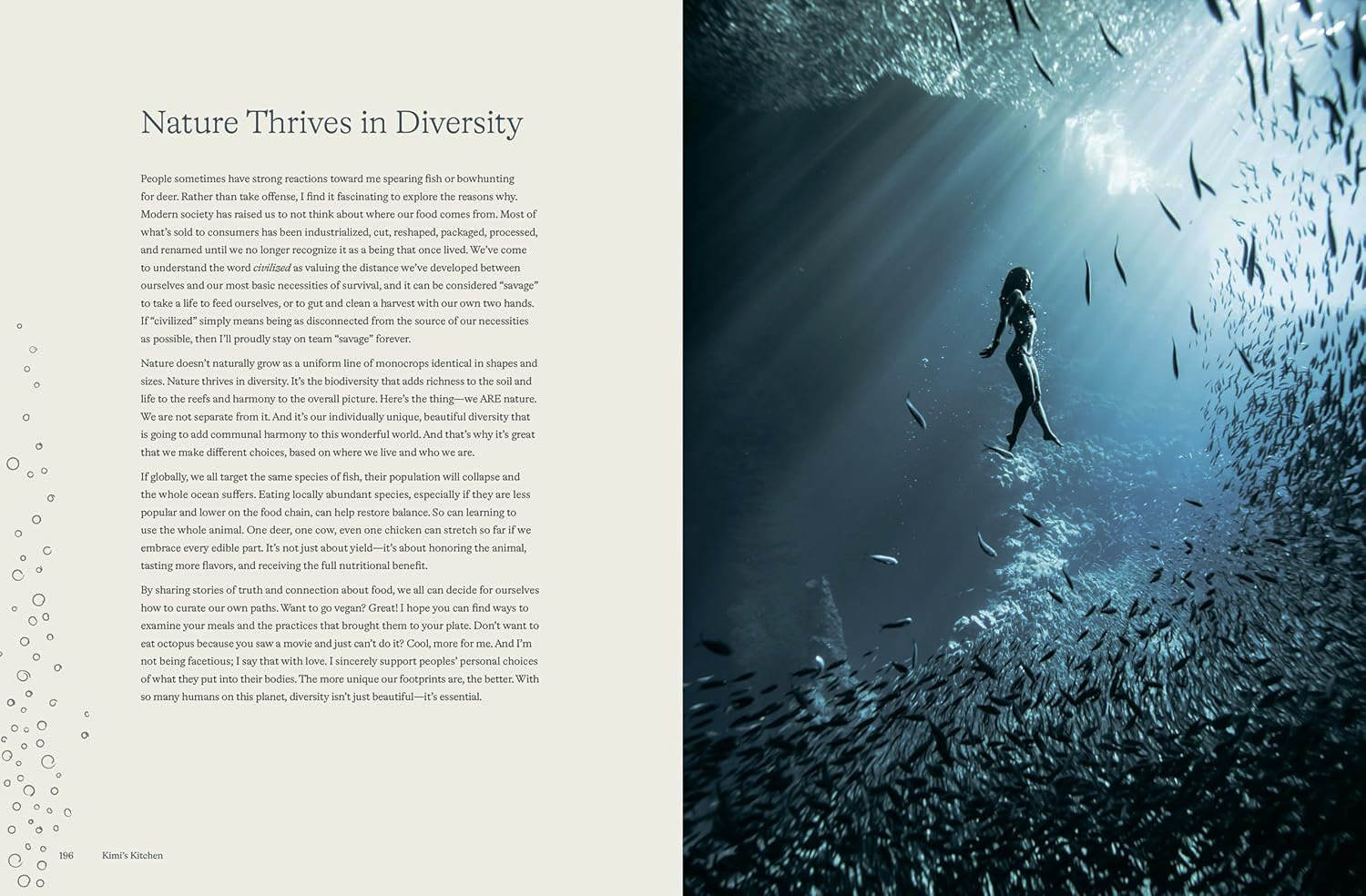
I was his cheerleader, always clapping for him at the surface, giddy with delight over his catches. I never actually caught anything myself—I was too young. But I was a devoted tagalong and enjoyed every second in the ocean with him, sometimes so much that I would get distracted by the magic of it all, only to look up and realize that I had no idea where my dad was. The fear was jolting. The ocean immediately seemed bigger and darker, and I suddenly felt so small. But as long as I could look at the very edge of my visibility, I could find the bubbles left by Dad’s fins. They would calm me down and assure me that he was near; like finding a trusty street sign while lost, they’d read, “Swim that way!”
My sister and I played in the river behind our house, where we caught crawdads to eat and picked fruit to bring home. We spent many afternoons helping my parents process the fresh fish my dad caught or the animals that my parents raised to feed us.
When I turned seven, things changed dramatically. My parents started making money. They saved up enough to enroll Mom at Maui Community College to get her nursing degree, and my dad’s construction business took off. And just like that, our family was thrust into a more civilized way of living. We moved to a subdivision with paved roads and other houses all around us; our days of living in the boonies came to an abrupt end.
Although I grew up in a civilized, “normal” way from there on out, those ocean memories never stopped speaking to me. And neither did my love for food. After high school, I moved to O‘ahu to pursue a degree in culinary arts. I got a job at an Americanized Mexican restaurant as a line cook, but I hated it. I had no connection to the ingredients or meals I was preparing. I found no creative joy in pumping out the same dishes every night using ingredients all imported from afar. Weighing me down the most was the feeling that I had arrived and no longer had a path unfolding in front of me. I got the degree, got the job, and was starting to fear that this would be it for the rest of my life.
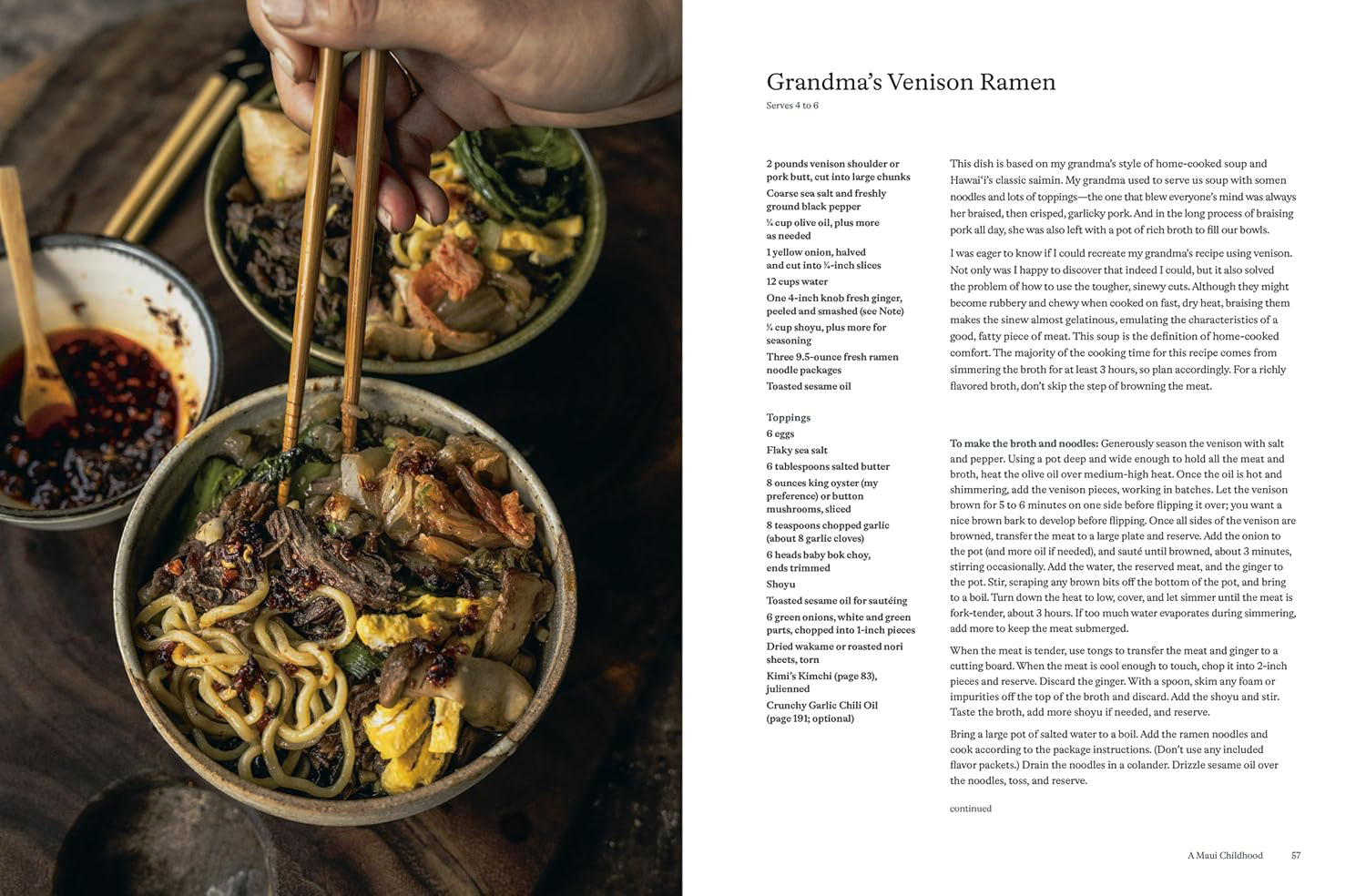
It started to become apparent that those memories of foraging meals from the ocean were the most treasured moments of my entire upbringing. At the time, I thought that lifestyle was a way of the past that no longer existed in this modern world. That is, until one day after competing in a paddling regatta, I watched as a few guys in my canoe club gathered around a small barbecue. The fish they placed over the fire were ones that I recognized from my youth. Kole, menpachi, and goatfish. When I asked where they got these fish, they simply said, “We went diving.” Seeing this memory come to life in this present-day world felt like gold to me. I begged those guys to take me along and told them that I loved to dive. But the more I talked, the more I must’ve sounded like a liability—claiming to love spearfishing while explaining that my experience consisted of tagging along with my dad when I was five years old. Needless to say, they didn’t call.
But the spark had been ignited, and my yearning for relearning freediving grew so strong that I finally decided I’d just go on my own. At the age of twenty-four, I drove out to the North Shore with a newly purchased three-prong spear and fins. When I got out of the car and started walking to the beach, I felt disabled with intimidation and anxiety. I felt like everyone was looking at me—this girl with a spear—and that everyone knew I had no idea what I was doing. I tried to hide my spear as I walked past beachgoers and slipped into the water.
The ocean was choppy, making the water hazy, and the more I tried to push my anxiety away, the more frantic I felt. I was scared and uncomfortable and felt like this whole thing was a stupid idea. But right when I was going to finally obey my demanding urge to turn around and return to shore, a small wind swell in the distance broke on the surface.
And when it did, I saw bubbles.
My body was triggered into a state of calm. The same comfort of relief swept over me just as it had when I was four years old, when Dad’s bubbles said, “Swim this way!” My muscle memory took over and I leaned into it. Eventually, I ended up swimming over a small reef in about twenty-five feet of water. I held my breath and kicked down. The reef was loaded with those same fish of my childhood. Over and over again, I let my spear fly at them. I missed a lot. It was hard. They were fast little suckers, but the hunt was on! Hours flew by in the ocean and by the end of the day, I returned to shore with five fish on my stringer.
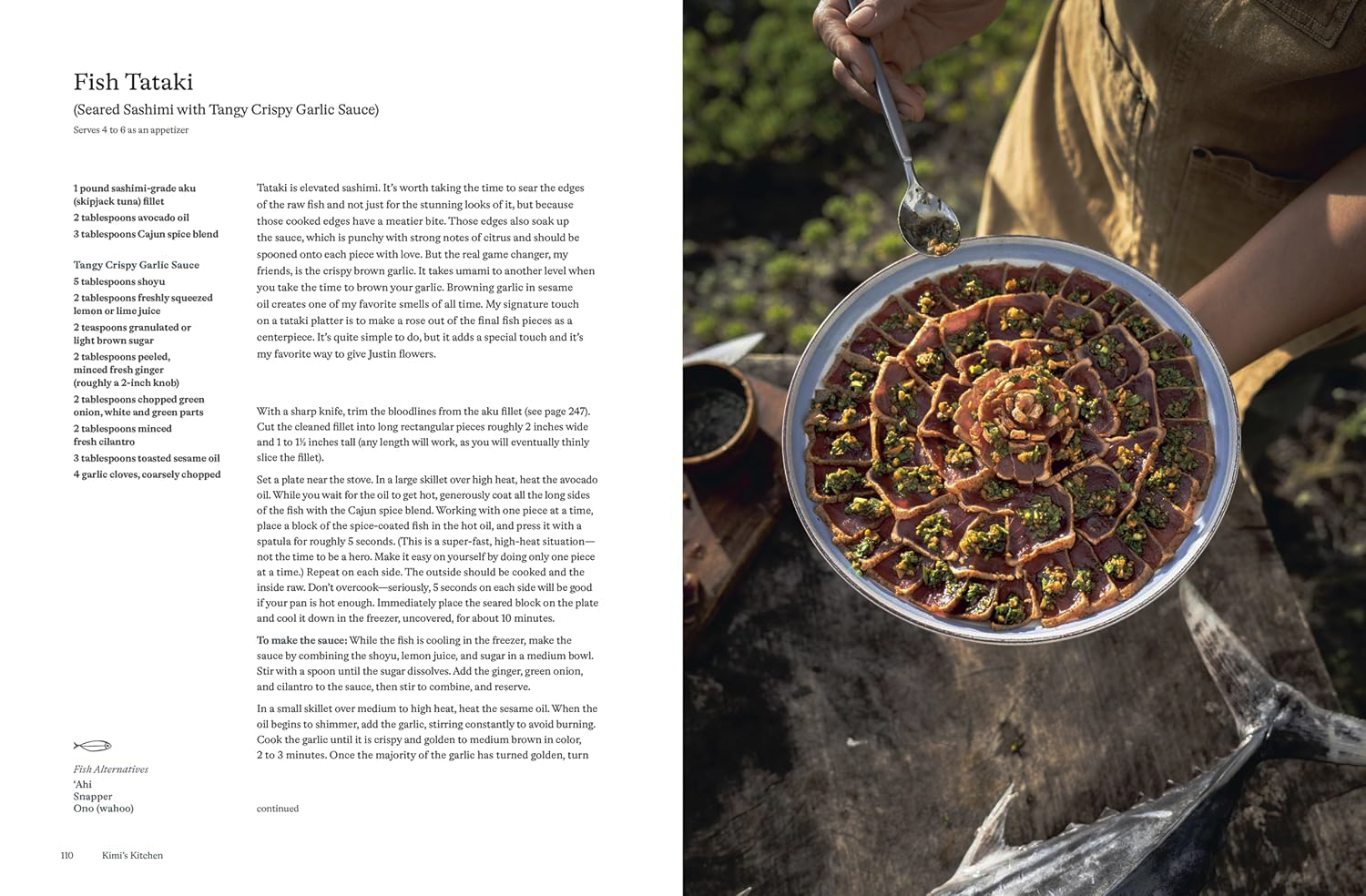
The woman who got out of the water that day was not the same woman who had entered it. I held my spear straight with my head high as I walked on the beach back to my car. I kept staring at my catch and felt the most primal sense of satisfaction I had ever felt. I was a lioness, returning from my hunt with food to bring home. And that night, when I simply cleaned, scored, and seasoned these fish with salt and pepper, then fried them, I felt like I had made the most delicious meal of my culinary career.
This day changed my life. It felt like falling in love. Nothing else in life really seemed to matter—I just wanted more of this happiness. I dreamed about fish in my sleep. I saw them every time I closed my eyes.
Eventually, the same canoe paddling boys who once avoided my persistence started calling when I started showing up at barbecues with my own catch to contribute. Soon, I got the dive partners of my dreams when I was introduced to Kalei Fernandez, Wayde Hayashi, and Andy Tamasese.
These guys were the best divers in Hawai‘i, and once they took me under their wings, my diving went to the next level. I had no idea I could dive a hundred feet and deeper until they taught me how. The possibilities became endless, and within a few years, I found myself the United States Spearfishing National Champion.
This got me recognition among the spearfishing community, and soon I was getting offers to travel for my diving. I kept competing until I realized it was taking away from the joy I felt in the ocean. Winning became all I thought about. I’d swim out to get food but think only about how many points each fish would be worth. I didn’t like what it was doing to me. My roots were all about the ocean giving me food, not trophies, and I found a deeper sense of self and passion when I was cooking for my friends and family and tinkering with recipes—frying, grilling, and seasoning the hard-won sustenance—than when I was just winning. So I stepped away from competing and, to my surprise, that didn’t hinder any of the opportunities.
My freediving has taken me to depths below 150 feet and to every continent. I’ve been able to spear dogtooth tuna in Africa, cod in the Arctic Circle, giant yellowtail in Chile, and so many other delicious fish of the world. I’ve swum with orcas in Norway, great white sharks in Mexico, sperm whales in the Caribbean, and leopard seals in the icy waters of Antarctica. It’s given me a community of ocean-loving friends across the world, partnerships with a spectrum of great brands, and the ability to do what I love for a living. But it’s never felt as full circle as it does right now, living in a simple home near the ocean with a humble but prosperous garden and going to the sea with my husband and my three-prong spear to fetch food for our son, Buddy.
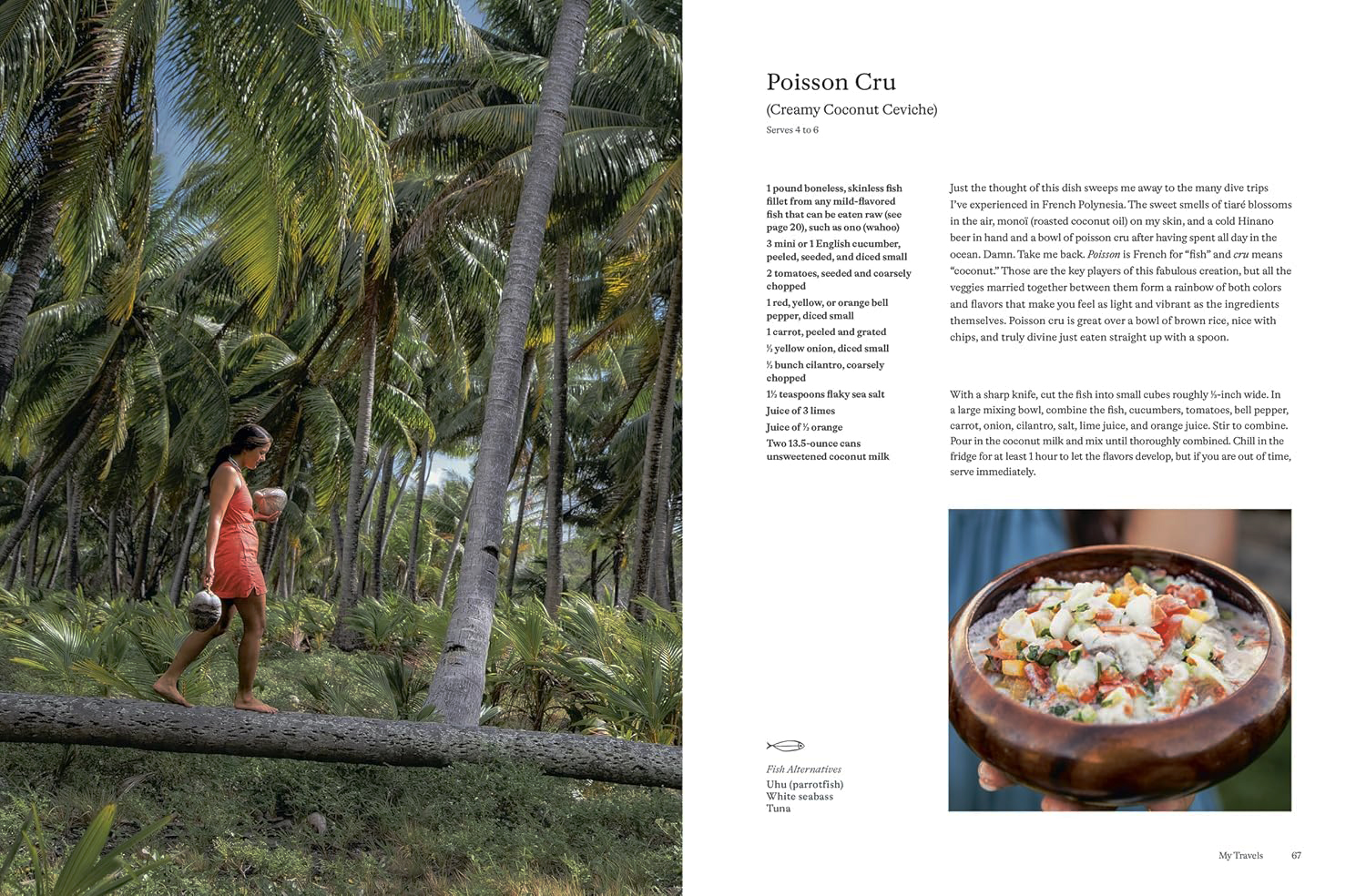
From the roots of where I came from to the winds of where I’ve been, there’s so much of the life and lessons I’ve learned woven into the recipes in this book. Knowing where to find food and how to cook it is a combination that will give you far more than just survival. It can give you community and an inner sense of belonging no matter where you go. As you flip through these pages and learn of my journey, I hope that maybe it evokes a curiosity in you. I hope that maybe you look at the edible plants growing in your own backyard, or learn about the fish that surround your own coastlines, or explore any invasive species in your ecosystem that might just happen to be tasty. Or maybe you just get to know your neighbors and their fruit trees, your local butcher or artisan fisherman, or check out your farmers’ market more often. I hope that this book inspires you to look a little closer at your own local ecosystem and community and connect with them through cooking and eating. Perhaps by making our home cooking just a little more wild, we can join hands and tighten the gap that often forms between us and nature.
Copyright © 2026 by Kimi Werner, Nicole Gormley, and Jennifer Fiedler. All rights reserved. No part of this excerpt may be reproduced or reprinted without permission in writing from the publisher.