Close Modal

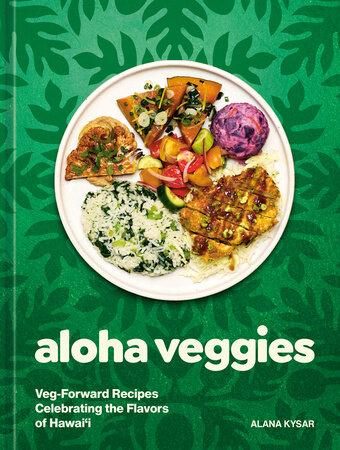
Aloha Veggies

Veg-Forward Recipes Celebrating the Flavors of Hawai'i

Look inside
additional book photo
Explore Hawai‘i’s diverse culinary heritage through 100+ flavor-packed, approachable, plant-based recipes for local Hawai‘i favorites from the bestselling author of Aloha Kitchen.

When Hawai‘i-born Alana Kysar returned home as an adult, Maui’s flourishing farmers’ markets and community crop shares inspired her to create veggie-centric spins on beloved local dishes. Hawai‘i's most iconic foods came to life with vibrant freshness and satisfying new textures. Aloha Veggies brings this evolution of local Hawai‘i food to your kitchen, offering simple, irresistible, and nutritious recipes for everyday meals. 

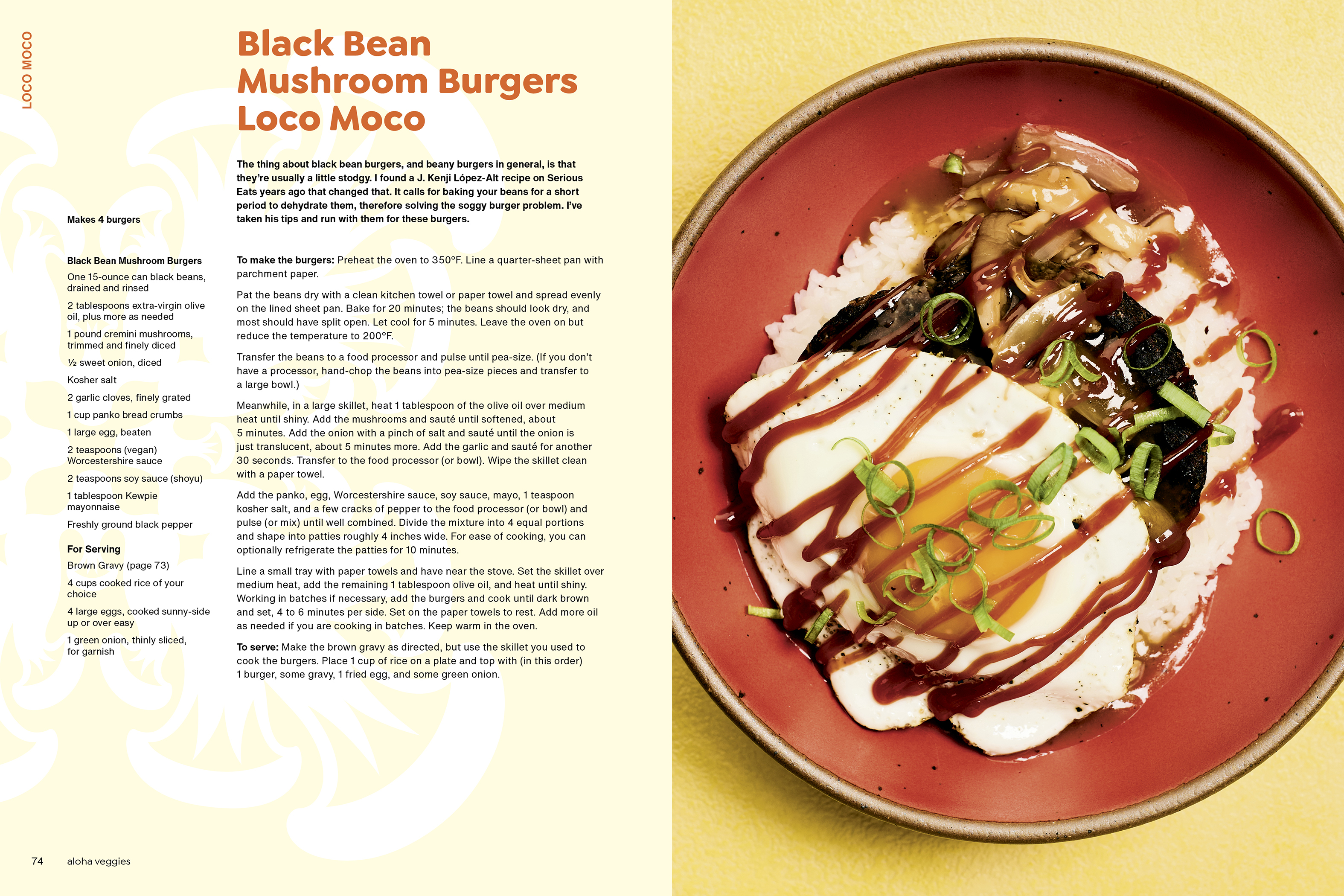
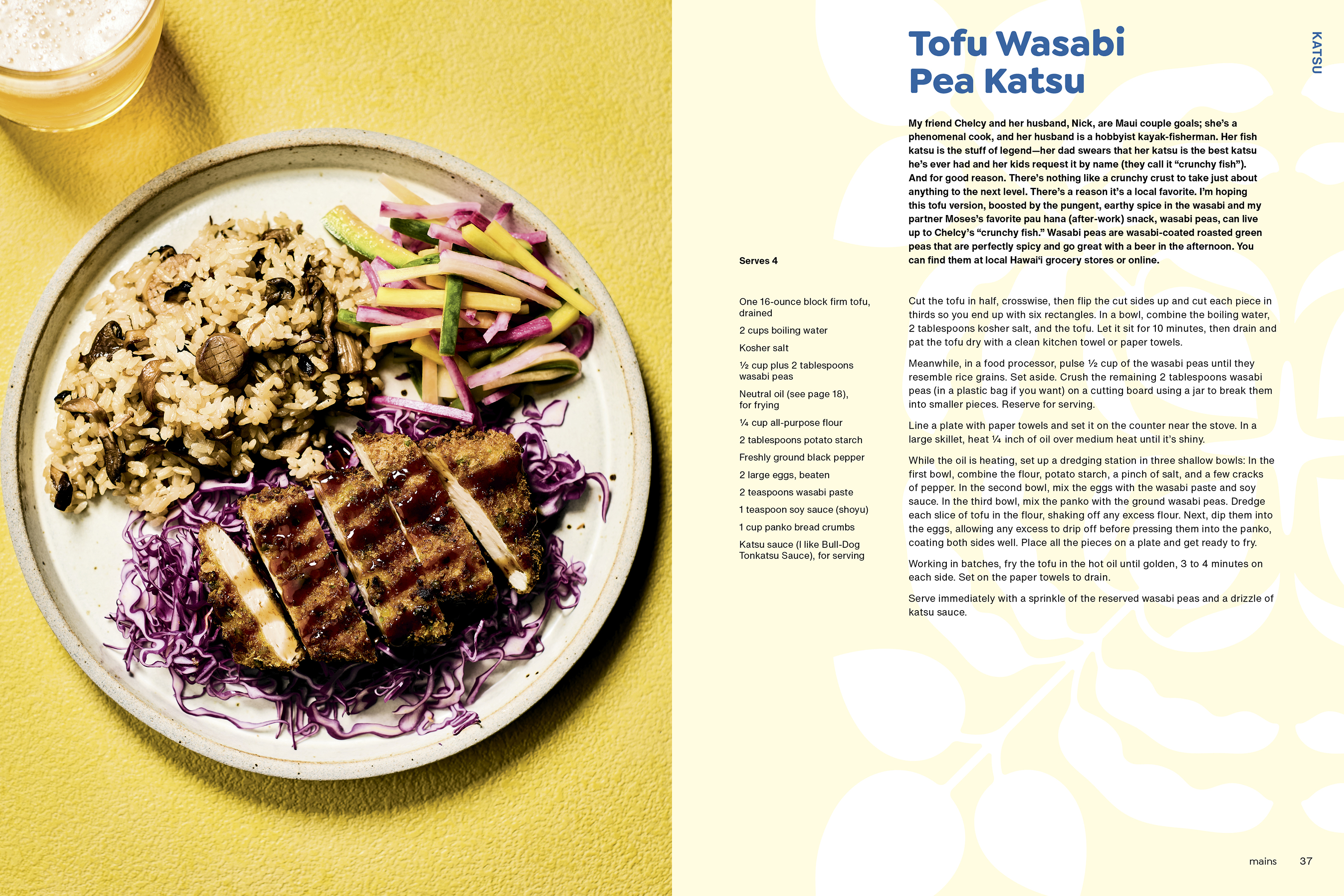
Alana’s equation for a balanced veg-forward meal is based on the local Hawai‘i plate lunch: Main + Starch + Side = Complete Meal, plus a bonus sweet, of course. The recipes in Aloha Veggies are organized by classic local flavors and dishes—from Mochiko, Loco Moco, and Adobo to Fried Rice, Poke, and Potato Mac Salad—each with four variations to try. Classic Mochiko sets you up with the batter typically used for fried chicken, tweaked to accommodate any veggies you please. For a twist, try Ginger-y or Sesame-y Mochiko variations. Pair Cabbage Adobo with Butternut Squash and Black Lentils with some Mushroomy Rice and an Everyday Quickle. Next week, try Braised Miso Eggplant with Pan-Seared Crispy Rice and Namasu Sweet Potato Salad. Since no meal is complete without a treat, Alana offers a rainbow of variations on favorite local Hawai‘i desserts from Passion Fruit Chiffon Cake to Ube Butter Mochi and more.

Alongside mouthwatering recipes, Alana profiles farms and farmers growing some of her favorite produce, encouraging a renewed connection to the land and the people who grow our food. Aloha Veggies reveals the limitless possibilities that arise when you center vegetables on your plate, inspiring a new generation of home cooks in Hawai‘i and beyond.
“Hawaiian cuisine is such an interesting and delicious confluence of global influences, and while Spam and mochiko chicken get lots of attention, Kysar proves that cooking only vegetables doesn’t mean having to give up those compelling Hawaiian flavors.”—Eater

“I was elated when I learned that she is publishing another book, Aloha Veggies, in April. It’s full of vegetable-forward dishes, honoring the flavors of Hawai’i.”—Bon Appetit

“Alana’s cooking celebrates the beauty of generosity and place—a connection to Hawai‘i that feels both intimate and expansive. Aloha Veggies is a love letter to the islands, to vegetables, to the art of the vegetable-forward plate lunch, and so much more. It’s a soulful reminder that food can hold memory, history, and joy all at once.”—Joshua McFadden, James Beard Award–winning cookbook author and food writer

“Alana Kysar does it again and has brought the generous and warm spirit of aloha into our kitchens with recipes that celebrate the beauty of vegetables! Between the pages of mouthwatering Huli Huli Tofu with Watercress and vibrant Guava Chiffon Roll, Alana gives us a colorful peek into life on the islands, where connection to nature and understanding how our food gets to our table offer a delicious life.”—Kristina Cho, James Beard Award–winning author of Mooncakes and Milk Bread and Chinese Enough

Aloha Veggies is one of my most anticipated 2026 releases, and Alana has done it again! This book has the same charisma, creativity, and whimsy as its predecessor, Aloha Kitchen! This book is not just another vegetable book—it’s a celebration of vegetables through the lens of local Hawaiian cooking, which is as exciting as it sounds. It’s an invitation to discover vegetables in a new, vibrant way. This is for sure to be a new lexicon of plant-based cooking!”—Betty Liu, James Beard Award–nominated cookbook author of The Chinese Way and My Shanghai

“Alana Kysar’s book breaks new ground for Hawai‘i-style cooking. While most food of the islands is meat-centric, Aloha Veggies brings a much-needed reinterpretation of the vibrant and culturally-rich foods of Hawai‘i to those who love vegetables. This is the perfect companion to Alana’s first book, Aloha Kitchen, one of my favorite cookbooks of all time. Vegetable lovers rejoice!”—Hetty Lui McKinnon, James Beard Award–winning cookbook author and food writer

“Alana Kysar’s Aloha Veggies fills all my criteria for a book I want to cook my way through. She cleverly organizes the recipes using local favorites as anchors. Each recipe tells a story and has a reference point. Each recipe is complex in flavor yet simple to execute. Mahalo, Alana, for showcasing Hawai‘i’s bounty. Indeed, it’s ‘lucky we live Hawai‘i’ for all the delicious, fresh, and nutritious produce our islands provide.”—Robynne Maii, executive chef and owner of Fête and Mille Fête

“ By honoring cherished food memories while embracing the new bounty of Hawai‘i’s farms, this book expands the possibilities of local cuisine and offers fresh inspiration for home cooks everywhere.”—Bryant Terry, James Beard Award–winning chef and author of Vegetable Kingdom and Afro-Vegan
© Asia Brynne
Alana Kysar is a Hawai‘i-born cookbook author, recipe developer, and photographer whose work celebrates the islands’ multicultural culinary heritage. Her debut cookbook Aloha Kitchen was an IACP Award finalist and named one of the best cookbooks of 2019 by NPR, The New York Times, and Library Journal. After launching her acclaimed blog Fix Feast Flair in 2015 and winning Saveur's Best New Voice award, Alana spent over a decade in California before returning home to Hawai‘i. She lives in Kula, Maui, with her husband and miniature dachshunds, working from her home studio to share Hawai‘i's cultural stories through food. View titles by Alana Kysar
Aloha, Veggies

Aloha means so much: It’s love, hello, goodbye. It’s a feeling and a way of life. But in this instance, let’s say, “Aloha, Veggies,” as in, “Hello, Veggies!”

Returning home to Maui at the beginning of 2022 meant rediscovering a lot about the island where I grew up—and of course, the revelations began in the kitchen. The island I grew up on was both familiar and new to me. While I spent my first eighteen years on Maui, I had not lived here in my adulthood, so in many ways my homecoming was not only about refamiliarizing myself with the island, but in part exploring a new, somewhat different home. I was pleasantly surprised to discover a renewed agricultural scene on the island and in Hawaiʻi at large, ostensibly in response to the rising need to source food locally rather than rely on unstable imports. This has always been the case in Hawai‘i, but the global pandemic made this more apparent and urgent.

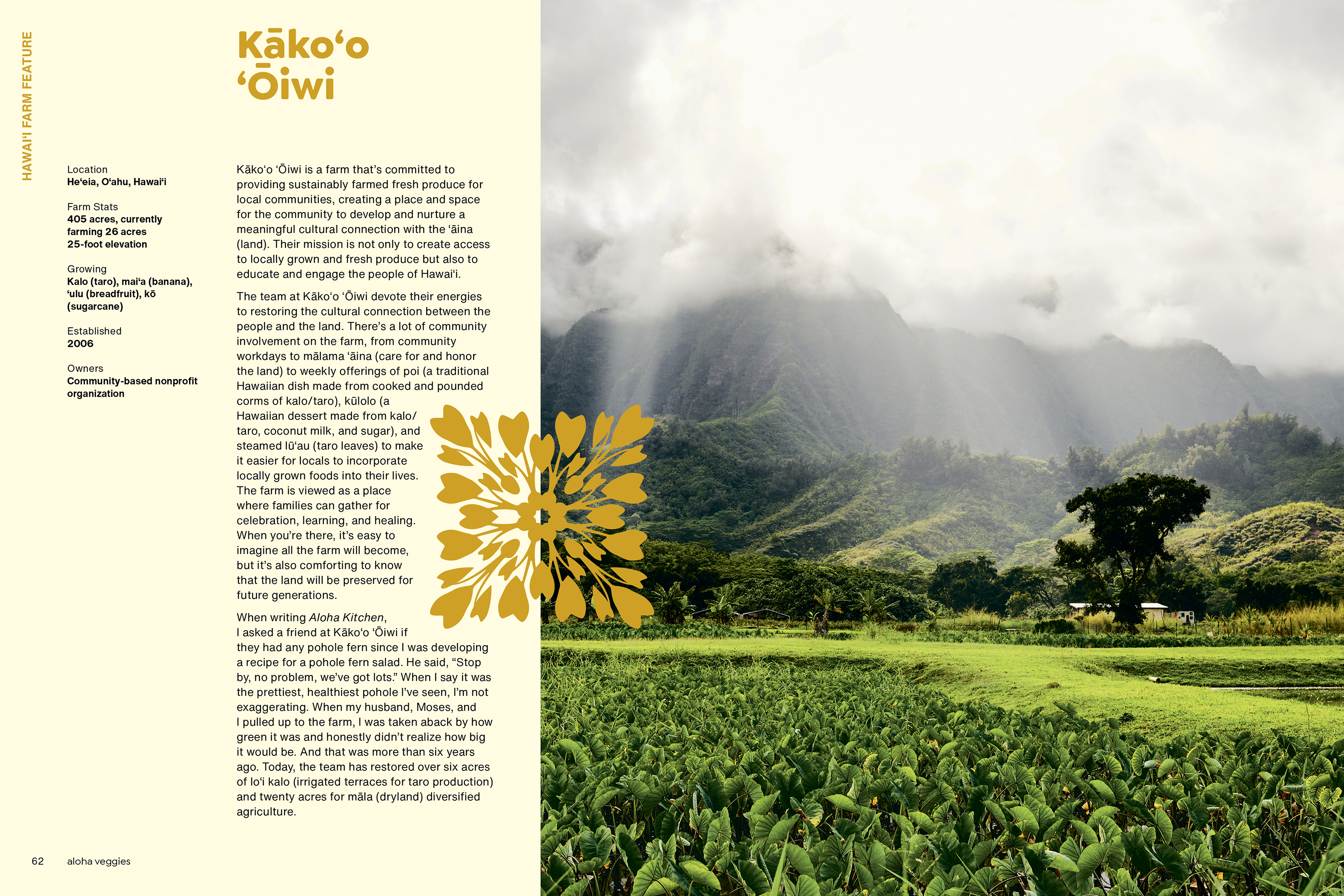
I was born and raised in Hawai‘i and grew up in Kula, a small city on the slopes of Haleakalā, Maui’s largest volcano, and have returned to the same neighborhood that was the backdrop for all my childhood memories. However, even the drive home looks different. Haleakalā Highway, the long road up the mountain once seemingly paved between the sugarcane, is now lined with rows of citrus trees, coffee plants, and other new crops. HC&S, Hawaiʻi’s last sugarcane producer, ended sugar production and operations on Maui in 2016, freeing up over 36,000 acres of agricultural land for local food production. Today, there are swaths of new crops being farmed on what was once sugarcane land. As an adult, I look at Maui through a new lens and pay attention to different things. Where I was once concerned with the fastest route to Big Beach in Makena, I am now slowing down to take in the sights, soaking in how the drive looks and feels. Nowadays, I find myself taking the long way, stopping to admire the majestic beauty of the land. Maui is home to over eight hundred farms primarily focused on produce, growing everything from breadfruit (‘ulu) and taro (kalo) to parsnips and citrus. And I’m pretty sure my twelve-year-old self was not invested in what was being grown on the island, but now I’m always looking around to see what’s growing and where.

The USDA’s 2022 Census of Agriculture reported 6,569 crop and livestock farms statewide here in Hawai‘i. I expect (and hope for) that number to skyrocket in the coming years. Following the devastating fires on Maui in 2023, I’ve seen an increased push for local food production through community interest in locally sourced food, an uptick in grants to increase local food production, and businesses looking for ways to support local farms to promote growth. In 2024, the popular plate lunch chain L&L Hawaiian Barbecue partnered with Hawai‘i ‘Ulu Cooperative to offer Hawai‘i-grown taro and sweet potato (‘uala) as a healthier, locally sourced alternative to rice or mac salad at their Hawai‘i locations.

The idea of contributing a new lexicon of vegetable deliciousness to the local food culture in a significant way and providing valuable tools to our community is something that really speaks to me. Shortly after we moved home, my husband and I had an incredible meal at Lineage, a restaurant in Wailea, Maui, centered around cooking with local ingredients and many veg-forward dishes. I thought to myself, We need more of this here. They had a dish called Bird’s Nest that featured oyster mushrooms (from a farm in Olinda called Lapa‘au Farm), bok choy, eggplant, and other seasonal veggies served atop a bed of crispy fried taro with a gravy that was familiar (think cake noodle) but different that I still think about. On O‘ahu, Chef Ed Kenney has been doing amazing things with local produce for decades, first at Town and now at Mud Hen Water. Moon and Turtle in Hilo on Hawai‘i Island had an incredible dish they called Drunken Mushrooms, which featured Hāmākua ali‘i mushrooms (also known as king trumpets) and charred cabbage; I still salivate just thinking about it. Looking around, I started to see that the community in general, not just the restaurant industry, was starting to champion locally grown produce. A farm from my favorite Maui farmers’ market, Upcountry Farmers Market, opened up a beautiful brick and mortar selling not just their produce but produce from farmers all over the island and value-added goods made with locally sourced produce like breadfruit hummus.

After living in California for almost a decade, I was reminded of the meat-centric nature of local island cuisine upon my return. Although I’m an enthusiastic omnivore, I found myself craving the abundance of vegetables found on menus and in home kitchens that feature Californian and other cuisines in Los Angeles and San Francisco. Seeing the exciting way a few local restaurants were bringing vegetables to the forefront, I began to dream about using the flavors and techniques I grew up loving in local Hawai‘i food to create a cornucopia of vegetable-forward meals. The more I explored this idea, the more I realized that local Hawai‘i cuisine’s familiar tastes, methods, and textures are ideally suited for vegetable- and plant-based cooking. Enter: Aloha Veggies.

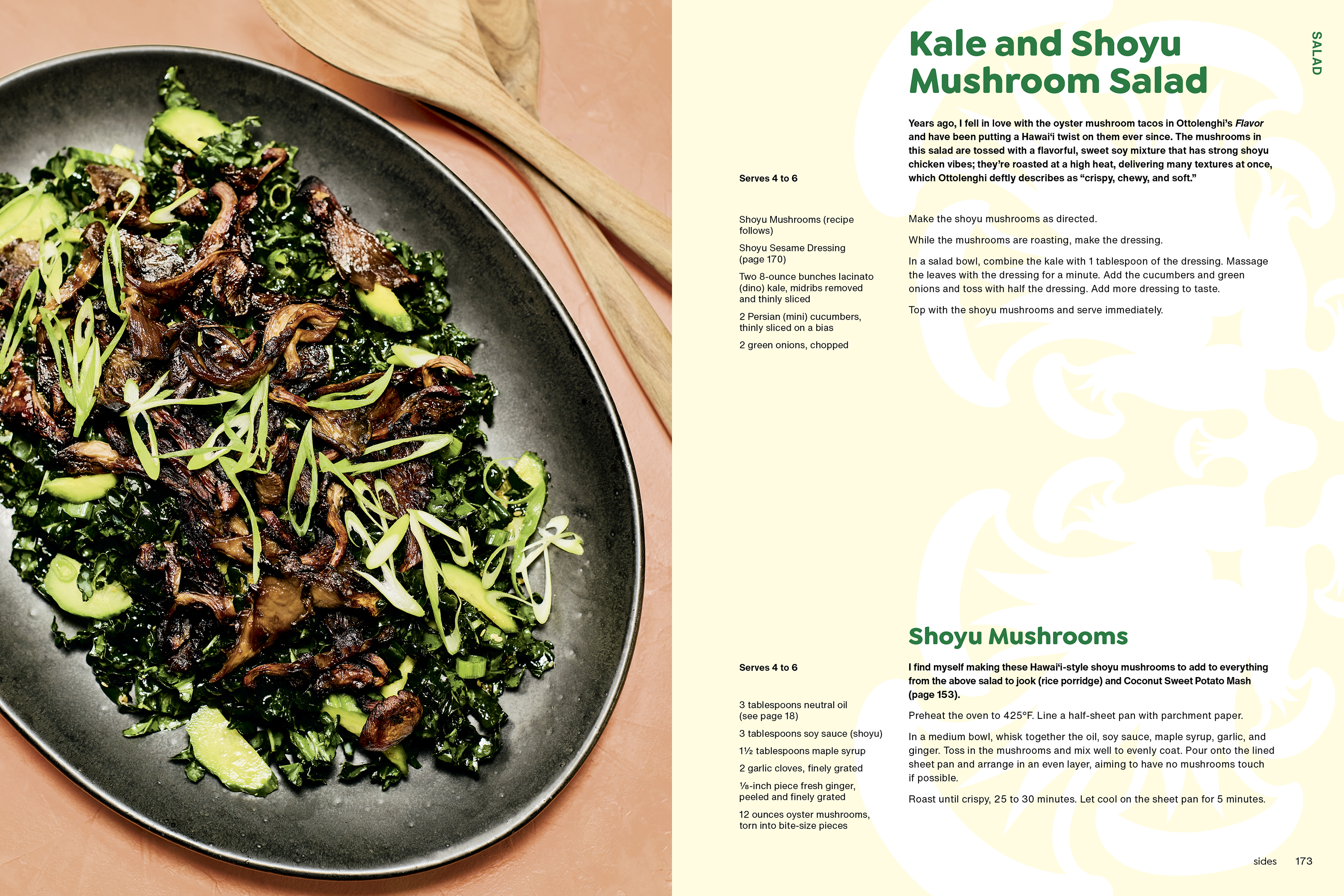
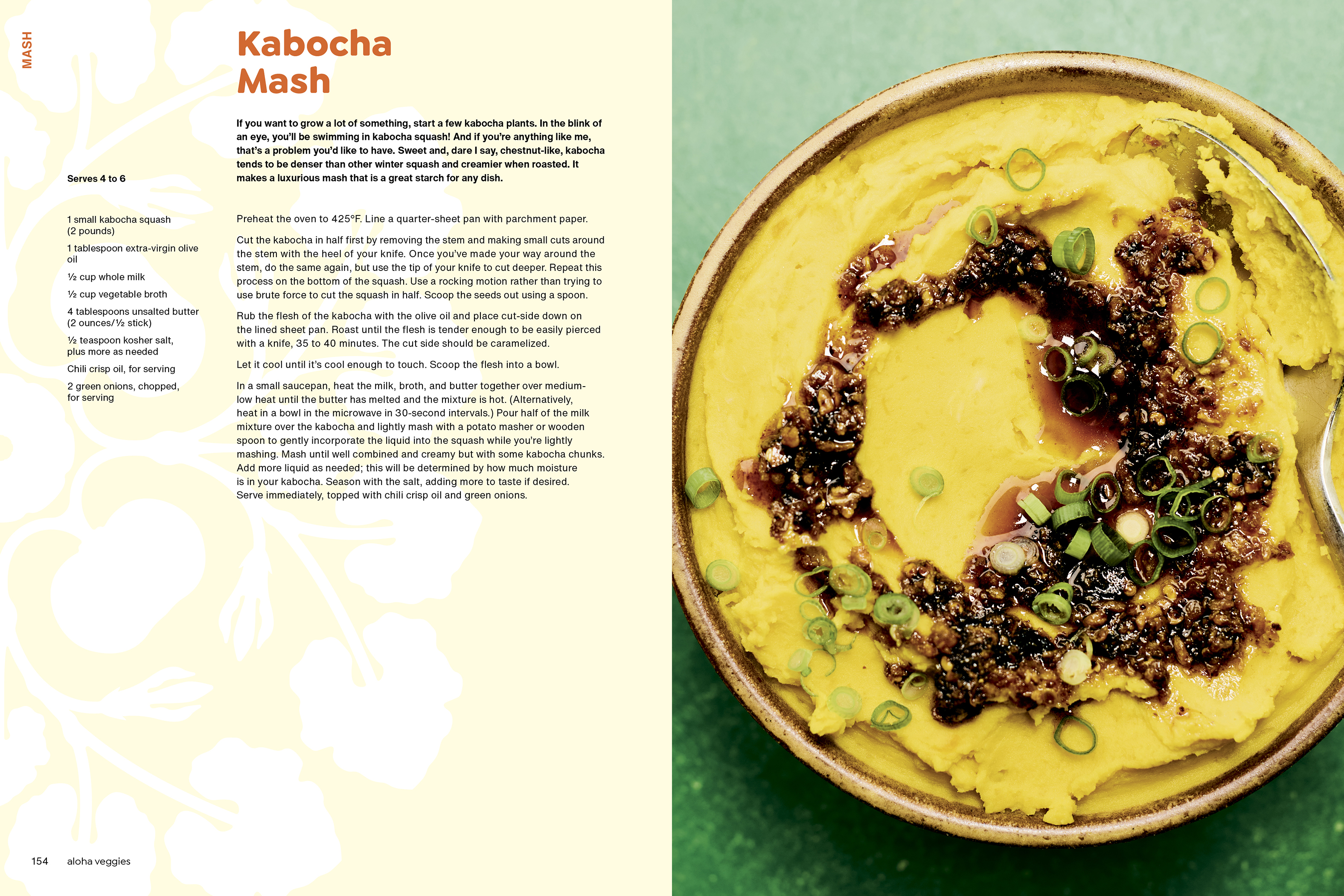
Two of the most frequent complaints I hear from home cooks—no matter where they live—are, “I don’t know how to cook vegetables’’ and “How do you make vegetables taste good?” In the context of local Hawai‘i food, a majority of the dishes that we cherish revolve around a protein, such as pork or chicken, but this does not mean that the flavors and cooking methods cannot be modified for vegetables and similar ingredients. Vegetables are so diverse—much more than meat, in textures, tastes, and so on—that making them taste good is easy. When you pick the right vegetable for the dish, you will be amazed by what you can create. For example, if you want something that’s both meaty and chewy, try oyster or king trumpet mushrooms. If you want something creamy and sweet when roasted, look no further than a Honeynut or kabocha squash.

Historically, vegetables have not been the center of the plate in Hawai‘i, but a lot of that is because of accessibility. Nowadays, we have access to a wider variety of produce that was previously harder to come by. As we move forward as a community, we’ll likely reevaluate our new normal, with an increased need and desire to incorporate more locally sourced ingredients. I have a small backyard garden on the slopes of Haleakalā, where I grow a diverse range of produce, including five types of squash, plenty of herbs, different varieties of tomatoes, bush beans, and eggplants. My friends are growing mushrooms nearby, thousands of people share backyard gardening tips in local Facebook groups that do monthly produce swaps, and grocery stores are newly committed to purchasing and highlighting locally grown food. Our local farmers’ markets are a sight to behold: all the colors of the rainbow with a wide range of produce that would rival the very best farmers’ markets of California. I believe it’s time for us to embrace vegetable-focused cooking in Hawaiʻi and worldwide.

The purpose of this book is not to advocate for vegetarianism or claim that cooking with vegetables is inherently healthier. I aim to use familiar flavors in new and exciting ways, explore techniques rooted in local Hawaiʻi cooking, and incorporate fresh ingredients. Hawaiʻi’s local food culture was built by and primarily influenced by the three major diasporas that ended up in Hawaiʻi, so it encompasses Hawaiian dishes like poi, made from baked and pounded taro, as well as hearty braised meats, stews, and stir-fries from Chinese, Japanese, Portuguese, Korean, and Filipino settlers. I firmly believe that vegetables can take center stage in a meal, and my goal is to showcase how to build satisfying and complete meals around them, making a positive change in our diets, not only for our bodies but also for our communities and the planet.

Before starting this project, my husband and I ate meat four or five days a week for at least one meal, sometimes two. Since I wrote the book, our diets have changed dramatically. This isn’t to say we aren’t eating a steak or some kālua pig now and then, because we are. However, for the most part, we now eat pretty veg-forward. And here’s what I want to say about this. I’ve struggled with veg-forward eating, mostly because I never felt full. So when I was developing these recipes, that was very important to me. Whenever friends came over for recipe test meals, at the end of every meal, I asked, “Are you full?” I have struggled for years to find a good balance when crafting veg-forward meals. I created the basic formula of this book with that in mind. And to answer my question, yes, now we are always full after our veggie-filled meals!

Photos

additional book photo

About

Explore Hawai‘i’s diverse culinary heritage through 100+ flavor-packed, approachable, plant-based recipes for local Hawai‘i favorites from the bestselling author of Aloha Kitchen.

When Hawai‘i-born Alana Kysar returned home as an adult, Maui’s flourishing farmers’ markets and community crop shares inspired her to create veggie-centric spins on beloved local dishes. Hawai‘i's most iconic foods came to life with vibrant freshness and satisfying new textures. Aloha Veggies brings this evolution of local Hawai‘i food to your kitchen, offering simple, irresistible, and nutritious recipes for everyday meals. 

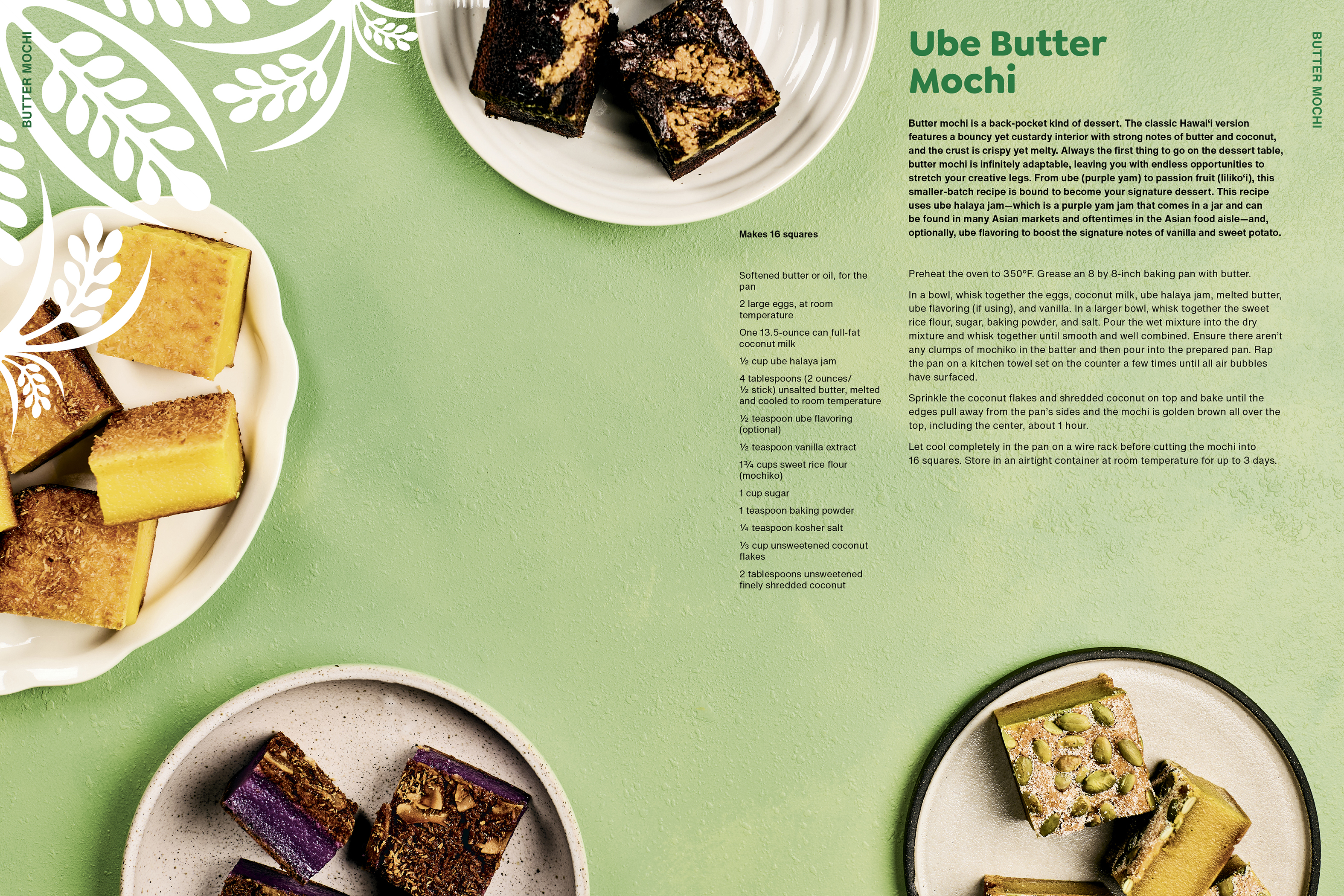
Alana’s equation for a balanced veg-forward meal is based on the local Hawai‘i plate lunch: Main + Starch + Side = Complete Meal, plus a bonus sweet, of course. The recipes in Aloha Veggies are organized by classic local flavors and dishes—from Mochiko, Loco Moco, and Adobo to Fried Rice, Poke, and Potato Mac Salad—each with four variations to try. Classic Mochiko sets you up with the batter typically used for fried chicken, tweaked to accommodate any veggies you please. For a twist, try Ginger-y or Sesame-y Mochiko variations. Pair Cabbage Adobo with Butternut Squash and Black Lentils with some Mushroomy Rice and an Everyday Quickle. Next week, try Braised Miso Eggplant with Pan-Seared Crispy Rice and Namasu Sweet Potato Salad. Since no meal is complete without a treat, Alana offers a rainbow of variations on favorite local Hawai‘i desserts from Passion Fruit Chiffon Cake to Ube Butter Mochi and more.

Alongside mouthwatering recipes, Alana profiles farms and farmers growing some of her favorite produce, encouraging a renewed connection to the land and the people who grow our food. Aloha Veggies reveals the limitless possibilities that arise when you center vegetables on your plate, inspiring a new generation of home cooks in Hawai‘i and beyond.

Praise

“Hawaiian cuisine is such an interesting and delicious confluence of global influences, and while Spam and mochiko chicken get lots of attention, Kysar proves that cooking only vegetables doesn’t mean having to give up those compelling Hawaiian flavors.”—Eater

“I was elated when I learned that she is publishing another book, Aloha Veggies, in April. It’s full of vegetable-forward dishes, honoring the flavors of Hawai’i.”—Bon Appetit

“Alana’s cooking celebrates the beauty of generosity and place—a connection to Hawai‘i that feels both intimate and expansive. Aloha Veggies is a love letter to the islands, to vegetables, to the art of the vegetable-forward plate lunch, and so much more. It’s a soulful reminder that food can hold memory, history, and joy all at once.”—Joshua McFadden, James Beard Award–winning cookbook author and food writer

“Alana Kysar does it again and has brought the generous and warm spirit of aloha into our kitchens with recipes that celebrate the beauty of vegetables! Between the pages of mouthwatering Huli Huli Tofu with Watercress and vibrant Guava Chiffon Roll, Alana gives us a colorful peek into life on the islands, where connection to nature and understanding how our food gets to our table offer a delicious life.”—Kristina Cho, James Beard Award–winning author of Mooncakes and Milk Bread and Chinese Enough

Aloha Veggies is one of my most anticipated 2026 releases, and Alana has done it again! This book has the same charisma, creativity, and whimsy as its predecessor, Aloha Kitchen! This book is not just another vegetable book—it’s a celebration of vegetables through the lens of local Hawaiian cooking, which is as exciting as it sounds. It’s an invitation to discover vegetables in a new, vibrant way. This is for sure to be a new lexicon of plant-based cooking!”—Betty Liu, James Beard Award–nominated cookbook author of The Chinese Way and My Shanghai

“Alana Kysar’s book breaks new ground for Hawai‘i-style cooking. While most food of the islands is meat-centric, Aloha Veggies brings a much-needed reinterpretation of the vibrant and culturally-rich foods of Hawai‘i to those who love vegetables. This is the perfect companion to Alana’s first book, Aloha Kitchen, one of my favorite cookbooks of all time. Vegetable lovers rejoice!”—Hetty Lui McKinnon, James Beard Award–winning cookbook author and food writer

“Alana Kysar’s Aloha Veggies fills all my criteria for a book I want to cook my way through. She cleverly organizes the recipes using local favorites as anchors. Each recipe tells a story and has a reference point. Each recipe is complex in flavor yet simple to execute. Mahalo, Alana, for showcasing Hawai‘i’s bounty. Indeed, it’s ‘lucky we live Hawai‘i’ for all the delicious, fresh, and nutritious produce our islands provide.”—Robynne Maii, executive chef and owner of Fête and Mille Fête

“ By honoring cherished food memories while embracing the new bounty of Hawai‘i’s farms, this book expands the possibilities of local cuisine and offers fresh inspiration for home cooks everywhere.”—Bryant Terry, James Beard Award–winning chef and author of Vegetable Kingdom and Afro-Vegan

Author

© Asia Brynne
Alana Kysar is a Hawai‘i-born cookbook author, recipe developer, and photographer whose work celebrates the islands’ multicultural culinary heritage. Her debut cookbook Aloha Kitchen was an IACP Award finalist and named one of the best cookbooks of 2019 by NPR, The New York Times, and Library Journal. After launching her acclaimed blog Fix Feast Flair in 2015 and winning Saveur's Best New Voice award, Alana spent over a decade in California before returning home to Hawai‘i. She lives in Kula, Maui, with her husband and miniature dachshunds, working from her home studio to share Hawai‘i's cultural stories through food. View titles by Alana Kysar

Excerpt

Aloha, Veggies

Aloha means so much: It’s love, hello, goodbye. It’s a feeling and a way of life. But in this instance, let’s say, “Aloha, Veggies,” as in, “Hello, Veggies!”

Returning home to Maui at the beginning of 2022 meant rediscovering a lot about the island where I grew up—and of course, the revelations began in the kitchen. The island I grew up on was both familiar and new to me. While I spent my first eighteen years on Maui, I had not lived here in my adulthood, so in many ways my homecoming was not only about refamiliarizing myself with the island, but in part exploring a new, somewhat different home. I was pleasantly surprised to discover a renewed agricultural scene on the island and in Hawaiʻi at large, ostensibly in response to the rising need to source food locally rather than rely on unstable imports. This has always been the case in Hawai‘i, but the global pandemic made this more apparent and urgent.

I was born and raised in Hawai‘i and grew up in Kula, a small city on the slopes of Haleakalā, Maui’s largest volcano, and have returned to the same neighborhood that was the backdrop for all my childhood memories. However, even the drive home looks different. Haleakalā Highway, the long road up the mountain once seemingly paved between the sugarcane, is now lined with rows of citrus trees, coffee plants, and other new crops. HC&S, Hawaiʻi’s last sugarcane producer, ended sugar production and operations on Maui in 2016, freeing up over 36,000 acres of agricultural land for local food production. Today, there are swaths of new crops being farmed on what was once sugarcane land. As an adult, I look at Maui through a new lens and pay attention to different things. Where I was once concerned with the fastest route to Big Beach in Makena, I am now slowing down to take in the sights, soaking in how the drive looks and feels. Nowadays, I find myself taking the long way, stopping to admire the majestic beauty of the land. Maui is home to over eight hundred farms primarily focused on produce, growing everything from breadfruit (‘ulu) and taro (kalo) to parsnips and citrus. And I’m pretty sure my twelve-year-old self was not invested in what was being grown on the island, but now I’m always looking around to see what’s growing and where.

The USDA’s 2022 Census of Agriculture reported 6,569 crop and livestock farms statewide here in Hawai‘i. I expect (and hope for) that number to skyrocket in the coming years. Following the devastating fires on Maui in 2023, I’ve seen an increased push for local food production through community interest in locally sourced food, an uptick in grants to increase local food production, and businesses looking for ways to support local farms to promote growth. In 2024, the popular plate lunch chain L&L Hawaiian Barbecue partnered with Hawai‘i ‘Ulu Cooperative to offer Hawai‘i-grown taro and sweet potato (‘uala) as a healthier, locally sourced alternative to rice or mac salad at their Hawai‘i locations.

The idea of contributing a new lexicon of vegetable deliciousness to the local food culture in a significant way and providing valuable tools to our community is something that really speaks to me. Shortly after we moved home, my husband and I had an incredible meal at Lineage, a restaurant in Wailea, Maui, centered around cooking with local ingredients and many veg-forward dishes. I thought to myself, We need more of this here. They had a dish called Bird’s Nest that featured oyster mushrooms (from a farm in Olinda called Lapa‘au Farm), bok choy, eggplant, and other seasonal veggies served atop a bed of crispy fried taro with a gravy that was familiar (think cake noodle) but different that I still think about. On O‘ahu, Chef Ed Kenney has been doing amazing things with local produce for decades, first at Town and now at Mud Hen Water. Moon and Turtle in Hilo on Hawai‘i Island had an incredible dish they called Drunken Mushrooms, which featured Hāmākua ali‘i mushrooms (also known as king trumpets) and charred cabbage; I still salivate just thinking about it. Looking around, I started to see that the community in general, not just the restaurant industry, was starting to champion locally grown produce. A farm from my favorite Maui farmers’ market, Upcountry Farmers Market, opened up a beautiful brick and mortar selling not just their produce but produce from farmers all over the island and value-added goods made with locally sourced produce like breadfruit hummus.

After living in California for almost a decade, I was reminded of the meat-centric nature of local island cuisine upon my return. Although I’m an enthusiastic omnivore, I found myself craving the abundance of vegetables found on menus and in home kitchens that feature Californian and other cuisines in Los Angeles and San Francisco. Seeing the exciting way a few local restaurants were bringing vegetables to the forefront, I began to dream about using the flavors and techniques I grew up loving in local Hawai‘i food to create a cornucopia of vegetable-forward meals. The more I explored this idea, the more I realized that local Hawai‘i cuisine’s familiar tastes, methods, and textures are ideally suited for vegetable- and plant-based cooking. Enter: Aloha Veggies.

Two of the most frequent complaints I hear from home cooks—no matter where they live—are, “I don’t know how to cook vegetables’’ and “How do you make vegetables taste good?” In the context of local Hawai‘i food, a majority of the dishes that we cherish revolve around a protein, such as pork or chicken, but this does not mean that the flavors and cooking methods cannot be modified for vegetables and similar ingredients. Vegetables are so diverse—much more than meat, in textures, tastes, and so on—that making them taste good is easy. When you pick the right vegetable for the dish, you will be amazed by what you can create. For example, if you want something that’s both meaty and chewy, try oyster or king trumpet mushrooms. If you want something creamy and sweet when roasted, look no further than a Honeynut or kabocha squash.

Historically, vegetables have not been the center of the plate in Hawai‘i, but a lot of that is because of accessibility. Nowadays, we have access to a wider variety of produce that was previously harder to come by. As we move forward as a community, we’ll likely reevaluate our new normal, with an increased need and desire to incorporate more locally sourced ingredients. I have a small backyard garden on the slopes of Haleakalā, where I grow a diverse range of produce, including five types of squash, plenty of herbs, different varieties of tomatoes, bush beans, and eggplants. My friends are growing mushrooms nearby, thousands of people share backyard gardening tips in local Facebook groups that do monthly produce swaps, and grocery stores are newly committed to purchasing and highlighting locally grown food. Our local farmers’ markets are a sight to behold: all the colors of the rainbow with a wide range of produce that would rival the very best farmers’ markets of California. I believe it’s time for us to embrace vegetable-focused cooking in Hawaiʻi and worldwide.

The purpose of this book is not to advocate for vegetarianism or claim that cooking with vegetables is inherently healthier. I aim to use familiar flavors in new and exciting ways, explore techniques rooted in local Hawaiʻi cooking, and incorporate fresh ingredients. Hawaiʻi’s local food culture was built by and primarily influenced by the three major diasporas that ended up in Hawaiʻi, so it encompasses Hawaiian dishes like poi, made from baked and pounded taro, as well as hearty braised meats, stews, and stir-fries from Chinese, Japanese, Portuguese, Korean, and Filipino settlers. I firmly believe that vegetables can take center stage in a meal, and my goal is to showcase how to build satisfying and complete meals around them, making a positive change in our diets, not only for our bodies but also for our communities and the planet.

Before starting this project, my husband and I ate meat four or five days a week for at least one meal, sometimes two. Since I wrote the book, our diets have changed dramatically. This isn’t to say we aren’t eating a steak or some kālua pig now and then, because we are. However, for the most part, we now eat pretty veg-forward. And here’s what I want to say about this. I’ve struggled with veg-forward eating, mostly because I never felt full. So when I was developing these recipes, that was very important to me. Whenever friends came over for recipe test meals, at the end of every meal, I asked, “Are you full?” I have struggled for years to find a good balance when crafting veg-forward meals. I created the basic formula of this book with that in mind. And to answer my question, yes, now we are always full after our veggie-filled meals!