Close Modal

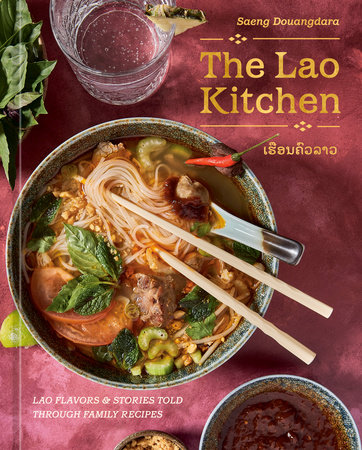
The Lao Kitchen

Lao Flavors and Stories Told Through Family Recipes

Foreword by Kulap Vilaysack
Look inside
Hardcover (Paper-over-Board, no jacket)
$32.99 US
8.28"W x 10.28"H x 0.88"D   | 39 oz | 12 per carton
On sale Apr 21, 2026 | 256 Pages | 9780593836170

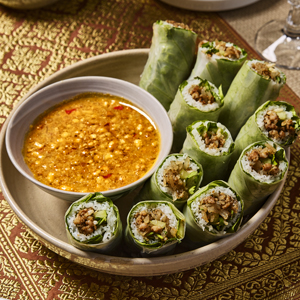
additional book photo
Explore Lao food through 95 approachable, flavor-packed recipes from the popular food content creator behind Saeng’s Kitchen.

“Saeng Douangdara brings Laos to the table with recipes that are bold, soulful, and alive with memory. This book belongs on every shelf where flavor, family, and food history matter.”—Andrew Zimmern


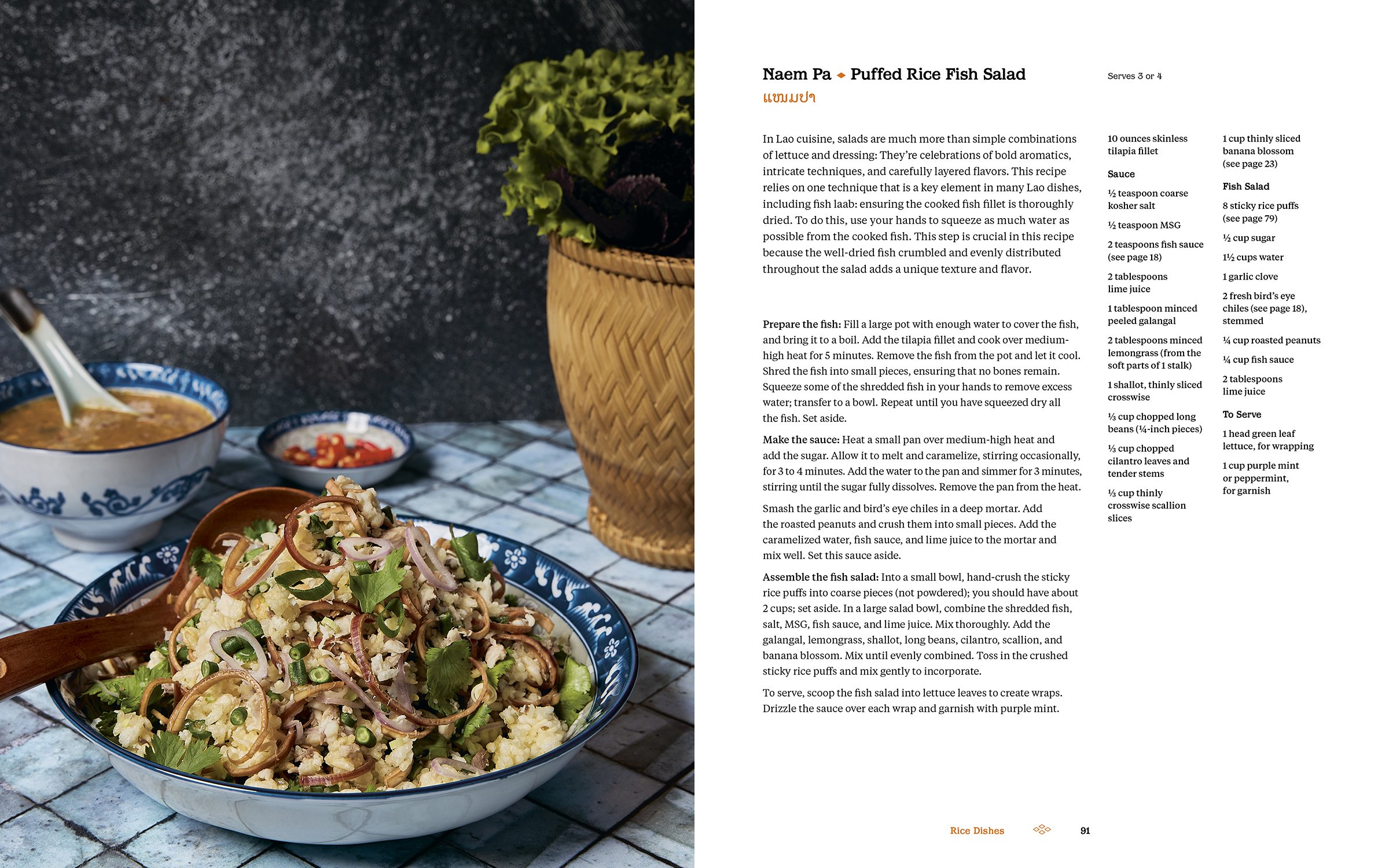
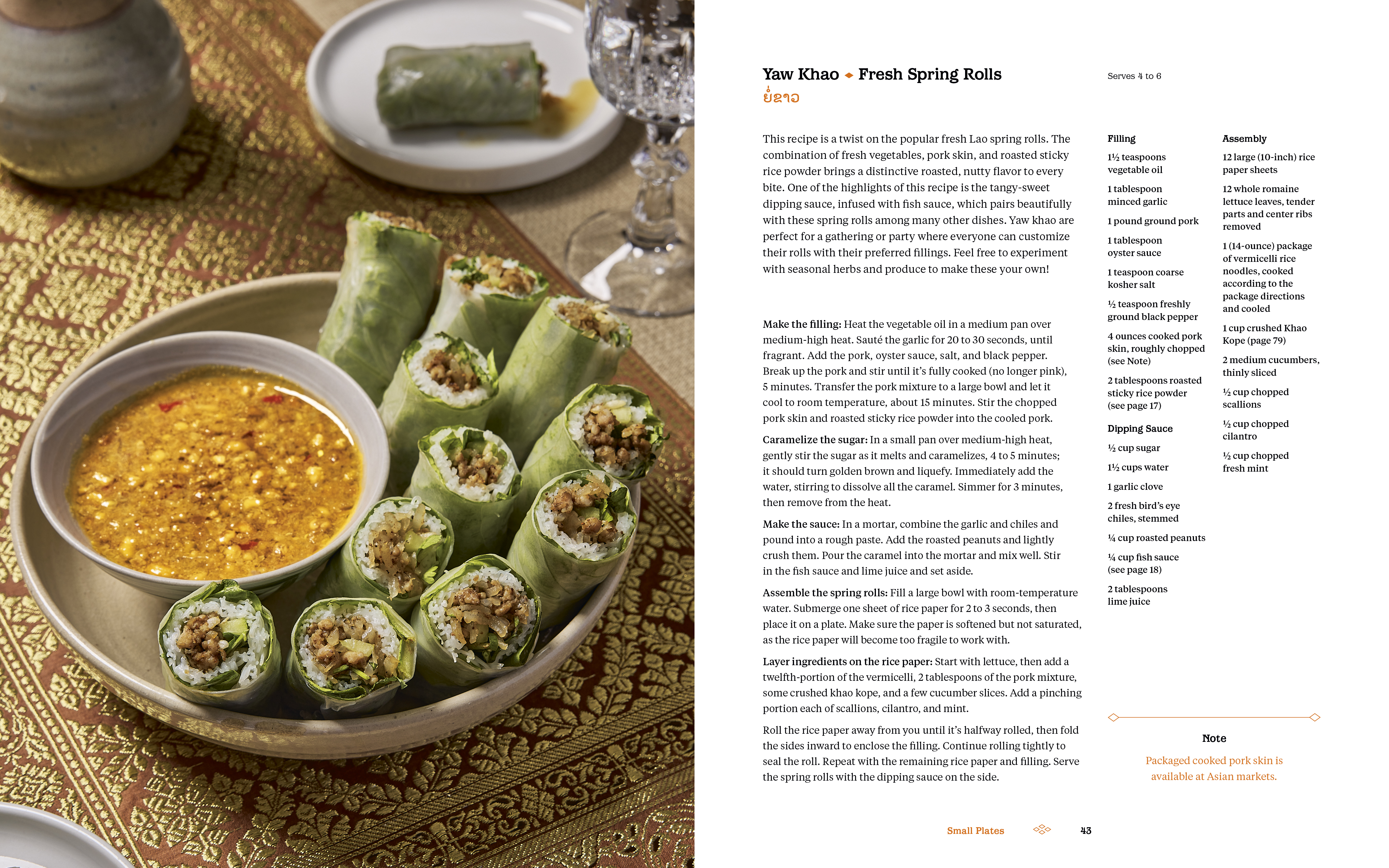
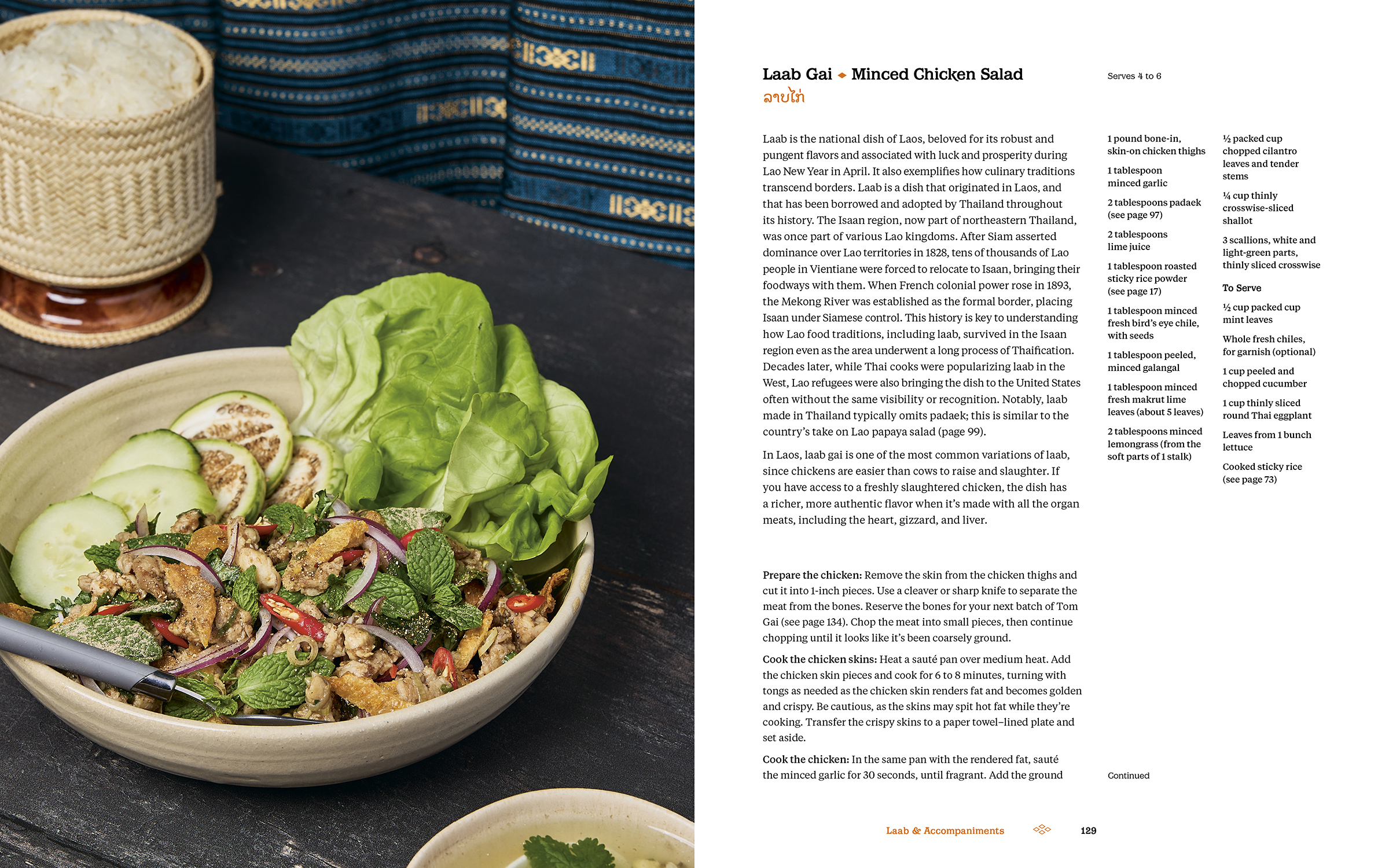
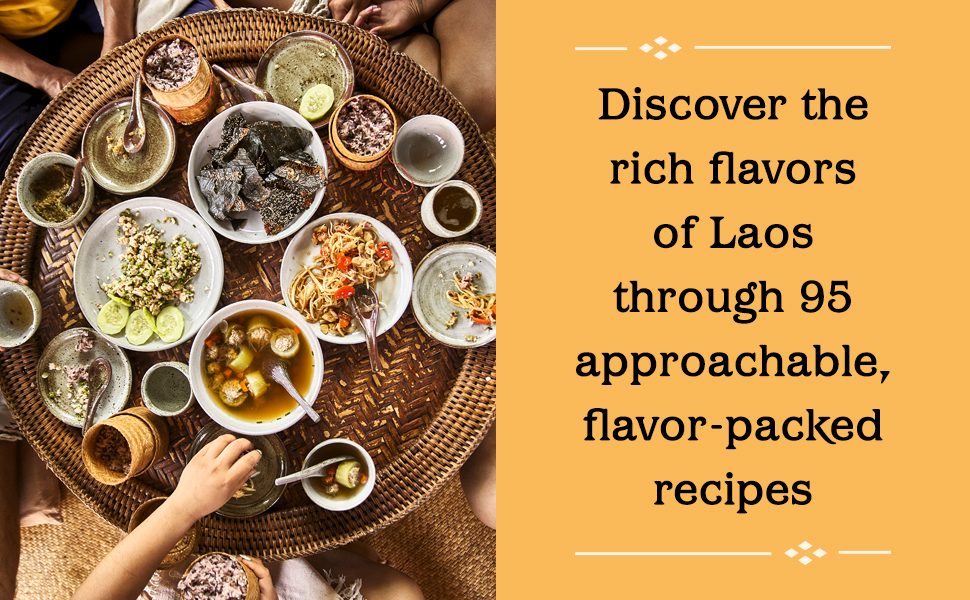
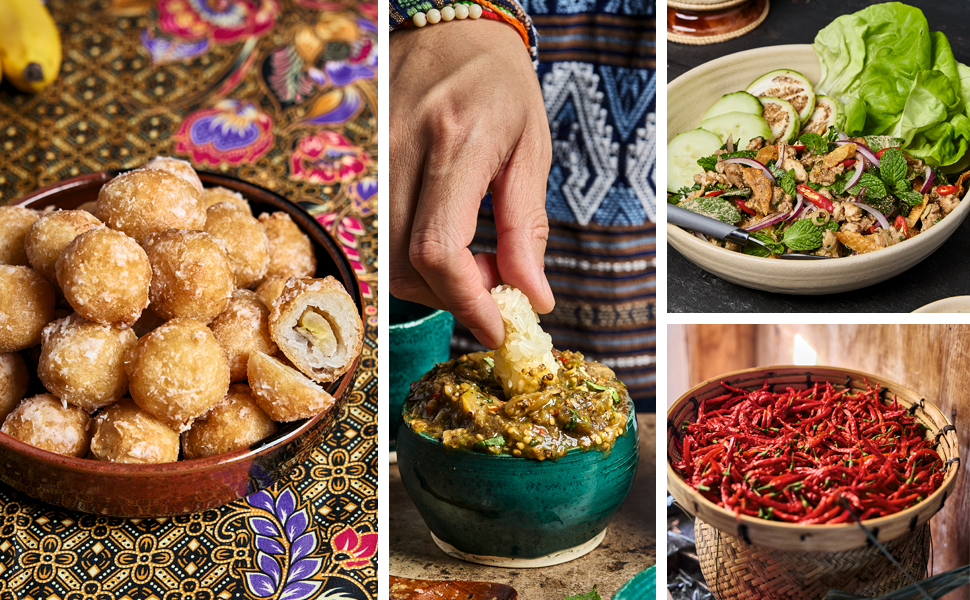
In Lao kitchens, every dish tells a story and every bite excites. The food culture of Laos has historically been preserved through oral tradition, and in this essential guide to Lao cooking, personal chef Saeng Douangdara draws on his expertise and the food knowledge passed down from his family to share the beauty and history of Lao cuisine. Discover the rich flavors of Laos through 95 recipes for dips, small plates, rice dishes, fermented foods and salads, laab, noodles, soups and stews, not-too-sweet desserts, and modern twists on traditional recipes, including:

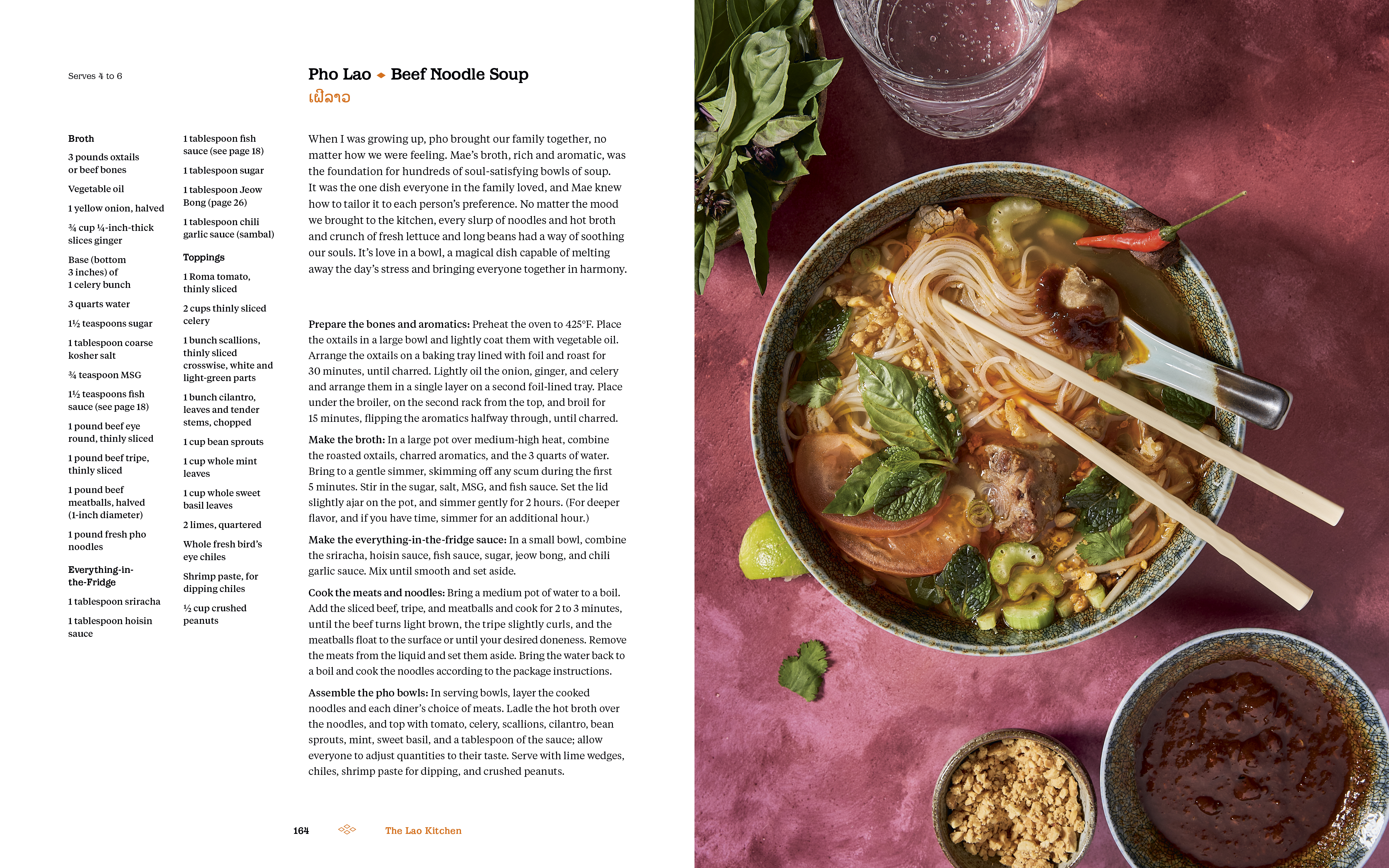
Thum Khao Poon (Cold Vermicelli Noodle Salad)
Som Moo (Fermented Pork Sausage)
Galabao (Pork Steamed Buns)
Khanom Mantone (Steamed Cassava Cake)
and more!

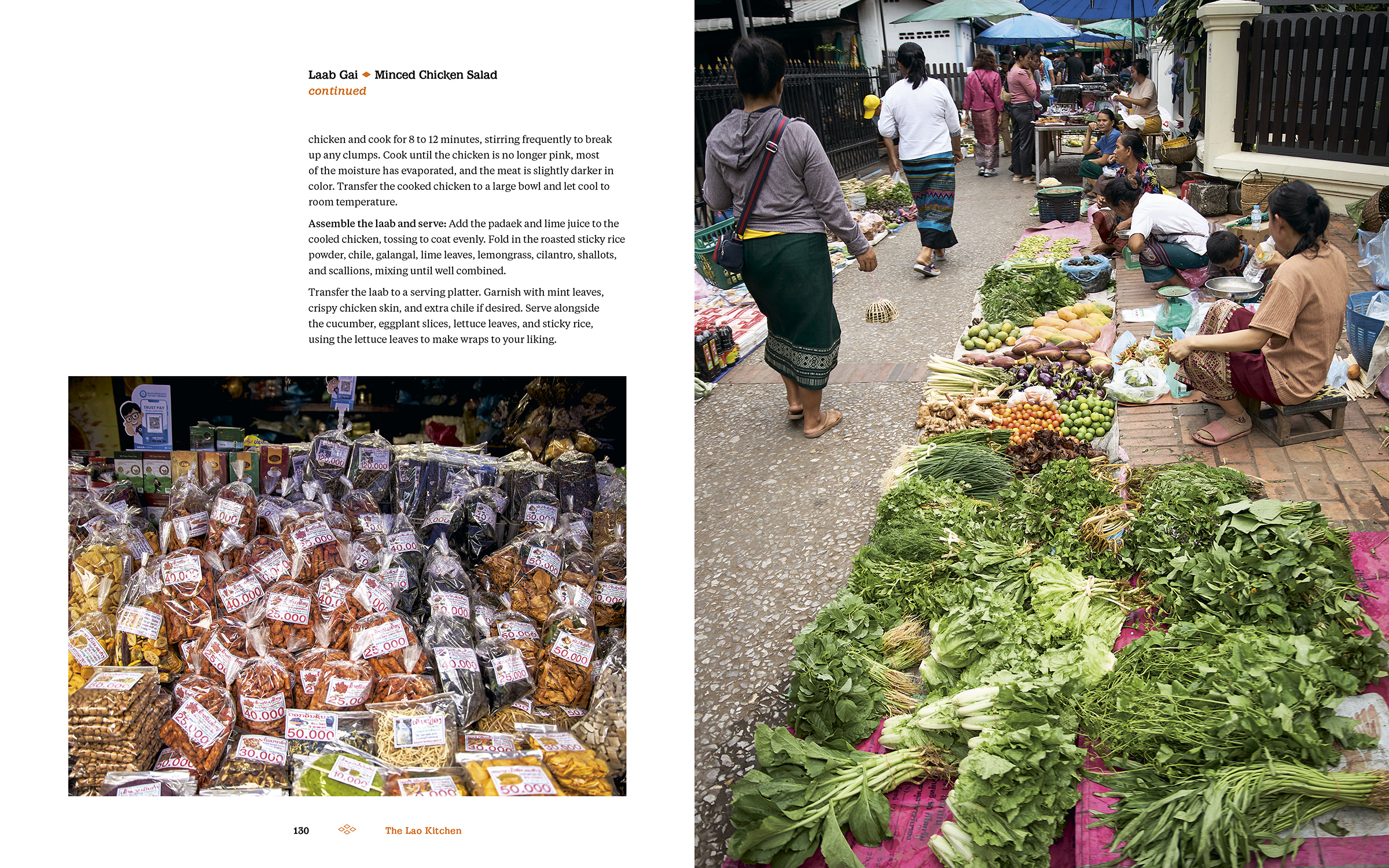
The Lao Kitchen dives into the heart of Lao foodways—often overlooked but deeply rooted in Southeast Asian traditions. Through thoughtful essays and memories connected to each recipe, Saeng tells his story as a member of the Lao diaspora, exploring his roots through food. Bold, flavorful, deeply personal, and featuring gorgeous photography from Laos and Saeng’s own kitchen, The Lao Kitchen is a celebration of community, the connection that food brings, and what it means to cook from the heart.
The Lao Kitchen is more than a cookbook—it’s a reclamation of a cuisine too often left out of the conversation. Saeng Douangdara brings Laos to the table with recipes that are bold, soulful, and alive with memory. This book belongs on every shelf where flavor, family, and food history matter.”—Andrew Zimmern

“Step into the kitchen with Saeng Douangdara and explore the world of Lao cooking through traditional dishes and thoughtful updates to time-honored cooking. Drawing from both ancestral roots and personal stories, this book shines a light on a cuisine shaped by history, land, and ritual. More than a collection of recipes, this book is a tribute to the ties that food can build across tables, generations, and borders.”—Illyanna Maisonet, James Beard Award winner and author of Diasporican: A Puerto Rican Cookbook

“As someone who’s been following the work of Saeng and has tasted his cooking personally, I know his passion for educating the world about the joy of Lao cuisine is simply unmatched. This book is a delight in learning about the untold beauty of Lao flavors and, whether you’re an expert in cooking or not, it’ll make anyone itch to cook and taste the culinary delights that Laos has to offer.”—Kim Chi, drag queen, author of Kim Chi Eats the World, and beauty mogul

“Saeng shares our Lao culture and food beautifully. The Lao Kitchen has taken me back to a time where my life was a perfect place of family and food. I am so proud to be Lao and even more proud of Saeng for sharing his love of the Lao kitchen with the world.”—Jujubee

“I have been in love with Lao food since my first bite. I remember it like yesterday, it had a bite in the best kind of way, funky, sweet, spicy, bitter, sour, and a little something extra I couldn’t quite put my finger on. I found myself wanting to know more, and then I found Saeng. The way he cooks is unapologetic and at the same time preserves history one bite, and one story, at a time. This book is a national treasure, and we will all be cooking like a Lao grandma because of Saeng.”—Tiffany Derry, chef, restaurateur, TV personality, and social justice advocate

“Inspiring and refreshing; Saeng’s deep love and passion for introducing Lao food to the world is fearlessly bold and absolutely amazing!”—Ae Southammavong, chef and creator

“I am deeply proud of Chef Saeng. His creativity, resilience, and courage shine through every page. By sharing our cuisine with the world, he not only honors our ancestors but also helps define the future of Lao American cooking.”—Chef Seng Luangrath, James Beard Award semi-finalist chef and founder, Lao Food Movement, restaurateur/owner of Thip Khao, Padaek, and Baan Mae

“Saeng captures the resilience, creativity, and heritage of Lao cooking in every page, making this book an invaluable addition to every book collection, not only to Lao families but to anyone seeking connection through food and storytelling.”—Aleena Inthaly, creative director, Lao Food Movement
Saeng Douangdara is a content creator and personal chef specializing in Lao cuisine. As a first-generation Lao American, food has always been central to his life. Saeng’s work has been featured in Delish, BuzzFeed, The New York Times, and the Los Angeles Times, and he is the winner of an episode of TBS's cooking show Rat in the Kitchen. A proud member of the Lao Food Movement, Saeng aims to inspire others to explore the delicious flavors of his culture.
Introduction


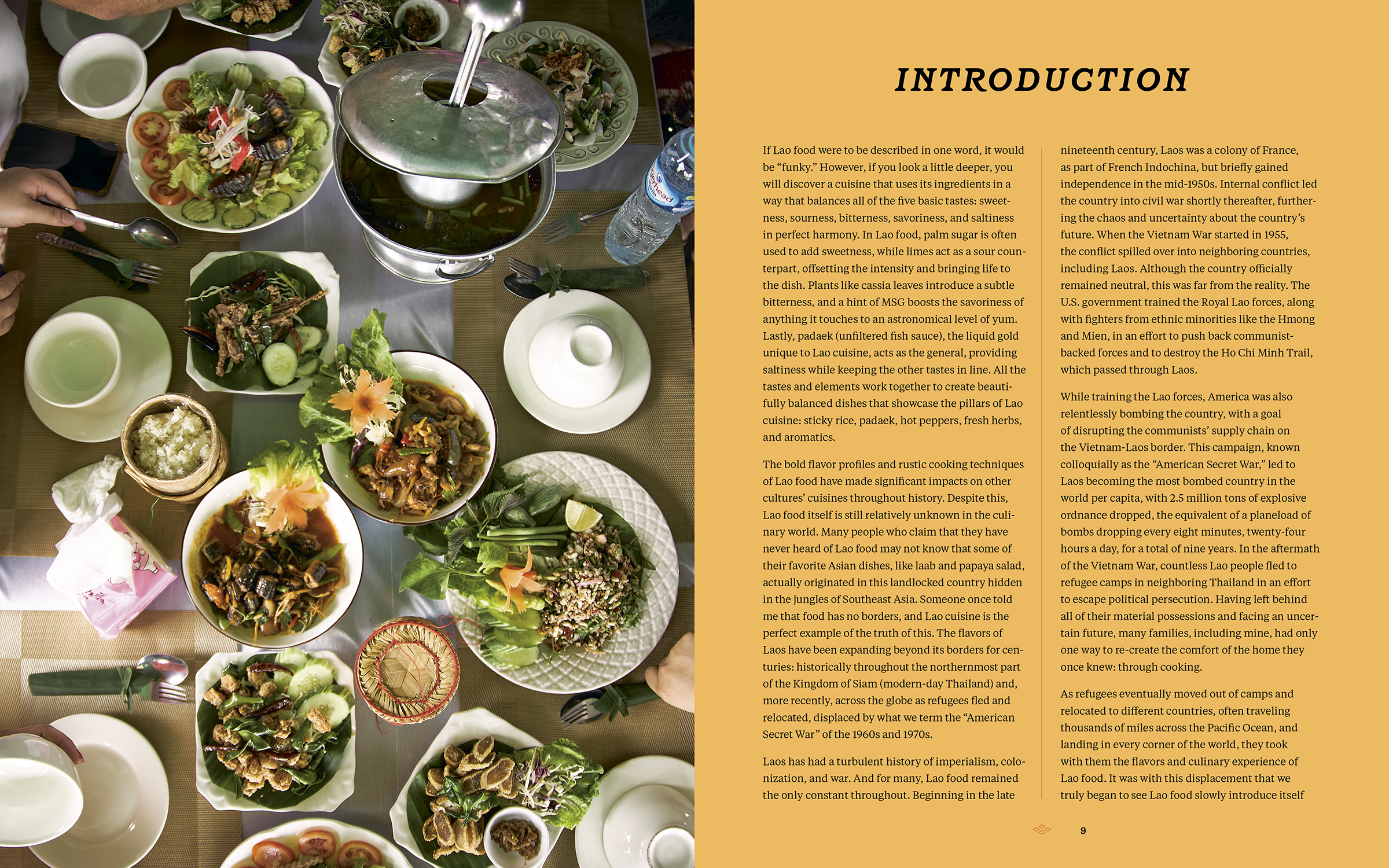
If Lao food were to be described in one word, it would be “funky.” However, if you look a little deeper, you will discover a cuisine that uses its ingredients in a way that balances all of the five basic tastes: sweetness, sourness, bitterness, savoriness, and saltiness in perfect harmony. In Lao food, palm sugar is often used to add sweetness, while limes act as a sour counterpart, offsetting the intensity and bringing life to the dish. Plants like cassia leaves introduce a subtle bitterness, and a hint of MSG boosts the savoriness of anything it touches to an astronomical level of yum. Lastly, padaek (unfiltered fish sauce), the liquid gold unique to Lao cuisine, acts as the general, providing saltiness while keeping the other tastes in line. All the tastes and elements work together to create beautifully balanced dishes that showcase the pillars of Lao cuisine: sticky rice, padaek, hot peppers, fresh herbs, and aromatics.

The bold flavor profiles and rustic cooking techniques of Lao food have made significant impacts on other cultures’ cuisines throughout history. Despite this, Lao food itself is still relatively unknown in the culinary world. Many people who claim that they have never heard of Lao food may not know that some of their favorite Asian dishes, like laab and papaya salad, actually originated in this landlocked country hidden in the jungles of Southeast Asia. Someone once told me that food has no borders, and Lao cuisine is the perfect example of the truth of this. The flavors of Laos have been expanding beyond its borders for centuries: historically throughout the northernmost part of the Kingdom of Siam (modern-day Thailand) and, more recently, across the globe as refugees fled and relocated, displaced by what we term the “American Secret War” of the 1960s and 1970s.

Laos has had a turbulent history of imperialism, colonization, and war. And for many, Lao food remained the only constant throughout. Beginning in the late

nineteenth century, Laos was a colony of France, as part of French Indochina, but briefly gained independence in the mid-1950s. Internal conflict led the country into civil war shortly thereafter, furthering the chaos and uncertainty about the country’s future. When the Vietnam War started in 1955, the conflict spilled over into neighboring countries, including Laos. Although the country officially remained neutral, this was far from the reality. The U.S. government trained the Royal Lao forces, along with fighters from ethnic minorities like the Hmong and Mien, in an effort to push back communist-backed forces and to destroy the Ho Chi Minh Trail, which passed through Laos.

While training the Lao forces, America was also relentlessly bombing the country, with a goal of disrupting the communists’ supply chain on the Vietnam-Laos border. This campaign, known colloquially as the “American Secret War,” led to Laos becoming the most bombed country in the world per capita, with 2.5 million tons of explosive ordnance dropped, the equivalent of a planeload of bombs dropping every eight minutes, twenty-four hours a day, for a total of nine years. In the aftermath of the Vietnam War, countless Lao people fled to refugee camps in neighboring Thailand in an effort to escape political persecution. Having left behind all of their material possessions and facing an uncertain future, many families, including mine, had only one way to re-create the comfort of the home they once knew: through cooking.


As refugees eventually moved out of camps and relocated to different countries, often traveling thousands of miles across the Pacific Ocean, and landing in every corner of the world, they took with them the flavors and culinary experience of Lao food. It was with this displacement that we truly began to see Lao food slowly introduce itself

to the world. Many refugees opened restaurants in whatever city they ended up in, hoping to bring the comfort they found in their food to others in their new community. However, according to many long-time Lao restaurant owners, at the time people were intimidated by the boldness of Lao flavors. The food was often deemed “too funky” to enjoy, forcing restaurant owners to market the food as something else in order to make it feel like a safer option. Due to the popularity of Thai food, many Lao refugees who started restaurants sold their food under the guise of the more accepted cuisine. This gave rise to the phenomenon of the Lao/Thai restaurant, typically owned by a Lao person trying to find business success while quietly maintaining their identity. These restaurateurs tended to keep Lao options on the menu to a minimum, or only made them available to patrons ordering off the “secret menu.”

In the 2000s, after decades of establishing a foothold in the restaurant world, these same owners were finally able to begin marketing their food as Lao, emboldened by growing demand for more authentic Lao eateries that embraced the power of the funk. In re-creating delicate, often intricate foods strictly from memory without the aid of written recipes, these chefs in the Lao diaspora achieved miracles. What they have been able to accomplish for Lao food worldwide deserves every praise.


Few cookbooks exist that are dedicated to Lao food. This is in large part because food culture in Laos is traditionally passed down orally and picked up through observing. Memorized recipes typically use measurements that are by nature inconsistent: The utensil used in “a spoonful” of something could be anything from a teaspoon to a soupspoon, setting the novice up for failure from the start. The Lao immigrant kitchen is also often home to mysterious sauces stored in repurposed gallon-sized ice cream tubs and

spices in unmarked containers. To the uninitiated, these random containers may seem to exist only to cause disappointment as they never contain what they are meant to. However, the experienced cook knows how these ingredients can be transformed into drool-worthy food in feats that are nothing short of magical.

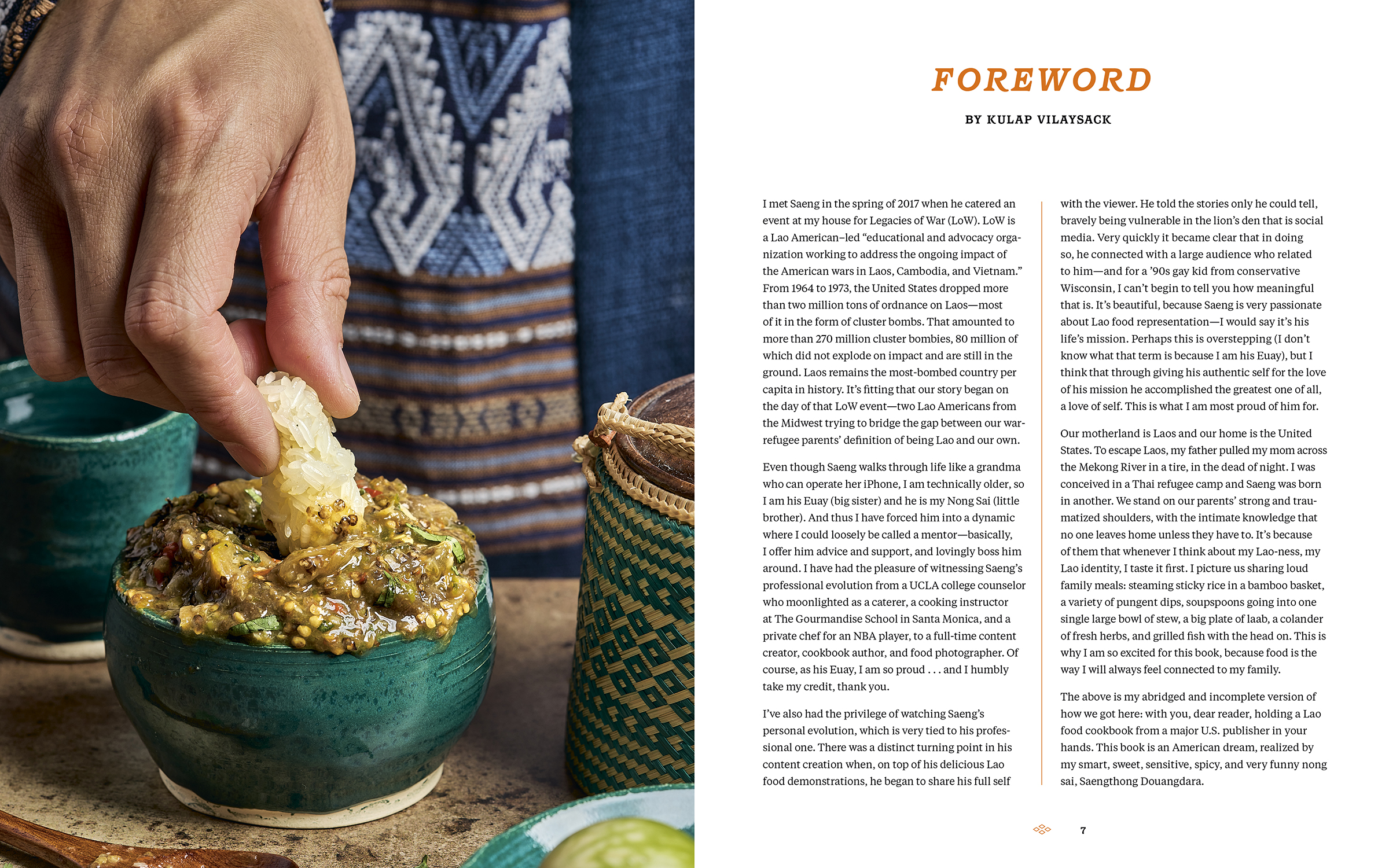
A lot of my childhood was spent watching my mae (mom) perform magic in the kitchen, turning common Midwest ingredients into a Lao feast. Looking back, I can only imagine how difficult it must have been for her to relocate to a foreign country that offered so little access to all the things that are at the core of Lao cuisine. Yet she persevered. She and my paw (dad) would drive over an hour each way to Madison, Wisconsin, to get a bag of sticky rice, a food so deeply ingrained in our culture that the Lao people refer to themselves as “the children of sticky rice.” She made her own padaek from the fish Paw caught in a nearby river. And whatever herbs and peppers she could not find in the local market she grew in her garden. Her story is like that of so many other refugees, showcasing their imperative will to preserve culture, culinary know-how, and traditions using the resources available to them.

One unintended consequence of passing down recipes solely by word of mouth is that it has created a barrier to entry for those who would like to try cooking Lao food. Younger generations in the Lao diaspora not only have to overcome a language barrier if they don’t speak Lao, but must also be brave enough to source and cook with ingredients that may be unfamiliar to them, such as beef bile or duck blood. It is also the case that, in an example of fully cooking from the heart, when Lao recipes are passed down, they are often tied to personal stories and experiences, sometimes traumatic ones, with the emotions manifesting themselves in the end product. As younger generations become

more removed from both the experiences and the culinary knowledge of those who came before them, they may find themselves unable to exactly replicate the flavors that live in their memories. And, perhaps, that’s okay.

It’s been almost fifty years since much of the Lao diaspora fled Laos. Ever since, our community has worked to find new ways of preserving our food traditions. Throughout this same time, there has been a large and growing interest in Southeast Asian cuisine, and in this context Lao food has started to gain more recognition. This in turn inspires new generations of Lao people to embrace and innovate within our culinary heritage. In the hope of expanding on what Lao cooking is to me as a member of the Lao diaspora, my contribution to that movement is this cookbook, which contains both traditional Lao recipes and reimagined classics, along with the stories that inspired them. I hope this book will

help bridge gaps between generations and cultures and ensure that Lao culinary knowledge and traditions continue to be passed down and cherished. The stories I share are my own, but with them I hope to provide you with a starting point on your own journey to create new stories and memories that you can one day share with others.

By embracing the funk, we can each honor the culinary heritage of Lao cuisineand cook dishes that leave a lasting impression on both our taste buds and our hearts. So add the padaek and make it “Lao hot.” Be as bold as the flavors of the masterpieces you are about to make. In fact, I challenge you to make it even Lao-der.

Photos

additional book photo

About

Explore Lao food through 95 approachable, flavor-packed recipes from the popular food content creator behind Saeng’s Kitchen.

“Saeng Douangdara brings Laos to the table with recipes that are bold, soulful, and alive with memory. This book belongs on every shelf where flavor, family, and food history matter.”—Andrew Zimmern


In Lao kitchens, every dish tells a story and every bite excites. The food culture of Laos has historically been preserved through oral tradition, and in this essential guide to Lao cooking, personal chef Saeng Douangdara draws on his expertise and the food knowledge passed down from his family to share the beauty and history of Lao cuisine. Discover the rich flavors of Laos through 95 recipes for dips, small plates, rice dishes, fermented foods and salads, laab, noodles, soups and stews, not-too-sweet desserts, and modern twists on traditional recipes, including:

Thum Khao Poon (Cold Vermicelli Noodle Salad)
Som Moo (Fermented Pork Sausage)
Galabao (Pork Steamed Buns)
Khanom Mantone (Steamed Cassava Cake)
and more!

The Lao Kitchen dives into the heart of Lao foodways—often overlooked but deeply rooted in Southeast Asian traditions. Through thoughtful essays and memories connected to each recipe, Saeng tells his story as a member of the Lao diaspora, exploring his roots through food. Bold, flavorful, deeply personal, and featuring gorgeous photography from Laos and Saeng’s own kitchen, The Lao Kitchen is a celebration of community, the connection that food brings, and what it means to cook from the heart.

Praise

The Lao Kitchen is more than a cookbook—it’s a reclamation of a cuisine too often left out of the conversation. Saeng Douangdara brings Laos to the table with recipes that are bold, soulful, and alive with memory. This book belongs on every shelf where flavor, family, and food history matter.”—Andrew Zimmern

“Step into the kitchen with Saeng Douangdara and explore the world of Lao cooking through traditional dishes and thoughtful updates to time-honored cooking. Drawing from both ancestral roots and personal stories, this book shines a light on a cuisine shaped by history, land, and ritual. More than a collection of recipes, this book is a tribute to the ties that food can build across tables, generations, and borders.”—Illyanna Maisonet, James Beard Award winner and author of Diasporican: A Puerto Rican Cookbook

“As someone who’s been following the work of Saeng and has tasted his cooking personally, I know his passion for educating the world about the joy of Lao cuisine is simply unmatched. This book is a delight in learning about the untold beauty of Lao flavors and, whether you’re an expert in cooking or not, it’ll make anyone itch to cook and taste the culinary delights that Laos has to offer.”—Kim Chi, drag queen, author of Kim Chi Eats the World, and beauty mogul

“Saeng shares our Lao culture and food beautifully. The Lao Kitchen has taken me back to a time where my life was a perfect place of family and food. I am so proud to be Lao and even more proud of Saeng for sharing his love of the Lao kitchen with the world.”—Jujubee

“I have been in love with Lao food since my first bite. I remember it like yesterday, it had a bite in the best kind of way, funky, sweet, spicy, bitter, sour, and a little something extra I couldn’t quite put my finger on. I found myself wanting to know more, and then I found Saeng. The way he cooks is unapologetic and at the same time preserves history one bite, and one story, at a time. This book is a national treasure, and we will all be cooking like a Lao grandma because of Saeng.”—Tiffany Derry, chef, restaurateur, TV personality, and social justice advocate

“Inspiring and refreshing; Saeng’s deep love and passion for introducing Lao food to the world is fearlessly bold and absolutely amazing!”—Ae Southammavong, chef and creator

“I am deeply proud of Chef Saeng. His creativity, resilience, and courage shine through every page. By sharing our cuisine with the world, he not only honors our ancestors but also helps define the future of Lao American cooking.”—Chef Seng Luangrath, James Beard Award semi-finalist chef and founder, Lao Food Movement, restaurateur/owner of Thip Khao, Padaek, and Baan Mae

“Saeng captures the resilience, creativity, and heritage of Lao cooking in every page, making this book an invaluable addition to every book collection, not only to Lao families but to anyone seeking connection through food and storytelling.”—Aleena Inthaly, creative director, Lao Food Movement

Author

Saeng Douangdara is a content creator and personal chef specializing in Lao cuisine. As a first-generation Lao American, food has always been central to his life. Saeng’s work has been featured in Delish, BuzzFeed, The New York Times, and the Los Angeles Times, and he is the winner of an episode of TBS's cooking show Rat in the Kitchen. A proud member of the Lao Food Movement, Saeng aims to inspire others to explore the delicious flavors of his culture.

Excerpt

Introduction


If Lao food were to be described in one word, it would be “funky.” However, if you look a little deeper, you will discover a cuisine that uses its ingredients in a way that balances all of the five basic tastes: sweetness, sourness, bitterness, savoriness, and saltiness in perfect harmony. In Lao food, palm sugar is often used to add sweetness, while limes act as a sour counterpart, offsetting the intensity and bringing life to the dish. Plants like cassia leaves introduce a subtle bitterness, and a hint of MSG boosts the savoriness of anything it touches to an astronomical level of yum. Lastly, padaek (unfiltered fish sauce), the liquid gold unique to Lao cuisine, acts as the general, providing saltiness while keeping the other tastes in line. All the tastes and elements work together to create beautifully balanced dishes that showcase the pillars of Lao cuisine: sticky rice, padaek, hot peppers, fresh herbs, and aromatics.

The bold flavor profiles and rustic cooking techniques of Lao food have made significant impacts on other cultures’ cuisines throughout history. Despite this, Lao food itself is still relatively unknown in the culinary world. Many people who claim that they have never heard of Lao food may not know that some of their favorite Asian dishes, like laab and papaya salad, actually originated in this landlocked country hidden in the jungles of Southeast Asia. Someone once told me that food has no borders, and Lao cuisine is the perfect example of the truth of this. The flavors of Laos have been expanding beyond its borders for centuries: historically throughout the northernmost part of the Kingdom of Siam (modern-day Thailand) and, more recently, across the globe as refugees fled and relocated, displaced by what we term the “American Secret War” of the 1960s and 1970s.

Laos has had a turbulent history of imperialism, colonization, and war. And for many, Lao food remained the only constant throughout. Beginning in the late

nineteenth century, Laos was a colony of France, as part of French Indochina, but briefly gained independence in the mid-1950s. Internal conflict led the country into civil war shortly thereafter, furthering the chaos and uncertainty about the country’s future. When the Vietnam War started in 1955, the conflict spilled over into neighboring countries, including Laos. Although the country officially remained neutral, this was far from the reality. The U.S. government trained the Royal Lao forces, along with fighters from ethnic minorities like the Hmong and Mien, in an effort to push back communist-backed forces and to destroy the Ho Chi Minh Trail, which passed through Laos.

While training the Lao forces, America was also relentlessly bombing the country, with a goal of disrupting the communists’ supply chain on the Vietnam-Laos border. This campaign, known colloquially as the “American Secret War,” led to Laos becoming the most bombed country in the world per capita, with 2.5 million tons of explosive ordnance dropped, the equivalent of a planeload of bombs dropping every eight minutes, twenty-four hours a day, for a total of nine years. In the aftermath of the Vietnam War, countless Lao people fled to refugee camps in neighboring Thailand in an effort to escape political persecution. Having left behind all of their material possessions and facing an uncertain future, many families, including mine, had only one way to re-create the comfort of the home they once knew: through cooking.


As refugees eventually moved out of camps and relocated to different countries, often traveling thousands of miles across the Pacific Ocean, and landing in every corner of the world, they took with them the flavors and culinary experience of Lao food. It was with this displacement that we truly began to see Lao food slowly introduce itself

to the world. Many refugees opened restaurants in whatever city they ended up in, hoping to bring the comfort they found in their food to others in their new community. However, according to many long-time Lao restaurant owners, at the time people were intimidated by the boldness of Lao flavors. The food was often deemed “too funky” to enjoy, forcing restaurant owners to market the food as something else in order to make it feel like a safer option. Due to the popularity of Thai food, many Lao refugees who started restaurants sold their food under the guise of the more accepted cuisine. This gave rise to the phenomenon of the Lao/Thai restaurant, typically owned by a Lao person trying to find business success while quietly maintaining their identity. These restaurateurs tended to keep Lao options on the menu to a minimum, or only made them available to patrons ordering off the “secret menu.”

In the 2000s, after decades of establishing a foothold in the restaurant world, these same owners were finally able to begin marketing their food as Lao, emboldened by growing demand for more authentic Lao eateries that embraced the power of the funk. In re-creating delicate, often intricate foods strictly from memory without the aid of written recipes, these chefs in the Lao diaspora achieved miracles. What they have been able to accomplish for Lao food worldwide deserves every praise.


Few cookbooks exist that are dedicated to Lao food. This is in large part because food culture in Laos is traditionally passed down orally and picked up through observing. Memorized recipes typically use measurements that are by nature inconsistent: The utensil used in “a spoonful” of something could be anything from a teaspoon to a soupspoon, setting the novice up for failure from the start. The Lao immigrant kitchen is also often home to mysterious sauces stored in repurposed gallon-sized ice cream tubs and

spices in unmarked containers. To the uninitiated, these random containers may seem to exist only to cause disappointment as they never contain what they are meant to. However, the experienced cook knows how these ingredients can be transformed into drool-worthy food in feats that are nothing short of magical.

A lot of my childhood was spent watching my mae (mom) perform magic in the kitchen, turning common Midwest ingredients into a Lao feast. Looking back, I can only imagine how difficult it must have been for her to relocate to a foreign country that offered so little access to all the things that are at the core of Lao cuisine. Yet she persevered. She and my paw (dad) would drive over an hour each way to Madison, Wisconsin, to get a bag of sticky rice, a food so deeply ingrained in our culture that the Lao people refer to themselves as “the children of sticky rice.” She made her own padaek from the fish Paw caught in a nearby river. And whatever herbs and peppers she could not find in the local market she grew in her garden. Her story is like that of so many other refugees, showcasing their imperative will to preserve culture, culinary know-how, and traditions using the resources available to them.

One unintended consequence of passing down recipes solely by word of mouth is that it has created a barrier to entry for those who would like to try cooking Lao food. Younger generations in the Lao diaspora not only have to overcome a language barrier if they don’t speak Lao, but must also be brave enough to source and cook with ingredients that may be unfamiliar to them, such as beef bile or duck blood. It is also the case that, in an example of fully cooking from the heart, when Lao recipes are passed down, they are often tied to personal stories and experiences, sometimes traumatic ones, with the emotions manifesting themselves in the end product. As younger generations become

more removed from both the experiences and the culinary knowledge of those who came before them, they may find themselves unable to exactly replicate the flavors that live in their memories. And, perhaps, that’s okay.

It’s been almost fifty years since much of the Lao diaspora fled Laos. Ever since, our community has worked to find new ways of preserving our food traditions. Throughout this same time, there has been a large and growing interest in Southeast Asian cuisine, and in this context Lao food has started to gain more recognition. This in turn inspires new generations of Lao people to embrace and innovate within our culinary heritage. In the hope of expanding on what Lao cooking is to me as a member of the Lao diaspora, my contribution to that movement is this cookbook, which contains both traditional Lao recipes and reimagined classics, along with the stories that inspired them. I hope this book will

help bridge gaps between generations and cultures and ensure that Lao culinary knowledge and traditions continue to be passed down and cherished. The stories I share are my own, but with them I hope to provide you with a starting point on your own journey to create new stories and memories that you can one day share with others.

By embracing the funk, we can each honor the culinary heritage of Lao cuisineand cook dishes that leave a lasting impression on both our taste buds and our hearts. So add the padaek and make it “Lao hot.” Be as bold as the flavors of the masterpieces you are about to make. In fact, I challenge you to make it even Lao-der.