Close Modal

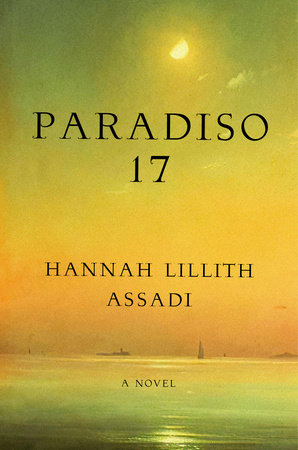
Paradiso 17

A Novel

Look inside
Hardcover
$29.00 US
6.45"W x 9.53"H x 1.04"D   | 17 oz | 12 per carton
On sale Mar 17, 2026 | 320 Pages | 9780593804056

LONGLISTED FOR THE WOMEN'S PRIZE • The intimate, sweeping tale of one Palestinian man’s restless search for home the world over, as the pendulum of fate swings between loss and life, grief and euphoria, regret and hope

"Generations are captured here, loss and pain and miraculous attempt at renewal. A beautiful work." —Nana Kwame Adjei-Brenyah, author of Chain Gang All-Stars


All his life, exile has been the shadow stitched to the sole of Sufien’s shoe.

Born in Palestine on the precipice of 1948’s Nakba, Sufien is forced to leave the only home he’s ever known, the one on the hill with a beautiful blue door. This is the precise moment when time stops making sense. He spends the rest of his life propelled forward, always on the way—although in search of what, he is never quite sure. In the dusty, oil-rich desert of Kuwait, he meets his first love and decides he must leave his family. In a small Italian university town, he spends his youth wrapped up in the sweet promise of the West and the forgetful assurance of wine. When life takes him to a gritty New York, he discovers his true vocation and falls for a Jewish woman born into a wholly different world. Finally, he finds himself recalled to the wild, vast open skies of the desert, in Arizona.

Sufien’s life spans friendships lost and maintained, a stint selling leathers at a tanner’s stall, the ineffable company of cats, and the freedom of the open road, the glowing pride of fatherhood, Sufi myths, prophetic dreams, and visions of the afterlife—and always, always, no matter how far he chases joy, the sweet, treacherous song of a balcony urging him to fly, to fall, to fall. The lyrical pages of Paradiso 17 weave in and out of time and space, beginning at the end and ending at the beginning. They are haunting, haunted with grief, struck through, as Dante once wrote, with “the arrow that the bow of exile / shoots first,” and yet they throb with light—not just the light that Sufien sees as he approaches his own end, but the brilliant light of a life lived.

Like all of our dead, Sufien still speaks, the book begins. Listen, this is his story.
"An intense, fearless, lyrical, and quite astonishing novel about the haunted apparitional life of a refugee." —Joy Williams, author of The Pelican Child

"Paradiso 17 is remarkable. It’s a novel of unearthing, a story of quiet explosions, of memories lost and recovered. It’s urgent and necessary. Read it as an intimate family tale, as mythos, or as history—but read it, read it, read it." —Rabih Alameddine, author of The True True Story of Raja the Gullible (and His Mother)

"Paradiso 17 is a searing portrait of exile, of a man reeling from home to home after the loss of Palestine. This poet’s novel is a true beauty, a tale of grief and also ultimate, otherworldly triumph and return." —Hala Alyan, author of I’ll Tell You When I’m Home

"There is something miraculous about Paradiso 17, about the poetry that seems to guide every sentence of this exquisite novel. With stunning intimacy, Hannah Lillith Assadi has crafted an unforgettable story about the many stunted afterlives of hyphenated belonging. In this book live some of the most complex characters I’ve read in a long time, and a deeply nuanced exploration of exile as both event and inheritance." —Omar El Akkad, author of One Day, Everyone Will Have Always Been Against This

"Paradiso 17 took my breath away. I put the book down wondering how Assadi had managed to so elegantly capture the grand, devastating, mundane, and often beautiful sweep of a life shaped by dispossession and exile. Paradiso 17 puts in writing the intricate dance played by politics, place, and personality, and the result is a novel that is so rigorously tender to its flawed, wonderful protagonist, and so honest about the ways we move through the world that I wept at its ending. A beautiful testament to the power of recording a life through art." —Lydia Kiesling, author of Mobility

"Assadi is a gorgeous writer, and here she unfurls a gripping story of a soul in exile. Paradiso 17 comes like a fugue, asking questions both timeless and heartbreakingly urgent." —Justin Torres, author of Blackouts

"Paradiso 17 is a novel of wondrous care and meticulous precision. It works on scales both epic and intimate while guiding the reader on a journey they will not forget. Generations are captured here, loss and pain and miraculous attempt at renewal. A beautiful work." —Nana Kwame Adjei-Brenyah, author of Chain Gang All-Stars

"I could not put down this sweeping narrative, written in some of the most transcendent prose I have read in a long time. Compassionate, elegiac and suffuse with unflinching wit, Paradiso 17 is a stunning testament to a people who will never abandon home, no matter how far they must travel in exile." —Maaza Mengiste, author of The Shadow King

"[A] sweeping, deeply personal novel based on the life of Assadi’s father, a Palestinian exile . . . yearning to find his true home. But what is home? That is the idiosyncratic Sufien’s central question, one he still struggles to answer from his deathbed while recalling his life journey. . . . As rendered in Assadi’s dreamy, lyrical . . . prose, Sufien is thoroughly beguiling—charming, smart, funny, and spiritual . . . [and] suffers from melancholia. . . . Family and friends never stop loving Sufien. Neither does the reader. With a generous vision, Assadi has created an unforgettable character in a multidimensional world." —Kirkus (starred review)

"A beautiful and heartbreaking novel. . . . Assadi writes with astonishing fluidity, using Sufien’s story to illustrate the legacy of displacement without losing sight of the character’s humanity, as Sufien, now dying from cancer in his 70s, considers how his 'homeland had been stolen, was being stolen, cast to the dustbin of history.' . . . This is remarkable." —Publishers Weekly (starred review)

"Flowing backwards and forwards through the life of Sufien, a Palestinian refugee, this delicately etched memory piece evokes the unending pain of the refugee experience. . . . A heartfelt, beautifully told, and powerful narrative of loss." —Booklist (starred review)

"Stunning. . . . [An] exquisitely written and elemental meditation on mortality, the weight of a single life, and what it can carry." —Alta
© Jordan Ledy
Hannah Lillith Assadi, a National Book Foundation 5 Under 35 honoree, teaches fiction at the Columbia University School of the Arts and the Pratt Institute. She is the author of Sonora, which received the Rosenthal Family Foundation Award from the American Academy of Arts and Letters and was a finalist for the PEN/Robert W. Bingham Prize for Debut Fiction. Her second novel, The Stars Are Not Yet Bells, was a New Yorker and NPR best book of 2022. Raised in Arizona, she lives in Brooklyn, New York. View titles by Hannah Lillith Assadi
1

Back to the beginning

Beyond the curtain of the final room Sufien was exiled to, a monsoon was developing at the edge of his desert. The clouds were bruised and the immigrant palm trees swayed and sang. It was the end of days. On his deathbed, he wished to see beyond all that mundane lightning, touch Allah’s golden dimensions. And though his desert nearly intimated the beyond, the brilliant sun aflame in a black-­and-­blue sky, he couldn’t see paradise yet. We are just covered by the skin of this world. The worst he had known in a life of war, diaspora, poverty, bankruptcy, was this final retribution: cancer. What if this is the reward? he thought. The only reward.

Sufien heard his ancient cat, Caesar II, flee to the closet from fright of the thunder, and Sufien understood why. Sound infiltrated directly to the heart. Sound is the last sense that remains to us, the hospice nurses kept telling his wife Sarah, his daughter Layla, so keep talking to him, he’ll hear you, as if Sufien was dead already. They had all maneuvered around him for so long, like a cumbersome object.

It was that big with no brains son-­in-­law of his, James, the tawil wa ahbal, who said the beautiful thing then, a thing which so surprised Sufien. What he said was, It isn’t because sound is the last sense to leave us. It’s because sound draws our souls out to the next world, and into the music.

*

It seemed impossible to Sufien that he could end. Not his story, no that was his wife Sarah, always thinking about him in terms of his story. What he was thinking about was himself ending, and what was he even? He was that silent thing which had dogged him late in the night after everyone else went to bed. That staticky hum beneath his vitals, beneath his heartbeat, his blood pressure, his want for another cigarette. He had always hated to go to sleep because he would be alone with it, that him that was him. What did he really find there? What are we made of, beneath the whirring fans, the droning AC, the murmuring trees, the creaking pipes, all this relentless news? Down there, in the quietest quiet, he was made only of death. Just like the rest of us.

Five months previous, his doctor, Dr. Scott, had given him six months to live. (This was the cruelest blow Sufien had ever received, crueler than even the decades-­long specter of his stolen homeland.) At first, hearing his middle-­aged oncologist, with his bleached teeth, say, Well, Sufien, you’ve done your darndest, put up a good fight, Sufien thought he was cured, in remission again. Then his wife had to ask for further clarification.

Sufien felt a sudden vertigo—­that’s what dying felt like, like falling from an unfathomable height.

I would guess he has about six months, Dr. Scott said then, looking at Sarah rather than at Sufien. But I’ve been wrong before!

For a long time, Sufien didn’t say anything. There was nothing left in him, no fight, he was too weak, too thin, too nauseated, except to say something mean. Words. At least he still had words.

Kus emmak, Sufien said to the doctor who had once promised to save his life. And he said it again, kus emmak. When he said it, Sufien hoped his face looked mean but he was too withered to look anything except pathetic.

What’s that, Dr. Scott asked, maybe a little scared, as if maybe his stage four cancer patient wearing designer cologne, cologne Sufien had bought specifically for this occasion (he left the apartment now to only go to the oncology ward), had a bomb hiding in his wheelchair after all.

Sufien wanted to tell Dr. Scott the truth about what he’d said, and wouldn’t that be a fine retort given the way Dr. Scott had tortured him, had manipulated him into accepting hormone therapy which had destroyed his manhood, then rounds of chemo which had taken his hair, and god almighty, the pain in his jaw when they gave him the radiation, and now after all of that, Scott had brandished the final sword. He had announced Sufien’s death sentence with a smile. Why had Sufien survived all that he had just to surrender like this, in this last war, being waged beneath the hospital office’s fluorescent lamps? Sufien wanted to tell the truth, that he had cursed the doctor’s mother’s cunt, but he didn’t, because even after all of that he still hoped that this motherfucker could save his life.

What I said was: Is there something else? Sufien forced a grin. We’ll try something else?

It surprised Sufien how much, in the end, he wanted to live.

*

Now his daughter was calling for him, asking Sufien if he wanted James to help him into the wheelchair. That dinner was ready.

You’re shaking, baba, his daughter said, drawing into his room.

Sufien asked her if Tarique had come yet.

Tarique? his daughter asked.

Sufien just shook his head, confused. In these last days, it felt like everything was written for him, and yet the morphine made it impossible to hold on to the text. He wanted to tell Layla something, to be emphatic, tell them all something, anyone who would listen, something they couldn’t forget, but it was all so imprecise, his windshield was coated in fog. No, he wasn’t driving anymore. It had been a long time since he had been in his car. The Volvo. It was turquoise. They didn’t make them like that anymore. What had they done with it? Sharmuta, he called out for his old cat. But this one was the wrong color. Not a Siamese. Earlier that day, he had called his daughter his wife’s name. Where was he actually? It seemed like the desert. He did not know. Where were his brothers? Or his mother and father? Why hadn’t they come for him yet? He was surrounded by only the living, and he wasn’t sure what hurt more: their crying or their laughing. He knew they were all waiting for him to die. And so, he felt he better get on with it.

Before that, though, just one last time, he wanted to go back to the beginning.

2

That war had already begun

Sufien never knew the exact date of his birth, but he did know that he was born in December like the prophet Isa, otherwise known as Jesus Christ.

Yes, his mother Amal loved to torture her son often with the story of his delivery, that when she was laboring with him—­ a labor made more painful and more dangerous by the fact that he came ass rather than head first—­she was in such hallucinatory pain that she swore she could hear the church bells ringing all the way from Nazareth. With Sufien dropping down, their song became so exquisite, she told the midwife she could hear the stars above singing. The midwife told her to stop dreaming and start pushing, that if she did not get that baby out fast he would be sent back to the seventh heaven, that this one’s an arrogant fool, worse, the kind stupid enough to think too much, you know that’s why his head is up, proud and stubborn, the kind bound for a perilous, suicidal, hopeless path, all the babies who refuse to look down to the Earth to get born are, so good luck with this one even if he is born, so Amal pushed and pushed and pushed, screaming at her to shut up, and the midwife kept talking at her, saying, Besides it’s nothing special, those Christians always ring their bells all night long around the holiday of the birth of Isa, adding that she herself heard nothing spectacular whatsoever.

Later, when the French officers at the refugee camp in Syria asked about Sufien’s date of birth for his Document de Voyage (Pour les Réfugiés Palestiniens), Amal, now called Um Sufien, replied that it was in the time of year of their savior’s birthday, remembering the hills of Safad disappeared by mist that first day nursing Sufien, how the land itself looked like it was dreaming in that season, and remembering so vividly the music of those bells. Life is a plot of its own, the story always rises then descends, and unfortunately the same purported messianic soundtrack of Sufien’s birth would not grace the ears of those who witnessed his death. He would pass away to the tune of distant police sirens.

*

Back then, though, in Sufien’s first memory, his end was still decades away, and after suffering through listening to the interminable story of his birth once more (his mother had been talking to a neighbor, rubbing her pregnant belly to conclude her tale, praying that the one coming wouldn’t torment her the way he had), Um Sufien finally let him go play.

Sufien and his friends had all climbed up to the roof, and from it, they could see Buhayret Tabariyeh, the lake where Isa once walked on water. It was a beautiful, clear day, early spring, and the hallowed lake was visible from Safad only on days like it. A very strong feeling overtook Sufien. Perhaps it was the heights. Or that spell of a sea. He wanted to fly. There had been talk of flying—­his friends engaged in this kind of magical thinking so customary to the fancy of childhood. Yet, no one else heard the jinn chanting seductively. Here one was; she was the color of sunset.

Come fly with me, she said.

So he did it. He jumped off the roof. And he felt the brief caress of the wind, and in falling, believed he was being held up by the sky. It was the olive tree in the courtyard which slowed his descent. He was captured in its branches before it too flung him off. Then there was that landing back on Earth. Now he understood pain. And gravity.

About

LONGLISTED FOR THE WOMEN'S PRIZE • The intimate, sweeping tale of one Palestinian man’s restless search for home the world over, as the pendulum of fate swings between loss and life, grief and euphoria, regret and hope

"Generations are captured here, loss and pain and miraculous attempt at renewal. A beautiful work." —Nana Kwame Adjei-Brenyah, author of Chain Gang All-Stars


All his life, exile has been the shadow stitched to the sole of Sufien’s shoe.

Born in Palestine on the precipice of 1948’s Nakba, Sufien is forced to leave the only home he’s ever known, the one on the hill with a beautiful blue door. This is the precise moment when time stops making sense. He spends the rest of his life propelled forward, always on the way—although in search of what, he is never quite sure. In the dusty, oil-rich desert of Kuwait, he meets his first love and decides he must leave his family. In a small Italian university town, he spends his youth wrapped up in the sweet promise of the West and the forgetful assurance of wine. When life takes him to a gritty New York, he discovers his true vocation and falls for a Jewish woman born into a wholly different world. Finally, he finds himself recalled to the wild, vast open skies of the desert, in Arizona.

Sufien’s life spans friendships lost and maintained, a stint selling leathers at a tanner’s stall, the ineffable company of cats, and the freedom of the open road, the glowing pride of fatherhood, Sufi myths, prophetic dreams, and visions of the afterlife—and always, always, no matter how far he chases joy, the sweet, treacherous song of a balcony urging him to fly, to fall, to fall. The lyrical pages of Paradiso 17 weave in and out of time and space, beginning at the end and ending at the beginning. They are haunting, haunted with grief, struck through, as Dante once wrote, with “the arrow that the bow of exile / shoots first,” and yet they throb with light—not just the light that Sufien sees as he approaches his own end, but the brilliant light of a life lived.

Like all of our dead, Sufien still speaks, the book begins. Listen, this is his story.

Praise

"An intense, fearless, lyrical, and quite astonishing novel about the haunted apparitional life of a refugee." —Joy Williams, author of The Pelican Child

"Paradiso 17 is remarkable. It’s a novel of unearthing, a story of quiet explosions, of memories lost and recovered. It’s urgent and necessary. Read it as an intimate family tale, as mythos, or as history—but read it, read it, read it." —Rabih Alameddine, author of The True True Story of Raja the Gullible (and His Mother)

"Paradiso 17 is a searing portrait of exile, of a man reeling from home to home after the loss of Palestine. This poet’s novel is a true beauty, a tale of grief and also ultimate, otherworldly triumph and return." —Hala Alyan, author of I’ll Tell You When I’m Home

"There is something miraculous about Paradiso 17, about the poetry that seems to guide every sentence of this exquisite novel. With stunning intimacy, Hannah Lillith Assadi has crafted an unforgettable story about the many stunted afterlives of hyphenated belonging. In this book live some of the most complex characters I’ve read in a long time, and a deeply nuanced exploration of exile as both event and inheritance." —Omar El Akkad, author of One Day, Everyone Will Have Always Been Against This

"Paradiso 17 took my breath away. I put the book down wondering how Assadi had managed to so elegantly capture the grand, devastating, mundane, and often beautiful sweep of a life shaped by dispossession and exile. Paradiso 17 puts in writing the intricate dance played by politics, place, and personality, and the result is a novel that is so rigorously tender to its flawed, wonderful protagonist, and so honest about the ways we move through the world that I wept at its ending. A beautiful testament to the power of recording a life through art." —Lydia Kiesling, author of Mobility

"Assadi is a gorgeous writer, and here she unfurls a gripping story of a soul in exile. Paradiso 17 comes like a fugue, asking questions both timeless and heartbreakingly urgent." —Justin Torres, author of Blackouts

"Paradiso 17 is a novel of wondrous care and meticulous precision. It works on scales both epic and intimate while guiding the reader on a journey they will not forget. Generations are captured here, loss and pain and miraculous attempt at renewal. A beautiful work." —Nana Kwame Adjei-Brenyah, author of Chain Gang All-Stars

"I could not put down this sweeping narrative, written in some of the most transcendent prose I have read in a long time. Compassionate, elegiac and suffuse with unflinching wit, Paradiso 17 is a stunning testament to a people who will never abandon home, no matter how far they must travel in exile." —Maaza Mengiste, author of The Shadow King

"[A] sweeping, deeply personal novel based on the life of Assadi’s father, a Palestinian exile . . . yearning to find his true home. But what is home? That is the idiosyncratic Sufien’s central question, one he still struggles to answer from his deathbed while recalling his life journey. . . . As rendered in Assadi’s dreamy, lyrical . . . prose, Sufien is thoroughly beguiling—charming, smart, funny, and spiritual . . . [and] suffers from melancholia. . . . Family and friends never stop loving Sufien. Neither does the reader. With a generous vision, Assadi has created an unforgettable character in a multidimensional world." —Kirkus (starred review)

"A beautiful and heartbreaking novel. . . . Assadi writes with astonishing fluidity, using Sufien’s story to illustrate the legacy of displacement without losing sight of the character’s humanity, as Sufien, now dying from cancer in his 70s, considers how his 'homeland had been stolen, was being stolen, cast to the dustbin of history.' . . . This is remarkable." —Publishers Weekly (starred review)

"Flowing backwards and forwards through the life of Sufien, a Palestinian refugee, this delicately etched memory piece evokes the unending pain of the refugee experience. . . . A heartfelt, beautifully told, and powerful narrative of loss." —Booklist (starred review)

"Stunning. . . . [An] exquisitely written and elemental meditation on mortality, the weight of a single life, and what it can carry." —Alta

Author

© Jordan Ledy
Hannah Lillith Assadi, a National Book Foundation 5 Under 35 honoree, teaches fiction at the Columbia University School of the Arts and the Pratt Institute. She is the author of Sonora, which received the Rosenthal Family Foundation Award from the American Academy of Arts and Letters and was a finalist for the PEN/Robert W. Bingham Prize for Debut Fiction. Her second novel, The Stars Are Not Yet Bells, was a New Yorker and NPR best book of 2022. Raised in Arizona, she lives in Brooklyn, New York. View titles by Hannah Lillith Assadi

Excerpt

1

Back to the beginning

Beyond the curtain of the final room Sufien was exiled to, a monsoon was developing at the edge of his desert. The clouds were bruised and the immigrant palm trees swayed and sang. It was the end of days. On his deathbed, he wished to see beyond all that mundane lightning, touch Allah’s golden dimensions. And though his desert nearly intimated the beyond, the brilliant sun aflame in a black-­and-­blue sky, he couldn’t see paradise yet. We are just covered by the skin of this world. The worst he had known in a life of war, diaspora, poverty, bankruptcy, was this final retribution: cancer. What if this is the reward? he thought. The only reward.

Sufien heard his ancient cat, Caesar II, flee to the closet from fright of the thunder, and Sufien understood why. Sound infiltrated directly to the heart. Sound is the last sense that remains to us, the hospice nurses kept telling his wife Sarah, his daughter Layla, so keep talking to him, he’ll hear you, as if Sufien was dead already. They had all maneuvered around him for so long, like a cumbersome object.

It was that big with no brains son-­in-­law of his, James, the tawil wa ahbal, who said the beautiful thing then, a thing which so surprised Sufien. What he said was, It isn’t because sound is the last sense to leave us. It’s because sound draws our souls out to the next world, and into the music.

*

It seemed impossible to Sufien that he could end. Not his story, no that was his wife Sarah, always thinking about him in terms of his story. What he was thinking about was himself ending, and what was he even? He was that silent thing which had dogged him late in the night after everyone else went to bed. That staticky hum beneath his vitals, beneath his heartbeat, his blood pressure, his want for another cigarette. He had always hated to go to sleep because he would be alone with it, that him that was him. What did he really find there? What are we made of, beneath the whirring fans, the droning AC, the murmuring trees, the creaking pipes, all this relentless news? Down there, in the quietest quiet, he was made only of death. Just like the rest of us.

Five months previous, his doctor, Dr. Scott, had given him six months to live. (This was the cruelest blow Sufien had ever received, crueler than even the decades-­long specter of his stolen homeland.) At first, hearing his middle-­aged oncologist, with his bleached teeth, say, Well, Sufien, you’ve done your darndest, put up a good fight, Sufien thought he was cured, in remission again. Then his wife had to ask for further clarification.

Sufien felt a sudden vertigo—­that’s what dying felt like, like falling from an unfathomable height.

I would guess he has about six months, Dr. Scott said then, looking at Sarah rather than at Sufien. But I’ve been wrong before!

For a long time, Sufien didn’t say anything. There was nothing left in him, no fight, he was too weak, too thin, too nauseated, except to say something mean. Words. At least he still had words.

Kus emmak, Sufien said to the doctor who had once promised to save his life. And he said it again, kus emmak. When he said it, Sufien hoped his face looked mean but he was too withered to look anything except pathetic.

What’s that, Dr. Scott asked, maybe a little scared, as if maybe his stage four cancer patient wearing designer cologne, cologne Sufien had bought specifically for this occasion (he left the apartment now to only go to the oncology ward), had a bomb hiding in his wheelchair after all.

Sufien wanted to tell Dr. Scott the truth about what he’d said, and wouldn’t that be a fine retort given the way Dr. Scott had tortured him, had manipulated him into accepting hormone therapy which had destroyed his manhood, then rounds of chemo which had taken his hair, and god almighty, the pain in his jaw when they gave him the radiation, and now after all of that, Scott had brandished the final sword. He had announced Sufien’s death sentence with a smile. Why had Sufien survived all that he had just to surrender like this, in this last war, being waged beneath the hospital office’s fluorescent lamps? Sufien wanted to tell the truth, that he had cursed the doctor’s mother’s cunt, but he didn’t, because even after all of that he still hoped that this motherfucker could save his life.

What I said was: Is there something else? Sufien forced a grin. We’ll try something else?

It surprised Sufien how much, in the end, he wanted to live.

*

Now his daughter was calling for him, asking Sufien if he wanted James to help him into the wheelchair. That dinner was ready.

You’re shaking, baba, his daughter said, drawing into his room.

Sufien asked her if Tarique had come yet.

Tarique? his daughter asked.

Sufien just shook his head, confused. In these last days, it felt like everything was written for him, and yet the morphine made it impossible to hold on to the text. He wanted to tell Layla something, to be emphatic, tell them all something, anyone who would listen, something they couldn’t forget, but it was all so imprecise, his windshield was coated in fog. No, he wasn’t driving anymore. It had been a long time since he had been in his car. The Volvo. It was turquoise. They didn’t make them like that anymore. What had they done with it? Sharmuta, he called out for his old cat. But this one was the wrong color. Not a Siamese. Earlier that day, he had called his daughter his wife’s name. Where was he actually? It seemed like the desert. He did not know. Where were his brothers? Or his mother and father? Why hadn’t they come for him yet? He was surrounded by only the living, and he wasn’t sure what hurt more: their crying or their laughing. He knew they were all waiting for him to die. And so, he felt he better get on with it.

Before that, though, just one last time, he wanted to go back to the beginning.

2

That war had already begun

Sufien never knew the exact date of his birth, but he did know that he was born in December like the prophet Isa, otherwise known as Jesus Christ.

Yes, his mother Amal loved to torture her son often with the story of his delivery, that when she was laboring with him—­ a labor made more painful and more dangerous by the fact that he came ass rather than head first—­she was in such hallucinatory pain that she swore she could hear the church bells ringing all the way from Nazareth. With Sufien dropping down, their song became so exquisite, she told the midwife she could hear the stars above singing. The midwife told her to stop dreaming and start pushing, that if she did not get that baby out fast he would be sent back to the seventh heaven, that this one’s an arrogant fool, worse, the kind stupid enough to think too much, you know that’s why his head is up, proud and stubborn, the kind bound for a perilous, suicidal, hopeless path, all the babies who refuse to look down to the Earth to get born are, so good luck with this one even if he is born, so Amal pushed and pushed and pushed, screaming at her to shut up, and the midwife kept talking at her, saying, Besides it’s nothing special, those Christians always ring their bells all night long around the holiday of the birth of Isa, adding that she herself heard nothing spectacular whatsoever.

Later, when the French officers at the refugee camp in Syria asked about Sufien’s date of birth for his Document de Voyage (Pour les Réfugiés Palestiniens), Amal, now called Um Sufien, replied that it was in the time of year of their savior’s birthday, remembering the hills of Safad disappeared by mist that first day nursing Sufien, how the land itself looked like it was dreaming in that season, and remembering so vividly the music of those bells. Life is a plot of its own, the story always rises then descends, and unfortunately the same purported messianic soundtrack of Sufien’s birth would not grace the ears of those who witnessed his death. He would pass away to the tune of distant police sirens.

*

Back then, though, in Sufien’s first memory, his end was still decades away, and after suffering through listening to the interminable story of his birth once more (his mother had been talking to a neighbor, rubbing her pregnant belly to conclude her tale, praying that the one coming wouldn’t torment her the way he had), Um Sufien finally let him go play.

Sufien and his friends had all climbed up to the roof, and from it, they could see Buhayret Tabariyeh, the lake where Isa once walked on water. It was a beautiful, clear day, early spring, and the hallowed lake was visible from Safad only on days like it. A very strong feeling overtook Sufien. Perhaps it was the heights. Or that spell of a sea. He wanted to fly. There had been talk of flying—­his friends engaged in this kind of magical thinking so customary to the fancy of childhood. Yet, no one else heard the jinn chanting seductively. Here one was; she was the color of sunset.

Come fly with me, she said.

So he did it. He jumped off the roof. And he felt the brief caress of the wind, and in falling, believed he was being held up by the sky. It was the olive tree in the courtyard which slowed his descent. He was captured in its branches before it too flung him off. Then there was that landing back on Earth. Now he understood pain. And gravity.