Close Modal

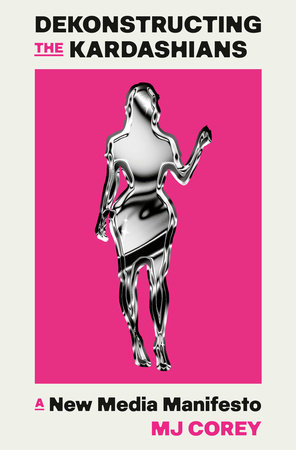
Dekonstructing the Kardashians

A New Media Manifesto

Author MJ Corey
Look inside
Hardcover
$30.00 US
6.4"W x 9.53"H x 1.29"D   | 22 oz | 12 per carton
On sale May 05, 2026 | 464 Pages | 9780593701348

From the creator of the highly popular Kardashian Kolloquium comes a new media manifesto for the TikTok age, blending theory and cultural analysis to explain the meteoric rise of the Kardashians and explore what their fame can teach us about the way media functions today

“By far the best book I've ever read on celebrity in the twenty-first century.”—Leigh Stein, author of Self Care

“Dekonstructing the Kardashians is Ways of Seeing for the Instagram Age.”—Maris Kreizman, author of Slaughterhouse 90210


Since 2007, Kim Kardashian and the extended Kardashian family have been mesmerizing—and scandalizing—America. Whether we’ve liked it or not, we’ve been inundated with stories of their social lives, scandals, and reality show shenanigans and have witnessed the subsequent ascent of their multibillion-dollar fashion, beauty, and media empire. But the question remains: Why are the Kardashians so famous in the first place? And what does this tell us about the new media that have delivered them to us?

In Dekonstructing the Kardashians, MJ Corey, creator of the viral social media presence Kardashian Kolloquium, brings us not only the definitive chronicle of the family that’s captivated a nation, but, perhaps more important, the story of how media has transformed in the internet age and how it continues to transform us as individuals and as a culture at large. Part media theory, part cultural analysis, Dekonstructing the Kardashians interweaves history from the past fifty years of Western media—from the Old Hollywood studio system, to the advent of the twenty-four-hour news cycle, to tabloid culture and beyond—with analysis of the cultural influence Kim Kardashian wields over us all and the influences that have shaped her in kind. In so doing, Corey offers proof that the Kardashians are, in fact, the First Family of our image-saturated and deeply divided nation, while also demonstrating how they hold the keys to understanding the disjointed, self-referential reality of our current era.
“A rigorous yet lively exploration of the way we consume media today, Dekonstructing the Kardashians is Ways of Seeing for the Instagram Age.”—Maris Kreizman, author of Slaughterhouse 90210 and I Want to Burn This Place Down

“From old Hollywood to MAGA, Corey looks at the world that gave us the Kardashians — and how they have, for good or ill, shaped us in turn.”The New York Times

“Why, some wonder, would a perfectly sane psychotherapist be so intrigued by the Kardashian family? The answer is simple: because it is possible to argue, as Corey persuasively does, that they are physical manifestations of America’s psyche; flesh-and-blood representatives of a post-internet mindset that prizes aesthetics over meaning.”Bookforum

“Corey is at her best when parsing the ways in which the Kardashians resonate with their vast audience.”The New Yorker

“An exhaustively researched, extremely entertaining, and surprisingly profound study of a decadent American dynasty and the spectacle they've produced—which we participate in whether we love them or love to hate them. This is by far the best book I've ever read on celebrity in the twenty-first century.”—Leigh Stein, author of Self Care

“A special work of scholarship that goes far beyond its stated—and divisive—topic. Both Kardashian fans and critics alike, however, will find genuine gold (not to mention plenty of diamonds) here: MJ Corey helps us to understand how and why the Kardashian family was able to parlay humble third-tier reality TV stardom into an empire that colonized our feeds, news, minds, and conversations over the last two decades. Did they know it had to do with Hegel, dialectics, semiotics, and the underpinnings of the history of cinema? Probably not, but now we do, and boy do we have some smart thoughts to drop at our next dinner party.”—Jennifer Keishin Armstrong, New York Times bestselling author of Seinfeldia and When Women Invented Television

“Any hack can hate on the Kardashians, but it takes a true genius to use America's first family as an entry point for a thoroughly researched romp through the last century of media criticism. You don't need to know anything about Kim and the Krew, or even be a fan, to follow MJ Corey's argument about how they are the truest reflection of our country at this moment or the incredible impact they've had on television, commerce, social media, and the world at large.”—Brian Moylan, New York Times bestselling author of The Housewives: The Real Story Behind the Real Housewives

“Taking on one of America's most self-documented and sensationalized families is no simple feat. But, M.J. Corey's Dekonstructing the Kardashians enters this pop culture fray with rigorous analysis, clever close readings, and the type of deft social commentary that the Kardashian brand often eludes. To make sense of their rise, their constant reinventions, and the role that race, gender, and media spectacle play in both their production of self and the public reception of them is to hold a mirror to 21st-century American identity—this book is a crucial looking glass.”—Salamishah Tillet, Pulitzer Prize-winning contributing critic-at-large for The New York Times

“It is hard to get your bearings in a world where ‘reality’ is just a kind of television show and many of the people in our (para)social circles are entirely imaginary. Lucky for us, MJ Corey is an adept guide through the hall of mirrors that is influencer culture, screen addiction, and the shapeshifting nature of contemporary celebrity. Dekonstructing the Kardashians is not just a brilliant analysis of one famous family and their physical and virtual empire, it’s a guide for navigating the distortions and misrepresentations of what comes out of our devices. Corey reveals how much we go to the Internet to tell us how to live, and she helps us make sense of that impulse. Clever and funny, she writes with the venom of a bee sting and the impact of a frying pan to the back of the head.”—Jessa Crispin, author of What Is Wrong with Men: Patriarchy, the Crisis of Masculinity, and How (Of Course) Michael Douglas Films Explain Everything

“A daring and radical interpretation of the Calabasas family that assesses Kim and her sisters not merely as a mirror to our society or a symptom of cultural rot but as the distilled essence of American spectacle, the spray-tanned spirit of the age. Dekonstructing the Kardashians is a rollicking trip through a century of mass media that seamlessly moves from California McMansion to ivory tower and back. The saga of a family self-made in every possible sense of the phrase, it’s an immersive treatise on the kontradictions of fame, how a family with so few professed fans has so many followers, and how a woman can be both a cultural underdog and social hegemon. MJ Corey has written a must-read to understand not only our moment but what made it—and the Kardashians—inevitable.”—Walt Hickey, author of You Are What You Watch: How Movies and TV Affect Everything

“A critical tour de force.” —Publishers Weekly

“Much needed in our current media landscape. . . . Will delight the biggest KUWTK fans and provide the uninitiated with an ultimate guide to one of America’s most famous families.”­—Booklist

“Paired with a personal fascination with the Kardashian family’s collective talent for narrative mastery, a postmodern sense of reality, and catchy episodic arcs, Corey cleverly and effectively fuses celebrity scrutiny and deft analysis with the famous family’s personalities and creates a whirlwind of themes, abstract ideas, and some very solid truths about their roles in modern society and their impact on feminism. . . . Corey digs deeper into the meaning and the message of the “pixel-perfect” family’s popularity, intelligently assessing how their tabloid-worthy, sensational fireworks keep the fires of celebrity culture and viewers’ addiction to reality television consistently stoked.”—Kirkus
© Craig LaCourt
MJ Corey is a Brooklyn-based writer and psychotherapist best known as Kardashian Kolloquium on TikTok and Instagram, where she applies media theory and postmodern frameworks to the Kardashian family. Her culture writing has been featured in Refinery29, Paper Magazine, Vogue, and The New Yorker, among many other outlets. View titles by MJ Corey
1. Blueprints
Postmodern iconicity and the network society

"What's more American than Marilyn Monroe?”

So inquires the title of a Kardashians episode that follows Kim’s preparation for the 2022 Met Gala. Fretting over dress measurements in her big beige closet and describing herself as a “shape-­shifter,” Kim prepares to don the nude sheath originally debuted by Marilyn in 1962 when she sang “Happy Birthday, Mr. President!” to John F. Kennedy. Of course, after the gala, public uproar across the press and social media inevitably coalesced into various hot-­take factions:

1.Kim wishes she were Marilyn: “You can put lipstick on a pig but it’s still a pig. Marilyn Monroe in this dress presented the vulnerability, sexuality, and unappreciated talent that were uniquely Marilyn. KK is a made-­for-­television plastic reproduction of Marilyn,” a user commented on a New York Times article.

2.Won’t someone please think about the dress?: “It was so disrespectful to wear it, if she really cared about Marilyn & her legacy she would’ve just worn the replica. It’s not all on her though, whoever ok’d it gets blame too,” @laura_gee13 opined on Twitter.

3.Kim’s crash diet to fit into the dress offers a dangerous precedent: “Kim Kardashian’s Met Gala Diet Stunt Is Both Outdated and Alarming,” read a Glamour magazine headline by Michelle Konstantinovsky.

4.Kim is an icon, after all: “It makes perfect sense in 2022 why Kim K would be the one chosen to wear this dress. She IS a modern day Marilyn. Incredible,” tweeted @MisterPreda, voicing the minority opinion.

I’m guessing that when you think of the term “American icon,” Marilyn Monroe is one of the first names that comes to mind; it’s just a question of which image your hippocampus pulls up. (For me, it’s the white dress moment from The Seven Year Itch.) Charles Casillo, author of Marilyn Monroe: The Private Life of a Public Icon and The Marilyn Diaries, tells me that an “icon” is a “person who is so celebrated that they come to represent a particular thing or field—­often the era that they come to prominence in—­like a music icon, movie icon, a sports icon, fashion icon, a political icon. But also, someone who has outstanding and unforgettable characteristics that label them. Like ‘a sex symbol’ or ‘genius,’ or a ‘hero.’ ” The other thing about icons is the enthusiastic emulation they inspire in others. “Let’s face it,” Casillo adds, “almost every female love goddess that has come after her has done a photo shoot or video dressed as Marilyn: Madonna, Drew Barrymore, Lindsay Lohan, Nicole Kidman, Naomi Watts, Scarlett Johansson, Miley Cyrus, Beyonce.” What, exactly, does Marilyn’s image offer them? S. Paige Baty suggests an answer in American Monroe: “By virtue of her familiarity, Marilyn serves as . . . an instantly recognizable expression of a mood, an era, a sexuality. She allows an audience to draw from a common ground.”

This common ground seems to inspire biographers, documentarians, authors, and filmmakers to continually attempt to tackle Marilyn from some new angle. The most recent entry in this genre, as of this writing, is Blonde, the Netflix original adapted from Joyce Carol Oates’s impressionistic novel of the same name, which drew an accurate, albeit bleak, allegory about what it can feel like to be a woman in this world. Perceived as a posthumous assault on Marilyn’s dignity, the film was not well received, especially on the heels of Kim’s boundary-­pushing stunt. Baty adds, “Authorings of Marilyn claim to reveal the ‘true’ subject, yet each new book or image will be followed by even more ‘final’ rememberings. . . . The images are not frozen in the past, but rather are often reconstructed in relationship to contemporary products, events, and icons.” Kim Kardashian can be deconstructed and reconstructed according to all kinds of products, events, and icons, from her self-­identification as a “Balenciaga Barbie” in an Instagram caption during a time when she was wearing hot pink all over town in the 2020s, to the 1995 O. J. Simpson trial, which many young people on Twitter claim to only know about thanks to her father’s presence, to, well, Marilyn herself—­an amalgamation of semiological systems that the French theorist Roland Barthes (inspired by the Swiss structural linguist Ferdinand de Saussure) considers the foundation for myth itself. Semiotics are made up of “signs that are seemingly straightforward but that subtly communicate ideological or connotative meaning and perpetuate the dominant values of society.” This book aims to identify and compile some of the semiotics Kim Kardashian has attached herself to throughout the years to become a living myth. Because her multiracial, intergenerational, blended dynasty has colonized such vast cultural ground, odds are you’re going to believe I omitted some crucial semiotics in my discussion—­why isn’t there, say, a “courtroom” chapter, wherein I unpack the underpinnings of Kim’s besuited Elle Woods activist persona? Especially when, at the time of writing, the reality star and entrepreneur Kim, suddenly also an actress, has signed on to coproduce and star in a Ryan Murphy legal drama as a cutthroat divorce attorney? Or you might ask, what about Cleopatra, whose discourse-­generating racial ambiguity and conversion of sexual prowess into political influence seem a worthwhile Kardashian comparison? I will say only that such omissions prove my larger point—­that the Kar-­Jenners, masters of contradictions, can be applied and deconstructed according to just about every aspect of American life.

Is earning an eternal legacy the unstated endgame of all pursuits of fame? The bad news for the stars on Casillo’s list is that—­aside from, probably, Beyoncé—­their iconic status will never approach that of the late starlet Monroe. The rest of us might get all misty-­eyed about her singularity—­there’ll never be another Marilyn—­but the truth is that there’ll never be another media environment quite like the one that made her: radio, film, newspapers, and some good old-­fashioned razzle-­dazzle (spoken with the transatlantic dialect that we hear in all media from those days, and which was in truth native to nowhere).

Our collective conception of the “icon” is ever evolving as new media forms continually reformat our understanding of the world. But let’s first define what new media even is. Cambridge Dictionary says it’s “information or entertainment” delivered by way of “computers or the internet, and not by traditional methods such as television and newspapers.”

We live the ramifications of new media daily: There’s an overload of information online; information conveyed visually is easier to consume; we’re able to consume faster than ever; and we are frequently inundated by everyone else’s feelings and thoughts about all of it. Microsoft’s market researchers have even suggested that the attention spans of goldfish now outshine our own, which have shrunk from twelve to eight seconds since 2000 (“about when the ‘mobile revolution’ began,” as Time points out). This ever accelerating and expanding state of affairs affects how we think about icons because we can pull their images up on Google in seconds and skim their visual archives across websites, fan accounts, and social media conversations, and the process tends to elicit a spectrum of strong feelings: identification, nostalgia, yearning, fascination, disgust, and, sometimes, a belief that we have a better grasp of American history and culture. Baty explains it this way: “The mass media have helped to make the representative character a common means of relaying stories and constructing histories which are easily circulated and imaged across great distances of time and space.”

The more representative characters put into conversation with one another, the better. As the Dress discourse swirled in the aftermath of Kim’s viral Met Gala appearance, rumors began to tide online that Britney Spears was a distant relative of Marilyn Monroe’s. Various Twitter threads and TikTok takes seemed to welcome this narrative in large part because it undermined Kim’s sartorial statement. Britney’s biography was certainly more akin to Marilyn’s: The pop star, recently liberated from an exploitative conservatorship and clearly haunted by the harms done to her by a fame she’d always been ambivalent about, is—­as Marilyn was—­a tragic figure. (Meanwhile, Kim’s legacy will never be defined by trauma because she willingly gives us all that we consume of her. Kim’s consent is part of the problem: It means she has a lust for fame.) As everyone worked out how they felt about the matter—­some conservators spoke out against Kim’s violation of an archival piece, while Marilyn Monroe’s estate released a statement of support—­those red-­carpet images of Kim wearing Monroe’s dress further propagated the social media posts, the message board threads, the news headlines. You saw the photos. Kim’s head is held high, perhaps because she knew she’d hacked new media’s defining economy—­the attention economy—­yet again.

Plus, the feeds, the threads, the headlines, all of which had delivered the Kim content, show us what it means to be mediated. Mediation is what happens when “media,” a noun, becomes a verb. Whatever we consume from social media, message boards, and the news has been mediated to us. Kim does not have tragedy in common with Marilyn. But she will share with her the legacy of having been hyper-­mediated.

***

In keeping with the high-­tech nature of new media, many pop culture consumers have applied a technical framework to understanding the function of icons: that of the blueprint.

In a viral April 2021 video titled “Unpopular Opinions: Kardashian/Jenner Edition,” the TikTok user @mizfit said, “It’s crazy how many people say the Kardashian/Jenners are the ‘blueprint,’ but not a single person can tell me what they’re the blueprint of!” He continued with a not-­infrequent critique of the Kardashians’ success: “If they’re the blueprint of anything, it is cultural appropriation on social media.” In the video’s comments section, responses resound in approval. “READ THEM BESTIE,” says one user. “They are billionaires for nothing and that makes me mad,” says another.

@mizfit and his commenters are half right. Cultural appropriation is a key component to Kim Kardashian’s complex self-­design, and while it’s not the complete picture, her donning of Black women’s hairstyles and numerous related transgressions may be why so many object to calling her the “blueprint” for anything.

But if icons represent eras, per Charles Casillo’s definition, I can’t think of a better blueprint for iconic fame in the internet age than Kim K, and reactions to her often mirror larger existential anxieties about the internet. Her infamous ethnic ambiguity has worked to her advantage as her image proliferates across media forms more numerous than her alleged nose jobs: from centerfold to cosplayer to cameo to main character to muse to mannequin to influencer to emoji and more. To put it in TikTok terms? Kim’s multiplicity “matches the energy” of the metaverse.

Kim Kardashian has cracked the code: Embody every icon. Live up the luxury life, invoking collective contempt à la Marie Antoinette (and wear a white wig and corset in a cable-­TV energy drink ad). Play muse to grand designers while spinning memorable mythologies about the family dynasty, like Jackie O (and dress in similar suits for a magazine cover, to decorate every newsstand). Piss everyone off with Spice Girls–­style Girl Power—­or is it Girlboss?—­messaging (and then “be” them with friends for a talent show). In fact, Kim confronts us with dialectics—­a concept, derived from the thinking of the nineteenth-­century German philosopher Georg Wilhelm Friedrich Hegel, that seemingly oppositional phenomena can in fact be synthetized. The personal and the political. The mother and the whore. The leader and the Everywoman. Kim’s ability to collapse binaries in every aspect of her brand is what renders her so confounding and therefore memorable. Within every semiotic in this book, you’ll find dialectics at play. By doing this, Kim herself has become a medium: surrounding us at every turn, reviving the profundity of the past, and cultivating cultural comparisons of which she becomes the center.

@mizfit’s complaint that “not a single person can tell me what they’re the blueprint of!” stems from the “blueprint” discourse popularized on Twitter in 2020. According to the website Know Your Meme, “blueprint” is a term used to claim that a “stan’s . . . idol was the first person to start a fashion or pop culture trend, making them the ‘blueprint’ others built off.”

“Blueprint” establishes comforting mathematics out of an overwhelming economy of content. As the Vox internet reporter Rebecca Jennings explains of social media’s influence on fashion, “No age group has ever had as much historical fashion knowledge and primary sources to draw from as young people do today, with the entirety of the last twenty years documented online.” The kids today are motivated to create colorful taxonomies of the throwback-­inspired micro-­trends they come up with, and then title them with the definitude of scholars: “bimbocore,” “coquette,” “indie sleaze,” “mod revival.” One popular tweet by a user named Dyke Angst posits that Miss Honey, the pretty teacher from the 1996 movie Matilda, was “the blueprint for cottagecore lesbian culture.” Other tweets claim that the screenshots of 1990s goth kids featured on shows like Maury and Jerry Springer are blueprints for a chaotic Gen Z fashion sensibility that Jennings has dubbed “TikTok Couture.” Insta­gram and TikTok feeds are so saturated with Looks and Concepts that it’s no wonder there’s such a fascination with the simpler times and icons—­the blueprints—­from whence they came.

Enter Kim Kardashian and her obvious incentive to borrow from big-­name blueprints. As Barbara Walters told Kim and her sisters in an internet-­acclaimed 2011 interview, “You don’t really act, you don’t sing, you don’t dance, you don’t have any—­forgive me—­any talent.”
Preface xi

PART I
1. Blueprints 3
2. Marilyn Monroe 28
3. Princess Jasmine 49
4. The Kennedys 74
5. O.J. 92
6. The Spice Girls 113
7. Paris Hilton 139

PART II
Arrival (2007–2013) 161
The Brady BunchI Love Lucy • Girls Gone Wild • Playboy • Catchphrases • Confession • Churches • Wrestling • Las Vegas • The Truman Show • Ritual • Famous for Being Famous • Mug Shots • Memes

Everywoman (2013–2020) 214
Power Couples • Selfies • Kim 2.0 • Emojis • Disguises • Discourse • Political Postmodernism • Cultural Appropriation • Braids • Tequila • Disrupters • Recycling

The Donda Era (2020–2024) 287
Scale • Kardashification • Marie Antoinette • Merch • Conspiracy Theory • Barbie • Archives • Robert Kardashian Sr.

Acknowledgments 375
Notes 377
Index 425

About

From the creator of the highly popular Kardashian Kolloquium comes a new media manifesto for the TikTok age, blending theory and cultural analysis to explain the meteoric rise of the Kardashians and explore what their fame can teach us about the way media functions today

“By far the best book I've ever read on celebrity in the twenty-first century.”—Leigh Stein, author of Self Care

“Dekonstructing the Kardashians is Ways of Seeing for the Instagram Age.”—Maris Kreizman, author of Slaughterhouse 90210


Since 2007, Kim Kardashian and the extended Kardashian family have been mesmerizing—and scandalizing—America. Whether we’ve liked it or not, we’ve been inundated with stories of their social lives, scandals, and reality show shenanigans and have witnessed the subsequent ascent of their multibillion-dollar fashion, beauty, and media empire. But the question remains: Why are the Kardashians so famous in the first place? And what does this tell us about the new media that have delivered them to us?

In Dekonstructing the Kardashians, MJ Corey, creator of the viral social media presence Kardashian Kolloquium, brings us not only the definitive chronicle of the family that’s captivated a nation, but, perhaps more important, the story of how media has transformed in the internet age and how it continues to transform us as individuals and as a culture at large. Part media theory, part cultural analysis, Dekonstructing the Kardashians interweaves history from the past fifty years of Western media—from the Old Hollywood studio system, to the advent of the twenty-four-hour news cycle, to tabloid culture and beyond—with analysis of the cultural influence Kim Kardashian wields over us all and the influences that have shaped her in kind. In so doing, Corey offers proof that the Kardashians are, in fact, the First Family of our image-saturated and deeply divided nation, while also demonstrating how they hold the keys to understanding the disjointed, self-referential reality of our current era.

Praise

“A rigorous yet lively exploration of the way we consume media today, Dekonstructing the Kardashians is Ways of Seeing for the Instagram Age.”—Maris Kreizman, author of Slaughterhouse 90210 and I Want to Burn This Place Down

“From old Hollywood to MAGA, Corey looks at the world that gave us the Kardashians — and how they have, for good or ill, shaped us in turn.”The New York Times

“Why, some wonder, would a perfectly sane psychotherapist be so intrigued by the Kardashian family? The answer is simple: because it is possible to argue, as Corey persuasively does, that they are physical manifestations of America’s psyche; flesh-and-blood representatives of a post-internet mindset that prizes aesthetics over meaning.”Bookforum

“Corey is at her best when parsing the ways in which the Kardashians resonate with their vast audience.”The New Yorker

“An exhaustively researched, extremely entertaining, and surprisingly profound study of a decadent American dynasty and the spectacle they've produced—which we participate in whether we love them or love to hate them. This is by far the best book I've ever read on celebrity in the twenty-first century.”—Leigh Stein, author of Self Care

“A special work of scholarship that goes far beyond its stated—and divisive—topic. Both Kardashian fans and critics alike, however, will find genuine gold (not to mention plenty of diamonds) here: MJ Corey helps us to understand how and why the Kardashian family was able to parlay humble third-tier reality TV stardom into an empire that colonized our feeds, news, minds, and conversations over the last two decades. Did they know it had to do with Hegel, dialectics, semiotics, and the underpinnings of the history of cinema? Probably not, but now we do, and boy do we have some smart thoughts to drop at our next dinner party.”—Jennifer Keishin Armstrong, New York Times bestselling author of Seinfeldia and When Women Invented Television

“Any hack can hate on the Kardashians, but it takes a true genius to use America's first family as an entry point for a thoroughly researched romp through the last century of media criticism. You don't need to know anything about Kim and the Krew, or even be a fan, to follow MJ Corey's argument about how they are the truest reflection of our country at this moment or the incredible impact they've had on television, commerce, social media, and the world at large.”—Brian Moylan, New York Times bestselling author of The Housewives: The Real Story Behind the Real Housewives

“Taking on one of America's most self-documented and sensationalized families is no simple feat. But, M.J. Corey's Dekonstructing the Kardashians enters this pop culture fray with rigorous analysis, clever close readings, and the type of deft social commentary that the Kardashian brand often eludes. To make sense of their rise, their constant reinventions, and the role that race, gender, and media spectacle play in both their production of self and the public reception of them is to hold a mirror to 21st-century American identity—this book is a crucial looking glass.”—Salamishah Tillet, Pulitzer Prize-winning contributing critic-at-large for The New York Times

“It is hard to get your bearings in a world where ‘reality’ is just a kind of television show and many of the people in our (para)social circles are entirely imaginary. Lucky for us, MJ Corey is an adept guide through the hall of mirrors that is influencer culture, screen addiction, and the shapeshifting nature of contemporary celebrity. Dekonstructing the Kardashians is not just a brilliant analysis of one famous family and their physical and virtual empire, it’s a guide for navigating the distortions and misrepresentations of what comes out of our devices. Corey reveals how much we go to the Internet to tell us how to live, and she helps us make sense of that impulse. Clever and funny, she writes with the venom of a bee sting and the impact of a frying pan to the back of the head.”—Jessa Crispin, author of What Is Wrong with Men: Patriarchy, the Crisis of Masculinity, and How (Of Course) Michael Douglas Films Explain Everything

“A daring and radical interpretation of the Calabasas family that assesses Kim and her sisters not merely as a mirror to our society or a symptom of cultural rot but as the distilled essence of American spectacle, the spray-tanned spirit of the age. Dekonstructing the Kardashians is a rollicking trip through a century of mass media that seamlessly moves from California McMansion to ivory tower and back. The saga of a family self-made in every possible sense of the phrase, it’s an immersive treatise on the kontradictions of fame, how a family with so few professed fans has so many followers, and how a woman can be both a cultural underdog and social hegemon. MJ Corey has written a must-read to understand not only our moment but what made it—and the Kardashians—inevitable.”—Walt Hickey, author of You Are What You Watch: How Movies and TV Affect Everything

“A critical tour de force.” —Publishers Weekly

“Much needed in our current media landscape. . . . Will delight the biggest KUWTK fans and provide the uninitiated with an ultimate guide to one of America’s most famous families.”­—Booklist

“Paired with a personal fascination with the Kardashian family’s collective talent for narrative mastery, a postmodern sense of reality, and catchy episodic arcs, Corey cleverly and effectively fuses celebrity scrutiny and deft analysis with the famous family’s personalities and creates a whirlwind of themes, abstract ideas, and some very solid truths about their roles in modern society and their impact on feminism. . . . Corey digs deeper into the meaning and the message of the “pixel-perfect” family’s popularity, intelligently assessing how their tabloid-worthy, sensational fireworks keep the fires of celebrity culture and viewers’ addiction to reality television consistently stoked.”—Kirkus

Author

© Craig LaCourt
MJ Corey is a Brooklyn-based writer and psychotherapist best known as Kardashian Kolloquium on TikTok and Instagram, where she applies media theory and postmodern frameworks to the Kardashian family. Her culture writing has been featured in Refinery29, Paper Magazine, Vogue, and The New Yorker, among many other outlets. View titles by MJ Corey

Excerpt

1. Blueprints
Postmodern iconicity and the network society

"What's more American than Marilyn Monroe?”

So inquires the title of a Kardashians episode that follows Kim’s preparation for the 2022 Met Gala. Fretting over dress measurements in her big beige closet and describing herself as a “shape-­shifter,” Kim prepares to don the nude sheath originally debuted by Marilyn in 1962 when she sang “Happy Birthday, Mr. President!” to John F. Kennedy. Of course, after the gala, public uproar across the press and social media inevitably coalesced into various hot-­take factions:

1.Kim wishes she were Marilyn: “You can put lipstick on a pig but it’s still a pig. Marilyn Monroe in this dress presented the vulnerability, sexuality, and unappreciated talent that were uniquely Marilyn. KK is a made-­for-­television plastic reproduction of Marilyn,” a user commented on a New York Times article.

2.Won’t someone please think about the dress?: “It was so disrespectful to wear it, if she really cared about Marilyn & her legacy she would’ve just worn the replica. It’s not all on her though, whoever ok’d it gets blame too,” @laura_gee13 opined on Twitter.

3.Kim’s crash diet to fit into the dress offers a dangerous precedent: “Kim Kardashian’s Met Gala Diet Stunt Is Both Outdated and Alarming,” read a Glamour magazine headline by Michelle Konstantinovsky.

4.Kim is an icon, after all: “It makes perfect sense in 2022 why Kim K would be the one chosen to wear this dress. She IS a modern day Marilyn. Incredible,” tweeted @MisterPreda, voicing the minority opinion.

I’m guessing that when you think of the term “American icon,” Marilyn Monroe is one of the first names that comes to mind; it’s just a question of which image your hippocampus pulls up. (For me, it’s the white dress moment from The Seven Year Itch.) Charles Casillo, author of Marilyn Monroe: The Private Life of a Public Icon and The Marilyn Diaries, tells me that an “icon” is a “person who is so celebrated that they come to represent a particular thing or field—­often the era that they come to prominence in—­like a music icon, movie icon, a sports icon, fashion icon, a political icon. But also, someone who has outstanding and unforgettable characteristics that label them. Like ‘a sex symbol’ or ‘genius,’ or a ‘hero.’ ” The other thing about icons is the enthusiastic emulation they inspire in others. “Let’s face it,” Casillo adds, “almost every female love goddess that has come after her has done a photo shoot or video dressed as Marilyn: Madonna, Drew Barrymore, Lindsay Lohan, Nicole Kidman, Naomi Watts, Scarlett Johansson, Miley Cyrus, Beyonce.” What, exactly, does Marilyn’s image offer them? S. Paige Baty suggests an answer in American Monroe: “By virtue of her familiarity, Marilyn serves as . . . an instantly recognizable expression of a mood, an era, a sexuality. She allows an audience to draw from a common ground.”

This common ground seems to inspire biographers, documentarians, authors, and filmmakers to continually attempt to tackle Marilyn from some new angle. The most recent entry in this genre, as of this writing, is Blonde, the Netflix original adapted from Joyce Carol Oates’s impressionistic novel of the same name, which drew an accurate, albeit bleak, allegory about what it can feel like to be a woman in this world. Perceived as a posthumous assault on Marilyn’s dignity, the film was not well received, especially on the heels of Kim’s boundary-­pushing stunt. Baty adds, “Authorings of Marilyn claim to reveal the ‘true’ subject, yet each new book or image will be followed by even more ‘final’ rememberings. . . . The images are not frozen in the past, but rather are often reconstructed in relationship to contemporary products, events, and icons.” Kim Kardashian can be deconstructed and reconstructed according to all kinds of products, events, and icons, from her self-­identification as a “Balenciaga Barbie” in an Instagram caption during a time when she was wearing hot pink all over town in the 2020s, to the 1995 O. J. Simpson trial, which many young people on Twitter claim to only know about thanks to her father’s presence, to, well, Marilyn herself—­an amalgamation of semiological systems that the French theorist Roland Barthes (inspired by the Swiss structural linguist Ferdinand de Saussure) considers the foundation for myth itself. Semiotics are made up of “signs that are seemingly straightforward but that subtly communicate ideological or connotative meaning and perpetuate the dominant values of society.” This book aims to identify and compile some of the semiotics Kim Kardashian has attached herself to throughout the years to become a living myth. Because her multiracial, intergenerational, blended dynasty has colonized such vast cultural ground, odds are you’re going to believe I omitted some crucial semiotics in my discussion—­why isn’t there, say, a “courtroom” chapter, wherein I unpack the underpinnings of Kim’s besuited Elle Woods activist persona? Especially when, at the time of writing, the reality star and entrepreneur Kim, suddenly also an actress, has signed on to coproduce and star in a Ryan Murphy legal drama as a cutthroat divorce attorney? Or you might ask, what about Cleopatra, whose discourse-­generating racial ambiguity and conversion of sexual prowess into political influence seem a worthwhile Kardashian comparison? I will say only that such omissions prove my larger point—­that the Kar-­Jenners, masters of contradictions, can be applied and deconstructed according to just about every aspect of American life.

Is earning an eternal legacy the unstated endgame of all pursuits of fame? The bad news for the stars on Casillo’s list is that—­aside from, probably, Beyoncé—­their iconic status will never approach that of the late starlet Monroe. The rest of us might get all misty-­eyed about her singularity—­there’ll never be another Marilyn—­but the truth is that there’ll never be another media environment quite like the one that made her: radio, film, newspapers, and some good old-­fashioned razzle-­dazzle (spoken with the transatlantic dialect that we hear in all media from those days, and which was in truth native to nowhere).

Our collective conception of the “icon” is ever evolving as new media forms continually reformat our understanding of the world. But let’s first define what new media even is. Cambridge Dictionary says it’s “information or entertainment” delivered by way of “computers or the internet, and not by traditional methods such as television and newspapers.”

We live the ramifications of new media daily: There’s an overload of information online; information conveyed visually is easier to consume; we’re able to consume faster than ever; and we are frequently inundated by everyone else’s feelings and thoughts about all of it. Microsoft’s market researchers have even suggested that the attention spans of goldfish now outshine our own, which have shrunk from twelve to eight seconds since 2000 (“about when the ‘mobile revolution’ began,” as Time points out). This ever accelerating and expanding state of affairs affects how we think about icons because we can pull their images up on Google in seconds and skim their visual archives across websites, fan accounts, and social media conversations, and the process tends to elicit a spectrum of strong feelings: identification, nostalgia, yearning, fascination, disgust, and, sometimes, a belief that we have a better grasp of American history and culture. Baty explains it this way: “The mass media have helped to make the representative character a common means of relaying stories and constructing histories which are easily circulated and imaged across great distances of time and space.”

The more representative characters put into conversation with one another, the better. As the Dress discourse swirled in the aftermath of Kim’s viral Met Gala appearance, rumors began to tide online that Britney Spears was a distant relative of Marilyn Monroe’s. Various Twitter threads and TikTok takes seemed to welcome this narrative in large part because it undermined Kim’s sartorial statement. Britney’s biography was certainly more akin to Marilyn’s: The pop star, recently liberated from an exploitative conservatorship and clearly haunted by the harms done to her by a fame she’d always been ambivalent about, is—­as Marilyn was—­a tragic figure. (Meanwhile, Kim’s legacy will never be defined by trauma because she willingly gives us all that we consume of her. Kim’s consent is part of the problem: It means she has a lust for fame.) As everyone worked out how they felt about the matter—­some conservators spoke out against Kim’s violation of an archival piece, while Marilyn Monroe’s estate released a statement of support—­those red-­carpet images of Kim wearing Monroe’s dress further propagated the social media posts, the message board threads, the news headlines. You saw the photos. Kim’s head is held high, perhaps because she knew she’d hacked new media’s defining economy—­the attention economy—­yet again.

Plus, the feeds, the threads, the headlines, all of which had delivered the Kim content, show us what it means to be mediated. Mediation is what happens when “media,” a noun, becomes a verb. Whatever we consume from social media, message boards, and the news has been mediated to us. Kim does not have tragedy in common with Marilyn. But she will share with her the legacy of having been hyper-­mediated.

***

In keeping with the high-­tech nature of new media, many pop culture consumers have applied a technical framework to understanding the function of icons: that of the blueprint.

In a viral April 2021 video titled “Unpopular Opinions: Kardashian/Jenner Edition,” the TikTok user @mizfit said, “It’s crazy how many people say the Kardashian/Jenners are the ‘blueprint,’ but not a single person can tell me what they’re the blueprint of!” He continued with a not-­infrequent critique of the Kardashians’ success: “If they’re the blueprint of anything, it is cultural appropriation on social media.” In the video’s comments section, responses resound in approval. “READ THEM BESTIE,” says one user. “They are billionaires for nothing and that makes me mad,” says another.

@mizfit and his commenters are half right. Cultural appropriation is a key component to Kim Kardashian’s complex self-­design, and while it’s not the complete picture, her donning of Black women’s hairstyles and numerous related transgressions may be why so many object to calling her the “blueprint” for anything.

But if icons represent eras, per Charles Casillo’s definition, I can’t think of a better blueprint for iconic fame in the internet age than Kim K, and reactions to her often mirror larger existential anxieties about the internet. Her infamous ethnic ambiguity has worked to her advantage as her image proliferates across media forms more numerous than her alleged nose jobs: from centerfold to cosplayer to cameo to main character to muse to mannequin to influencer to emoji and more. To put it in TikTok terms? Kim’s multiplicity “matches the energy” of the metaverse.

Kim Kardashian has cracked the code: Embody every icon. Live up the luxury life, invoking collective contempt à la Marie Antoinette (and wear a white wig and corset in a cable-­TV energy drink ad). Play muse to grand designers while spinning memorable mythologies about the family dynasty, like Jackie O (and dress in similar suits for a magazine cover, to decorate every newsstand). Piss everyone off with Spice Girls–­style Girl Power—­or is it Girlboss?—­messaging (and then “be” them with friends for a talent show). In fact, Kim confronts us with dialectics—­a concept, derived from the thinking of the nineteenth-­century German philosopher Georg Wilhelm Friedrich Hegel, that seemingly oppositional phenomena can in fact be synthetized. The personal and the political. The mother and the whore. The leader and the Everywoman. Kim’s ability to collapse binaries in every aspect of her brand is what renders her so confounding and therefore memorable. Within every semiotic in this book, you’ll find dialectics at play. By doing this, Kim herself has become a medium: surrounding us at every turn, reviving the profundity of the past, and cultivating cultural comparisons of which she becomes the center.

@mizfit’s complaint that “not a single person can tell me what they’re the blueprint of!” stems from the “blueprint” discourse popularized on Twitter in 2020. According to the website Know Your Meme, “blueprint” is a term used to claim that a “stan’s . . . idol was the first person to start a fashion or pop culture trend, making them the ‘blueprint’ others built off.”

“Blueprint” establishes comforting mathematics out of an overwhelming economy of content. As the Vox internet reporter Rebecca Jennings explains of social media’s influence on fashion, “No age group has ever had as much historical fashion knowledge and primary sources to draw from as young people do today, with the entirety of the last twenty years documented online.” The kids today are motivated to create colorful taxonomies of the throwback-­inspired micro-­trends they come up with, and then title them with the definitude of scholars: “bimbocore,” “coquette,” “indie sleaze,” “mod revival.” One popular tweet by a user named Dyke Angst posits that Miss Honey, the pretty teacher from the 1996 movie Matilda, was “the blueprint for cottagecore lesbian culture.” Other tweets claim that the screenshots of 1990s goth kids featured on shows like Maury and Jerry Springer are blueprints for a chaotic Gen Z fashion sensibility that Jennings has dubbed “TikTok Couture.” Insta­gram and TikTok feeds are so saturated with Looks and Concepts that it’s no wonder there’s such a fascination with the simpler times and icons—­the blueprints—­from whence they came.

Enter Kim Kardashian and her obvious incentive to borrow from big-­name blueprints. As Barbara Walters told Kim and her sisters in an internet-­acclaimed 2011 interview, “You don’t really act, you don’t sing, you don’t dance, you don’t have any—­forgive me—­any talent.”

Table of Contents

Preface xi

PART I
1. Blueprints 3
2. Marilyn Monroe 28
3. Princess Jasmine 49
4. The Kennedys 74
5. O.J. 92
6. The Spice Girls 113
7. Paris Hilton 139

PART II
Arrival (2007–2013) 161
The Brady BunchI Love Lucy • Girls Gone Wild • Playboy • Catchphrases • Confession • Churches • Wrestling • Las Vegas • The Truman Show • Ritual • Famous for Being Famous • Mug Shots • Memes

Everywoman (2013–2020) 214
Power Couples • Selfies • Kim 2.0 • Emojis • Disguises • Discourse • Political Postmodernism • Cultural Appropriation • Braids • Tequila • Disrupters • Recycling

The Donda Era (2020–2024) 287
Scale • Kardashification • Marie Antoinette • Merch • Conspiracy Theory • Barbie • Archives • Robert Kardashian Sr.

Acknowledgments 375
Notes 377
Index 425

Live Inspired with Compendium: Now Available from PRH!

Exciting news! Compendium has joined the Penguin Random House family, bringing a proven line of bestselling, sentiment-driven gifts to our extensive and ever-growing catalog. Since 1985, Compendium has been creating meaningful moments with beautiful, thoughtfully made gifts that center connection and celebrate occasions both big and small. From greeting cards to inspirational books to impulse-friendly add-ons, Compendium

Read more