Close Modal

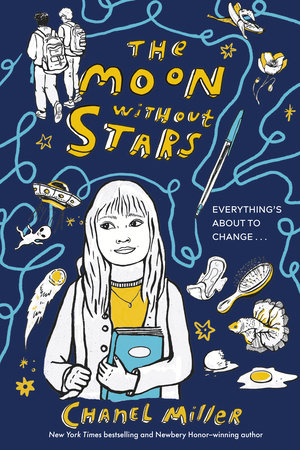
The Moon Without Stars

Look inside
Hardcover
$17.99 US
5.75"W x 8.5"H x 0.84"D   | 12 oz | 12 per carton
On sale Jan 13, 2026 | 256 Pages | 9780593624555
Age 10 and up | Grade 5 & Up
Reading Level: Lexile 800L

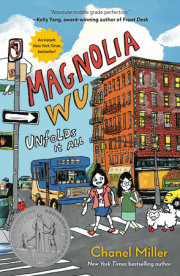
The New York Times bestselling, Newbery Honor–winning author of Magnolia Wu Unfolds It All explores the way growing up, finding friends, and discovering who you are can be both awkward and empowering in this heartfelt middle school novel.

At the beginning of seventh grade, Luna knows who she is: an observant, quiet girl who loves writing and making zines with her best friend, Scott. But when one of their zines takes off, Luna is somehow swept up into the popular group and learns just how much of herself she's going to have to compromise to stay there. Will she give up her writing? Her best friend? What about her own beliefs about who she is and what she stands for?

Featuring author-illustrator Chanel Miller’s signature line drawings, The Moon Without Stars is a deeply personal and often funny novel about what it means to lose and then find yourself again during the vulnerable, life-changing years of middle school.
Praise for The Moon Without Stars:

An Indie Next pick!

* “Authentic and raw, this story is at once a timeless account of growing up and a tale that’s specific to this generation . . . Genuine and poignant; has the makings of a modern classic.” —Kirkus, starred review

* “Subtle, original, and lightly suspenseful, Luna’s journey toward learning to balance the complex ins and outs of social interaction with her own desires will resonate with those seeking community and understanding.” —Publishers Weekly, starred review

* “Miller accurately captures stigmas that persist through middle-school life, from periods to peer pressure. But young readers won't only see a reflection of their experiences on these pages, they'll find new perspectives . . . An unflinching, nuanced take on contemporary middle-school life.” —Booklist, starred review

* “Miller (Magnolia Wu Unfolds It All) writes Luna’s voice with authenticity and warmth, capturing the awkward humor, emotion, and self-discovery that define early adolescence . . . An authentic coming-of-age story that encourages empathy, accountability, and confidence.” —School Library Journal, starred review

* “Miller has crafted a sensitive, authentic voice for the protagonist . . . Readers will find comfort in the moments of levity and small acts of kindness in the story that balance these darker plot lines while also knowing that they, like Luna’s bibliotherapy subjects, are not alone.” —The Horn Book, starred review
© Mariah Tiffany
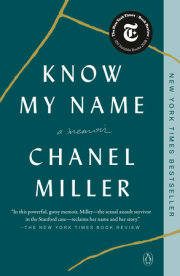
Chanel Miller is a writer and artist. Her first children’s book, Magnolia Wu Unfolds It All, was a Newbery Honor winner and an instant New York Times bestseller. It was also a TODAY show Read with Jenna Jr selection, a Good Housekeeping Best Kids’ Book Awards winner, a New York Times for Kids pick, a The Week Junior book club selection, a People magazine summer reading pick, a Junior Library Guild selection, and an Indie Next pick. Her memoir, Know My Name, was a New York Times bestseller, a New York Times Book Review Notable Book, and a winner of the National Book Critics Circle Award, the Dayton Literary Peace Prize, the Ridenhour Book Prize, and the California Book Award. It was also a best book of the year in TIME, The Washington Post, Chicago Tribune, NPR, and People, among others. She was named one of the Forbes 30 Under 30 and a Time Next 100 honoree and was a Glamour Woman of the Year honoree. You can visit her online at Chanel-Miller.com or follow her on Instagram @Chanel_Miller. View titles by Chanel Miller
PROLOGUE

Most people assume a life-changing event requires summiting a snowcapped mountain, saving someone from a burning building, or winning a bajillion dollars. The reality is you can change your life with a single word. Up until seventh grade, I’d been an introvert with exactly one friend, content with the uneventful. But everything would start to shift, to slip slowly into unexpected joy and catastrophe, all because of the afternoon I chose to say, “Okay.”

It was an overcast day. Bag of grapes, block of cheddar cheese, lukewarm lemonade, and two lawn chairs on a faded yellow blanket. Ten days left of summer. Scott tossed his head back, his mouth agape, trying to catch a Goldfish cracker up in the air. It bounced off his chin and landed near my feet. I brushed my bangs aside, dog-eared a page. A creaking sound, the wheels of a metal wagon. Our heads turned in unison. Poppy’s mom, long face, unruly hair, purple windbreaker, was pulling her wagon with the black karaoke machine up the sidewalk. I knew it wasn't polite to stare and glued my eyes back to my book.

Poppy Lee had been in the grade above me, but died, after a long illness. Passed away, that’s the polite term, but it comes out to the same thing. I guess death is a scary word, the thhh at the end sounds like a tire leaking air and the hard d of death sounds like done, like door. It’s final, shut. After Poppy died, her mom started showing up in the park with this karaoke machine and microphone attached to a long wire. Singing and swaying all day long, eyes closed. Some people complained she sounded like a mosquito. Said, She’s gone off her rocker. Cuckoo bananas. It’s haunting. Like a wailing cat! Poor woman. So melancholy. But nobody intervened, they just let her be.

I heard the wheels come to a stop and glanced up.

“Poppy loved to read,” she said. I looked behind me, made sure I was the one she was addressing.

“So many books at home, and nothing to do with them,” she said. “Would you like them?”

Her eyes burrowed straight into mine. Without moving my head, I slid my pupils to my left toward Scott. I saw the barely perceptible tilt of his head forward, an affirmation.

“Will you take them?” Mrs. Lee said.

“Okay,” I said to her, and that was it, my whole rest of the year hinged on that moment.

“Okay! Smart girl. Poppy will be happy. I’ll have Palmer drop them off later.”

She seemed relieved and began humming as she dragged her wagon away.

***

That evening, a cream-colored minivan pulled up out front. I could hear the engine click off, the crickets chirping outside. The doorbell rang, my dad called out, “Who is it?” And I yelled back, “Just a delivery, I got it!”

Poppy’s older brother, Palmer, sixteen, stood in the doorframe, swoopy haired, tall and narrow as a palm tree. I’d put on my best sweater. Not to impress him or anything, it was just the first time a boy, other than Scott, had come over. But Scott didn’t count; I’ve known him since I had a consciousness, feel neutral toward him like I would toward a penguin.

“Come in,” I said. Palmer’s lanky arms were wrapped around a cardboard box, the hard edges pressing red lines into his forearms. So began the quiet rhythm of Palmer setting boxes down, one by one, with a subtle exhale. The shushing sound of boxes sliding over the carpet and into my room, heat generated from the friction. Palmer’s forehead began to shimmer. I rushed to the fridge to see if I could get him a cold drink, but we only had soy milk.

“I think that’s it,” he said.

I held out a handful of White Rabbit candies from the kitchen drawer. He hesitated, then reached out and took one.

“Thank you,” I said. “The inside wrapper is just sticky rice paper—you don’t have to peel it off. You can eat it.”

He nodded. “Noted.” He perched himself on the arm of the couch, signifying he had no intention of staying, just needed to rest.

“So you think you’re going to read all of them?” he said.

I nodded, so firmly my chin touched my chest.

“Okay, good. She loved those things, read them while she was sick, called them her ‘little companions.’ So don’t—don’t waste them.”

***

Late at night, I sat alone in my room, the cardboard boxes staring at me like a herd of sheep that’d gotten lost and wandered into the wrong meadow. I worried it was bad luck to have accepted them, thinking about how the last hours of Poppy’s life had been spent turning these pages. I vowed to make good use of them. So I said, “Thank you, Poppy!” out loud into the air, in case she could hear me. And then I said it one more time, a little louder. I don’t believe in ghosts, but I do believe in not being a bumhole. I tore the first box open.

***

Over the next ten days I downed them, one after the other, like potato chips. I read every genre, but what broke my mind open was nonfiction—memoirs, which I’d always assumed were just old people going through sad things. Poppy had highlighted entire passages until they glowed yellow, drew tiny hearts and exclamation points and scribbled, Do this. It turns out people were also conducting big lives in places that were not here. Destructive, adventurous, willy-nilly lives. And no one was asking petty questions like, What grade did you get? How do you think you did on that test?

Characters in books were feeling everything; angst, heartbreak, elation, rejection, awe. I was realizing I hadn’t felt nearly as much. In fact, of all the things to feel in a lifetime, I’d collected maybe two and a half important feelings. It was slightly embarrassing, how little my life had been. How I’d never stirred the pot, wouldn’t even have the spoon to do it.

Truth is, I’d always assumed life would begin later, when I was older, my real life. That middle school was just the part I had to get through. Poppy’s books were nudging me to pay attention, because life was already happening and I should be ready to feel everything.

CHAPTER ONE: OKUBO COMETS MIDDLE SCHOOL

On the first day of seventh grade, our mascot, a comet, stood at the entrance waving to kids, looking like a happy meatball on fire. I watched cars line up, classmates hopping out, crisp collared, hair brushed, teeth brushed, wearing smooth-nosed sneakers. This was a fresh start, a clean slate. The purity of a beginning, when all of us were perfect and guilty of nothing.

I watched girls flock over to June; I swear she swallowed a magnet when she was a baby, the way people were pulled toward her. Everyone found their herds while I rocked on my heels waiting for Scott Mango. Scott, with his wire-rimmed glasses like bent paper clips. Scott, who always wears a rust-colored hoodie, sleeves dangling past his hands. Scott, who peels oranges when he’s anxious, gunky citrus permanently wedged beneath his fingernails. Scott, who is naturally smart like he took all these classes in a past life. He jogged over, thumped a thick paperback on top of my head.

“Hey, Luna . . . Luna balloona, Luna bafoona, Luny tuny,” he said.

“Hey, Scott . . . Scotty potty, Scotty bugatti, Scotty with a body,” I said.

I flicked him in the ear as hard as I could, which was like a hug, since we don’t hug. He kneeled on the pavement and picked up my limp shoelaces.

“Get it together, lady,” he said, turning the lines into two loops.

“You still do bunny ears?” I said, peeking down. He gave my laces a strong tug and I wiggled my foot to test his knot. He popped back up, shook out his hair, and said,

“Double-knotted bunny. It’s the only way. Good to see you, it’s been forever,” he said.

But I’d seen him yesterday, every day, his presence as obvious as the sun. Then I heard the sound of the clattering bell, like an angry bee in a metal can, and the school year began.

***

What I’ll say up front is that I’m not very good at school. Other kids, though—smart. The Bay Area is tech land; most people’s parents are engineers and cybersecurity cloud machine data learning whatever. (June’s dad invented some button feature that we use on our phones, so her family’s loaded off their rockers, live up in the hills.) Which means all these kids, even as embryos, were marinating in genius juice. In this STEM-obsessed environment, I think I’m the flower atop the stem, the expressive and colorful thing bursting off that sturdy, conventional stalk.

I do pay attention, not in class necessarily, but to my surroundings; I’m a sharp observer with an internal antenna that can pick up on people’s emotions. For example, in sixth grade I’d noticed Ms. Crane seemed slightly somber. Then I spotted the picture on her desk; the photo of her in a white dress with her short husband had been replaced with a photo of the Grand Canyon, just a dry orange rock in a five-by-seven-inch frame. Oh, I thought, She got a divorce. The word itself sounded like divide with force. Anyway, one day Ms. Crane was eating rigatoni with a plastic fork and Bonnie said, You know the ocean is dying because of the plastic you’re using? Bonnie doesn’t have the antenna. Ms. Crane’s voice got real low and she said, Well, it’s hard to find REUSABLE FORKS when your whole life is packed up in BOXES. Then she apologized, stepped into her closet, and burst into tears—we could all hear her. She came back out with a jellyfish of mucus sliding out of her nose, and you know what she said? Allergies. Eyes dripping, still breathing like hup hup hup, and she was telling us it was pollen’s fault. Springtime will getcha! she said, dabbing at her eyes. Adults will tell you all kinds of things before they admit to the truth of the matter. To this day, if someone yells, “REUSABLE FORKS,” kids bust up laughing, but I knew she had her reasons.

This year, I have Mrs. Koko-Gray for art again, thank heavens. She’s got an artichoke tattoo, gold studs pepper-ing her ear, and she holds her claw clip in her mouth when she pulls up her dark wavy hair. Mrs. Koko-Gray always tells us to “make ourselves at home.” It isn’t literal, otherwise I would’ve eaten cereal cross-legged in my underwear. But you get the gist. Anytime you wanted to show her something, and I mean anything, she’d open up her hand and say, Put it here. If you found a dead roly-poly, Put it here. Random earring, Put it here. Outdated coin, Put it here. She’d inspect your little piece of nothing and under her gaze it’d glow with significance.

***

On our first day, she tied her corduroy jacket around her waist, then handed us each a sheet of paper and a large canvas. She instructed us to sketch a thumbnail of our idea onto the paper before transferring it to the canvas. We could create any image, as long as it felt personal. I cut a picture of a potato from a gardening magazine and glued it onto my paper. Then I used a black pastel crayon to draw glasses on it.

“That’s you,” I whispered to Scott.

But when it came time to paint on the canvas, I really tried, spending the rest of class painting Scott’s brown mop of hair and capturing the more angular shape of his face. I created a border of short, colorful lines that were meant to be the spines of books. Mrs. Koko-Gray said we’d spend the first fifteen minutes of class for the next few months on our pieces, and then she’d place them in a private gallery we could visit at the end of the year.

Second period I had English with Mr. Cornwall; he’s balding hard. He made us go in a circle and give our summer updates. Arjun shared that he’d been struggling with depression but referred to it as “dee-pee-pee” and Mr. Cornwall said that was inappropriate language. I didn’t understand why if Shakespeare could thine, thee, thou all day, Arjun couldn’t spice up his words too. Miki was sharing about her family vacation in Maui, when all of a sudden she tensed up, tucking her knees into her chest. She pointed to a corner of the room. I tried to see what she was seeing; it was a spider so thin it could’ve been drawn in pencil. Miki stood up on her chair.

“What’re you doing?” Kyle Kumagi said. Kyle Kumagi’s got a head of black curly hair, freckles, and wears Velcro sandals with his socks, even though he’s an athlete. This year his voice also dropped; he sounded like if a shadow could talk. Frankly, he could wear a hot dog costume and people would find him attractive. Most people wore accessories to elevate their status, while Kyle made everything cool by its proximity to his being. That was a special kind of power.

“I don’t want the spider to crawl on me,” Miki said.

There’s literally nothing, so annoying, big baby, quit overreacting, people chimed in.

“Enough,” Mr. Cornwall said. “Sit down.”

Enough can be a painful word—enough of you, too much of you. Miki’s got air in her dome, but she’s sweet; her clothes are bow-laden, and she once spelled bikini with a q, so people don’t take her seriously. As I looked at her, though, I could see the fear had seeped in, lip trembling; she wasn’t playing around.

My mind went to one of Poppy’s books; a boy enters a world where the insects are three times his size. He befriends them and ends up riding a giant spider into battle, who sacrifices its life for the boy. When that spider died, I cried, surprising myself, so emotionally attached to that eight-legged beast. I decided I'd give Miki the book, then thought better to leave it for her somewhere—spare myself the discomfort in case she turned it down.

At the end of the E wing there’s an old principal’s desk with a wobbly leg that’d been dragged out a long time ago, like a retired show horse. This is where Scott and I eat lunch. The desk is shaded by a thick redwood tree that’s got a gaping hole in its center. That hole was where I’d hide the book for Miki.

Lunch is my favorite time of day, a sacred half hour where my thoughts trickle out freely. There’s no indoor cafeteria like I’ve seen in the movies, since California’s sunny year-round save for the occasional forest fires up north, which turn the skies pink and coat the picnic tables in ash. All the genetically blessed kids with nice teeth and smooth foreheads hang out under the willow tree that has a bench wrapped around its base. I don’t know when our outdoor territories were chosen, but every day we gravitate toward them like they were assigned to us, marked by invisible boundaries.

It was nice to observe everyone from the safety of our desk. By the willow, I could see Miki huddled alongside June and Ivy. Kyle Kumagi and Llama had their backpacks on their fronts, squatting like sumo wrestlers before charging each other. (Llama got his nickname because his hair’s soft and tufty, almost white, I think his grandpa’s Norwegian.) Boris, the tallest boy on campus, practiced shooting an invisible three-pointer. Sometimes I'd see a kid wandering alone, cast off from a group, floating like a ghost saddled with a backpack.

Scott was cradling a giant pine cone. When we were little, he used to pretend pine cones were grenades, but then he learned about the Vietnam War and quickly put the game to rest.

“I’m taking this home,” he said.

“Why?” I said.

“To make a bird feeder,” he said. “I think I can just coat it in peanut butter and birdseed.”

Scott doesn’t tend to elaborate. He never rambles or lets his thoughts take up space without explicit encouragement. But if I ask, he’ll answer; I’m one of the few people in the world who can pull sentences from him endlessly. He spent the rest of lunch talking about pine cone types and native conifers. He explained that when pine tree bark is wounded, the tree secretes sticky golden resin to heal itself. “It’s nice how it holds the answer to its injury; it knows how to make itself better,” he said.

The following morning, I dropped a note in Miki’s locker:

Gift for you in the redwood.—Luna

By lunchtime, the book was gone.

About

The New York Times bestselling, Newbery Honor–winning author of Magnolia Wu Unfolds It All explores the way growing up, finding friends, and discovering who you are can be both awkward and empowering in this heartfelt middle school novel.

At the beginning of seventh grade, Luna knows who she is: an observant, quiet girl who loves writing and making zines with her best friend, Scott. But when one of their zines takes off, Luna is somehow swept up into the popular group and learns just how much of herself she's going to have to compromise to stay there. Will she give up her writing? Her best friend? What about her own beliefs about who she is and what she stands for?

Featuring author-illustrator Chanel Miller’s signature line drawings, The Moon Without Stars is a deeply personal and often funny novel about what it means to lose and then find yourself again during the vulnerable, life-changing years of middle school.

Praise

Praise for The Moon Without Stars:

An Indie Next pick!

* “Authentic and raw, this story is at once a timeless account of growing up and a tale that’s specific to this generation . . . Genuine and poignant; has the makings of a modern classic.” —Kirkus, starred review

* “Subtle, original, and lightly suspenseful, Luna’s journey toward learning to balance the complex ins and outs of social interaction with her own desires will resonate with those seeking community and understanding.” —Publishers Weekly, starred review

* “Miller accurately captures stigmas that persist through middle-school life, from periods to peer pressure. But young readers won't only see a reflection of their experiences on these pages, they'll find new perspectives . . . An unflinching, nuanced take on contemporary middle-school life.” —Booklist, starred review

* “Miller (Magnolia Wu Unfolds It All) writes Luna’s voice with authenticity and warmth, capturing the awkward humor, emotion, and self-discovery that define early adolescence . . . An authentic coming-of-age story that encourages empathy, accountability, and confidence.” —School Library Journal, starred review

* “Miller has crafted a sensitive, authentic voice for the protagonist . . . Readers will find comfort in the moments of levity and small acts of kindness in the story that balance these darker plot lines while also knowing that they, like Luna’s bibliotherapy subjects, are not alone.” —The Horn Book, starred review

Author

© Mariah Tiffany
Chanel Miller is a writer and artist. Her first children’s book, Magnolia Wu Unfolds It All, was a Newbery Honor winner and an instant New York Times bestseller. It was also a TODAY show Read with Jenna Jr selection, a Good Housekeeping Best Kids’ Book Awards winner, a New York Times for Kids pick, a The Week Junior book club selection, a People magazine summer reading pick, a Junior Library Guild selection, and an Indie Next pick. Her memoir, Know My Name, was a New York Times bestseller, a New York Times Book Review Notable Book, and a winner of the National Book Critics Circle Award, the Dayton Literary Peace Prize, the Ridenhour Book Prize, and the California Book Award. It was also a best book of the year in TIME, The Washington Post, Chicago Tribune, NPR, and People, among others. She was named one of the Forbes 30 Under 30 and a Time Next 100 honoree and was a Glamour Woman of the Year honoree. You can visit her online at Chanel-Miller.com or follow her on Instagram @Chanel_Miller. View titles by Chanel Miller

Excerpt

PROLOGUE

Most people assume a life-changing event requires summiting a snowcapped mountain, saving someone from a burning building, or winning a bajillion dollars. The reality is you can change your life with a single word. Up until seventh grade, I’d been an introvert with exactly one friend, content with the uneventful. But everything would start to shift, to slip slowly into unexpected joy and catastrophe, all because of the afternoon I chose to say, “Okay.”

It was an overcast day. Bag of grapes, block of cheddar cheese, lukewarm lemonade, and two lawn chairs on a faded yellow blanket. Ten days left of summer. Scott tossed his head back, his mouth agape, trying to catch a Goldfish cracker up in the air. It bounced off his chin and landed near my feet. I brushed my bangs aside, dog-eared a page. A creaking sound, the wheels of a metal wagon. Our heads turned in unison. Poppy’s mom, long face, unruly hair, purple windbreaker, was pulling her wagon with the black karaoke machine up the sidewalk. I knew it wasn't polite to stare and glued my eyes back to my book.

Poppy Lee had been in the grade above me, but died, after a long illness. Passed away, that’s the polite term, but it comes out to the same thing. I guess death is a scary word, the thhh at the end sounds like a tire leaking air and the hard d of death sounds like done, like door. It’s final, shut. After Poppy died, her mom started showing up in the park with this karaoke machine and microphone attached to a long wire. Singing and swaying all day long, eyes closed. Some people complained she sounded like a mosquito. Said, She’s gone off her rocker. Cuckoo bananas. It’s haunting. Like a wailing cat! Poor woman. So melancholy. But nobody intervened, they just let her be.

I heard the wheels come to a stop and glanced up.

“Poppy loved to read,” she said. I looked behind me, made sure I was the one she was addressing.

“So many books at home, and nothing to do with them,” she said. “Would you like them?”

Her eyes burrowed straight into mine. Without moving my head, I slid my pupils to my left toward Scott. I saw the barely perceptible tilt of his head forward, an affirmation.

“Will you take them?” Mrs. Lee said.

“Okay,” I said to her, and that was it, my whole rest of the year hinged on that moment.

“Okay! Smart girl. Poppy will be happy. I’ll have Palmer drop them off later.”

She seemed relieved and began humming as she dragged her wagon away.

***

That evening, a cream-colored minivan pulled up out front. I could hear the engine click off, the crickets chirping outside. The doorbell rang, my dad called out, “Who is it?” And I yelled back, “Just a delivery, I got it!”

Poppy’s older brother, Palmer, sixteen, stood in the doorframe, swoopy haired, tall and narrow as a palm tree. I’d put on my best sweater. Not to impress him or anything, it was just the first time a boy, other than Scott, had come over. But Scott didn’t count; I’ve known him since I had a consciousness, feel neutral toward him like I would toward a penguin.

“Come in,” I said. Palmer’s lanky arms were wrapped around a cardboard box, the hard edges pressing red lines into his forearms. So began the quiet rhythm of Palmer setting boxes down, one by one, with a subtle exhale. The shushing sound of boxes sliding over the carpet and into my room, heat generated from the friction. Palmer’s forehead began to shimmer. I rushed to the fridge to see if I could get him a cold drink, but we only had soy milk.

“I think that’s it,” he said.

I held out a handful of White Rabbit candies from the kitchen drawer. He hesitated, then reached out and took one.

“Thank you,” I said. “The inside wrapper is just sticky rice paper—you don’t have to peel it off. You can eat it.”

He nodded. “Noted.” He perched himself on the arm of the couch, signifying he had no intention of staying, just needed to rest.

“So you think you’re going to read all of them?” he said.

I nodded, so firmly my chin touched my chest.

“Okay, good. She loved those things, read them while she was sick, called them her ‘little companions.’ So don’t—don’t waste them.”

***

Late at night, I sat alone in my room, the cardboard boxes staring at me like a herd of sheep that’d gotten lost and wandered into the wrong meadow. I worried it was bad luck to have accepted them, thinking about how the last hours of Poppy’s life had been spent turning these pages. I vowed to make good use of them. So I said, “Thank you, Poppy!” out loud into the air, in case she could hear me. And then I said it one more time, a little louder. I don’t believe in ghosts, but I do believe in not being a bumhole. I tore the first box open.

***

Over the next ten days I downed them, one after the other, like potato chips. I read every genre, but what broke my mind open was nonfiction—memoirs, which I’d always assumed were just old people going through sad things. Poppy had highlighted entire passages until they glowed yellow, drew tiny hearts and exclamation points and scribbled, Do this. It turns out people were also conducting big lives in places that were not here. Destructive, adventurous, willy-nilly lives. And no one was asking petty questions like, What grade did you get? How do you think you did on that test?

Characters in books were feeling everything; angst, heartbreak, elation, rejection, awe. I was realizing I hadn’t felt nearly as much. In fact, of all the things to feel in a lifetime, I’d collected maybe two and a half important feelings. It was slightly embarrassing, how little my life had been. How I’d never stirred the pot, wouldn’t even have the spoon to do it.

Truth is, I’d always assumed life would begin later, when I was older, my real life. That middle school was just the part I had to get through. Poppy’s books were nudging me to pay attention, because life was already happening and I should be ready to feel everything.

CHAPTER ONE: OKUBO COMETS MIDDLE SCHOOL

On the first day of seventh grade, our mascot, a comet, stood at the entrance waving to kids, looking like a happy meatball on fire. I watched cars line up, classmates hopping out, crisp collared, hair brushed, teeth brushed, wearing smooth-nosed sneakers. This was a fresh start, a clean slate. The purity of a beginning, when all of us were perfect and guilty of nothing.

I watched girls flock over to June; I swear she swallowed a magnet when she was a baby, the way people were pulled toward her. Everyone found their herds while I rocked on my heels waiting for Scott Mango. Scott, with his wire-rimmed glasses like bent paper clips. Scott, who always wears a rust-colored hoodie, sleeves dangling past his hands. Scott, who peels oranges when he’s anxious, gunky citrus permanently wedged beneath his fingernails. Scott, who is naturally smart like he took all these classes in a past life. He jogged over, thumped a thick paperback on top of my head.

“Hey, Luna . . . Luna balloona, Luna bafoona, Luny tuny,” he said.

“Hey, Scott . . . Scotty potty, Scotty bugatti, Scotty with a body,” I said.

I flicked him in the ear as hard as I could, which was like a hug, since we don’t hug. He kneeled on the pavement and picked up my limp shoelaces.

“Get it together, lady,” he said, turning the lines into two loops.

“You still do bunny ears?” I said, peeking down. He gave my laces a strong tug and I wiggled my foot to test his knot. He popped back up, shook out his hair, and said,

“Double-knotted bunny. It’s the only way. Good to see you, it’s been forever,” he said.

But I’d seen him yesterday, every day, his presence as obvious as the sun. Then I heard the sound of the clattering bell, like an angry bee in a metal can, and the school year began.

***

What I’ll say up front is that I’m not very good at school. Other kids, though—smart. The Bay Area is tech land; most people’s parents are engineers and cybersecurity cloud machine data learning whatever. (June’s dad invented some button feature that we use on our phones, so her family’s loaded off their rockers, live up in the hills.) Which means all these kids, even as embryos, were marinating in genius juice. In this STEM-obsessed environment, I think I’m the flower atop the stem, the expressive and colorful thing bursting off that sturdy, conventional stalk.

I do pay attention, not in class necessarily, but to my surroundings; I’m a sharp observer with an internal antenna that can pick up on people’s emotions. For example, in sixth grade I’d noticed Ms. Crane seemed slightly somber. Then I spotted the picture on her desk; the photo of her in a white dress with her short husband had been replaced with a photo of the Grand Canyon, just a dry orange rock in a five-by-seven-inch frame. Oh, I thought, She got a divorce. The word itself sounded like divide with force. Anyway, one day Ms. Crane was eating rigatoni with a plastic fork and Bonnie said, You know the ocean is dying because of the plastic you’re using? Bonnie doesn’t have the antenna. Ms. Crane’s voice got real low and she said, Well, it’s hard to find REUSABLE FORKS when your whole life is packed up in BOXES. Then she apologized, stepped into her closet, and burst into tears—we could all hear her. She came back out with a jellyfish of mucus sliding out of her nose, and you know what she said? Allergies. Eyes dripping, still breathing like hup hup hup, and she was telling us it was pollen’s fault. Springtime will getcha! she said, dabbing at her eyes. Adults will tell you all kinds of things before they admit to the truth of the matter. To this day, if someone yells, “REUSABLE FORKS,” kids bust up laughing, but I knew she had her reasons.

This year, I have Mrs. Koko-Gray for art again, thank heavens. She’s got an artichoke tattoo, gold studs pepper-ing her ear, and she holds her claw clip in her mouth when she pulls up her dark wavy hair. Mrs. Koko-Gray always tells us to “make ourselves at home.” It isn’t literal, otherwise I would’ve eaten cereal cross-legged in my underwear. But you get the gist. Anytime you wanted to show her something, and I mean anything, she’d open up her hand and say, Put it here. If you found a dead roly-poly, Put it here. Random earring, Put it here. Outdated coin, Put it here. She’d inspect your little piece of nothing and under her gaze it’d glow with significance.

***

On our first day, she tied her corduroy jacket around her waist, then handed us each a sheet of paper and a large canvas. She instructed us to sketch a thumbnail of our idea onto the paper before transferring it to the canvas. We could create any image, as long as it felt personal. I cut a picture of a potato from a gardening magazine and glued it onto my paper. Then I used a black pastel crayon to draw glasses on it.

“That’s you,” I whispered to Scott.

But when it came time to paint on the canvas, I really tried, spending the rest of class painting Scott’s brown mop of hair and capturing the more angular shape of his face. I created a border of short, colorful lines that were meant to be the spines of books. Mrs. Koko-Gray said we’d spend the first fifteen minutes of class for the next few months on our pieces, and then she’d place them in a private gallery we could visit at the end of the year.

Second period I had English with Mr. Cornwall; he’s balding hard. He made us go in a circle and give our summer updates. Arjun shared that he’d been struggling with depression but referred to it as “dee-pee-pee” and Mr. Cornwall said that was inappropriate language. I didn’t understand why if Shakespeare could thine, thee, thou all day, Arjun couldn’t spice up his words too. Miki was sharing about her family vacation in Maui, when all of a sudden she tensed up, tucking her knees into her chest. She pointed to a corner of the room. I tried to see what she was seeing; it was a spider so thin it could’ve been drawn in pencil. Miki stood up on her chair.

“What’re you doing?” Kyle Kumagi said. Kyle Kumagi’s got a head of black curly hair, freckles, and wears Velcro sandals with his socks, even though he’s an athlete. This year his voice also dropped; he sounded like if a shadow could talk. Frankly, he could wear a hot dog costume and people would find him attractive. Most people wore accessories to elevate their status, while Kyle made everything cool by its proximity to his being. That was a special kind of power.

“I don’t want the spider to crawl on me,” Miki said.

There’s literally nothing, so annoying, big baby, quit overreacting, people chimed in.

“Enough,” Mr. Cornwall said. “Sit down.”

Enough can be a painful word—enough of you, too much of you. Miki’s got air in her dome, but she’s sweet; her clothes are bow-laden, and she once spelled bikini with a q, so people don’t take her seriously. As I looked at her, though, I could see the fear had seeped in, lip trembling; she wasn’t playing around.

My mind went to one of Poppy’s books; a boy enters a world where the insects are three times his size. He befriends them and ends up riding a giant spider into battle, who sacrifices its life for the boy. When that spider died, I cried, surprising myself, so emotionally attached to that eight-legged beast. I decided I'd give Miki the book, then thought better to leave it for her somewhere—spare myself the discomfort in case she turned it down.

At the end of the E wing there’s an old principal’s desk with a wobbly leg that’d been dragged out a long time ago, like a retired show horse. This is where Scott and I eat lunch. The desk is shaded by a thick redwood tree that’s got a gaping hole in its center. That hole was where I’d hide the book for Miki.

Lunch is my favorite time of day, a sacred half hour where my thoughts trickle out freely. There’s no indoor cafeteria like I’ve seen in the movies, since California’s sunny year-round save for the occasional forest fires up north, which turn the skies pink and coat the picnic tables in ash. All the genetically blessed kids with nice teeth and smooth foreheads hang out under the willow tree that has a bench wrapped around its base. I don’t know when our outdoor territories were chosen, but every day we gravitate toward them like they were assigned to us, marked by invisible boundaries.

It was nice to observe everyone from the safety of our desk. By the willow, I could see Miki huddled alongside June and Ivy. Kyle Kumagi and Llama had their backpacks on their fronts, squatting like sumo wrestlers before charging each other. (Llama got his nickname because his hair’s soft and tufty, almost white, I think his grandpa’s Norwegian.) Boris, the tallest boy on campus, practiced shooting an invisible three-pointer. Sometimes I'd see a kid wandering alone, cast off from a group, floating like a ghost saddled with a backpack.

Scott was cradling a giant pine cone. When we were little, he used to pretend pine cones were grenades, but then he learned about the Vietnam War and quickly put the game to rest.

“I’m taking this home,” he said.

“Why?” I said.

“To make a bird feeder,” he said. “I think I can just coat it in peanut butter and birdseed.”

Scott doesn’t tend to elaborate. He never rambles or lets his thoughts take up space without explicit encouragement. But if I ask, he’ll answer; I’m one of the few people in the world who can pull sentences from him endlessly. He spent the rest of lunch talking about pine cone types and native conifers. He explained that when pine tree bark is wounded, the tree secretes sticky golden resin to heal itself. “It’s nice how it holds the answer to its injury; it knows how to make itself better,” he said.

The following morning, I dropped a note in Miki’s locker:

Gift for you in the redwood.—Luna

By lunchtime, the book was gone.