Skillful, sophisticated translations of two of Nietzsche's essential works about the conflict between the moral and aesthetic approaches to life, the impact of Christianity on human values, the meaning of science, the contrast between the Apollonian and Dionysian spirits, and other themes central to his thinking.
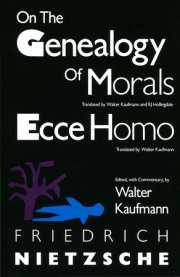
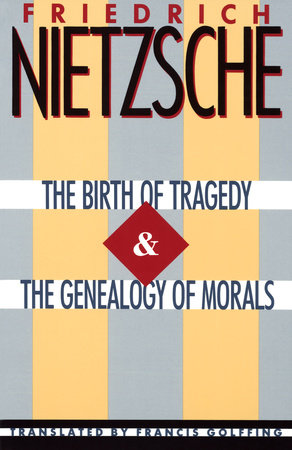
The Birth of Tragedy (1872) was Nietzsche's first book, The Geneology of Morals (1887) one of his last. Though they span the career of this controversial genius, both address the problems such as the conflict between the moral versus aesthetic approaches to life, the effect of Christianity on human values, the meaning of science, and the famous dichotomy between the Apollonian and Dionysian spirits, among many themes which Nietzsche struggled throughout his tortured life.
The philosopher Friedrich Nietzsche was born in Prussia in 1844. After the death of his father, a Lutheran minister, Nietzsche was raised from the age of five by his mother in a household of women. In 1869 he was appointed Professor of Classical Philology at the University of Basel, where he taught until 1879 when poor health forced him to retire. He never recovered from a nervous breakdown in 1889 and died 11 years later. Known for saying that “god is dead,” Nietzsche propounded his metaphysical construct of the superiority of the disciplined individual (superman) living in the present over traditional values derived from Christianity and its emphasis on heavenly rewards. His ideas were appropriated by the Fascists, who turned his theories into social realities that he had never intended.
View titles by Friedrich Nietzsche
Skillful, sophisticated translations of two of Nietzsche's essential works about the conflict between the moral and aesthetic approaches to life, the impact of Christianity on human values, the meaning of science, the contrast between the Apollonian and Dionysian spirits, and other themes central to his thinking.
The Birth of Tragedy (1872) was Nietzsche's first book, The Geneology of Morals (1887) one of his last. Though they span the career of this controversial genius, both address the problems such as the conflict between the moral versus aesthetic approaches to life, the effect of Christianity on human values, the meaning of science, and the famous dichotomy between the Apollonian and Dionysian spirits, among many themes which Nietzsche struggled throughout his tortured life.
Author
The philosopher Friedrich Nietzsche was born in Prussia in 1844. After the death of his father, a Lutheran minister, Nietzsche was raised from the age of five by his mother in a household of women. In 1869 he was appointed Professor of Classical Philology at the University of Basel, where he taught until 1879 when poor health forced him to retire. He never recovered from a nervous breakdown in 1889 and died 11 years later. Known for saying that “god is dead,” Nietzsche propounded his metaphysical construct of the superiority of the disciplined individual (superman) living in the present over traditional values derived from Christianity and its emphasis on heavenly rewards. His ideas were appropriated by the Fascists, who turned his theories into social realities that he had never intended.
View titles by Friedrich Nietzsche