
NOW AVAILABLE
Sign in and order your Wish List!
Retailers, sign in here with your PRH Self-Service email and password to enjoy new Wish List features, like saving and ordering your list.

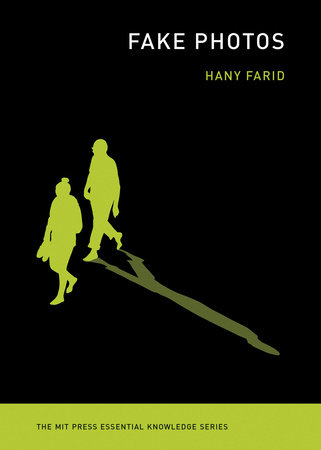
Stalin, Mao, Hitler, Mussolini, and other dictators routinely doctored photographs so that the images aligned with their messages. They erased people who were there, added people who were not, and manipulated backgrounds. They knew if they changed the visual record, they could change history. Once, altering images required hours in the darkroom; today, it can be done with a keyboard and mouse. Because photographs are so easily faked, fake photos are everywhere—supermarket tabloids, fashion magazines, political ads, and social media. How can we tell if an image is real or false? In this volume in the MIT Press Essential Knowledge series, Hany Farid offers a concise and accessible guide to techniques for detecting doctored and fake images in photographs and digital media.
Farid, an expert in photo forensics, has spent two decades developing techniques for authenticating digital images. These techniques model the entire image-creation process in order to find the digital disruption introduced by manipulation of the image. Each section of the book describes a different technique for analyzing an image, beginning with those requiring minimal technical expertise and advancing to those at intermediate and higher levels. There are techniques for, among other things, reverse image searches, metadata analysis, finding image imperfections introduced by JPEG compression, image cloning, tracing pixel patterns, and detecting images that are computer generated. In each section, Farid describes the techniques, explains when they should be applied, and offers examples of image analysis.
Stalin, Mao, Hitler, Mussolini, and other dictators routinely doctored photographs so that the images aligned with their messages. They erased people who were there, added people who were not, and manipulated backgrounds. They knew if they changed the visual record, they could change history. Once, altering images required hours in the darkroom; today, it can be done with a keyboard and mouse. Because photographs are so easily faked, fake photos are everywhere—supermarket tabloids, fashion magazines, political ads, and social media. How can we tell if an image is real or false? In this volume in the MIT Press Essential Knowledge series, Hany Farid offers a concise and accessible guide to techniques for detecting doctored and fake images in photographs and digital media.
Farid, an expert in photo forensics, has spent two decades developing techniques for authenticating digital images. These techniques model the entire image-creation process in order to find the digital disruption introduced by manipulation of the image. Each section of the book describes a different technique for analyzing an image, beginning with those requiring minimal technical expertise and advancing to those at intermediate and higher levels. There are techniques for, among other things, reverse image searches, metadata analysis, finding image imperfections introduced by JPEG compression, image cloning, tracing pixel patterns, and detecting images that are computer generated. In each section, Farid describes the techniques, explains when they should be applied, and offers examples of image analysis.