Close Modal

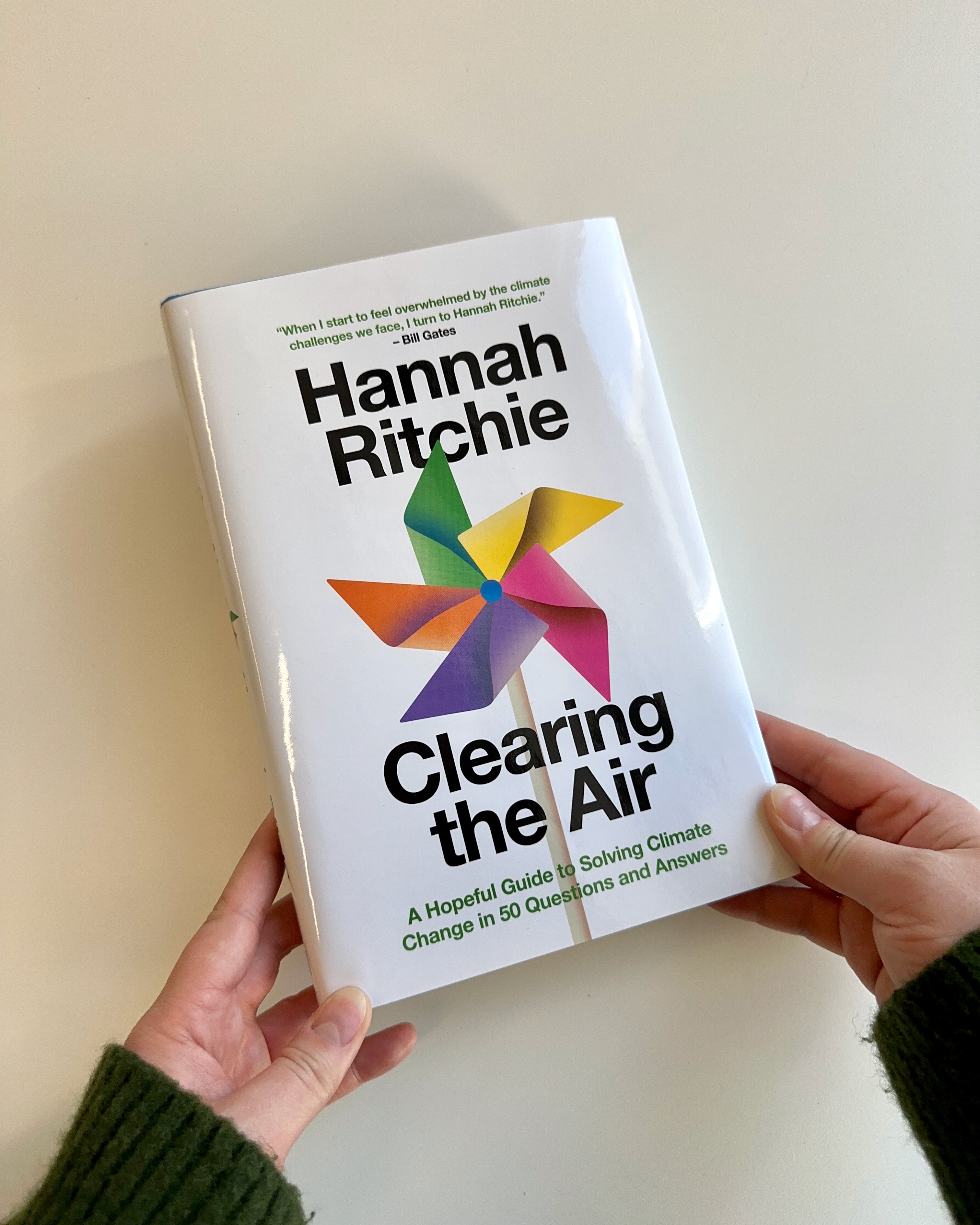
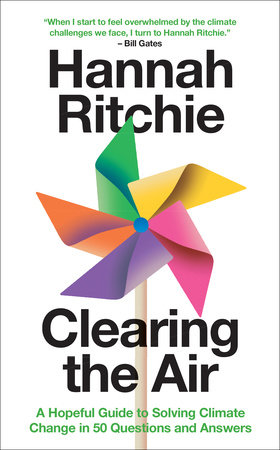
Clearing the Air

A Hopeful Guide to Solving Climate Change in 50 Questions and Answers

Look inside
Hardcover
$27.95 US
6.38"W x 9.31"H x 0.97"D   | 17 oz | 20 per carton
On sale Feb 17, 2026 | 296 Pages | 9780262052740

additional book photo
*A FINANCIAL TIMES & NEW STATESMAN BEST BOOK OF 2025*

A Bill Gates Top Pick for 2025: "One of the clearest explanations of the climate challenge I’ve read.”

"A refreshingly pragmatic and undoomy book."
—The Guardian

Clear, simple answers to the most common and vexing questions about climate change that we can take action on right now.


We can’t afford to delay climate action, but with all the shouting and disagreement, it’s hard to know where to turn. In Clearing the Air, data scientist and bestselling author Hannah Ritchie answers 50 key climate questions once and for all, clearing the air so we can take action and fix things.

The first piece of good news is that Ritchie is here with answers and the steps we need to take right now. Using simple, clear data, she tackles questions such as: Is it too late? Won’t we run out of minerals? Aren’t we too polarized? The second piece of good news: The truth is far more hopeful than you might think.

We’re at a critical moment for our planet, and getting the facts straight is step one. But even more crucial is feeling hopeful about what we can do next. The third piece of good news? We already have many of the solutions we need to create a more sustainable planet for future generations.
Included in Bill Gates's "Five books to read this winter"
Included in the Financial Times's Best Books of 2025: Environment

"If you want a book that explains the climate challenge without doom or denial, Clearing the Air is a must-read. It’s a hopeful reminder that while the problem is enormous, the progress is real."
—Gates Notes

"Addressing 50 commonly asked questions about climate change, her book provides actions that individuals and countries can put into practice...A hopeful guide to solving climate change offers some steps we can all take now.”
Kirkus Reviews

“If you have ever wondered if we can afford solar power, or if electric cars are really green, or whether heat pumps actually work, this highly readable book has all the facts you need. From nuclear energy to plant-based burgers, it gives brisk, smart insights into the big climate questions.”
The Financial Times

"Readers will find inspiration and hope, as well
as a robust list of possible actions they can take to enact climate solutions."
Booklist

"This is a refreshingly pragmatic and undoomy book."
The Guardian

ENDORSEMENTS

“When I start to feel overwhelmed by the climate challenges we face, I turn to Hannah Ritchie.”
—Bill Gates

“The world needs practical, calm, and data-led climate problem solving, and Clearing the Air provides answers—and hope—in spades.”
—Saul Griffith, author of Electrify


“Hannah Ritchie is the world’s most levelheaded, no-nonsense purveyor of truth about our changing planet, and I’m deeply grateful she’s given us the gift of Clearing the Air.”
—Kate Marvel, author of Human Nature


“The best thing you can do for the climate is read this book—now.”
—Mark Lynas, author of Six Degrees


“If there were a Nobel Prize for clear thinking, Hannah Ritchie would have my vote. She doesn’t just cut through the noise—she vaporizes it. With a scientist’s rigor and a storyteller’s grace, she shows us what the data actually says about the biggest challenges of our time. Her work is essential reading for anyone who still believes facts can change minds and optimism can change the world.”
—Rutger Bregman, author of Utopia for Realists and Humankind


“Thank goodness for Hannah Ritchie and her clear, data-led optimism. An essential myth-busting primer on climate actions for everyone navigating the blizzard of confusing opinions and misinformation around the defining issue of our time.”
—Gaia Vince, author of Nomad Century


Hannah Ritchie is Senior Researcher in the Program for Global Development at the University of Oxford. She is also Deputy Editor of Our World in Data and was awarded an Honorary Fellowship of the Royal Statistical Society. In 2022, she was named Scotland’s Youth Climate Champion. In 2024, she was selected by Prospect magazine as one of their “Top 25 Thinkers.” She is the author of Not the End of the World.
Preliminary Table of Contents
Introduction 1
Part One: The Big Questions 11
1 Isn’t it too late? Aren’t we heading for a warmer world? 13
2 Is there enough public support to tackle climate change? 19
3 Isn’t climate action too polarised and politically divisive to fix? 23
4 My country only emits 1% of the world’s emissions; surely it’s too small to make a difference? 26
5 Aren’t our efforts pointless if China’s emissions keep growing? 30
Part Two: Fossil Fuels 35
6 Don’t poor countries need fossil fuels to develop? 37
7 Can’t we just keep burning fossil fuels and capture the CO2? 43
8 Can we transition to clean energy fast enough? 47
9 Are we even transitioning to clean energy if we keep adding more fossil fuels? 51
10 Will we even be able to produce enough clean energy to replace fossil fuels? 56
11 Won’t we need fossil fuels to build low-carbon energy in the first place? 61
12. Won’t we need more fossil fuels to keep up with artificial intelligence? 64
13 Won’t a lot of energy workers lose their jobs? 71
Part Three: Renewable Energy 77
14 Don’t solar and wind emit lots of carbon when we include the materials to build them? 79
15 What happens when the sun doesn’t shine and wind doesn’t blow? 82
16 Aren’t renewables too expensive? 86
17 Don’t solar panels and wind turbines generate huge amounts of waste? 92
18 Won’t we run out of land to use for solar panels and wind turbines? 97
19 Can we build electricity grids fast enough? 102
20 Don’t wind farms kill lots of birds and wildlife? 106
Part Four: Nuclear power 111
21 Isn’t nuclear power dangerous? 113
22 Doesn’t it take too long to build a nuclear plant? 118
23 Isn’t nuclear power too expensive? 122
24 What about radioactive waste? 126
Part Five: Electric Cars 131
25 Aren’t electric cars just as bad for the climate as petrol cars? 133
26 Don’t electric cars also contribute to air pollution? 138
27 Aren’t electric cars too expensive for the average drive? 142
28 Aren’t electric cars only good for shorter journeys? 146
29 Aren’t there too few charging points? 150
30 Won’t electric car charging break our electricity grids? 154
31 Don’t electric cars struggle in the cold? 158
32 Don’t electric cars catch fire all the time? 161
Part Six: Minerals 165
33 Won’t the world run out of minerals? 167
34 Won’t renewables and electric cars mean a lot more mining? 171
35 What about human exploitation in mineral supply chains? 176
36 Won’t we become dependent on a few countries, just like we did with fossil fuels? 181
37 Doesn’t mining minerals for clean energy use too much water to be sustainable? 186
Part Seven: Heating (and Cooling) 191
38 Aren’t heat pumps hopeless in the cold? 193
39 Aren’t heat pumps much more expensive than a gas boiler? 196
40 How can the world deal with the increasing demands for air conditioning? 200
Part Eight: Food 205
41 Surely we don’t have enough land for everyone to go plant-based? 207
42 Aren’t meat substitutes worse for the climate than meat because they use so much energy? 211
43 How can people switch when meat substitutes cost more than meat? 215
44 Meat substitutes are ‘ultra- processed’; doesn’t that make them unhealthy? 220
Part Nine: Cement, Steel and Other ‘Hard- to- Abate’ Industries 225
45 Will we ever be able to produce low- carbon cement? 227
46 What about low- carbon steel? 232
47 Is there any hope of low-carbon aviation and shipping? 236
Part Ten: Carbon Removal and Solar Geoengineering 241
48 Can we solve climate change without carbon dioxide removal? 243
49 Isn’t carbon dioxide removal too expensive? 246
50 Isn’t solar geoengineering too risky? 249

Photos

additional book photo

About

*A FINANCIAL TIMES & NEW STATESMAN BEST BOOK OF 2025*

A Bill Gates Top Pick for 2025: "One of the clearest explanations of the climate challenge I’ve read.”

"A refreshingly pragmatic and undoomy book."
—The Guardian

Clear, simple answers to the most common and vexing questions about climate change that we can take action on right now.


We can’t afford to delay climate action, but with all the shouting and disagreement, it’s hard to know where to turn. In Clearing the Air, data scientist and bestselling author Hannah Ritchie answers 50 key climate questions once and for all, clearing the air so we can take action and fix things.

The first piece of good news is that Ritchie is here with answers and the steps we need to take right now. Using simple, clear data, she tackles questions such as: Is it too late? Won’t we run out of minerals? Aren’t we too polarized? The second piece of good news: The truth is far more hopeful than you might think.

We’re at a critical moment for our planet, and getting the facts straight is step one. But even more crucial is feeling hopeful about what we can do next. The third piece of good news? We already have many of the solutions we need to create a more sustainable planet for future generations.

Praise

Included in Bill Gates's "Five books to read this winter"
Included in the Financial Times's Best Books of 2025: Environment

"If you want a book that explains the climate challenge without doom or denial, Clearing the Air is a must-read. It’s a hopeful reminder that while the problem is enormous, the progress is real."
—Gates Notes

"Addressing 50 commonly asked questions about climate change, her book provides actions that individuals and countries can put into practice...A hopeful guide to solving climate change offers some steps we can all take now.”
Kirkus Reviews

“If you have ever wondered if we can afford solar power, or if electric cars are really green, or whether heat pumps actually work, this highly readable book has all the facts you need. From nuclear energy to plant-based burgers, it gives brisk, smart insights into the big climate questions.”
The Financial Times

"Readers will find inspiration and hope, as well
as a robust list of possible actions they can take to enact climate solutions."
Booklist

"This is a refreshingly pragmatic and undoomy book."
The Guardian

ENDORSEMENTS

“When I start to feel overwhelmed by the climate challenges we face, I turn to Hannah Ritchie.”
—Bill Gates

“The world needs practical, calm, and data-led climate problem solving, and Clearing the Air provides answers—and hope—in spades.”
—Saul Griffith, author of Electrify


“Hannah Ritchie is the world’s most levelheaded, no-nonsense purveyor of truth about our changing planet, and I’m deeply grateful she’s given us the gift of Clearing the Air.”
—Kate Marvel, author of Human Nature


“The best thing you can do for the climate is read this book—now.”
—Mark Lynas, author of Six Degrees


“If there were a Nobel Prize for clear thinking, Hannah Ritchie would have my vote. She doesn’t just cut through the noise—she vaporizes it. With a scientist’s rigor and a storyteller’s grace, she shows us what the data actually says about the biggest challenges of our time. Her work is essential reading for anyone who still believes facts can change minds and optimism can change the world.”
—Rutger Bregman, author of Utopia for Realists and Humankind


“Thank goodness for Hannah Ritchie and her clear, data-led optimism. An essential myth-busting primer on climate actions for everyone navigating the blizzard of confusing opinions and misinformation around the defining issue of our time.”
—Gaia Vince, author of Nomad Century


Author

Hannah Ritchie is Senior Researcher in the Program for Global Development at the University of Oxford. She is also Deputy Editor of Our World in Data and was awarded an Honorary Fellowship of the Royal Statistical Society. In 2022, she was named Scotland’s Youth Climate Champion. In 2024, she was selected by Prospect magazine as one of their “Top 25 Thinkers.” She is the author of Not the End of the World.

Table of Contents

Preliminary Table of Contents
Introduction 1
Part One: The Big Questions 11
1 Isn’t it too late? Aren’t we heading for a warmer world? 13
2 Is there enough public support to tackle climate change? 19
3 Isn’t climate action too polarised and politically divisive to fix? 23
4 My country only emits 1% of the world’s emissions; surely it’s too small to make a difference? 26
5 Aren’t our efforts pointless if China’s emissions keep growing? 30
Part Two: Fossil Fuels 35
6 Don’t poor countries need fossil fuels to develop? 37
7 Can’t we just keep burning fossil fuels and capture the CO2? 43
8 Can we transition to clean energy fast enough? 47
9 Are we even transitioning to clean energy if we keep adding more fossil fuels? 51
10 Will we even be able to produce enough clean energy to replace fossil fuels? 56
11 Won’t we need fossil fuels to build low-carbon energy in the first place? 61
12. Won’t we need more fossil fuels to keep up with artificial intelligence? 64
13 Won’t a lot of energy workers lose their jobs? 71
Part Three: Renewable Energy 77
14 Don’t solar and wind emit lots of carbon when we include the materials to build them? 79
15 What happens when the sun doesn’t shine and wind doesn’t blow? 82
16 Aren’t renewables too expensive? 86
17 Don’t solar panels and wind turbines generate huge amounts of waste? 92
18 Won’t we run out of land to use for solar panels and wind turbines? 97
19 Can we build electricity grids fast enough? 102
20 Don’t wind farms kill lots of birds and wildlife? 106
Part Four: Nuclear power 111
21 Isn’t nuclear power dangerous? 113
22 Doesn’t it take too long to build a nuclear plant? 118
23 Isn’t nuclear power too expensive? 122
24 What about radioactive waste? 126
Part Five: Electric Cars 131
25 Aren’t electric cars just as bad for the climate as petrol cars? 133
26 Don’t electric cars also contribute to air pollution? 138
27 Aren’t electric cars too expensive for the average drive? 142
28 Aren’t electric cars only good for shorter journeys? 146
29 Aren’t there too few charging points? 150
30 Won’t electric car charging break our electricity grids? 154
31 Don’t electric cars struggle in the cold? 158
32 Don’t electric cars catch fire all the time? 161
Part Six: Minerals 165
33 Won’t the world run out of minerals? 167
34 Won’t renewables and electric cars mean a lot more mining? 171
35 What about human exploitation in mineral supply chains? 176
36 Won’t we become dependent on a few countries, just like we did with fossil fuels? 181
37 Doesn’t mining minerals for clean energy use too much water to be sustainable? 186
Part Seven: Heating (and Cooling) 191
38 Aren’t heat pumps hopeless in the cold? 193
39 Aren’t heat pumps much more expensive than a gas boiler? 196
40 How can the world deal with the increasing demands for air conditioning? 200
Part Eight: Food 205
41 Surely we don’t have enough land for everyone to go plant-based? 207
42 Aren’t meat substitutes worse for the climate than meat because they use so much energy? 211
43 How can people switch when meat substitutes cost more than meat? 215
44 Meat substitutes are ‘ultra- processed’; doesn’t that make them unhealthy? 220
Part Nine: Cement, Steel and Other ‘Hard- to- Abate’ Industries 225
45 Will we ever be able to produce low- carbon cement? 227
46 What about low- carbon steel? 232
47 Is there any hope of low-carbon aviation and shipping? 236
Part Ten: Carbon Removal and Solar Geoengineering 241
48 Can we solve climate change without carbon dioxide removal? 243
49 Isn’t carbon dioxide removal too expensive? 246
50 Isn’t solar geoengineering too risky? 249