Close Modal

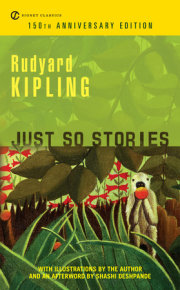
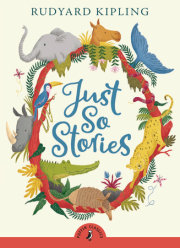
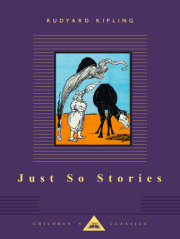
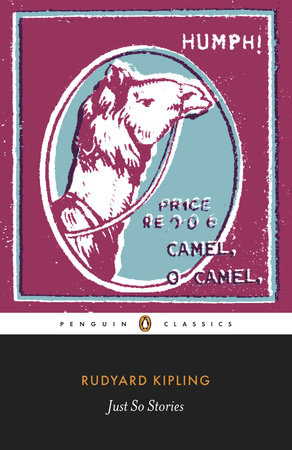
Just So Stories

Introduction by Judith Plotz
Paperback
$12.00 US
5.1"W x 7.7"H x 0.55"D   | 6 oz | 80 per carton
On sale Sep 21, 2011 | 368 Pages | 9780141442402

A relentlessly inventive collection of myths that betray a deep love and respect for the natural world

A Penguin Classic


The Camel gets his Hump, the Whale his Throat, and the Leopard his Spots in these bewitching stories that conjure up distant lands, the beautiful gardens of splendid palaces, and the jungle and its creatures. Inspired by Rudyard Kipling's delight in human eccentricities and the animal world, and based on bedtime stories he told to his daughter, these strikingly imaginative fables explore the myths of creation, the nature of beasts, and the origins of language and writing. They are linked by poems and scattered with Kipling's illustrations, which contain hidden jokes, symbols, and puzzles.

For more than seventy years, Penguin has been the leading publisher of classic literature in the English-speaking world. With more than 1,700 titles, Penguin Classics represents a global bookshelf of the best works throughout history and across genres and disciplines. Readers trust the series to provide authoritative texts enhanced by introductions and notes by distinguished scholars and contemporary authors, as well as up-to-date translations by award-winning translators.
By the Winner of the Nobel Prize in Literature
Rudyard Kipling was born in Bombay, India, to British parents on December 30, 1865. In 1871 Rudyard and his sister, Trix, aged three, were left to be cared for by a couple in Southsea, England. Five years passed before he saw his parents again. His sense of desertion and despair were later expressed in his story "Baa Baa, Black Sheep" (1888), in his novel The Light That Failed (1890), and in his autobiography, Something of Myself (1937). As late as 1935, Kipling still spoke bitterly of the "House of Desolation" at Southsea: "I should like to burn it down and plough the place with salt." Kipling and his wife settled in Brattleboro, Vermont, where Kipling wrote The Jungle Book (1894), The Second Jungle Book (1895), and most of Captains Courageous (1897). By this time Kipling's popularity and financial success were enormous. In 1899 the Kiplings settled in Sussex, England, where he wrote some of his best books: Kim (1901), Just So Stories (1902), and Puck of Pook's Hill (1906). In 1907 he received the Nobel Prize for Literature. By the time he died, on January 18, 1936, critical opinion was deeply divided about his writings, but his books continue to be read by thousands. View titles by Rudyard Kipling

About

A relentlessly inventive collection of myths that betray a deep love and respect for the natural world

A Penguin Classic


The Camel gets his Hump, the Whale his Throat, and the Leopard his Spots in these bewitching stories that conjure up distant lands, the beautiful gardens of splendid palaces, and the jungle and its creatures. Inspired by Rudyard Kipling's delight in human eccentricities and the animal world, and based on bedtime stories he told to his daughter, these strikingly imaginative fables explore the myths of creation, the nature of beasts, and the origins of language and writing. They are linked by poems and scattered with Kipling's illustrations, which contain hidden jokes, symbols, and puzzles.

For more than seventy years, Penguin has been the leading publisher of classic literature in the English-speaking world. With more than 1,700 titles, Penguin Classics represents a global bookshelf of the best works throughout history and across genres and disciplines. Readers trust the series to provide authoritative texts enhanced by introductions and notes by distinguished scholars and contemporary authors, as well as up-to-date translations by award-winning translators.

Praise

By the Winner of the Nobel Prize in Literature

Author

Rudyard Kipling was born in Bombay, India, to British parents on December 30, 1865. In 1871 Rudyard and his sister, Trix, aged three, were left to be cared for by a couple in Southsea, England. Five years passed before he saw his parents again. His sense of desertion and despair were later expressed in his story "Baa Baa, Black Sheep" (1888), in his novel The Light That Failed (1890), and in his autobiography, Something of Myself (1937). As late as 1935, Kipling still spoke bitterly of the "House of Desolation" at Southsea: "I should like to burn it down and plough the place with salt." Kipling and his wife settled in Brattleboro, Vermont, where Kipling wrote The Jungle Book (1894), The Second Jungle Book (1895), and most of Captains Courageous (1897). By this time Kipling's popularity and financial success were enormous. In 1899 the Kiplings settled in Sussex, England, where he wrote some of his best books: Kim (1901), Just So Stories (1902), and Puck of Pook's Hill (1906). In 1907 he received the Nobel Prize for Literature. By the time he died, on January 18, 1936, critical opinion was deeply divided about his writings, but his books continue to be read by thousands. View titles by Rudyard Kipling

Live Inspired with Compendium: Now Available from PRH!

Exciting news! Compendium has joined the Penguin Random House family, bringing a proven line of bestselling, sentiment-driven gifts to our extensive and ever-growing catalog. Since 1985, Compendium has been creating meaningful moments with beautiful, thoughtfully made gifts that center connection and celebrate occasions both big and small. From greeting cards to inspirational books to impulse-friendly add-ons, Compendium

Read more